Identifying Common Causes of Repeated Battery Failure in Modern Vehicles
Your battery keeps dying because deep discharges can reduce lead-acid capacity by 20% per cycle. Short trips and accessories left on prevent full charging, while loose or corroded terminals add resistance-just 0.5 ohms can drop voltage below 12.4V. Faulty alternators below 13V cause sulfation; above 15V they damage cells. Parasitic drains over 100 mA-like stuck modules or bad relays-drain power overnight. Extreme heat accelerates corrosion; cold cuts cranking power by up to 50%. Learn the hidden failures killing your battery before you replace it again.
Notable Insights
- Repeated deep discharges from short trips or accessories left on can degrade lead-acid battery capacity by up to 20% per cycle.
- Loose or corroded terminals increase resistance, reducing voltage delivery and causing power loss up to 30%.
- Faulty battery temperature sensors disrupt charging algorithms, leading to chronic undercharging and sulfation.
- Alternator output below 13V or above 15V causes undercharging or overcharging, damaging battery health over time.
- Excessive parasitic drain from defective modules or aftermarket devices can deplete a battery within days.
Why Your Car Battery Keeps Dying
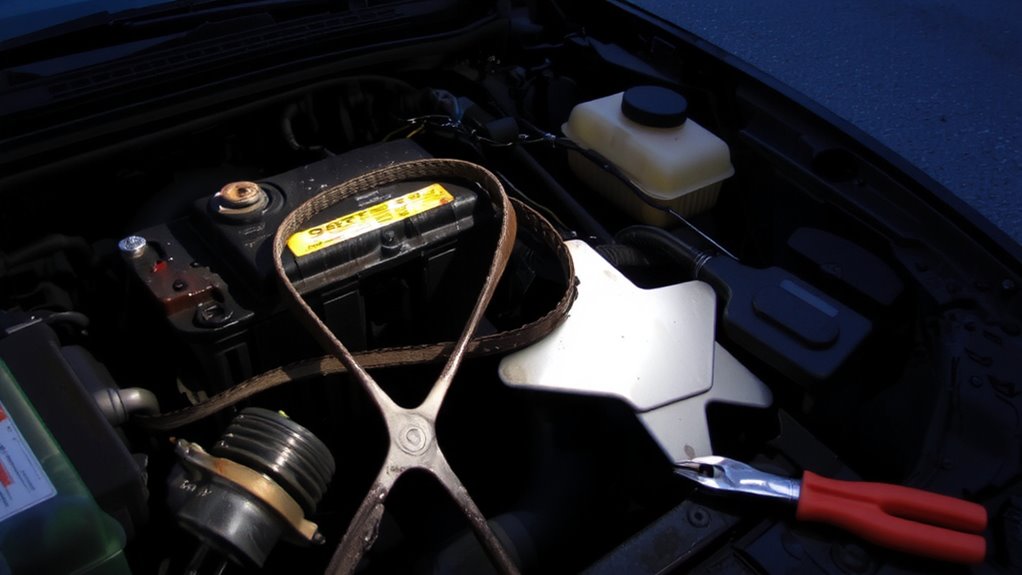
Some car batteries fail prematurely due to repeated deep discharges, especially if you’re regularly short-tripping or leaving accessories on when the engine’s off. Each full discharge cycle degrades lead-acid battery capacity by up to 20%. Faulty sensors, like a malfunctioning battery temperature sensor, can misreport charge needs, leading to chronic undercharging. These sensors operate within ±2°C accuracy-if compromised, charging algorithms fail. Loose terminals increase electrical resistance, measured in milliohms, reducing voltage delivery. A 0.5-ohm resistance at the terminal can drop system voltage below 12.4V, preventing full recharge. Corrosion exacerbates this, creating a 30% power loss in extreme cases. Batteries require stable 13.8–14.4V to maintain 100% state of charge. Without it, sulfation begins within hours. Secure connections and accurate sensor data are critical. Regular inspection of terminal tightness-torqued to 5–8 Nm-and sensor diagnostics prevent avoidable failures. You can’t ignore these details and expect long battery life. Upgrading to one of the best Subaru Outback battery picks can significantly improve performance and longevity in demanding conditions.
How a Bad Alternator Kills Your Battery
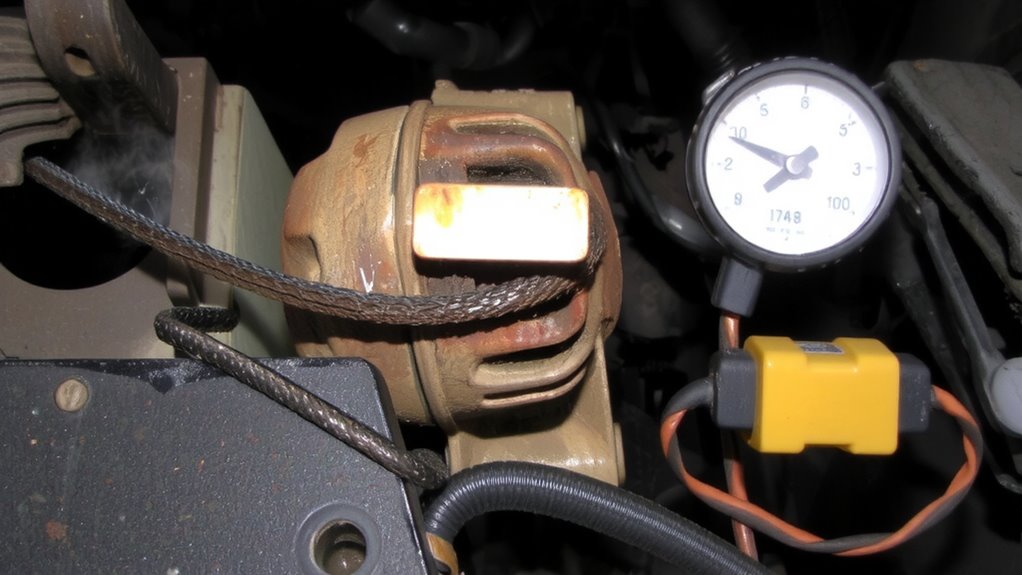
When your alternator fails, it stops replenishing the battery’s charge while you drive, slowly draining its capacity until the vehicle won’t start. A healthy alternator outputs 13.5 to 14.8 volts under normal conditions, maintaining proper voltage regulation. If alternator output drops below 13 volts, the battery isn’t receiving enough charge. Over time, this insufficient charging leads to sulfation, reducing the battery’s ability to hold a charge. Poor voltage regulation can also cause overcharging, exceeding 15 volts and damaging the battery through excessive heat and electrolyte loss. Both undercharging and overcharging stem from alternator faults. The alternator’s internal voltage regulator constantly adjusts output based on electrical load and battery demand. When it fails, so does the balance needed for sustained battery health. Without consistent alternator output and stable voltage regulation, your battery won’t survive long-term. Choosing the right replacement battery is crucial, and selecting one of the best 12-volt batteries can help ensure better performance and longevity when paired with a properly functioning charging system.
Find Parasitic Drains Overnight
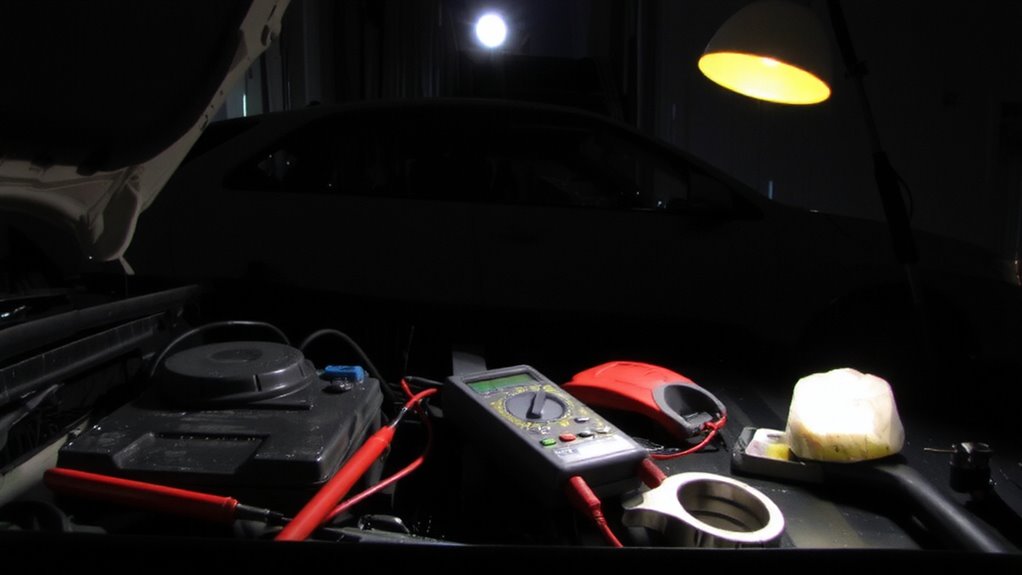
How much power does your governor draw when it’s supposed to be off? A small parasitic drain of 50–80 milliamps is normal. Anything above 100 mA may point to faulty sensors or other hidden issues. Use a multimeter to check current flow at the negative battery terminal with the car off. Disconnect accessories and wait 20–30 minutes for modules to sleep before measuring.
| Suspect Component | Typical Draw (mA) | Common Cause |
|---|---|---|
| ECU/ECM | 20–50 | Normal |
| Infotainment | 30–70 | Faulty sensors |
| Aftermarket Alarms | 80–200 | Poor install |
| Interior Lights | 100–500 | Stuck switch |
| Battery Itself | N/A | Corroded terminals |
Persistent high draw drains your battery overnight. Corroded terminals increase resistance, distorting readings. Guarantee clean, tight connections before testing. Address faulty sensors promptly-they keep systems active, killing the battery. A reliable car multimeter is essential for accurate diagnostics.
How Short Trips Prevent Charging
Even if your car starts fine each morning, frequent short trips could be sabotaging your battery’s ability to recharge. Short trips don’t give the alternator enough time to restore the charge used during engine cranking. Your vehicle’s charging system operates efficiently only after prolonged operation-typically above 1,500 RPM for at least 20–30 minutes. Most short trips end before the battery reaches full charge, creating chronic undercharging. Over time, this leads to sulfation, where lead sulfate crystals harden on battery plates, reducing capacity and lifespan. Modern cars with high electrical loads-from infotainment to driver aids-demand more from the battery, worsening charging issues. A healthy alternator outputs 13.8–14.4 volts under load, but brief drives prevent sustained voltage application. Repeated short trips fundamentally drain more than they replenish, like spending income faster than it’s earned. This continuous deficit accelerates battery failure, even in otherwise well-maintained vehicles.
How Heat and Cold Kill Your Battery
Extreme temperatures, both hot and cold, are silent killers of automotive batteries, often acting faster than short trips to degrade performance and shorten life. Heat accelerates chemical reactions inside the battery, increasing internal corrosion and causing thermal expansion that warps internal components. This stress can crack plates or damage separators, reducing capacity and increasing failure risk. Prolonged exposure to temperatures above 95°F (35°C) can cut a battery’s lifespan by up to 40%. Cold temps slow ion movement, reducing cranking power. At 32°F (0°C), a battery loses about 35% of its strength; at 0°F (-18°C), it’s nearly half. Cold also promotes ice formation if the battery is weak or undercharged. Ice formation ruptures internal structures, causing permanent damage. A fully charged battery resists freezing down to -76°F (-60°C), but a half-charged one can freeze at 20°F (-7°C). Protecting your battery from extreme heat and cold is essential for longevity.
Bad Relays or Lights Draining Power
A surprising number of battery failures stem from parasitic drains caused by defective relays or lights left on unintentionally. Defective relays can remain engaged even when the engine is off, drawing 50–300 milliamps continuously. Over 24 hours, that drain can deplete a standard 48-amp-hour battery by up to 15%. Interior lights left on are equally problematic. A single dome light drawing 1.5 amps can drain the same battery in under 30 hours. Modern vehicles have multiple relay-controlled modules; a malfunctioning one may not enter sleep mode, causing constant power draw. Check your fuse box for relays that click repeatedly after shutdown. Use a multimeter to measure parasitic drain-normal is under 50 milliamps. Any reading above 100 milliamps indicates a fault. Address defective relays promptly and make certain interior lights turn off automatically. These small draws, if ignored, result in deep discharges that shorten battery life markedly.
When to Replace Your Battery (And When Not To)
How do you know when your car battery needs replacing-or when it’s not the battery at all? Check your battery warranty and replacement timing to avoid unnecessary costs. Most batteries last 3–5 years; if yours is within this range but failing, test the charging system first. A weak alternator or parasitic drain could mimic battery failure.
| Sign | Meaning |
|---|---|
| Slow engine crank | Likely battery issue |
| Dashboard battery light | Charging system fault |
| Corroded terminals | Poor connection, not failure |
| Recent jump-starts | Monitor voltage; don’t replace yet |
| Over 5 years old | Time to proactively replace |
Replace only if voltage drops below 12.4V at rest or load testing fails. If symptoms persist post-replacement, inspect the alternator output-it should be 13.8–14.4V.
On a final note
Your battery issues likely stem from one of several common faults. A failing alternator outputs less than 13.5 volts, starving the battery. Parasitic draws exceeding 50 milliamps drain power overnight. Short trips prevent full charging; the battery needs 20+ minutes of driving to replenish. Extreme temperatures accelerate sulfation or fluid loss. Faulty relays or lights create constant loads. Replace the battery only after testing these systems with a multimeter and scan tool.