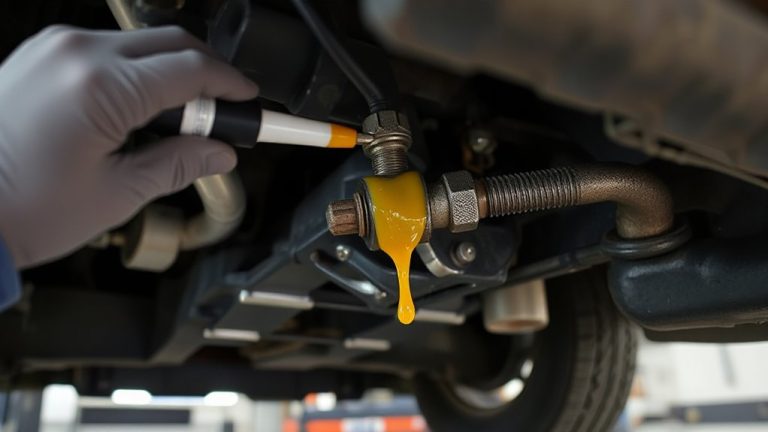
Optimal Tire Pressure Adjustments for SUVs Sitting Unused for Five+ Months
Your SUV’s tires lose 1–3 psi per month during five+ months of inactivity due to natural air diffusion through the butyl inner liner. Cold temperatures accelerate pressure loss-every 10°F drop reduces psi by 1–2. Check cold pressure using a calibrated gauge and inflate to the OEM specification on the driver’s door jamb, not the tire’s sidewall max. Tires over five years old lose 15–20% more air due to molecular degradation. Aging rubber also risks cracks, especially under static load. Even with adequate tread, consider replacement after six years-verify with the DOT code. Inspect for bulges, soft spots, or visible wear indicators before use. Proper inflation guarantees load capacity, fuel efficiency, and safe handling. Further details cover inspection techniques and storage best practices.
Notable Insights
- SUV tires lose 1–3 psi monthly during storage; check and adjust pressure before driving.
- Inflate tires to the OEM-specified PSI on the door jamb, not the sidewall maximum.
- Cold temperatures reduce pressure 1–2 psi per 10°F drop; account for ambient conditions.
- Inspect for cracks, bulges, and tread wear; replace tires over six years old regardless of tread.
- Use a calibrated digital gauge to measure cold tire pressure before re-inflating to recommended levels.
Why SUV Tires Lose Pressure After Sitting
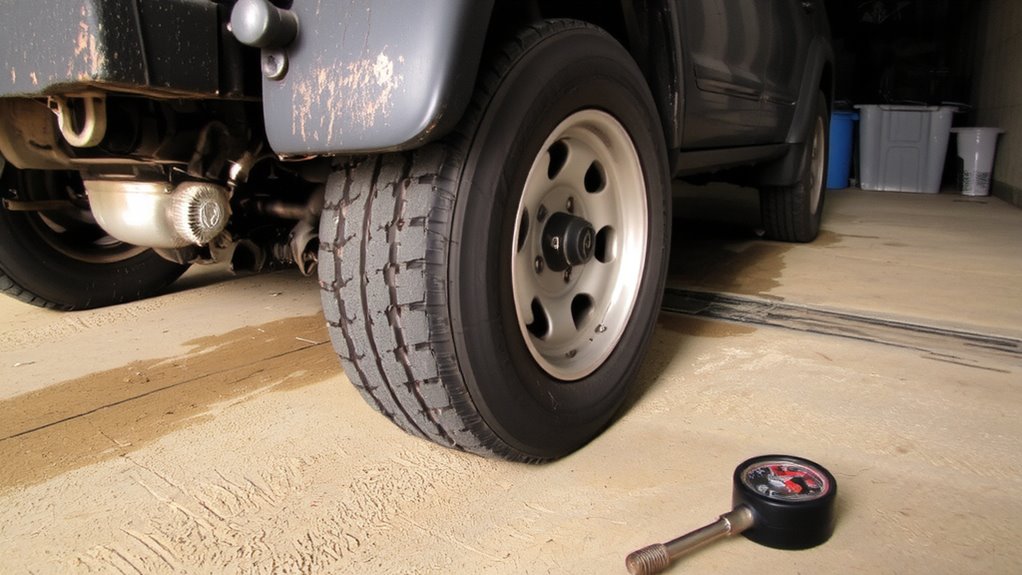
Most SUVs sitting unused for five or more months will experience noticeable tire pressure loss, often between 1 and 3 psi per month under normal conditions. You can expect this drop due to natural air diffusion through the tire’s rubber, a process accelerated by tire aging. As tires age, even without use, their internal structure weakens. Material degradation occurs at the molecular level, reducing the liner’s ability to retain air. Butyl rubber, commonly used in inner liners, slowly allows nitrogen and oxygen molecules to escape. This permeability increases slightly over time, especially in older tires. A five-year-old SUV tire may lose pressure 15–20% faster than a new one due to cumulative material degradation. You should inspect stored SUVs monthly. Tire aging isn’t just cosmetic-it directly impacts inflation stability, safety, and structural integrity, even if tread appears intact.
How Cold Weather and Storage Damage Tires
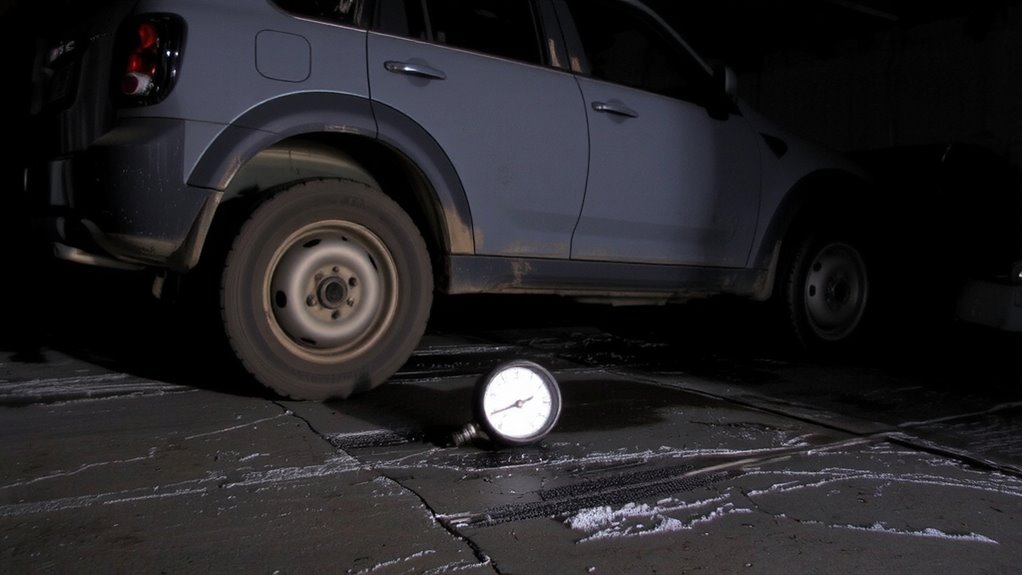
Cold weather compounds the natural pressure loss you’ve already seen in stored SUV tires. For every 10°F drop, tire pressure decreases about 1–2 psi, accelerating underinflation. Prolonged cold exposure makes rubber brittle, increasing the risk of tire cracking. Cracks form first in high-stress areas like tread grooves and bead seals. Extended static load during storage magnifies this, especially on underinflated tires. Sidewall deterioration occurs when ozone and UV light degrade rubber compounds. Lack of movement prevents protective waxes from rising to the surface, leaving sidewalls vulnerable. You might not see damage immediately, but microfractures grow over time. Once cracks reach the tire’s steel belts, structural integrity fails. Even if tires look intact, cold-stored rubber can lose elasticity, reducing performance and safety. Inspect tires closely before reuse-visible cracks or stiff sidewalls mean replacement is necessary. Preventative inflation and covering help, but cannot fully stop chemical aging.
Find Your SUV’s Ideal Cold Tire PSI
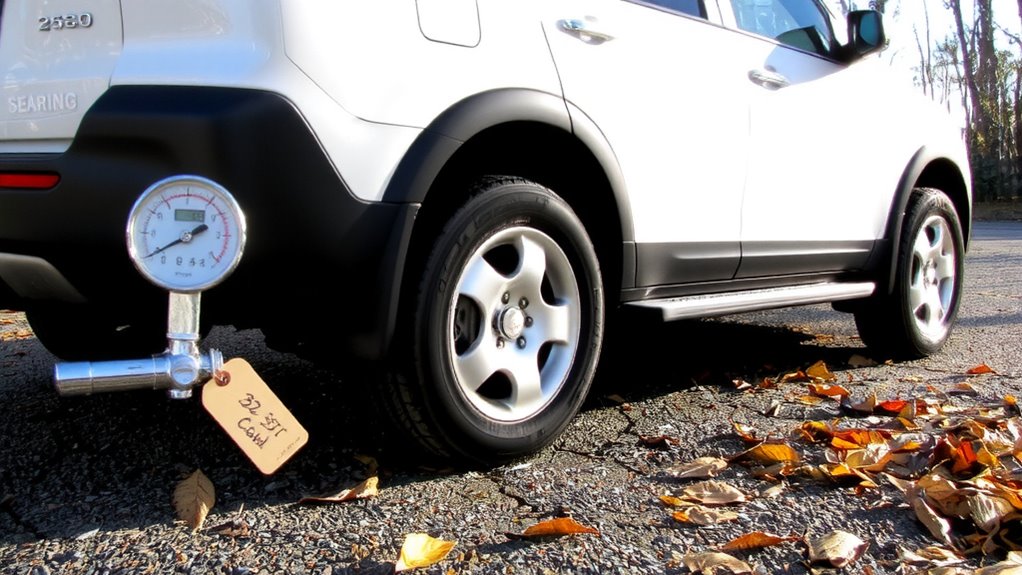
Your SUV’s recommended cold tire pressure is specified by the manufacturer and typically found on a placard located on the driver’s side door jamb or in the owner’s manual. This value, measured in PSI, guarantees peak load capacity, fuel efficiency, and handling. Never rely on the maximum pressure listed on the tire sidewall-it’s a safety limit, not a recommendation. Tire age impact becomes critical after six years, reducing structural integrity and pressure retention. Aging rubber can skew readings, leading to underinflation. Wheel alignment effects also influence pressure requirements; misaligned wheels increase rolling resistance and uneven wear, demanding precise PSI to mitigate damage. Use a calibrated digital gauge for accuracy. Check when tires are cold-after the vehicle has been parked for at least three hours. Adhering to factory specs offsets long-term storage risks and maintains drivetrain performance. A reliable digital pressure gauge ensures consistent and precise readings over time.
Check and Inflate Tires After Long Storage
One overlooked step after storing your SUV for five or more months is rechecking tire pressure before driving. Tires naturally lose 1–2 psi monthly; after five months, underinflation can impair handling and fuel efficiency. Use a calibrated digital gauge to measure cold PSI at dawn or before driving. Inflate to the OEM-specified pressure listed on the driver’s side door jamb. Underinflated tires wear unevenly, reducing tread life and increasing hydroplaning risk. Conduct a tire tread inspection: insert a quarter into the tread groove; if Washington’s head is fully visible, tread depth is below 4/32 inch-near replacement threshold. Check for cracks or flat spots from storage. Uneven wear or persistent pulling may signal the need for a wheel alignment check. Misalignment over 0.5 degrees toe deviation accelerates tread wear and decreases tire lifespan. Address it promptly.
When to Replace SUV Tires After Sitting
You might not realize it, but tires degrade over time even when they’re not being used. Exposure to UV light, ozone, and temperature swings accelerates tire age degradation. After five+ months of inactivity, your SUV’s tires may suffer irreversible structural integrity loss, even if they look fine. Rubber compounds break down, leading to microcracks and weakened sidewalls. Most manufacturers recommend replacing tires after six years, regardless of tread depth.
| Indicator | Action |
|---|---|
| Visible sidewall cracks | Replace immediately |
| Tread wear indicators exposed | Replace now |
| Age over 6 years | Replace, even if unused |
| Low pressure retention | Check for internal damage |
| Bulges or soft spots | Replace due to structural integrity loss |
Tire age degradation isn’t always visible-internal structural breakdown can occur without obvious signs. Use the DOT code to verify manufacture date.
Drive Safely After Long-Term SUV Storage
Though the engine may start without issue, driving immediately after long-term SUV storage risks safety and component failure. You must inspect your SUV thoroughly before operation. Tire tread aging occurs even without use; rubber degrades over time, reducing grip and increasing blowout risk. Check tread depth-replace tires if below 2/32 inches (1.6 mm). Even with proper inflation, aged tread compromises wet and emergency braking performance. Wheel alignment shifts can happen from uneven settling, leading to uneven tire wear and unstable handling. Have a technician measure toe, camber, and caster-values outside manufacturer specs (often ±0.1 to ±0.5 degrees) require correction. Test brakes, steering response, and suspension joints. Drive cautiously the first 50 miles, monitoring for pulling, vibration, or noise. Safety depends on these verified mechanical conditions, not just engine function.
On a final note
You must check tire pressure before driving after long storage. Tires lose 1–2 psi monthly from permeation and temperature drops. Inflate to the manufacturer’s cold PSI-typically 32–35 psi-for ideal handling and tread life. Underinflated tires increase rolling resistance by up to 10%, reducing fuel efficiency. Inspect sidewalls for cracking; replace if cords are exposed or tread depth is below 2/32″. Drive cautiously the first 50 miles to verify performance.