Why Using a Rinseless Wash for Quick Touch-Ups Extends Coating Life
You extend your ceramic coating’s life by using rinseless wash because it removes contaminants without scratching or chemical degradation. Traditional washing erodes 5–10 nanometers of the 200-nanometer coating per wash. Rinseless formulas use pH-neutral surfactants (7.0–8.5) and micelle technology to lift dirt with zero abrasion. Lubricity exceeds 900 centipoise, preventing swirls. This preservation of the hydrophobic layer maintains beading and slickness. You’ll discover how to apply it correctly for maximum protection.
Notable Insights
- Rinseless wash uses pH-neutral formulas that prevent chemical breakdown of ceramic coatings.
- Low-abrasion application minimizes micro-scratches, preserving the coating’s hydrophobic layer.
- Micelle technology lifts dirt without wiping, reducing physical stress on the nano-scale coating.
- High lubricity reduces friction during cleaning, preventing swirl marks and surface degradation.
- Regular use between full washes limits buildup of contaminants that degrade coating integrity.
Why Traditional Washing Damages Ceramic Coatings
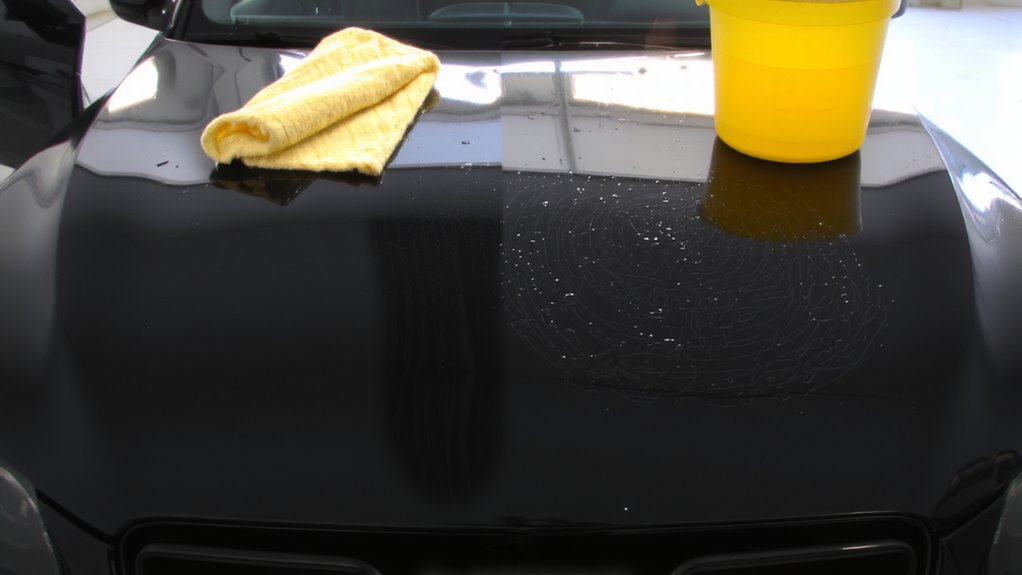
While water and soap may seem harmless, traditional washing methods can gradually degrade ceramic coatings over time. You expose the surface to physical and chemical stresses that compromise its integrity. Water spots form when minerals in hard water dry on the surface, creating etchings that dull the coating’s finish. These deposits are difficult to remove without aggressive wiping. Abrasive towels-like microfiber with trapped debris or low-quality fabrics-scratches nano-scale layers, reducing hydrophobic performance. Each wash with coarse materials removes 5–10 nanometers of the 200-nanometer average ceramic layer. Over six months, frequent washing can degrade up to 30% of the coating. You also increase surface energy, defeating the coating’s ability to repel water and contaminants. Even pH-unbalanced soaps accelerate breakdown. Traditional washing doesn’t remove only dirt-it removes your protection.
How Rinseless Wash Protects Your Ceramic Coating
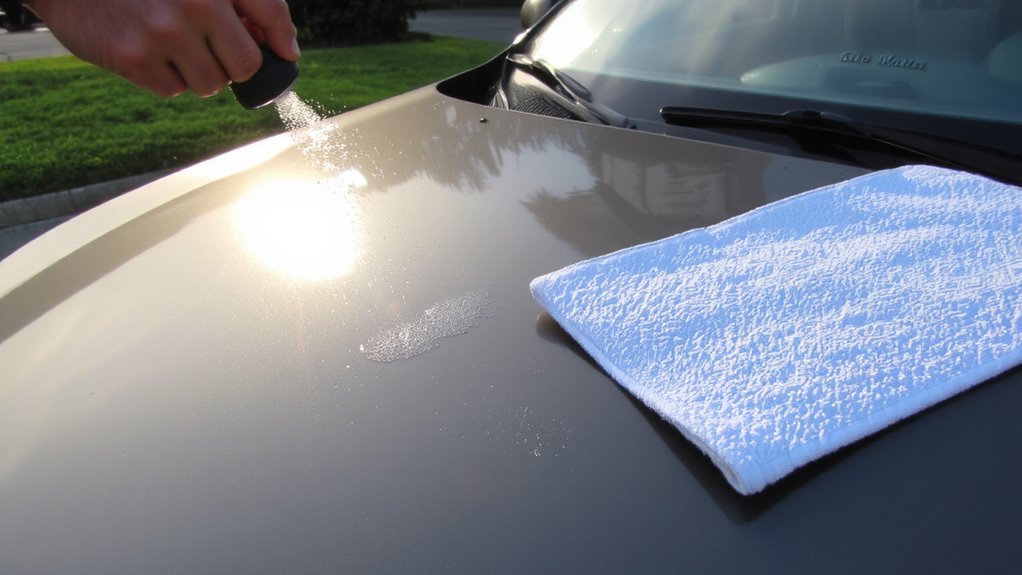
Rinseless wash systems are engineered to preserve your ceramic coating’s integrity without sacrificing cleanliness. These solutions use surfactants with low ionic concentration to guarantee chemical safety, preventing breakdown of the SiO₂ or TiO₂ matrix in cured coatings. Each liter of rinseless wash concentrate typically dilutes into 32 liters of working solution, maintaining a neutral pH between 6.5 and 7.5-critical for surface integrity. The micelle structure in the solution encapsulates dirt particles, lifting them away without requiring abrasive wiping. Lubricity ratings exceed 900 centipoise, reducing friction during wiping. You avoid swirls and micro-scratches common in traditional wash methods. By eliminating high-pressure water and harsh detergents, rinseless wash maintains the coating’s hydrophobic layer. This approach supports long-term performance, preserving slickness and beading for up to six months between detailed washes. You extend coating life with minimal water use and maximum protection.
How to Use Rinseless Wash on Coated Cars
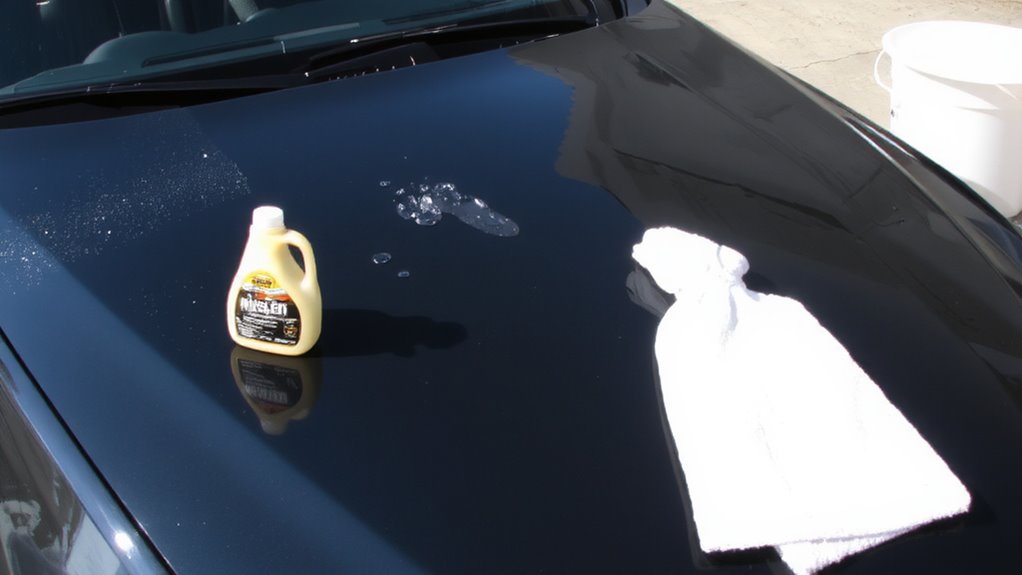
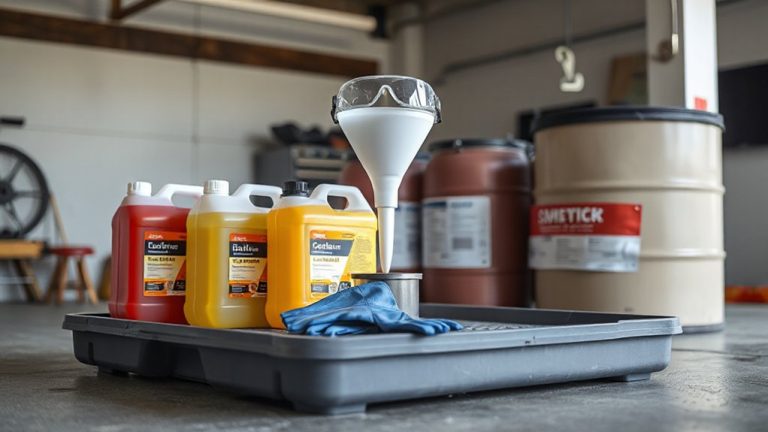
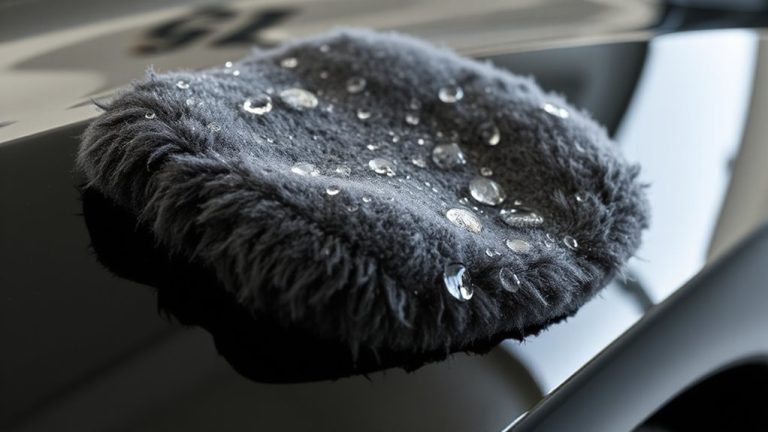
When applying rinseless wash to a coated vehicle, start by ensuring the surface is cool and out of direct sunlight to prevent solution drying. Mix 1 ounce of rinseless wash per 2 quarts of distilled water to maintain proper pH balance-ideally between 7.0 and 8.5-to avoid degrading the ceramic layer. Use a clean, plush microfiber towel with the two-bucket method (one for solution, one for rinsing the towel) to reduce contamination. Apply the solution with light, overlapping strokes using the microfiber technique: flat-hand pressure, no tight scrunching. This minimizes swirl risk and maximizes lubricity. Flip the towel frequently to use clean sections. Let the solution dwell for 30–60 seconds to encapsulate dirt. Wipe off with a second, dry, 100% polyester microfiber towel. Avoid circular motions; use straight lines for consistent results. Rinseless wash, when applied correctly, cleans without stripping protection. Proper garage organization, including using a high-capacity oil drain pan, helps maintain a clean workspace for detailing tools and supplies.
Mistakes That Ruin Ceramic Coatings
How could something as simple as washing your car end up shortening the life of its ceramic coating? Using abrasive towels damages the coating’s surface at a microscopic level, creating swirls and reducing hydrophobic performance. Harsh chemicals strip protective layers, especially if they contain strong solvents or low pH levels. These mistakes degrade coating integrity far sooner than expected. Maintaining proper engine care with the right best oil for a 350Z can also prevent acidic byproducts that may indirectly affect coating longevity through environmental exposure.
| Mistake | Effect on Coating |
|---|---|
| Abrasive towels | Create micro-scratches; reduce gloss and water beading |
| Harsh chemicals | Break down cross-linked silica matrix; shorten lifespan |
Always use 100% cotton or microfiber towels with a pile depth over 300gsm. Avoid household cleaners-pH values below 5 or above 9 compromise SiO₂ structures. Proper care maintains coating performance for 2–5 years as intended.
When You Need a Full Wash, Not Rinseless
Isn’t it obvious when your car’s too dirty for a quick wipe-down? You need a full wash when layers of dirt, brake dust, or road grime accumulate. Rinseless washes aren’t designed for deep cleaning-they lack the detergency to lift embedded contaminants. A two-bucket method with pH-neutral shampoo (diluted 2:1 or as directed) guarantees safe, effective cleaning. Use a microfiber mitt with 300+ GSM to trap coarse particles without scratching. This process removes stubborn grime that would otherwise degrade your ceramic coating over time. High-pressure rinsing (at least 1,500 PSI) preps the surface by flushing away loose debris before contact washing. Skipping this step risks marring. For maximum coating performance, deep cleaning every 4–6 weeks maintains hydrophobic function and prevents micro-abrasion. Always dry with a waffle-weave towel to avoid water spotting. For optimal results, consider using one of the best car wash kits that include all essential tools for a spotless finish. best car wash kits
On a final note
You extend ceramic coating life by minimizing abrasive contact. Traditional washing introduces micro-scratches via dirt-laden sponges and high-pressure streams. Rinseless washes use lubricating surfactants-such as iso-decyl alcohol and alkyl polyglucosides-at 5–10% concentration to suspend grit, reducing surface shear. Apply with a clean, 100% cotton microfiber (minimum 300 g/m²) using straight-line motions. For best results, limit rinseless use to light dust between biweekly pH-neutral washes.