Maximizing Engine Oil Life Through Regular Maintenance Tasks: Tips for Keeping Valves Clean, Adjusting Filters, and Performing Other Critical Upkeep Measures
You extend oil life by controlling degradation from heat and oxidation, which start above 160°F. Use synthetic oil with oxidation inhibitors to resist breakdown. Clean valves every 30,000 miles to maintain oil flow and prevent hotspots. Replace filters every 5,000–10,000 miles using high-quality units with anti-drain back valves. Check for sludge near the valve cover and use API SN/SP oils with detergents. Top off monthly with the correct viscosity. Ideal maintenance practices align with driving demands and engine specifications. There’s more to optimizing each component’s role in system-wide protection.
Notable Insights
- Replace the oil filter at every oil change to ensure clean oil circulation and prevent contaminant buildup.
- Inspect and clean valves every 30,000 miles to maintain proper oil flow and prevent carbon deposit-related damage.
- Use high-quality synthetic oil with oxidation inhibitors to slow thermal and oxidative degradation above 160°F.
- Check oil levels monthly and top off with the manufacturer-recommended viscosity to maintain optimal lubrication.
- Detect sludge early during oil changes and use API SN or SP-grade oils with detergents to prevent flow restrictions.
How Oil Breaks Down (And How to Stop It)
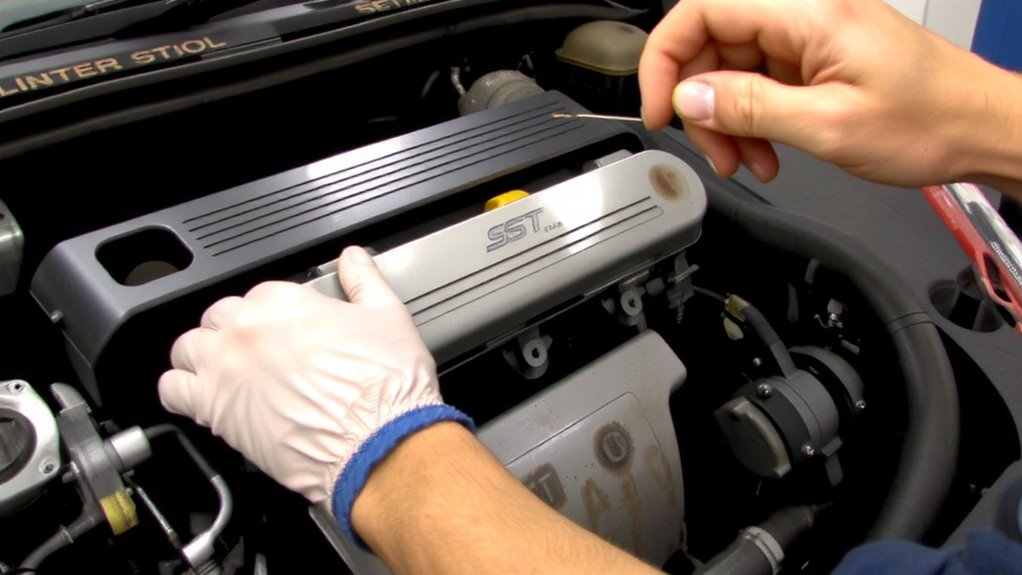
While oil doesn’t “wear out” in the traditional sense, it does degrade over time due to heat, oxidation, and contamination. Oil oxidation occurs when oxygen molecules react with hydrocarbons in the oil, forming acids and sludge that reduce lubricity and increase engine wear. This process accelerates at temperatures above 160°F (71°C), which are common in operating engines. Thermal degradation happens when extreme heat breaks down the oil’s molecular structure, reducing viscosity and film strength. Unlike oxidation, thermal degradation occurs even in oxygen-poor environments, such as under piston rings. Together, these chemical reactions compromise oil performance. You can slow them by using high-quality synthetic oils with oxidation inhibitors and thermal stabilizers. Regular oil analysis every 5,000 miles helps track degradation by measuring acid number and viscosity changes. Maintaining proper operating temperatures through cooling system upkeep also minimizes stress on the oil.
Clean Valves to Keep Oil Flowing Smoothly
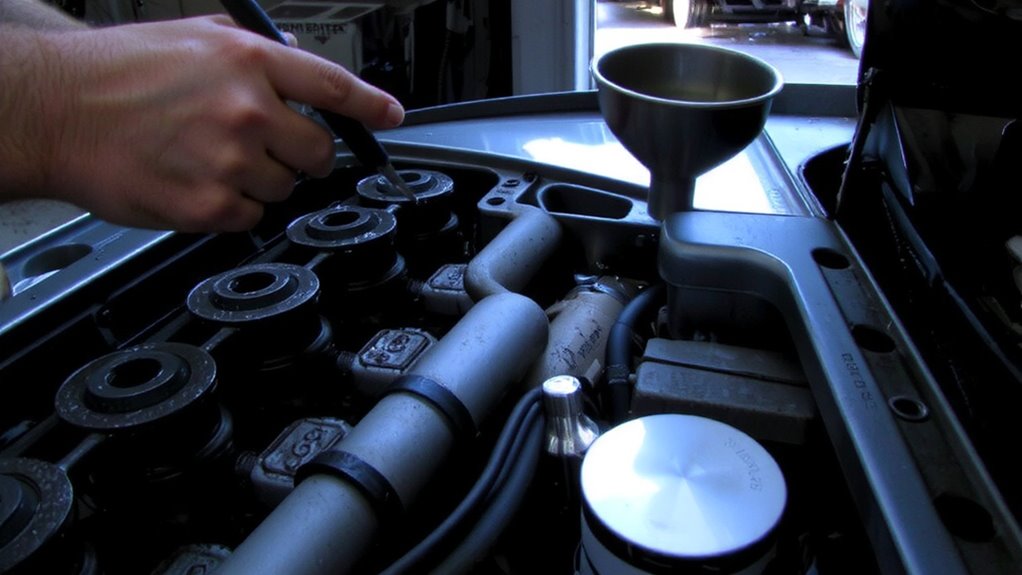
Clean valves play a critical role in maintaining ideal oil flow and engine performance. When valves stay free of debris, oil circulates efficiently, reducing wear and preserving viscosity. Valve deposits restrict movement and impede proper sealing, leading to power loss and increased emissions. Over time, heat and pressure cause carbon buildup on valve stems and guides, hindering lubrication paths. This buildup stems from fuel impurities and incomplete combustion, especially in direct-injection engines. Deposits can throttle oil return passages, raising oil temperatures by up to 20°F. You should inspect valves every 30,000 miles, using a borescope for accurate assessment. Cleaning kits with soft abrasives remove residue without damaging surfaces. Preventive use of detergent-enhanced oils limits new carbon buildup. Keeping valves clean guarantees consistent oil flow, extends oil life, and sustains engine efficiency under varied operating conditions. Using a high-quality engine part cleaner can effectively dissolve tough carbon deposits during maintenance.
Change Oil Filters on Time Every Time
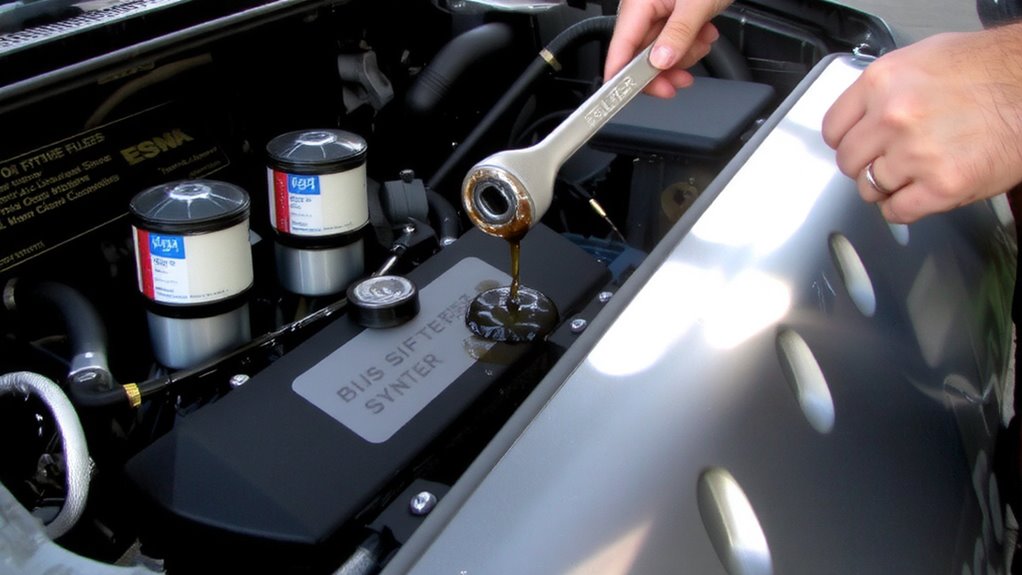
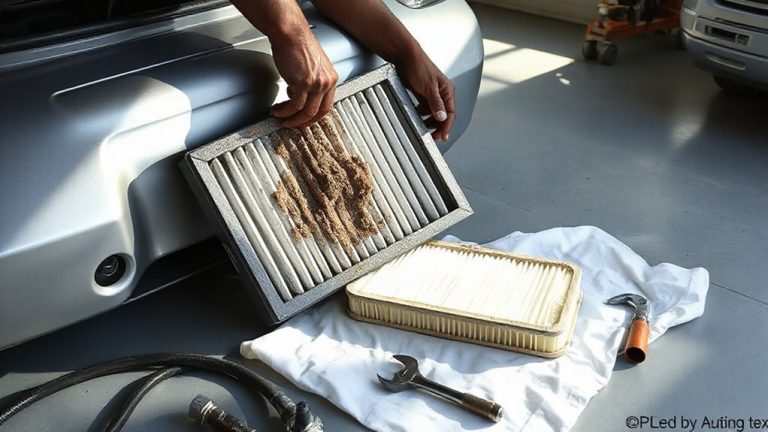
Replacing your oil filter at every oil change keeps contaminants out of the lubrication system and maintains oil integrity. You must follow strict filter replacement timing to guarantee engine protection. Most manufacturers recommend replacing the filter with each oil change-typically every 5,000 to 10,000 miles, depending on driving conditions and oil type. Modern oil filter materials, such as cellulose, synthetic fibers, or blended media, trap particles as small as 10 microns. A clogged or old filter reduces flow, allowing unfiltered oil into critical components. High-quality filters feature steel housings, reinforced anti-drain back valves, and crush-resistant filter media. Using inferior filters or delaying replacement risks particle migration, increased wear, and reduced oil life. Always install a new filter properly torqued to spec-usually hand-tight plus ¾ turn. Doing so guarantees maximum filtration efficiency and sustained engine performance. Don’t gamble with intervals-stick to the schedule. A reliable oil filter wrench ensures safe and efficient removal of tightly sealed filters.
Spot Sludge Early in Oil Passages
How often do you consider what’s lurking inside your engine’s oil galleries? Sludge buildup can restrict oil flow and cause serious damage. Performing regular sludge inspection helps you catch thick, tar-like deposits before they impair performance. Look for dark, gelatinous residue during oil changes, especially near the valve cover and oil pan. Modern engines operate at tight tolerances-many clearance gaps are less than 0.001 inches-so even minor blockages disrupt lubrication. Early detection allows timely passage cleaning using solvent flushes or specialized cleaning additives with dispersants. For best results, use detergents meeting API SN or SP standards. Avoid aggressive chemical cleaners that can degrade rubber seals. Instead, prioritize consistent maintenance and high-detergent oils to prevent accumulation. Spotting sludge early isn’t just preventive-it’s essential for sustaining oil flow, cooling, and engine longevity. A high-quality engine flush product can effectively dissolve deposits without harming internal components when used as directed.
Top Off Oil to Prevent Lubrication Loss
Topping off your engine oil between changes is a simple yet critical habit that keeps internal components properly lubricated. Low oil level reduces hydraulic pressure, impairing lubrication to pistons, camshafts, and bearings. Most engines consume 0.5 to 1 quart every 3,000 miles under normal conditions. Check the dipstick monthly or before long trips to assess oil level accurately. Maintain oil within the “MIN” and “MAX” marks to guarantee efficient flow and cooling. The recommended top up frequency depends on your vehicle’s age, engine design, and driving intensity. Turbocharged and high-mileage engines often require more frequent additions. Use the manufacturer-specified viscosity grade when adding oil to prevent thinning or poor circulation. Consistent top ups reduce wear, prevent overheating, and extend oil life. Neglecting this step risks metal-to-metal contact, especially in lifters and valve trains.
Choose Oil That Fits Your Driving Habits
Why does your daily commute or weekend road trip matter when choosing engine oil? Your driving habits directly impact oil performance and longevity. If you face frequent stop-and-go traffic, city driving generates more engine heat and moisture buildup, demanding oil with strong thermal stability and dispersant additives. Look for a 5W-30 or 5W-20 synthetic with high Total Base Number (TBN) to neutralize acids. For consistent highway driving, where engines run hotter but more steadily, a 10W-30 or 0W-40 provides ideal film strength at elevated temperatures. Viscosity ratings must match manufacturer specs-typically found in your manual. Synthetics outperform conventional oils, especially under stress. Always follow the API service classification recommended for your vehicle. Choosing the right oil isn’t about brand-it’s about matching chemistry and viscosity to your real-world driving conditions.
Stick to a Maintenance Schedule for Longest Oil Life
You’ve selected the right oil for your driving patterns-now maintaining it consistently keeps that protection active. Sticking to a maintenance schedule minimizes oil consumption and prevents accelerated engine wear. Regular oil changes guarantee peak viscosity and contamination control. Even high-quality synthetic oils degrade over time, especially under extreme loads or stop-and-go driving.
| Maintenance Task | Recommended Interval |
|---|---|
| Oil change | Every 5,000–7,500 miles |
| Filter replacement | Every 15,000 miles or with every oil change |
| Valve inspection | Every 30,000 miles |
| Full system flush | Every 60,000 miles |
Ignoring intervals increases sludge buildup, reduces lubrication efficiency, and promotes metal-to-metal contact. You extend oil life and preserve engine integrity by following manufacturer specifications. Consistent upkeep buffers against thermal breakdown and maintains flow rates. Preventing excessive oil consumption safeguards performance and cuts long-term repair costs.
On a final note
You keep oil working longer by controlling contamination and heat. Replace oil every 5,000 to 7,500 miles, or every 6 months-whichever comes first. Use OEM-specified viscosity grades, like 5W-30 or 10W-40, to maintain proper film strength. Clean valves prevent carbon buildup, improving oil flow. A clogged filter reduces efficiency by 40%. Monitor for sludge; it restricts oil passages and raises engine wear by 300%. Stick to the schedule.