The Ins and Outs of a Vehicle’s Alternator: How It Generates Electricity to Power the Electrical System While Charging the Battery
Your alternator keeps your car’s electrical systems running and your battery charged while the engine’s on. It generates electricity through electromagnetic induction, with the rotor spinning up to 18,000 RPM inside the stator to produce AC current. The diode rectifier converts this to DC, and the voltage regulator holds output between 13.8 and 14.4 volts. It supplies 70–150 amps depending on demand, powering the ECU, lights, and ignition. Battery charging stops automatically when full. You’ll see how each part enables this seamless performance.
Notable Insights
- The alternator generates electricity using electromagnetic induction as the rotor spins inside the stator.
- It converts mechanical energy from the engine into alternating current, which is then rectified to direct current.
- A voltage regulator maintains output between 13.8 and 14.4 volts to charge the battery and power systems.
- The alternator supplies power to the vehicle’s electrical components while simultaneously recharging the battery.
- Diode rectifiers convert AC to DC, ensuring stable current flow for consistent electrical system operation.
What an Alternator Does and Why It Matters
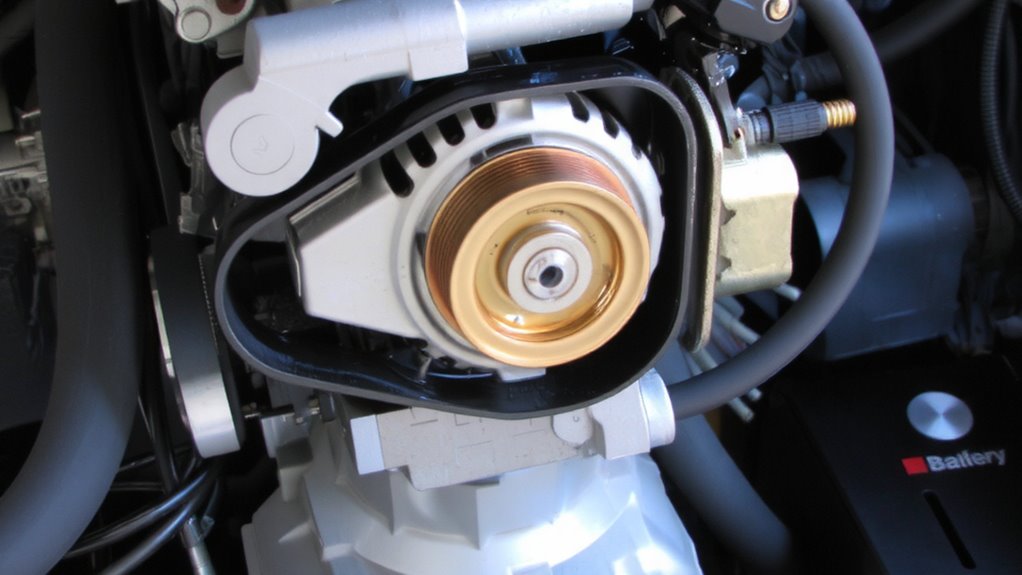
Think of your car’s alternator as the unsung hero of the electrical system. It maintains voltage regulation, ensuring output stays near 14.2 to 14.7 volts under varying engine speeds. Without this control, overcharging or undercharging ruins your battery. The alternator also handles power distribution, supplying current to critical components like the ECU, ignition, lights, and climate controls. Typical alternators generate 70 to 150 amps, depending on vehicle demands. At idle, it still produces sufficient power, thanks to internal diodes and rotor-stator interaction. Modern units use solid-state regulators for precise voltage control. If your alternator fails, accessories draw energy solely from the battery, which depletes rapidly. A healthy alternator sustains operation, extends battery life, and supports all electronics seamlessly. Voltage regulation and reliable power distribution aren’t optional-they’re essential for consistent vehicle performance. You rely on it every time you turn the key.
How an Alternator Generates Electricity
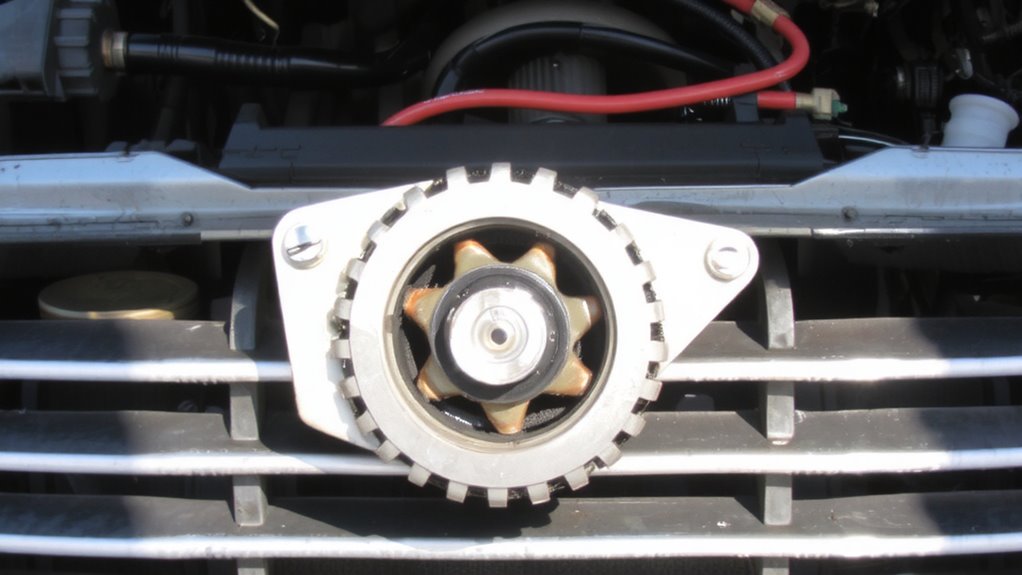
While your engine runs, the alternator produces electricity through electromagnetic induction, converting mechanical energy into electrical power. Rotation of the rotor inside the stator creates a shifting magnetic field, inducing alternating current in the stator windings. This process relies on precise rotor dynamics, where the rotor-a magnetized coil spinning at engine-driven speeds-generates a consistent magnetic flux. The rotor typically spins at 2-3 times engine RPM, reaching up to 18,000 RPM in high-performance engines. Electromagnetic induction occurs as voltage is produced when conductors cut through magnetic lines of force. The iron-core stator, with precisely wound copper coils, maximizes flux linkage for efficient energy transfer. No permanent magnets are used; instead, a small current supplied to the rotor establishes the magnetic field. This design guarantees stable output across variable speeds, maintaining peak charging voltage between 13.5 and 14.5 volts under normal load.
Main Parts of an Alternator and How They Work
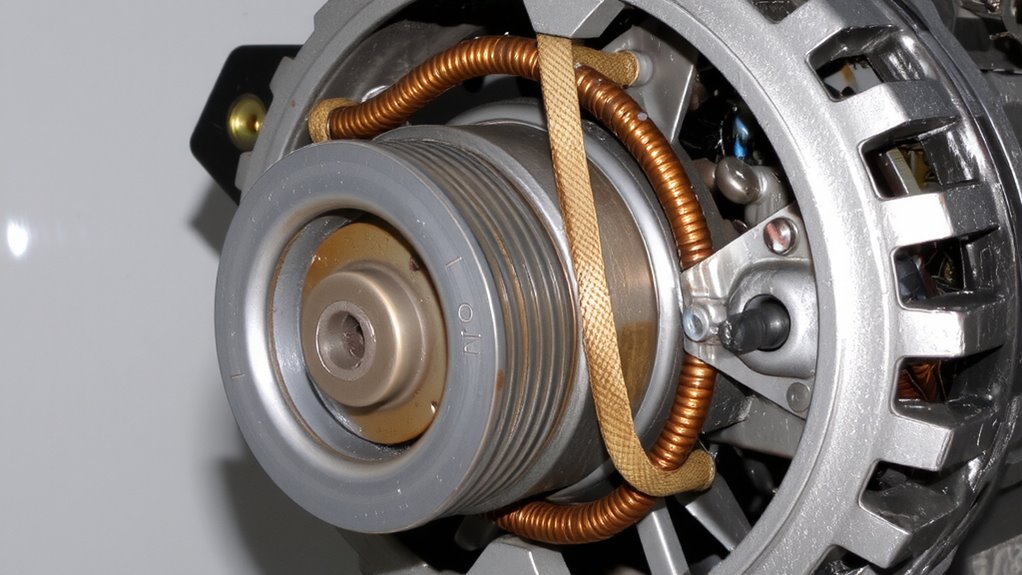
Since electricity generation in your vehicle depends on the alternator’s internal coordination, knowing its key components helps you understand how power is produced and regulated. The rotor design spins inside the stator configuration, creating a magnetic field that induces current. This electromagnetic interaction is essential for efficient energy conversion.
| Part | Function |
|---|---|
| Rotor | Rotates to create a moving magnetic field via copper windings around a steel core |
| Stator | Remains stationary; contains wire coils where AC voltage is induced |
| Diode Rectifier | Converts AC to DC using semiconductor diodes arranged in a bridge pattern |
| Voltage Regulator | Monitors output; adjusts rotor field current to maintain ~13.5–14.5 volts |
Your alternator’s performance hinges on precise rotor design and ideal stator configuration. These elements guarantee consistent electrical output under varying engine speeds.
How It Charges Your Battery and Powers Your Car
When your engine runs, the alternator kicks into action, converting mechanical energy into electrical power that keeps your battery charged and operates your vehicle’s electrical systems. It generates alternating current (AC), which is then rectified to direct current (DC) for use in your car’s circuits. Voltage regulation guarantees output stays near 14.4 volts, preventing overcharging and damage. Without proper regulation, excessive voltage can accelerate battery corrosion, reducing lifespan and reliability. The alternator supplies power to critical components like the ignition, lights, and ECU while maintaining the battery at full charge. Under normal conditions, it produces 50 to 120 amps, depending on engine speed and electrical load. Charging stops when the battery reaches sufficient voltage. This continuous cycle supports reliable operation, guaranteeing your car starts and runs smoothly.
Common Alternator Failure Signs and Fixes
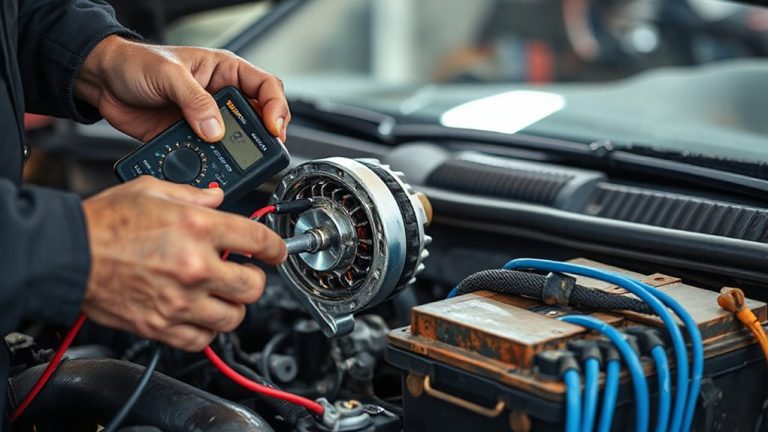
A failing alternator disrupts your vehicle’s electrical balance, leading to noticeable performance issues. You might notice dimming headlights or a weak battery even after driving. These signs often stem from poor belt tension, which prevents the alternator from spinning at maximum speed. A loose or worn drive belt slips, reducing charging efficiency. Check belt tension manually-most require 1/2 to 1 inch of deflection under 10 pounds of pressure. Excessive electrical load from accessories like amplifiers or inverters overwhelms a marginal alternator. Standard units output 70 to 150 amps; if your demand exceeds output, components fail. Test alternator voltage with a multimeter-it should read 13.8 to 14.4 volts at idle. Replace faulty voltage regulators, belts, or the alternator itself to restore balance.
On a final note
Your alternator powers the car’s electrical system and recharges the battery. It generates AC voltage through electromagnetic induction at rotational speeds from 2,000 to 18,000 RPM. The voltage regulator maintains output around 13.5 to 14.5 volts. Diodes convert AC to DC for system use. A failing alternator drops below 12.5 volts, causing dim lights or stalling. Replace worn brushes or faulty regulators promptly.