Mastering the Art of Transmission Fluid Change: A Must-Know Procedure for Keeping Your Transmission in Top Condition
You should check your transmission fluid regularly to guarantee peak performance. Fresh fluid is bright red and translucent; dark or milky fluid means trouble. Use the correct type-Dexron VI or Mercon LV aren’t interchangeable. Drain the old fluid completely, replace the filter, and clean the pan. Refill with 4 to 12 quarts of OEM-specified fluid using a funnel. Check the level with the engine running and warm. Avoid overfilling-it causes foaming and pressure issues. There’s more to get right for long-term reliability.
Notable Insights
- Check fluid condition regularly; bright red indicates freshness, while dark, milky, or gritty fluid signals damage or contamination.
- Use the correct OEM-specified transmission fluid type to prevent seal damage and ensure proper shifting performance.
- Drain old fluid completely, inspect the pan for metal debris, and replace the filter to maintain optimal transmission health.
- Refill with the recommended amount of fluid and check the level with the engine running and transmission warmed up.
- Avoid common mistakes like using the wrong fluid, overfilling, or skipping maintenance intervals to prevent costly transmission failure.
Check If Your Transmission Fluid Needs Changing
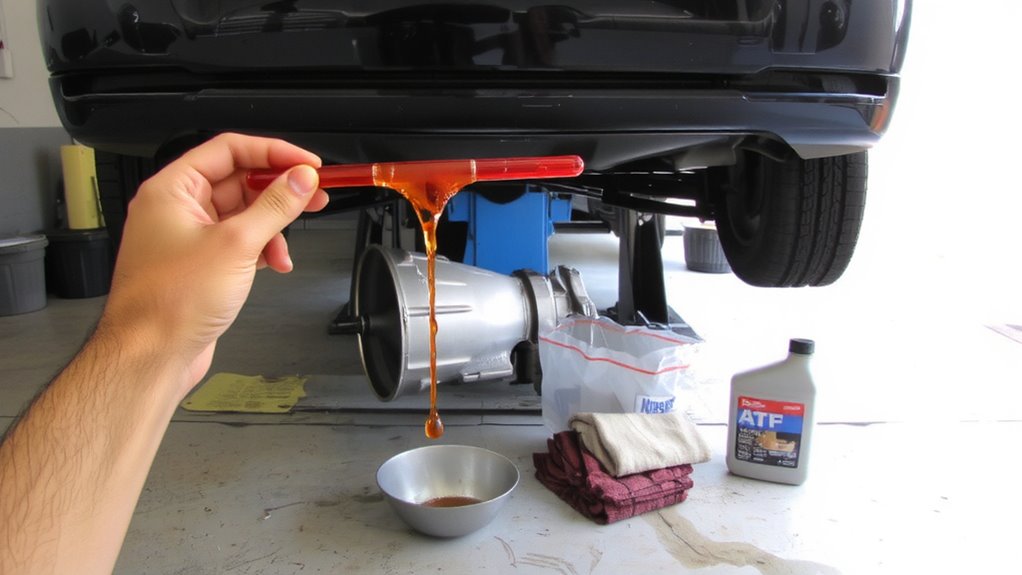
How can you tell if your transmission fluid needs changing? Check the fluid color first. Fresh transmission fluid is bright red and translucent, designed to maintain viscosity between -40°C and 120°C. If it appears brown or black, oxidation and heat damage have degraded its performance. A milky appearance indicates coolant contamination, which compromises lubrication. Use the dipstick to assess fluid level and consistency-gritty texture signals internal wear. Perform a smell test: healthy fluid has a slightly sweet or neutral odor. If it smells burnt, friction material is likely deteriorating inside the transmission, reducing shift efficiency. Dark fluid with a sharp, acrid smell means immediate replacement is necessary. These indicators directly reflect transmission health. Ignoring them risks slippage, overheating, or mechanical failure. Regular checks every 30,000 miles prevent costly repairs.
Gather Tools for a Transmission Fluid Change
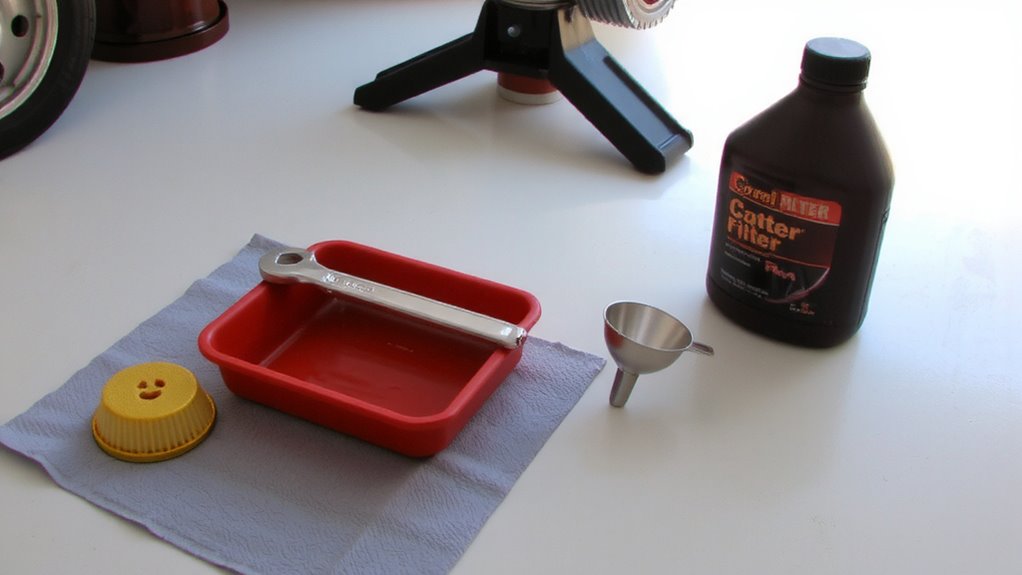
You’ve confirmed the fluid needs changing by inspecting its color, smell, and texture. Now, gather the right tools based on your vehicle’s transmission types-automatic or manual. Most automatics require a drain pan, funnel, torque wrench, and fluid pump. Manual transmissions often need a socket set and O-ring for the fill plug. Always consult your owner’s manual for the correct fluid specification; using the wrong type causes irreversible damage. Most manufacturers recommend OEM-approved fluid additives, especially for high-mileage or performance vehicles. These enhance friction characteristics and thermal stability. Use only the volume specified-typically 4 to 12 quarts-depending on system capacity. A transmission fluid exchange kit may simplify the process, particularly for sealed systems. Guarantee all tools are clean to avoid contamination. Proper preparation prevents mistakes and ensures long-term transmission health.
Drain Old Fluid and Replace the Filter
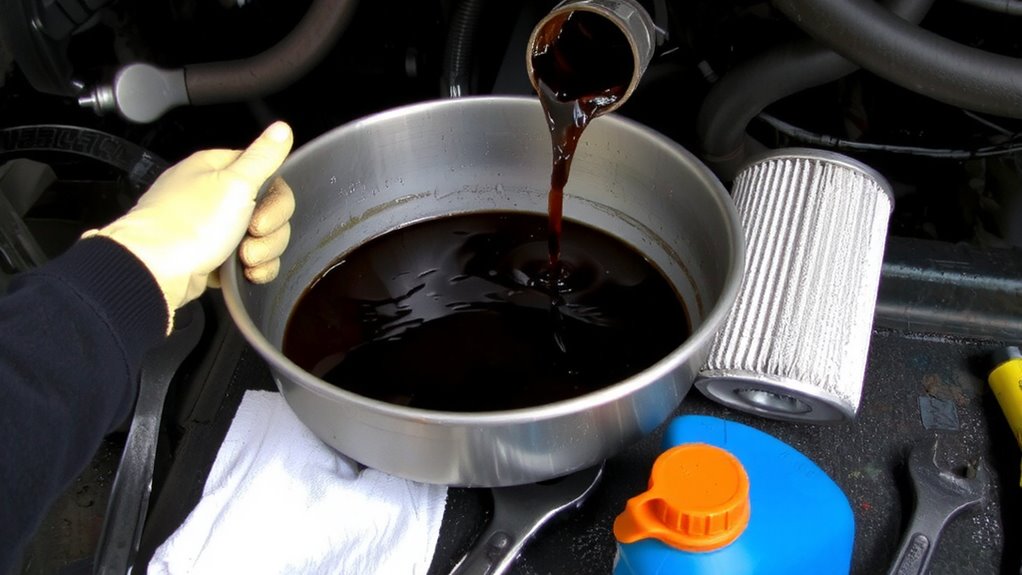
Start by positioning your vehicle on a level surface and engaging the parking brake-most transmission fluid drains require you to remove the drain plug located on the oil pan, and doing this on an incline risks uneven fluid evacuation. Once the old fluid has drained completely, remove the transmission pan to access the filter. Perform a thorough filter inspection, noting any debris or metal shavings that could indicate internal wear. Replace the filter with an OEM-specified unit to maintain proper flow rates and filtration efficiency. During pan cleaning, use a lint-free cloth and mild solvent to remove sludge without damaging sealing surfaces. Inspect the pan’s magnet for metallic residue, and clean it thoroughly. Reinstall the pan with a new gasket, torquing bolts to manufacturer specs-typically 8–12 ft-lbs in a crisscross pattern. Proper pan cleaning and filter inspection guarantee maximum transmission health.
Refill and Check Transmission Fluid Level
With the transmission pan reinstalled and the old filter replaced, attention shifts to replenishing the system with fresh fluid. Use the correct fluid type specified by your vehicle manufacturer-typically ATF, Mercon, or Dexron variants-since using the wrong type can impair shifting and damage internal components. Begin the refill method by inserting a funnel into the transmission fill tube located near the engine. Slowly add fluid until it reaches the dipstick’s “cold” or “warm” fill range, depending on operating temperature. Overfilling causes foaming; underfilling leads to poor pressure and overheating. Most transmissions require 4 to 6 quarts during a full change. With the engine running and transmission cycled through all gears, recheck the level. Adjust as needed, ensuring the fluid appears clear red and free of particles.
Avoid These Common Transmission Fluid Mistakes
While proper fluid selection and procedure are critical, avoiding common mistakes during a transmission fluid change is just as essential to guarantee long-term drivetrain health. Using the incorrect fluid type can damage seals, reduce lubrication, and impair shifting. Always consult your owner’s manual-ATF types like Dexron VI or Mercon LV aren’t interchangeable. Even slight chemical differences affect viscosity and friction modifiers. Ignoring maintenance schedule leads to sludge buildup, overheating, and premature failure. Most manufacturers recommend fluid changes every 30,000 to 60,000 miles, depending on driving conditions. Towing or frequent stop-and-go traffic shortens this interval. Overfilling or underfilling by even a quart disrupts hydraulic pressure, causing slipping or hard shifts. Check fluid level with the engine running and transmission warm. Use the dipstick or fill plug method as specified. Small errors lead to expensive repairs-precision matters.
On a final note
You now know the correct procedure for changing transmission fluid. Always use the manufacturer-specified fluid type, such as Dexron-VI or Mercon LV, depending on your vehicle. Check fluid level with the engine running and at operating temperature. Maintain the dipstick within the calibrated range-typically 3–5 mm between min and max marks. Improper fluid levels cause cavitation or overheating. This routine service extends transmission life by reducing wear in the valve body and torque converter.