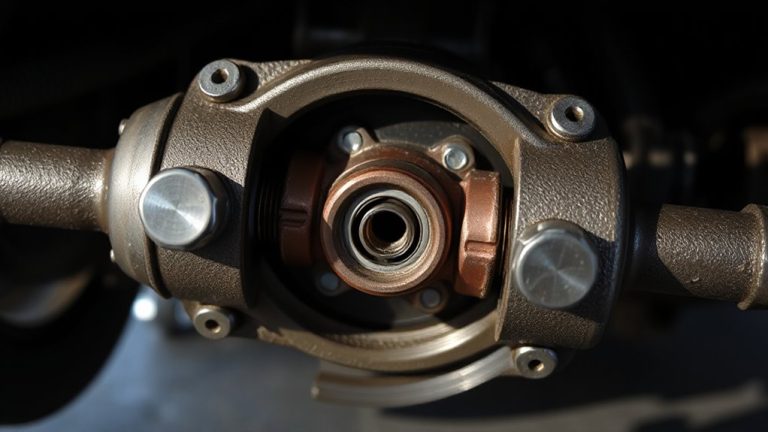
How Uneven Brake Pad Wear Points to Sticking Calipers Requiring Immediate Attention
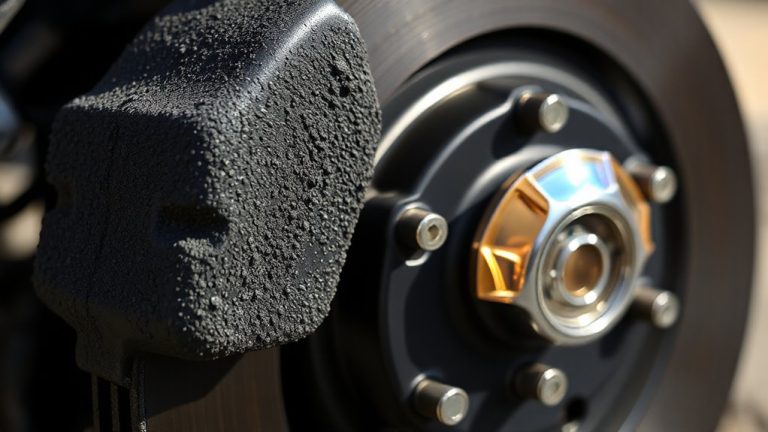
Uneven brake pad wear often means you have a sticking caliper. One pad wears faster because the piston or slide pins don’t retract, keeping it pressed against the rotor. This constant contact creates excess heat, accelerates wear by up to 25%, and reduces braking efficiency. A 10% imbalance in clamping force leads to uneven pad wear. Drag increases stopping distances and damages rotors. You’ll learn what signs to watch for and how to confirm the issue next.
Notable Insights
- Uneven brake pad wear often indicates a sticking caliper due to restricted piston movement preventing proper retraction.
- A caliper that fails to release causes one pad to constantly contact the rotor, accelerating wear on that side.
- Contamination or misalignment creates imbalanced clamping force, leading to one pad wearing up to 25% faster.
- Persistent brake drag from a sticking caliper generates excess heat, increasing the risk of rotor warping and longer stops.
- Ignoring the issue can reduce fuel efficiency, increase stopping distances by up to 25%, and cause premature tire wear.
Why a Sticking Caliper Causes Uneven Brake Pad Wear
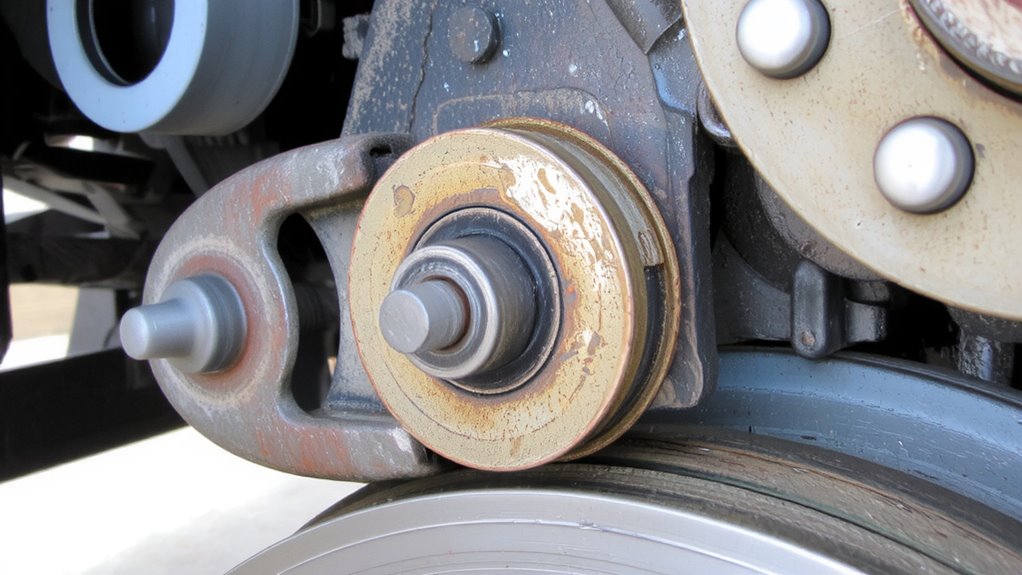
When a brake caliper fails to move freely, it creates uneven pressure on the brake pads, leading to irregular wear. You’ll notice excessive brake friction on one side, causing the affected pad to wear faster. This happens because restricted piston movement prevents the caliper from retracting properly after braking. Normally, the piston moves smoothly within a tolerance of 0.002–0.005 inches; when it sticks, that precision is lost. The result? One pad remains in constant contact with the rotor, generating heat and accelerating wear. Uneven pressure distribution disrupts balanced clamping force, typically rated at 800–1,200 psi in passenger vehicles. Without uniform piston movement, brake friction becomes localized instead of even across both pads. You’re not just losing pad material-you’re compromising braking efficiency, increasing stopping distances by up to 15%. A sticking caliper doesn’t just wear pads; it undermines the entire system’s performance and safety margins. Immediate inspection is critical.
Why One Brake Pad Wears Faster Than the Other?
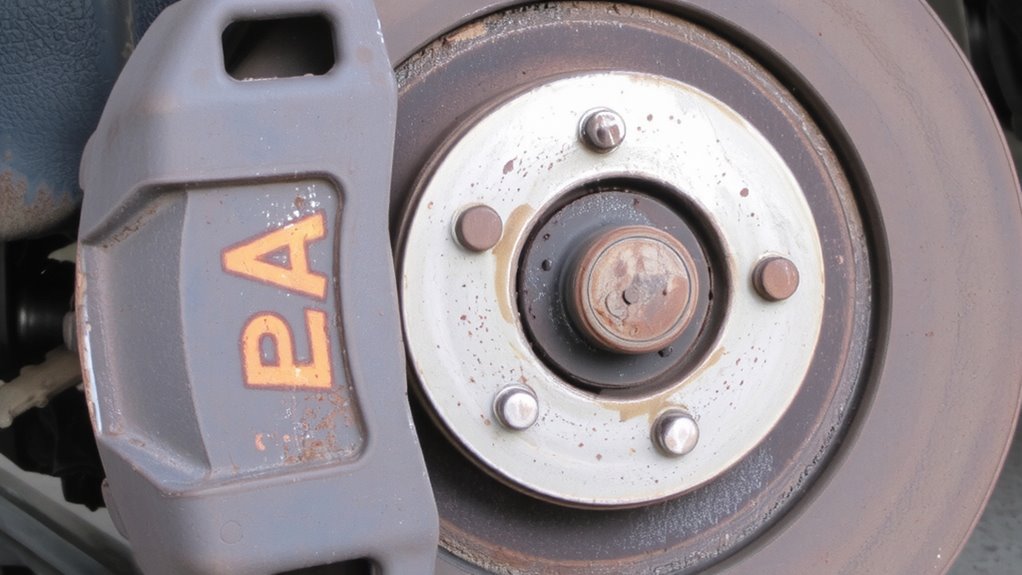
Why does one brake pad wear faster than its counterpart? It often comes down to differences in brake pad material and your driving habits. Even slight manufacturing variances in brake pad material-like hardness or friction coefficient-can cause uneven wear between left and right pads. Ceramic pads typically last longer but may not dissipate heat as efficiently as metallic ones under heavy use. Your driving habits heavily influence wear too. Frequent hard braking or riding brakes on inclines increases heat and friction on one side, accelerating wear. Brake systems are designed symmetrically, but asymmetrical use or contamination on one rotor disrupts balance. Even a 10% difference in clamping force, due to caliper misalignment, can lead to one pad wearing 25% faster over time. Consistent pressure distribution is critical for even wear.
Signs Your Brake Caliper Isn’t Releasing Properly
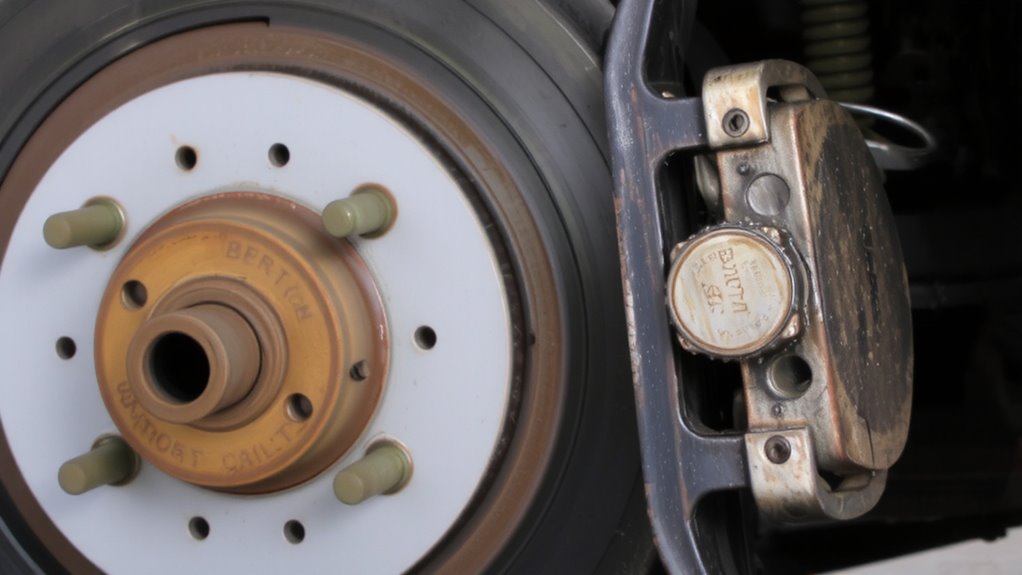
What should you do if your car pulls to one side while driving? That’s a classic sign your brake caliper isn’t releasing. When a caliper sticks, it causes brake drag, keeping the pad pressed against the rotor. This drag creates excess heat and wear on one side. You might also feel rotor pulsation when braking, caused by uneven rotor thickness from prolonged friction. The affected wheel often heats up more, detectable after short drives. Tire wear becomes uneven, and fuel efficiency drops due to added resistance. Caliper slides or pistons may seize from corrosion or lack of lubrication. A seized piston might not retract properly, maintaining partial brake application. Check for sticky rubber boots, damaged hardware, or leaking fluid. Use a dial gauge to measure rotor runout-anything over 0.002 inches indicates distortion. Address this early to prevent further damage.
What Happens If You Ignore a Sticking Caliper?
You can’t afford to ignore a sticking caliper-left untreated, it escalates into costly damage. The constant friction from a seized caliper piston overheats the brake rotor, leading to brake rotor warping. Warped rotors exceed standard runout tolerances (typically 0.002–0.004 inches), causing noticeable vibrations during braking. Pad material transfers unevenly to the rotor surface, reducing stopping power and increasing stopping distances by up to 25%. Your vehicle’s alignment pulls to one side, accelerating tire wear by 30–50% on the affected wheel. Dragging brakes also create mechanical resistance, resulting in reduced fuel efficiency-expect a 1–3 mpg drop under city driving conditions due to added engine load. Ignoring the issue risks complete caliper seizure, brake fluid degradation, and potential failure of the hydraulic system. Repairs escalate quickly, often requiring rotor replacement, pad replacement, and new brake hoses.
How to Diagnose a Sticking Caliper at Home
A sticking caliper won’t fix itself, and waiting too long means risking the damage outlined earlier-warping rotors, excessive tire wear, and avoidable repair bills. You can diagnose it at home with basic tools. First, lift the vehicle and spin each wheel. A dragging sensation indicates a stuck caliper. Inspect brake fluid; dark, gritty fluid suggests contamination-moisture or debris degrades performance and corrodes components. Check caliper slide pins: they must move freely. Lack of caliper slide lubrication causes binding. Use high-temperature silicone grease during reassembly. Confirm even brake pad wear; significant thickness differences mean unequal pressure distribution. Measure pad depth with a caliper gauge-uneven wear exceeding 2mm demands attention. Test drive cautiously, noting pulling or noise. These signs, combined with visual and tactile checks, confirm a sticking caliper. Address issues promptly to maintain braking efficiency and safety.
When to See a Mechanic for a Sticking Caliper
Why ignore warning signs when safety hangs in the balance? If you suspect a sticking caliper, don’t delay professional help. Persistent dragging, pulsating pedals, or uneven wear signal serious issues like brake fluid contamination or caliper slide corrosion. These problems compromise hydraulic efficiency and pad alignment, reducing stopping power.
| Symptom | Urgency Level |
|---|---|
| Fluid leaks or discolored brake fluid | High – indicates contamination |
| Rust on caliper slides or seized pins | Critical – corrosion impairs movement |
Brake fluid contamination lowers boiling points, risking vapor lock. Caliper slide corrosion prevents even pad retraction, accelerating wear. A mechanic uses corrosion-resistant lubricants and measures slide pin clearance to 0.002–0.003 inches. They also flush contaminated fluid meeting DOT 3 or DOT 4 specs. Ignoring these signs risks rotor warping or total brake failure. Seek help immediately.
How to Prevent Brake Calipers From Sticking
Ignoring warning signs of a sticking caliper puts safety at risk, but preventing the issue altogether keeps your braking system reliable. Perform regular lubrication maintenance using high-temperature synthetic grease on caliper slides, pins, and bushings every 12,000 miles or during every tire rotation. Proper lubrication reduces friction and prevents corrosion. Inspect caliper hardware-including mounting brackets, bolts, and anti-rattle clips-for wear, rust, or deformation at each brake service. Replace worn components with OEM-spec parts to guarantee proper alignment and movement. Sticking often results from seized guide pins or degraded rubber boots, compromising piston retraction. Guarantee rubber boots are intact to shield moving parts from debris and moisture. Use a torque wrench to tighten caliper bolts to manufacturer specifications-typically 20–25 ft-lbs-to avoid binding. Consistent care of lubrication maintenance and caliper hardware prevents seizure and extends brake life.
On a final note
You now know uneven brake pad wear often signals a sticking caliper. One pad wears faster because the caliper piston or slider binds, maintaining pressure. This causes drag, generating excess heat up to 500°F, accelerating wear. Left unrepaired, it reduces fuel economy by up to 3 MPG and risks rotor warping at 0.003 inches out of flat. Inspect slides every 12,000 miles. Replace corroded hardware. Immediate service prevents costly damage.