Preventing Belt Slip With Adjustable Tensioner Kits on High-Horsepower S/C Builds
You prevent belt slip in high-horsepower supercharged engines by using an adjustable tensioner kit that maintains 120–150 psi of consistent tension. These kits eliminate slack under load, especially above 600 whp, where even 2 degrees of misalignment can cut belt life in half. CNC-machined 6061-T6 aluminum guarantees rigidity, while sealed bearings and ±5 mm adjustability enable precise tuning. Laser alignment within ±0.5 degrees maximizes efficiency and reduces wear. Proper installation prevents power loss and sets the foundation for peak supercharger performance.
Notable Insights
- Adjustable tensioner kits maintain consistent belt pressure, preventing slip under high loads in supercharged engines.
- Precision-machined aluminum components ensure alignment accuracy within 0.002 inches, reducing vibration and wear.
- Proper tension (120–150 psi) from sprung-loaded arms compensates for thermal and belt stretch changes.
- CNC-machined 6061-T6 aluminum construction provides strength and minimal flex for high-horsepower applications.
- Correct installation with laser alignment and deflection testing ensures optimal performance and belt life.
Why Belt Slip Ruins Supercharged Engine Performance
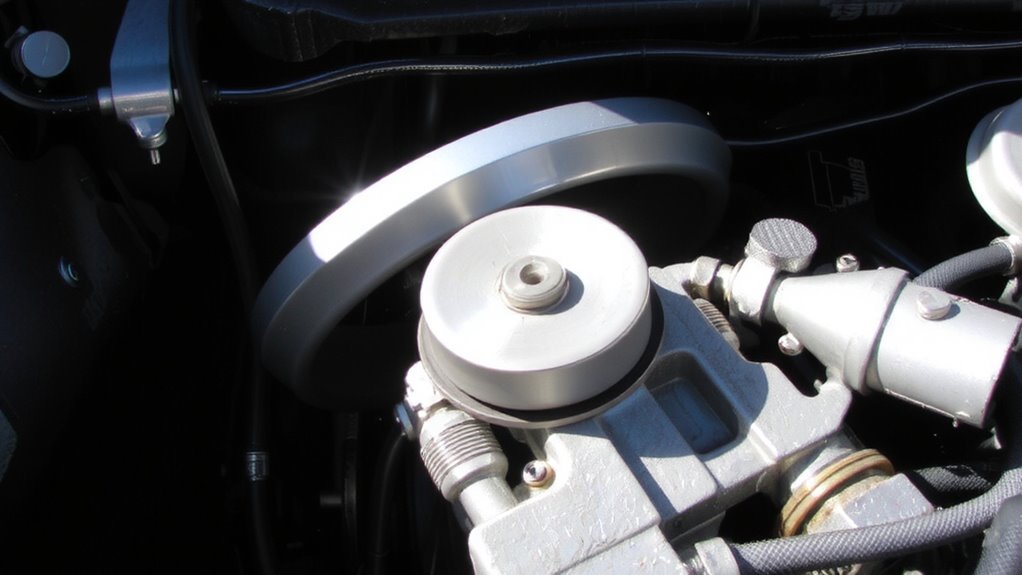
While your supercharger relies on precise power delivery, even minor belt slip can degrade performance considerably. Belt slip causes immediate power loss, reducing boost pressure and throttle response. You might not notice it at idle, but under high RPM or heavy load, the drivetrain demands perfect belt-to-pulley contact. Belt wear accelerates when heat and friction build from slipping, creating a glazed belt surface that further reduces grip. A worn belt can’t maintain the 90–120 pounds of tension typically required in high-horsepower S/C setups. This leads to inconsistent supercharger speeds-sometimes as much as 10–15% below target. That translates directly to reduced airflow, lower compression, and lost horsepower. Over time, this cyclic slipping increases wear on pulleys and bearings. Power loss isn’t just momentary-it accumulates, hurting efficiency, longevity, and peak output. Your build can’t perform consistently if the drive system isn’t secure.
How Adjustable Tensioners Stop Belt Slip for Good
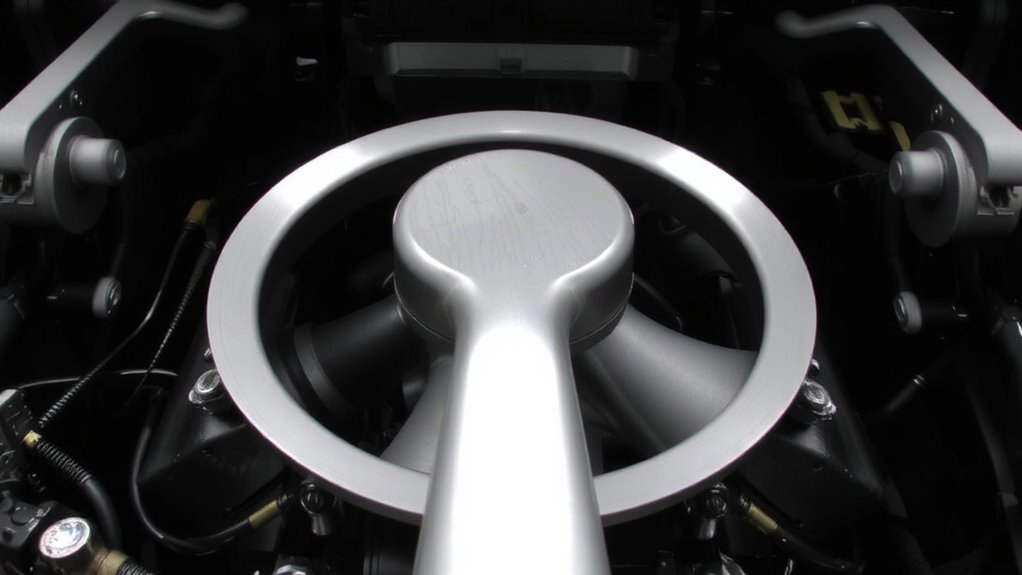
When your supercharger belt slips, performance drops-but an adjustable tensioner fixes the root cause by maintaining consistent belt-to-pulley pressure. You get immediate gains in drive efficiency because the tensioner eliminates slack under high load. Proper belt alignment is guaranteed through precision-machined brackets that position the idler exactly parallel to the crankshaft. Misalignment as little as 0.5 degrees causes uneven wear and premature failure-this system prevents that. The tensioner’s sprung-loaded arm compensates for belt stretch and thermal changes, keeping pressure at a suitable 120–150 pounds per square inch. Pulley balance is preserved with billet-aluminum components that are true within 0.002 inches, minimizing harmonic vibrations. Unlike fixed mounts, this design adapts to engine movement, so your belt runs true. You keep full power delivery, reduce heat buildup, and stop slippage for good-no guesswork, just repeatable mechanical accuracy.
Must-Have Features in a Supercharger Tensioner Kit
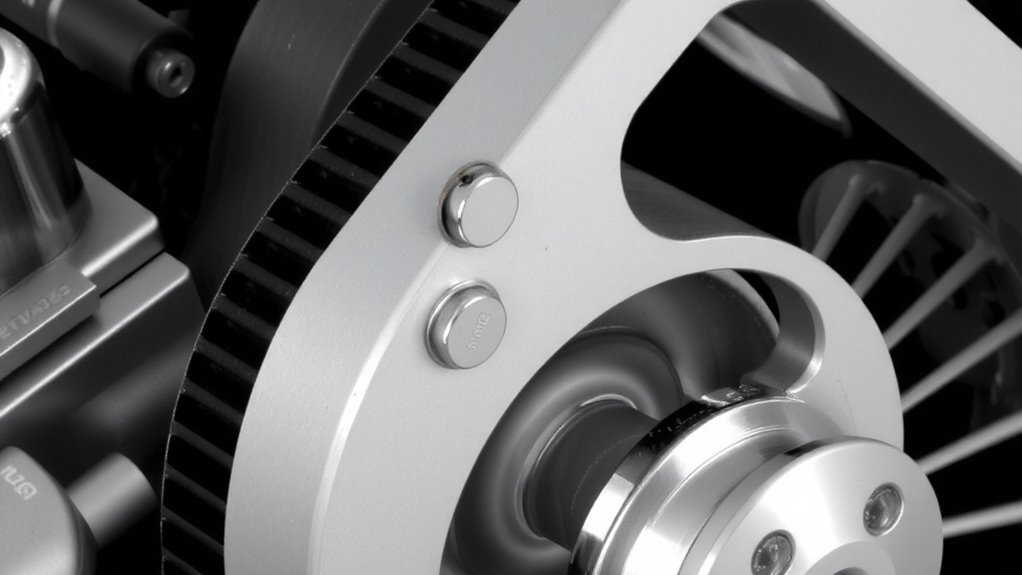
Because consistency under stress defines reliability, you need a supercharger tensioner kit built for real-world demands. High horsepower outputs strain the belt material and challenge pulley alignment, so your kit must maintain precision and durability. Look for CNC-machined aluminum arms-they resist flex under load. A sealed ball bearing idler guarantees smooth operation, minimizing friction and wear over time. Adjustable pivot points let you fine-tune tension without guesswork, critical when using high-grip belt materials like Ethylene Propylene Diene Monomer (EPDM). Accurate pulley alignment prevents edge wear and slippage. Use a laser alignment tool during setup for best results. The table below summarizes must-have features.
| Feature | Specification |
|---|---|
| Construction | 6061-T6 aluminum |
| Adjustment Range | ±5 mm for precise fine-tuning |
| Bearing Type | Sealed, lubricated-for-life |
| Compatibility | Fits most S/C systems and belt types |
Don’t Make These Belt Tension Mistakes
If you overlook proper tension during installation, even the best adjustable tensioner kit won’t prevent belt slip. Too little tension causes slippage under high load, especially on supercharged engines exceeding 600 horsepower. Excessive tension leads to premature pulley wear and bearing failure. Always follow manufacturer torque specs-typically 80–110 inch-pounds for most tensioner bolts. Belt alignment is critical; even 2 degrees of misalignment increases wear and reduces belt life by up to 50%. Use a straightedge or laser tool to verify pulley alignment before final tightening. Misaligned belts generate heat and noise, accelerating degradation. Inspect pulleys regularly for grooving or glazing, signs of pulley wear that compromise grip. A worn pulley reduces effective tension by up to 30%, regardless of adjustment. Pair precise tension with perfect belt alignment to maximize efficiency, power transfer, and component longevity. Don’t guess-measure and verify every time.
Installing an Adjustable Tensioner (Step-by-Step)
Proper belt tension and alignment set the foundation for reliable performance, but now it’s time to put those principles into action with the installation of an adjustable tensioner. Start by removing the old tensioner and inspecting for pulley wear-replace any damaged components. Mount the new adjustable unit using OEM-torque specs (typically 35–40 ft-lbs). Use a laser alignment tool to verify belt alignment within ±0.5 degrees. Adjust the pivot bolt to achieve 1/2 inch deflection under 20 lbs force.
| Step | Action | Purpose |
|---|---|---|
| 1 | Remove old tensioner | Clear mounting surface |
| 2 | Check pulley wear | Prevent premature belt failure |
| 3 | Install new tensioner | Enable precise adjustment |
| 4 | Verify belt alignment | Guarantee power transfer efficiency |
Finalize with a test run under load. Correct setup reduces heat, slippage, and extends belt life.
On a final note
You prevent belt slip effectively with a properly installed adjustable tensioner kit. These systems maintain ideal belt tension, typically 180–220 pounds force, critical for high-horsepower supercharged engines. Precision-machined billet aluminum components resist deflection under load. Eccentric adjustment allows fine-tuning without repositioning hardware. Correct alignment, within 0.030 inches, guarantees even wear and maximizes power transfer. This reliability preserves performance and drivetrain longevity.