Adapting EFI Components to Older Gen I SBC Equipped With Modern Supercharger Kits
You can adapt EFI to your older Gen I SBC with a modern supercharger using integrated kits that include pre-tuned ECU calibrations for boost. These systems feature 6–12 psi electronic solenoid control, 3–4 bar MAP sensors, and fuel pressure that’s boost-referenced. They support sequential injection, wideband O2 monitoring, and injector pulse widths over 12ms. Calibration guarantees accurate 0–5V sensor inputs and smooth idle. Hidden wiring and OEM-style enclosures maintain a factory look. Discover how each component pairs for best performance.
Notable Insights
- Use pre-tuned EFI systems with boost-calibrated tables for seamless integration with modern supercharger kits on Gen I SBCs.
- Ensure fuel pressure is boost-referenced and injectors are sized to match target horsepower and manifold pressure.
- Install a 3–4 bar MAP sensor to accurately track pressure changes under forced induction.
- Calibrate sensors to ±2% tolerance and use wideband O2 feedback for precise AFR control during tuning.
- Conceal wiring and ECU with factory-style routing and finishes to maintain a classic appearance.
How Supercharger Kits Simplify EFI on Gen I SBCs
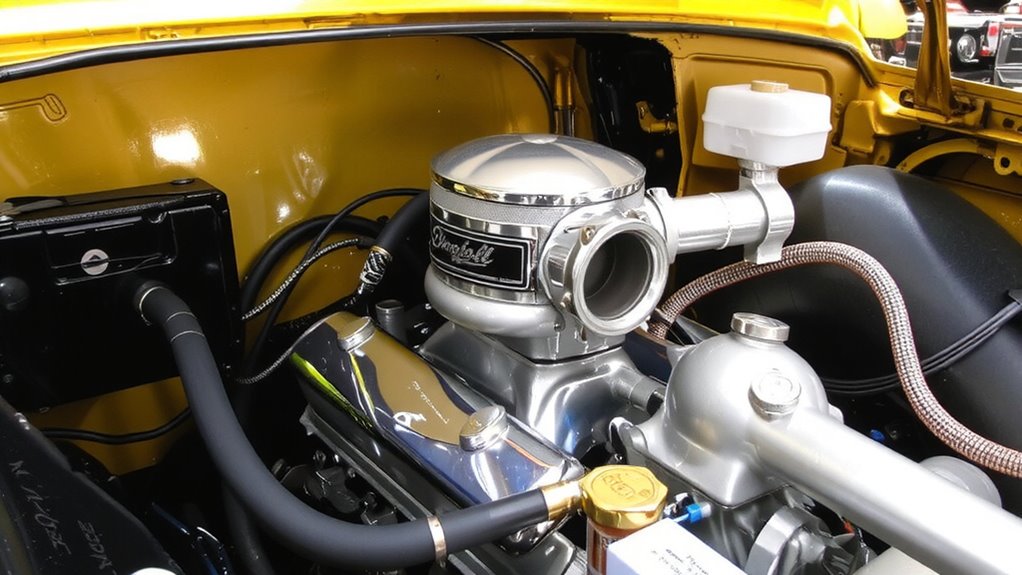
The challenge of modern fuel delivery meets its match when retrofitting Gen I small-block Chevys with electronic fuel injection (EFI). Supercharger kits simplify this process by integrating essential EFI components into a single engineered system. You get precise fuel mapping right out of the box, with pre-tuned calibration tables optimized for boosted operation. These kits include sensors, harnesses, and engine control modules that adjust fuel delivery based on real-time load and throttle position. Boost control is managed through electronic solenoids, allowing accurate regulation of turbo or supercharger output, typically maintaining 6–12 psi within safe factory limits. The EFI system dynamically adjusts timing and air/fuel ratios, preventing detonation. You don’t need a standalone ECU-most kits use OEM-style tuning logic. This plug-and-play approach reduces wiring complexity. Calibration adapts to modifications, ensuring drivability. You achieve reliable, repeatable performance with minimal tuning effort.
Choosing the Right EFI System for a Classic Small-Block
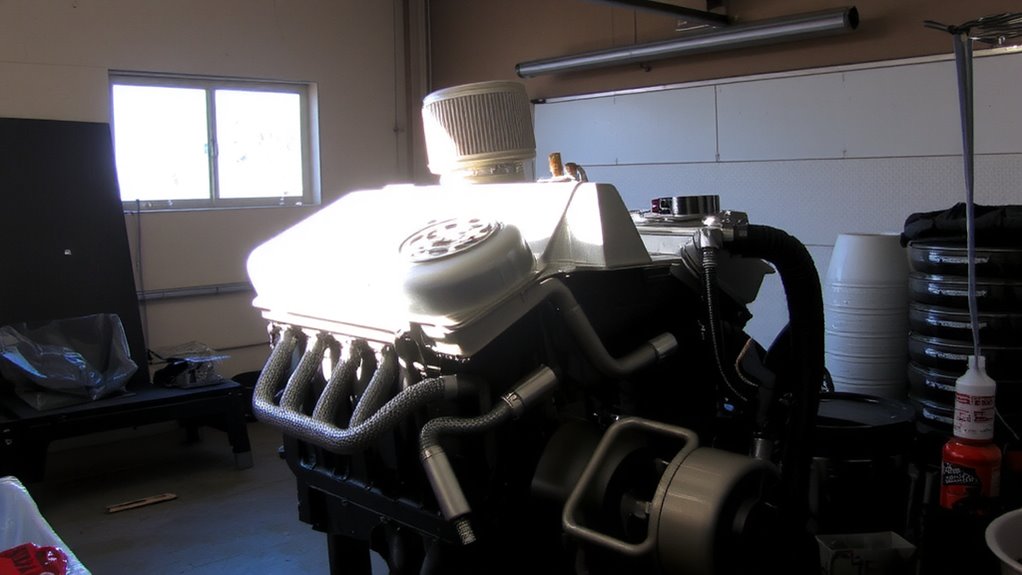
What if you could bolt on modern fuel efficiency and power without sacrificing reliability in your classic small-block? You can-by choosing the right EFI system. Look for a system with precise fuel mapping capabilities, allowing fine-tuned air/fuel ratios across all RPM ranges. A programmable ECU gives you control, adapting to modifications like cam upgrades or forced induction. Sensor calibration is critical; mismatched sensors cause poor idle, hesitation, or detonation. Use a harness-compatible system with 0–5V analog inputs for MAP, IAT, and O2 sensors. Guarantee it supports sequential firing and supports at least 12ms injector pulse widths. Match the EFI’s voltage regulation to your alternator output-typically 13.8–14.4V. Think of the ECU as the brain: accurate sensor data enables superior fuel mapping. Choose wisely-it’s the difference between smooth performance and constant troubleshooting.
Matching EFI to Supercharged Intake Manifolds
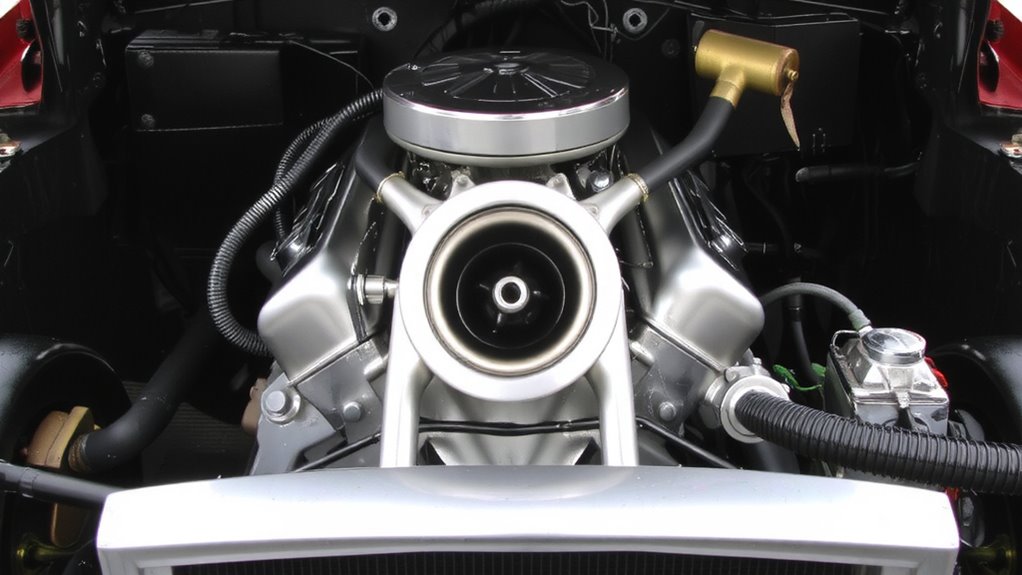
You’ve picked an EFI system that handles fuel mapping and sensor input like a pro-now it’s time to make sure it works seamlessly with your supercharged intake manifold. Supercharged manifolds alter air density and plenum dynamics, requiring precise fuel mapping under boost. Your EFI must adapt to sudden pressure changes and deliver consistent AFRs from idle to redline.
| Feature | Impact |
|---|---|
| High-rise plenum volume | Increases airflow but delays throttle response |
| Boost-referenced fuel pressure | Maintains accurate fuel mapping under varied air density |
| Integrated MAP sensor (3–4 bar) | Tracks pressure changes for instant fueling adjustments |
Ensure injector sizing matches expected horsepower and manifold pressure. Match runner length to your RPM range-longer runners boost midrange torque. Your system must read air density changes instantly to prevent lean spikes.
Wiring and Tuning EFI on a Gen I Chevrolet
How do you bring modern EFI performance to a vintage Gen I Chevrolet? You start with proper wiring and precise tuning. Connect the ECU using a dedicated harness designed for LS swaps or retrofit EFI, ensuring clean power and ground paths. Install a 0.900” diameter throttle position sensor (TPS) and pair it with a compatible 5-volt reference system. Accurate sensor calibration is critical-verify the MAP, IAT, and O2 sensors read within ±2% of actual values. Use a wideband O2 sensor to monitor air/fuel ratios in real time. Adjust fuel mapping to match your supercharger’s airflow, typically increasing pulse width by 25–40% at full boost. Tune in 2° ignition timing increments, watching for knock. A well-calibrated system delivers 12.8:1–13.2:1 AFR under load, optimizing power and reliability.
Hiding EFI Components to Preserve Vintage Looks
A clean, factory-original appearance doesn’t have to be sacrificed for modern fuel injection performance. Concealment techniques allow EFI components to function efficiently while remaining visually unobtrusive. Place the ECU behind the dashboard or under a seat, using factory-style enclosures to maintain a stock look. Route wiring through existing harness channels to avoid visible bundles. Use braided sleeving for a polished finish that mimics original wiring looms. Relocate fuel pumps to in-tank configurations, eliminating external canisters. Integrate sensors flush with engine surfaces to reduce protrusions. Aesthetic integration means selecting throttle bodies with factory-style appearances, even if internally upgraded. Black anodized fittings blend with cast aluminum intakes. Even with a modern supercharger kit, you can hide injectors and rail systems under custom-machined valley covers. Every modification serves both form and function. Proper execution guarantees performance gains stay hidden in plain sight.
On a final note
You’ve streamlined EFI integration on your Gen I SBC with a modern supercharger kit. Direct-fit throttle-body systems, like the Holley 550 CFM TBI, mount securely to dual-plane intakes. Wiring harnesses plug into GM-style sensors-0–5 V TPS, 100 kPa MAP-for accurate fuel calculations. You tune via handheld controller, adjusting AFR to 11.8:1 under boost. Hidden injectors and loom-covered wiring preserve the classic look without sacrificing 450 HP potential.