Exhaust Pipe Length Explained: 28–36 Inches, Sound & Power
Your exhaust pipe length shapes engine performance, sound, and balance. Shorter pipes increase back pressure, hurting high-RPM power. Longer tubes-typically 28 to 36 inches-reduce pressure peaks and improve scavenging by syncing exhaust pulses. This boosts volumetric efficiency and horsepower. Longer systems also deepen engine tone and add rear weight, affecting handling. Tuning length optimizes flow, sound, and vehicle dynamics. The right setup depends on engine specs and driving needs-choices you’ll want to contemplate carefully.
Notable Insights
- Exhaust pipe length influences back pressure, with shorter pipes increasing restriction and longer pipes reducing it for better high-RPM flow.
- Tuned pipe lengths enhance exhaust scavenging by aligning pressure waves with valve timing, improving volumetric efficiency and engine performance.
- Longer exhaust pipes produce a deeper engine sound by lowering acoustic frequencies, while shorter pipes create a higher-pitched, raspier tone.
- Extended exhaust systems can increase vehicle weight and shift the center of gravity rearward, affecting handling and balance.
- Noise control components in longer systems may reduce horsepower due to added back pressure, presenting a trade-off between quietness and performance.
How Exhaust Pipe Length Affects Back Pressure and Power
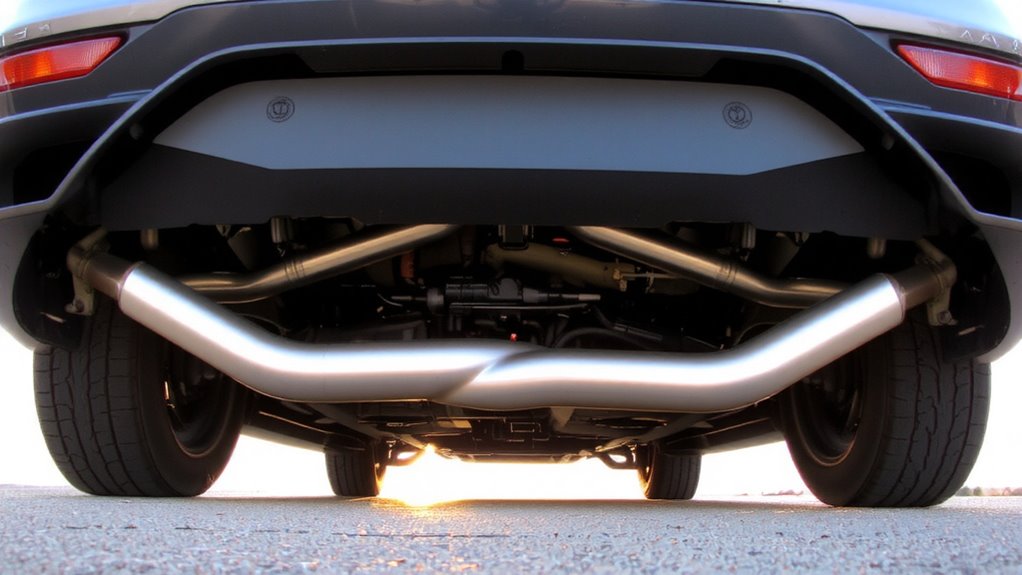
Back pressure. It’s the resistance exhaust gases face exiting the engine, and pipe length directly influences it. Too much back pressure chokes power; too little hurts low-end torque. You need balance. Shorter pipes increase back pressure, restricting flow efficiency, especially at high RPMs. This builds exhaust resonance, amplifying certain frequencies that can disrupt scavenging pulses. Longer pipes reduce peak pressure, smoothing exhaust resonance and improving flow efficiency across the powerband. Ideal length-typically 28 to 36 inches for four-cylinder engines-tunes pressure waves to enhance cylinder evacuation. Engineers use computational fluid dynamics (CFD) to model gas velocity and pressure decay. At 6,000 RPM, gas pulses travel at 300 ft/sec; precise pipe length aligns these pulses to lower back pressure during valve overlap. You gain power not by eliminating back pressure, but by controlling it through tuned length and flow efficiency.
Why Longer Pipes Improve Exhaust Scavenging
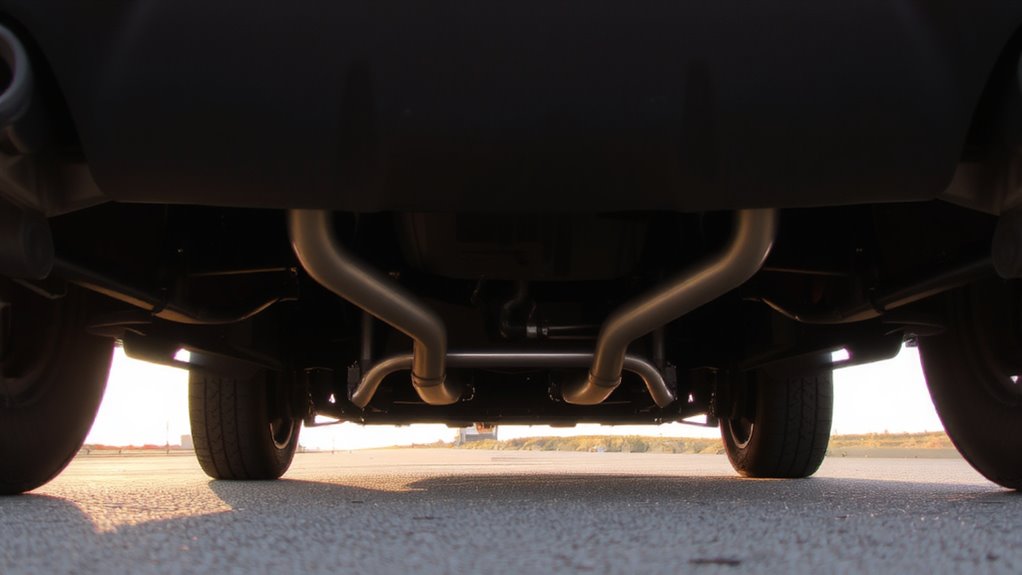
When exhaust pulses travel through a properly tuned system, they create low-pressure waves that help pull fresh air-fuel mixtures into the cylinder-longer pipes make this scavenging effect more effective. You benefit because increased tube length enhances resonance tuning, aligning pressure waves with valve timing for ideal cylinder evacuation. Proper pulse timing guarantees that each exhaust pulse arrives at the collector just as the next cylinder fires, reinforcing the low-pressure suction. This synchronization reduces exhaust interference and improves volumetric efficiency. Longer pipes provide better control over wave dynamics, especially in the midrange RPM band (3,000–5,500 RPM), where scavenging matters most. At 4,500 RPM, a 36-inch primary tube length can improve scavenging efficiency by up to 12% compared to a 24-inch setup. Resonance tuning relies on precise pipe length to maintain this effect. The result? More complete exhaust expulsion and conditions ripe for efficient combustion.
How Pipe Length Changes Horsepower and Engine Sound
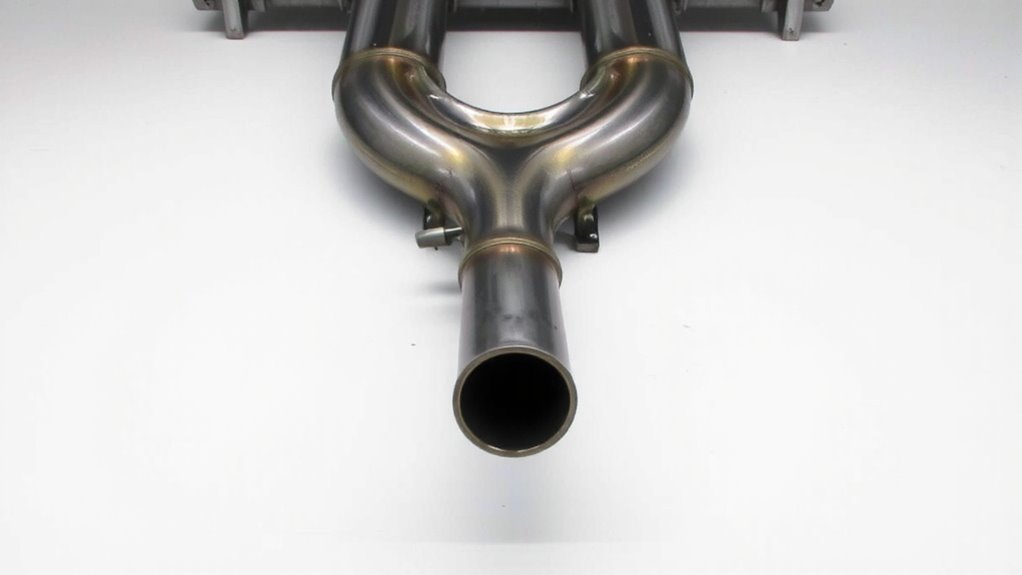
While you might think exhaust tuning is only about power, the length of the exhaust pipes directly shapes both horsepower output and engine sound. Proper pipe length optimizes exhaust scavenging by timing pressure waves to pull spent gases from the cylinder. When tuned correctly, this improves flow dynamics and increases volumetric efficiency. Most performance systems use pipes between 30 to 50 inches long, balancing low-end torque and high-RPM power. Pipe length also influences exhaust harmonics, which determine the engine’s acoustic signature. Longer pipes deepen the tone and emphasize lower frequencies. Shorter pipes amplify higher-pitched notes, creating a raspier sound. These effects stem from wave reflection timing in the system. Tuning pipe length alters overlap phase, affecting how exhaust pulses interact. This precise control lets engineers fine-tune both performance and sound without altering engine components.
The Trade-Off: Noise Control vs. Performance
Though minimizing noise is critical for meeting legal and comfort standards, you’ll often find it comes at the expense of peak performance. Longer exhaust systems with multiple mufflers reduce sound but increase back pressure, restricting exhaust flow. This hampers engine efficiency, especially at high RPMs. You trade decibels for lost horsepower-sometimes up to 5–10%. Shorter, straighter pipes improve scavenging and power delivery but amplify sound output, risking regulatory non-compliance. Thermal expansion in shorter systems also increases stress on joints and hangers, accelerating material fatigue over time. High-performance alloys resist this, but at added cost. You must balance acoustics and output while ensuring durability. Effective designs use tuned resonators to target specific frequencies without excessive flow restriction. Your goal isn’t silence, but control-preserving power while managing noise. Proper material selection and system geometry help maintain performance without sacrificing longevity or legal compliance. Smart engineering reconciles these competing demands. Enthusiasts often achieve optimal results by selecting a top exhaust system for 370Z that integrates performance-oriented design with refined sound management.
How Exhaust Length Influences Vehicle Balance
Weight distribution matters, and exhaust length plays a bigger role than you might think. The added mass of a longer exhaust system shifts weight toward the rear, altering your vehicle’s balance. Exhaust routing determines where that weight sits-uneven placement can affect handling dynamics. A well-designed system keeps weight distribution within ideal limits, typically between 50:50 and 40:60 front-to-rear ratios. For example, performance sedans like the BMW M3 use compact, asymmetric exhaust routing to maintain balance. Longer pipes add weight-up to 25 lbs in dual exhaust setups-which impacts rotational inertia. This makes the car less responsive during quick changes. Manufacturers optimize routing to centralize mass and reduce rear bias. Even small changes in pipe length can shift the center of gravity by inches, affecting cornering stability. Efficient exhaust routing doesn’t just improve flow-it preserves balance critical for precision driving.
Matching Exhaust Length to Driving Conditions
If you’re driving in stop-and-go traffic, a shorter exhaust system generally works better because it heats up faster and keeps emissions low. Shorter pipes improve scavenging at low RPMs, enhancing fuel efficiency during city driving. For highway cruising, longer exhausts maximize exhaust resonance, boosting mid-range torque and reducing drone. The ideal length balances flow velocity and pressure waves-typically 48 to 60 inches for 4-cylinder engines. At higher driving altitude, thinner air reduces engine output, so tuning exhaust length compensates by improving pulse timing. A properly matched system can increase efficiency by up to 5%. Exhaust resonance must align with engine frequency; a miscalibrated length causes lag or excessive back pressure. Manufacturers use variable-length exhaust manifolds in some performance models to adapt dynamically. These systems adjust between 36 and 72 inches, depending on load and RPM. Matching length to conditions guarantees peak power, efficiency, and emissions across driving environments.
On a final note
You optimize performance by tuning exhaust pipe length to engine RPM and displacement. Longer pipes enhance scavenging, reducing back pressure by up to 15% and boosting torque in the mid-range (3,000–5,000 RPM). Shorter pipes increase high-RPM horsepower but raise back pressure. Length also affects sound frequency-longer pipes lower pitch. Weight distribution shifts minutely, altering rear bias. Match length to driving conditions: longer for street, shorter for track.