Heat Shield Design Principles to Protect Intake Components From Radiant Hood Heat
You lose power when radiant heat soaks your intake, raising air temps by up to 50°F. Heat shields reflect over 90% of infrared radiation using polished aluminum or ceramic-coated surfaces. They require a 0.5-inch air gap to enable convective cooling and reduce thermal transfer. Ceramic handles 1,200°F and cuts thermal conductivity to 1.5 W/m·K, while aluminized steel suits most street applications. Proper spacing and high-temp clamps guarantee durability. Custom fits eliminate hot spots-performance gains depend on precise installation.
Notable Insights
- Use reflective materials like polished aluminum to redirect radiant heat from exhaust and turbo components.
- Maintain a 0.5 to 1-inch air gap between shield and intake for effective convective cooling.
- Install high-emissivity or ceramic-coated shields to minimize heat absorption and withstand extreme temperatures.
- Optimize shield coverage with custom-fit designs to eliminate hot spots and ensure full protection.
- Position shields with proper clearances using heat-resistant gaskets and clamps for durable, safe installation.
How Hood Heat Hurts Your Intake (Without a Heat Shield)
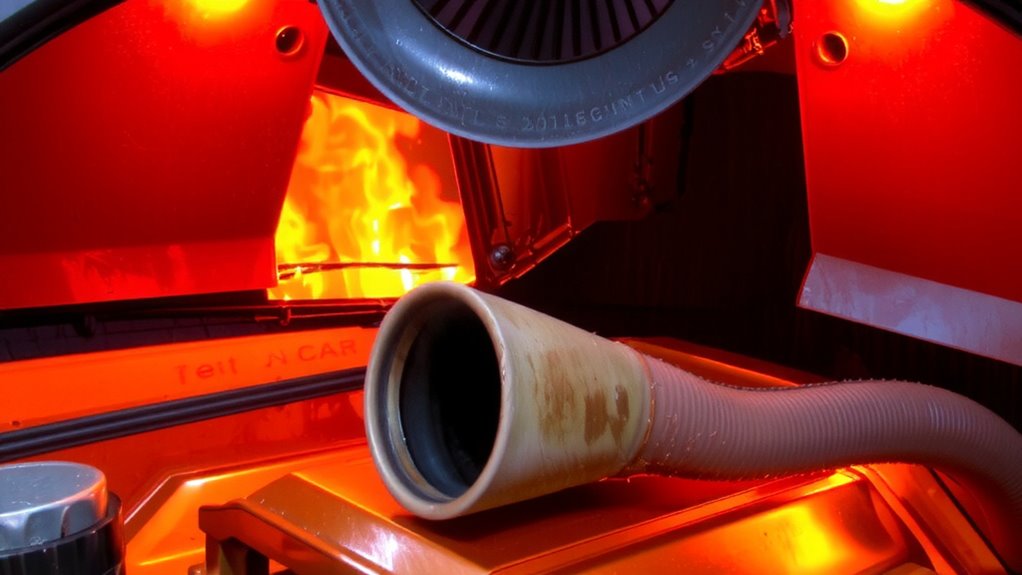
While your engine runs, radiant heat from the exhaust manifold and turbocharger soaks into the engine bay, and without a heat shield, that thermal energy transfers directly to your air intake system. This leads to thermal soak, where retained heat elevates intake air temperatures over time. Hotter air is less dense, reducing oxygen content per volume and compromising intake efficiency. Within 15 minutes of aggressive driving, underhood temperatures can exceed 300°F (149°C), increasing intake air temps by 50°F (28°C) or more. This diminishes combustion efficiency and can cause knock, forcing engine knock sensors to retard timing. Even mild thermal degradation reduces horsepower and torque output. Intake efficiency drops by up to 10% under sustained thermal soak, directly affecting throttle response and fuel economy. Without a heat shield, materials like plastic airboxes or silicone hoses absorb and re-radiate heat, prolonging cooling. Thermal management is critical-factory designs often under-specify protection, leaving performance gains unrealized.
How Heat Shields Reflect and Redirect Engine Heat
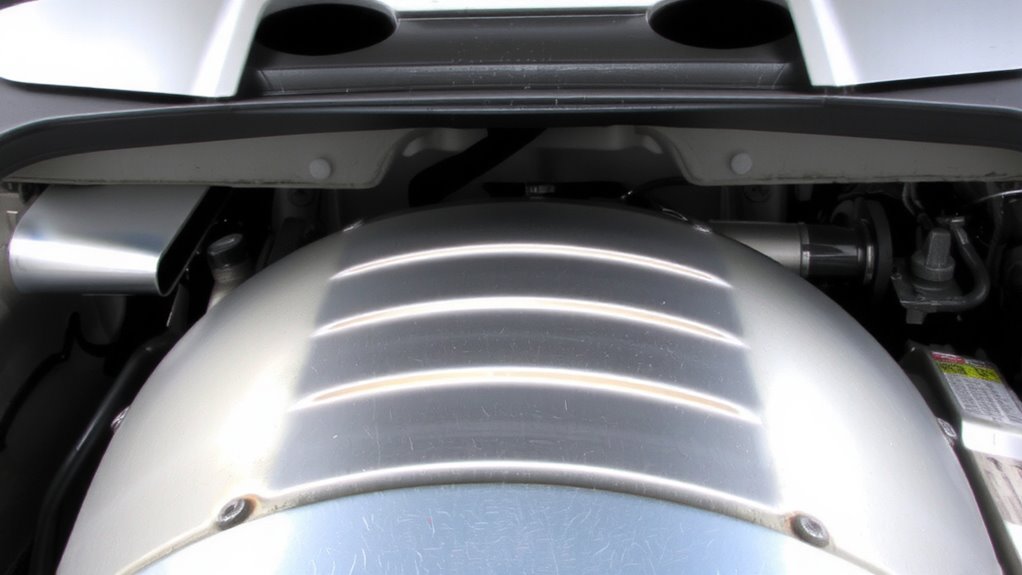
Because radiant heat travels in straight lines and transfers energy through electromagnetic waves, reflective heat shields are engineered to intercept and redirect this thermal energy before it reaches sensitive intake components. You rely on thermal reflection to bounce radiant heat away from critical parts. These shields use smooth, polished surfaces-often aluminum-to maximize reflectivity, typically deflecting over 90% of incoming infrared radiation. Radiant redirection guarantees heat flows around, not into, your intake system. Shields are spaced 0.5 to 1 inch from surfaces to create insulating air gaps, enhancing effectiveness. They’re shaped to follow engine contours, guaranteeing full coverage. By combining precise geometry with high-emissivity backing, heat shields minimize absorption and boost dissipation. This design stops heat soak during idle and reduces underhood temperatures by up to 50%. You get consistent airflow and protect performance-all through smart thermal management.
Aluminized Steel vs. Ceramic: Best Heat Shield Materials
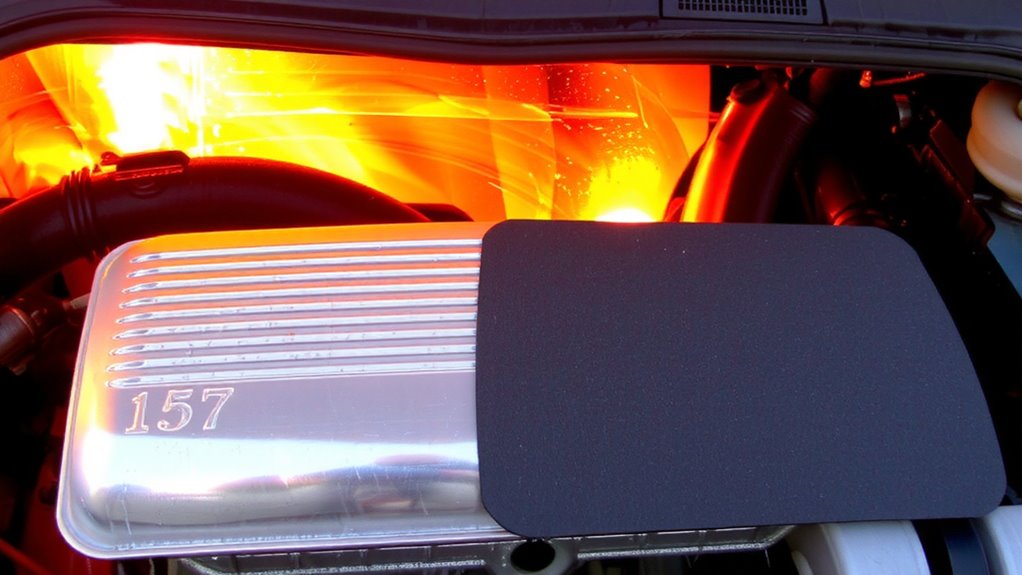
A heat shield’s performance starts with material choice, and you’ve got two top contenders: aluminized steel and ceramic-coated metals. Aluminized steel resists rust and reflects heat well, with low thermal conductivity-typically around 30–40 W/m·K-making it effective under high underhood temperatures. It’s affordable and widely used, offering solid material durability in standard engine environments. Ceramic-coated metals, however, take performance further. The ceramic layer reduces thermal conductivity to as low as 1.5 W/m·K, acting as a superior thermal barrier. This coating also enhances material durability by protecting against corrosion and thermal degradation up to 1,200°F. While more expensive, ceramic shields maintain efficiency longer under extreme, repeated heat cycles. You’ll find ceramic ideal for high-performance or forced-induction setups where heat soak is a critical concern. Choose aluminized steel for budget-conscious reliability; pick ceramic for maximum thermal protection.
Air Gaps & Ventilation: How They Boost Cooling
An effective heat shield relies on more than just material-it depends on smart design, and air gaps play a critical role. You need at least a 3/8-inch gap between the shield and the intake to allow proper airflow optimization. This space enables convective currents to carry heat away, leveraging thermal dynamics to keep underhood temps lower. Without ventilation, heat gets trapped, reducing shield efficiency. Strategically placed vents in the shield enhance airflow, promoting heat dissipation through convection. You’re not just blocking radiant heat-you’re managing energy flow. Computational fluid studies show designs with isolated air channels can lower intake air temps by up to 50°F. Proper airflow optimization reduces heat soak during idle and sustained operation. Think of the air gap as a buffer zone-passive but powerful. It turns your heat shield into an active thermal management system.
Custom Fit vs. Universal Heat Shields: Which Is Better?
While both types serve the same purpose, custom fit heat shields outperform universal versions in thermal protection and installation precision. You get exact vehicle compatibility, ensuring full coverage over vulnerable intake areas. Custom shields are engineered to match complex contours, reducing hot spots by up to 40% compared to universal models. They use stamped aluminum or stainless steel, typically 0.060 to 0.080 inches thick, enhancing durability. This precise construction also improves underhood aesthetics, blending seamlessly with factory components. Universal heat shields, often 0.040 inches thick, require trimming and offer inconsistent gaps, compromising efficiency. They may sag over time, reducing long-term durability. Custom designs resist warping above 1,200°F, maintaining structural integrity. You benefit from optimized reflectivity, reduced engine bay temperatures, and cleaner visual integration. While slightly more expensive, their performance, longevity, and aesthetics make them the superior choice for serious protection and professional-grade results.
Install Right: Maximize Heat Shield Performance
Because proper installation directly impacts thermal efficiency, securing your heat shield correctly guarantees maximum protection against underhood heat soak. You must position the shield at least 0.5 inches from hot surfaces to maintain effective heat reflection. Use high-temperature silicone gaskets and stainless steel clamps rated to 500°F to prevent warping or shifting. Guarantee full coverage over intake components-gaps reduce shielding efficiency by up to 40%. Proper alignment supports airflow optimization, minimizing turbulence in the intake tract. Mount the shield so it directs cool air from the front grille, enhancing volumetric efficiency by up to 4%. Verify fitment with a 3mm clearance from moving parts. Adhesive-backed foil tape can seal minor edges, but avoid overuse-it degrades above 300°F. Follow manufacturer templates for drilling and mounting. Correct installation isn’t optional-it’s critical for sustained engine performance and thermal management.
On a final note
You need a heat shield to protect your intake from radiant hood heat. Aluminized steel reflects up to 90% of thermal radiation. Ceramic coatings add durability and handle temperatures over 1,200°F. An air gap of at least ½ inch improves convective cooling. Custom-fit shields seal edges tightly, reducing heat soak by 40% versus universal models. Proper installation guarantees maximum thermal separation.