The Importance of Using Filtered Water for Final Rinsing on Coated Cars
You must use filtered water for final rinsing to protect your ceramic coating. Tap water contains 150–400 ppm TDS, leaving mineral deposits that bond under UV and heat, causing micro-pitting and degrading the hydrophobic layer by up to 30%. Hard water, with over 120 ppm calcium and magnesium, disrupts surface energy and invites etching. Reverse osmosis or deionization filters reduce TDS to near 0 ppm, preventing spots and preserving slickness. A spot-free rinse guarantees long-term clarity and performance-there’s more to optimize your routine.
Notable Insights
- Filtered water prevents mineral deposits that degrade ceramic coating integrity and reduce lifespan by up to 30%.
- Using deionized water with 0 ppm TDS ensures spot-free evaporation without residue on hydrophobic surfaces.
- Hard water minerals disrupt surface energy, leading to water spotting and reduced beading performance.
- RO and DI filtration systems remove 99–100% of contaminants, preserving coating clarity and slickness.
- Rinse with filtered water below 10 ppm TDS and dry immediately to prevent etching and water spot formation.
Why Tap Water Ruins Coated Car Finishes
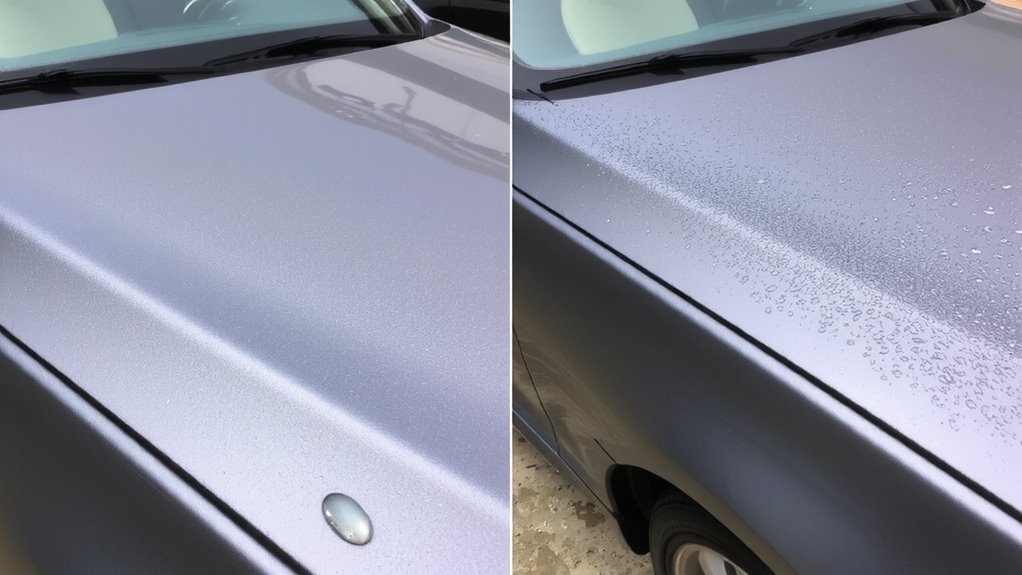
How often do you think about what’s in the water hitting your car’s finish? Tap water contains dissolved minerals like calcium, magnesium, and iron. When it evaporates, it leaves behind mineral deposits on the surface. These deposits bond tightly to ceramic coatings, especially under heat and UV exposure. Over time, they initiate chemical reactions that degrade the coating’s hydrophobic layer. The pH fluctuations in tap water-typically between 6.5 and 8.5-accelerate this breakdown. Mineral deposits also act as abrasion points, increasing surface friction by up to 40%. This compromises the coating’s slickness and protective qualities. Unlike pure water, untreated tap water carries 150–400 parts per million of total dissolved solids (TDS). These solids etch into the coating matrix, creating micro-pitting. Repeated exposure reduces coating lifespan by as much as 30%. You’re not just rinsing-you’re unknowingly corroding.
How Filtered Water Prevents Water Spots and Staining
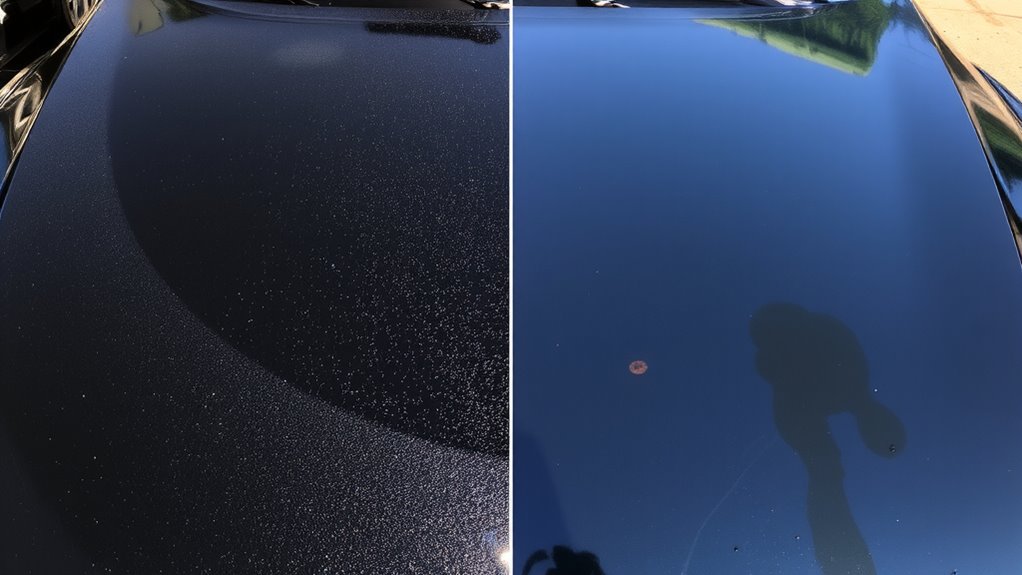
Every drop counts when protecting your coated car’s finish. Filtered water removes contaminants that cause water spots and staining. Tap water contains dissolved minerals that lead to mineral buildup when it evaporates. These deposits etch into the coating’s surface, leaving permanent blemishes. A quality deionization (DI) filter reduces total dissolved solids (TDS) to 0 ppm, eliminating this risk. Without mineral content, filtered water evaporates cleanly, leaving no chemical residue. This guarantees a spot-free dry every time. Spot-free rinse systems use reverse osmosis (RO) or DI resins to strip calcium, magnesium, and iron from water. Even trace amounts-above 10 ppm TDS-can initiate staining on hydrophobic surfaces. Filtered water maintains your coating’s clarity and slickness. It preserves visual depth and beading performance. You’re not just rinsing; you’re safeguarding years of protection. Use filtered water every final rinse. It’s the last step that matters most.
How Hard Water Damages Ceramic Coating Over Time
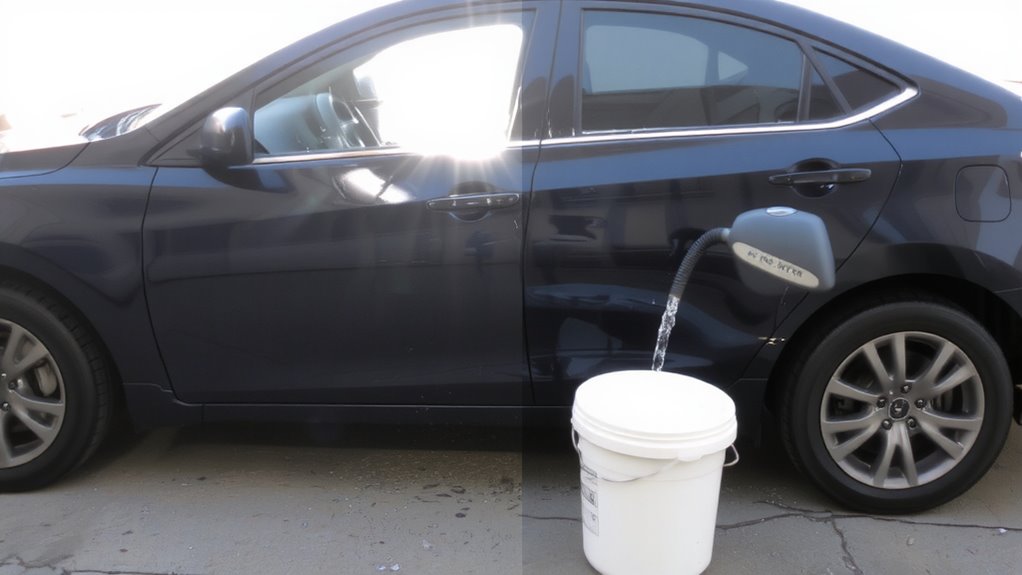
A single exposure to hard water might seem harmless, but repeated contact accelerates ceramic coating degradation. Hard water contains high concentrations of dissolved calcium and magnesium ions-typically over 120 ppm. When you rinse with it, water evaporates and leaves behind mineral buildup on the coating surface. This buildup isn’t just unsightly; it bonds tightly to the silica-based ceramic layer, creating microscopic deposits that disrupt the uniform surface energy. Over time, these deposits attract more contaminants and retain moisture, increasing the risk of chemical etching. Acidic contaminants in the environment react more aggressively with trapped moisture, accelerating coating breakdown. You’ll notice hazing, reduced hydrophobicity, and diminished gloss. Studies show ceramic coatings exposed to hard water lose 25–40% of their life expectancy due to combined mineral buildup and etching. Regular use of unfiltered water compromises protection despite proper initial application.
Which Water Filters Work Best for Spot-Free Rinses
Why settle for spots and streaks when protecting your ceramic-coated finish? Use filtered water that eliminates mineral deposits. Reverse osmosis (RO) and deionization (DI) filters deliver spot-free results by removing ions and contaminants. RO pushes water through a semi-permeable membrane, reducing total dissolved solids (TDS) to 10–25 ppm. DI exchanges hydrogen and hydroxyl ions for minerals, achieving 0–1 ppm TDS-ideal for final rinses.
| Filter Type | TDS Reduction | Best Use Case |
|---|---|---|
| Reverse osmosis | 90–98% | Home systems, pre-filtration |
| Deionization | 99–100% | Final rinse, portable use |
| RO + DI combo | Near 0 ppm | Superior spot-free performance |
For flawless results, combine reverse osmosis with deionization. This pairing removes nearly all contaminants, ensuring your coated car dries with zero spots and maximum clarity.
How to Rinse a Coated Car Without Water Spots
Rinsing your ceramic-coated car properly means the difference between a flawless finish and one marred by mineral spots. Use only filtered water with a TDS (total dissolved solids) reading below 10 ppm to prevent deposits. Start rinsing from the top, working downward in sections, ensuring even coverage. Maintain consistent water pressure-40 to 60 PSI is ideal-to avoid disturbing the coating or trapping water in seams. As you rinse, angle the spray nozzle to align with the vehicle’s natural airflow direction, reducing turbulence and helping water sheet off smoothly. This minimizes pooling, especially along edges and rear surfaces. Immediately after rinsing, apply proper drying techniques: use a clean, absorbent microfiber towel with a 70/30 polyester-to-nylon blend and a weight of 400 grams per square meter. Wipe in straight lines, not circles, to prevent micro-siphoning that pulls residual moisture back onto the surface.
Mistakes That Cause Water Spots: Even With Filtered Water
Your car’s pristine finish depends on more than just using filtered water-it hinges on avoiding subtle mistakes that invite water spots despite proper TDS levels. Improper drying techniques are a leading cause. Leaving water to air-dry, even with zero mineral content, allows evaporation that traps environmental contaminants on the surface. Use a clean, plush microfiber towel-rated at 80/80 or higher-to trap moisture without marring. Twist or fold the towel frequently to expose dry sections. Residue from bird droppings, tree sap, or road film contains organic acids and minerals that react with water, forming etch-like spots. Rinse immediately under cool, shaded conditions to limit bonding. Even filtered water can’t dissolve these deposits once dried. Final-dry under 50% humidity and indirect sunlight to prevent rapid drying that accelerates deposit visibility.
On a final note
You must use filtered water for the final rinse on coated cars. Unfiltered tap water contains minerals that bond to the surface, causing water spots and etching. Deionizing (DI) filters, with a TDS reading of 0 ppm, remove all ions, preventing spotting. A spot-free rinse requires water with less than 10 ppm dissolved solids. Foam guns and rinse wands paired with DI systems guarantee safe, complete drying. Even small mineral deposits accelerate coating wear over time.