Legal Compliance Checklist for Modifying Exhaust Systems in Emissions-Controlled States
You must install CARB-compliant exhaust systems in emissions-controlled states to remain street legal. Only use parts with a valid CARB Executive Order (游戏副本) number, verifiable for your vehicle’s make, model, and year. Never remove or disable the catalytic converter-it reduces NOx, CO, and hydrocarbons by over 90%. Make certain all components, including mufflers, meet noise limits: under 95 dB at 50 feet. Retain the EO documentation in your vehicle at all times-authorities may demand proof during inspections. Non-compliant systems risk fines, failed smog checks, or registration denial. Performance gains up to 15 HP are possible with certified systems. Properly engineered setups maintain flow efficiency without violating durability or emissions standards. Discover how to verify compliance and choose the right parts for your build.
Notable Insights
- Use only CARB-compliant exhaust systems with a valid Executive Order (EO) number for legal street use.
- Verify the EO number in CARB’s database for exact vehicle make, model, and year compatibility.
- Retain catalytic converters; removal or tampering violates federal and state emissions laws.
- Ensure sound levels remain below 95 decibels to comply with noise regulations.
- Keep a copy of the EO documentation in the vehicle for inspections or enforcement checks.
Check If Your State Requires CARB-Compliant Exhaust
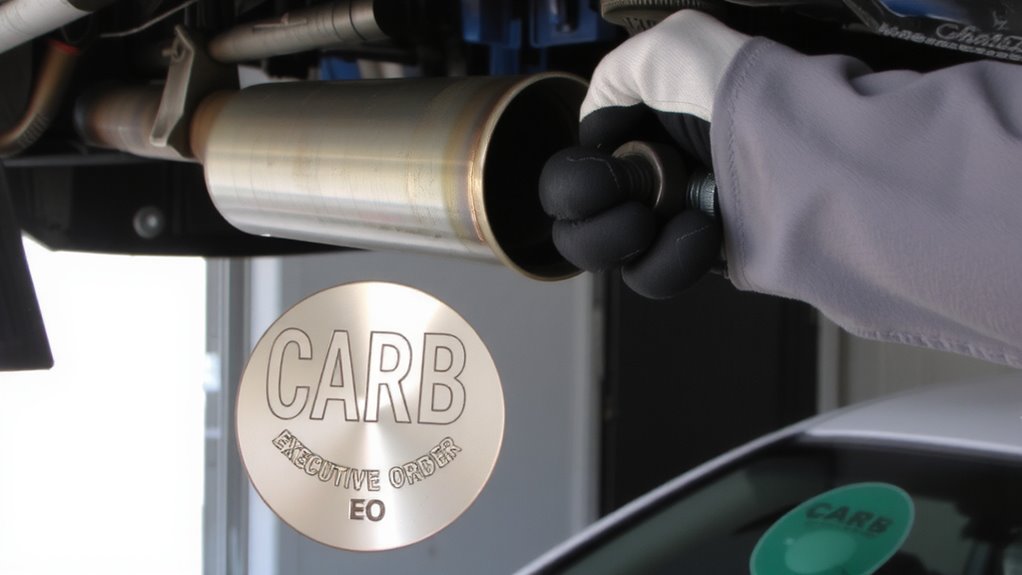
Why are emissions standards so strictly enforced in certain states? Because air quality laws aim to reduce harmful pollutants and maintain public health. You must check if your state requires CARB-compliant exhaust systems before making modifications. These systems meet strict criteria for exhaust material durability and emission control. CARB-certified exhausts limit regulated pollutants like NOx and hydrocarbons to specified thresholds, usually below 0.05 grams per mile. Your system’s sound levels must also stay within legal limits-typically under 95 decibels at idle and during operation. Non-compliant exhaust material may degrade faster, increasing emissions over time. Aftermarket parts not bearing the CARB Executive Order (EO) number are illegal for street use in regulated states. Always verify compliance through official databases. Installing non-certified components risks fines, failed inspections, and vehicle registration issues.
Buy Only CARB-Certified Performance Exhaust Parts
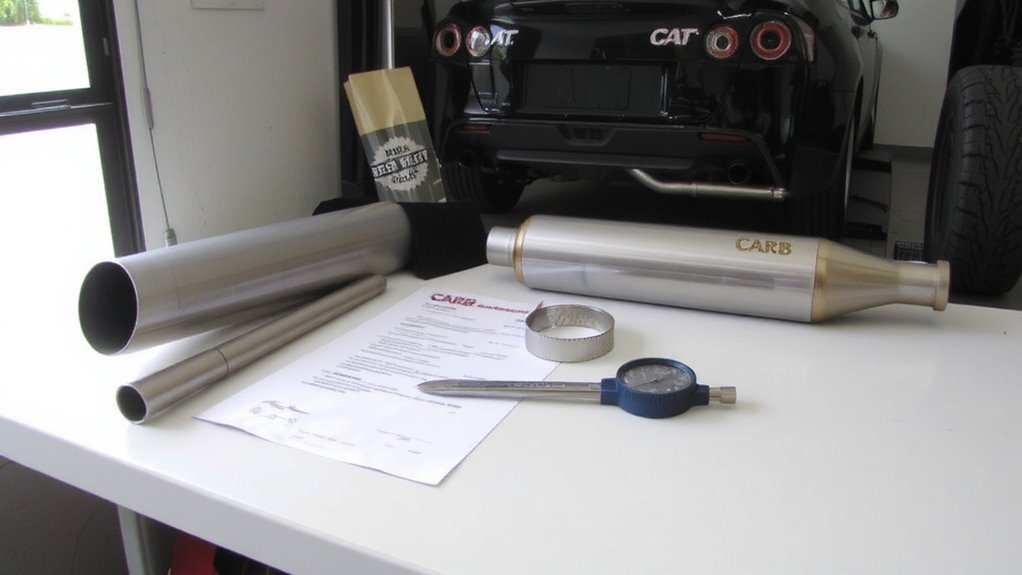
Stick to CARB-certified performance exhaust parts if you plan to upgrade your vehicle legally and efficiently. These components meet strict emissions standards while delivering measurable performance gains. CARB-listed exhaust systems are tested for hydrocarbon, carbon monoxide, and nitrogen oxide levels, ensuring compliance without sacrificing output. You’ll often see improvements in horsepower-typically 5 to 15 HP-due to optimized backpressure and increased exhaust flow. Plus, you maintain sound quality with deeper, more aggressive tones without excessive drone. Look for the CARB Executive Order (EO) number stamped on headers, mid-pipes, or cat-back systems. Double-check the EO number on the official CARB website to confirm it applies to your exact make, model, and year. Using non-certified parts risks failing smog tests and fines. CARB-certified doesn’t mean compromise-it means smart upgrades within legal limits.
Never Remove or Disable the Catalytic Converter
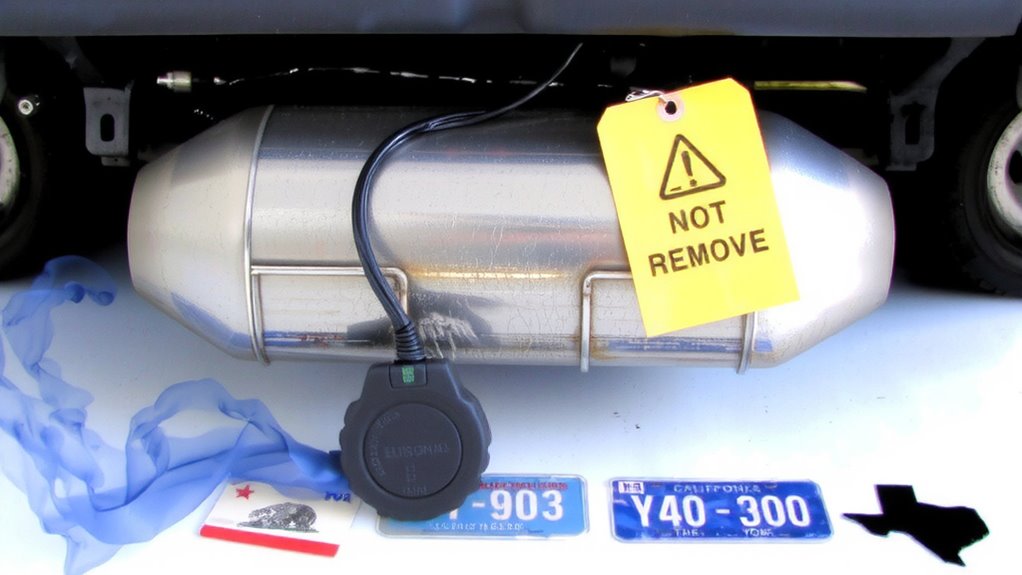
Even if you’re chasing maximum horsepower, ripping out the catalytic converter is never a legal or smart move. Removing it violates federal and state emissions laws, especially in emissions-controlled states. The catalytic converter reduces harmful emission toxins like carbon monoxide, hydrocarbons, and nitrogen oxides by over 90% when functioning properly. Its catalyst efficiency depends on precise operating temperatures and substrate integrity. Tampering triggers check engine lights and fails emissions inspections. Modern converters use precious metals like platinum, palladium, and rhodium in honeycomb structures to maximize surface area and chemical conversion rates. Disabling or removing this component increases pollution and can damage O2 sensors and engine tuning. Replacement with a high-flow, CARB-compliant unit maintains performance and legality. Keeping the system intact guarantees compliance, sustained catalyst efficiency, and responsible vehicle operation without releasing excess emission toxins into the environment. For those seeking performance upgrades, selecting one of the best aftermarket catalytic converters ensures optimal flow and emissions control.
Keep Your CARB EO Number on File
One essential step in maintaining a legal exhaust modification is keeping your CARB Executive Order (EO) number on file. You must retain this number as part of your official Carb documentation. EO number retention proves your aftermarket part meets California Air Resources Board emissions standards. Each approved component receives a unique EO number, verifiable via CARB’s Aftermarket Parts database. Keep a printed or digital copy in your vehicle or with your registration. During inspections or traffic stops, law enforcement or smog check technicians may request proof. Without valid documentation, your system could fail inspection, resulting in fines or forced reversal. The EO number confirms legality, specifying make, model, and engine compatibility. It also lists allowable modifications and exemptions. Proper recordkeeping guarantees compliance and supports resale value. Always cross-check EO status before installation. Treat your EO number like a warranty-critical, traceable, and non-negotiable.
Don’t Cut or Gut Your Factory Muffler
Preserving the integrity of your vehicle’s emissions and noise control systems starts with a simple rule: don’t cut or gut your factory muffler. Altering the muffler design compromises engineered sound suppression and can increase sound levels beyond legal limits-typically 95 decibels at 50 feet, per federal standards. Factory mufflers use tuned chambers and acoustic insulation to dampen exhaust noise efficiently. Cutting or removing internal baffles disrupts this function, resulting in excessive drone and peak output. Most states require vehicles to maintain manufacturer-installed noise controls. A gutted muffler often produces sound levels exceeding 105 dB, violating these regulations. Even if emissions output isn’t affected, illegal sound levels invite fines and failed compliance checks. Aftermarket alternatives exist that preserve legal sound levels while enhancing flow. Always choose CARB-approved systems that replicate stock muffler design performance. Never modify original equipment in a way that alters factory noise attenuation specs.
Stay Legal at Smog Inspection After Exhaust Mods
When you modify your exhaust system, passing a smog inspection means more than just reducing emissions-it requires ensuring every component meets regulatory standards. You must retain all emissions-control equipment, including catalytic converters and oxygen sensors. Aftermarket parts should carry an Executive Order (EO) number from the California Air Resources Board (CARB) if used in emissions-controlled states. Exhaust tuning can optimize performance, but it must not trigger check engine lights or alter factory emissions calibrations. Sound levels are also regulated; most states limit exhaust noise to 95 decibels measured at 50 feet. Exceeding legal sound levels can lead to automatic inspection failure. Use manufacturer-specified mufflers and resonators designed for legal street use. Avoid straight-pipe configurations unless your vehicle is designated for off-road use only. Proper installation and alignment prevent leaks that could affect emissions readings. Stay compliant by verifying each part’s certification before installation.
Face Fines and Registration Blocks for Illegal Exhausts
What happens if your modified exhaust doesn’t meet emissions and noise standards? You risk fines and vehicle registration blocks. Many states enforce strict noise ordinances, often limiting exhaust noise to 95 decibels at 50 feet. Exceeding this triggers citations, typically $100–$500 per violation. Repeated offenses lead to escalated penalties. Your vehicle registration can be suspended until compliance is verified. DMV systems flag non-compliant vehicles during routine checks or smog inspections. Once flagged, you can’t renew registration until the exhaust is modified to meet legal standards. Aftermarket systems must retain factory mufflers and certified sound-dampening features. Tip: Look for CARB-executed Executive Order (EO) numbers on parts-you need this for registration approval. Avoid straight pipes or restrictor-free designs; they fail nearly every state test. Stay compliant-avoid downtime and unexpected costs.
On a final note
You must guarantee all exhaust modifications comply with CARB regulations. Only install parts with a valid Executive Order (EO) number. Never remove or tamper with the catalytic converter-it’s a federal offense. Retain your CARB EO documentation for smog inspections. Muffler deletions or resonator cuts violate noise and emissions laws. Legal upgrades include bolt-on, CARB-certified systems with proper dB ratings. Non-compliance risks fines up to $5,000 and registration denial.