The Effect of Heavy Wheels on Electric Vehicle Range and Regen Braking
Heavy wheels reduce your EV’s range by increasing unsprung mass and rolling resistance. Every 10 lbs of added wheel weight can cut efficiency by 1–2 miles per charge. Underinflated tires add up to 15% more resistance, while bulky 20-inch wheels create 8% more aerodynamic drag than 18-inch ones. Heavier wheels also weaken regenerative braking-up to 15% less energy is recovered due to higher rotational inertia. Lightweight forged aluminum or aerodynamic designs offer better efficiency and brake performance. You’ll discover which wheel specs deliver the best balance of durability and range.
Notable Insights
- Heavy wheels increase unsprung mass, reducing EV efficiency and decreasing range by up to 2 miles per 10 lbs added.
- Increased rotational inertia from heavy wheels lowers regenerative braking efficiency, recovering up to 15% less energy.
- Bulky, heavy wheels create more aerodynamic drag, reducing range, especially at highway speeds.
- Lightweight wheels improve range and regen performance but may sacrifice durability in rough driving conditions.
- Optimal EV wheel choice balances low weight, aerodynamic design, and structural integrity to maximize efficiency and range.
How Heavy Wheels Cut EV Range

While your EV’s battery capacity and aerodynamics play major roles in range, the weight of your wheels has a direct and measurable impact on how far you can go between charges. Heavy wheels increase unsprung mass, forcing your motor to expend more energy during acceleration. Every pound adds rolling resistance, reducing efficiency. Lower tire pressure compounds this effect, increasing rolling resistance by up to 15%. Underinflated tires deform more, wasting energy as heat. Aerodynamic drag rises when bulky wheels disrupt airflow, even at moderate speeds. A 20-inch wheel can generate 8% more drag than an 18-inch alternative. Lightweight alloys or factory-spec wheels reduce inertia, improving efficiency. For every 10 lbs saved across all four wheels, range increases by roughly 1–2 miles per charge. Maintaining ideal tire pressure-typically 32–36 psi-ensures minimal resistance. Combined with reduced aerodynamic drag, proper wheel choice and maintenance maximize your EV’s real-world range without extra charging.
How Wheel Weight Weakens Regen Braking

Heavy wheels don’t just sap energy when accelerating-they also undercut the efficiency of regenerative braking, reducing the amount of energy your EV recovers during deceleration. Braking efficiency drops because heavier wheels carry more rotational inertia, meaning they resist changes in motion. Your EV’s regen system can’t convert that extra kinetic energy as effectively. This directly limits energy recovery, especially in stop-and-go driving where regen cycles repeat frequently. Tests show vehicles with 20 lb heavier wheels recover up to 15% less energy per braking event. The motor-generator must work harder to decelerate the added mass, wasting potential charge. Lightweight components spin down faster, improving regen responsiveness. High rotational mass also shifts braking balance, forcing friction brakes to engage sooner, further cutting regen’s contribution. You get less kWh returned to the battery over time. That means shorter effective range and reduced system efficiency without any driver behavior change. Every pound impacts braking efficiency and long-term energy recovery.
Trade-Offs: Lightweight Vs. Heavy Wheels
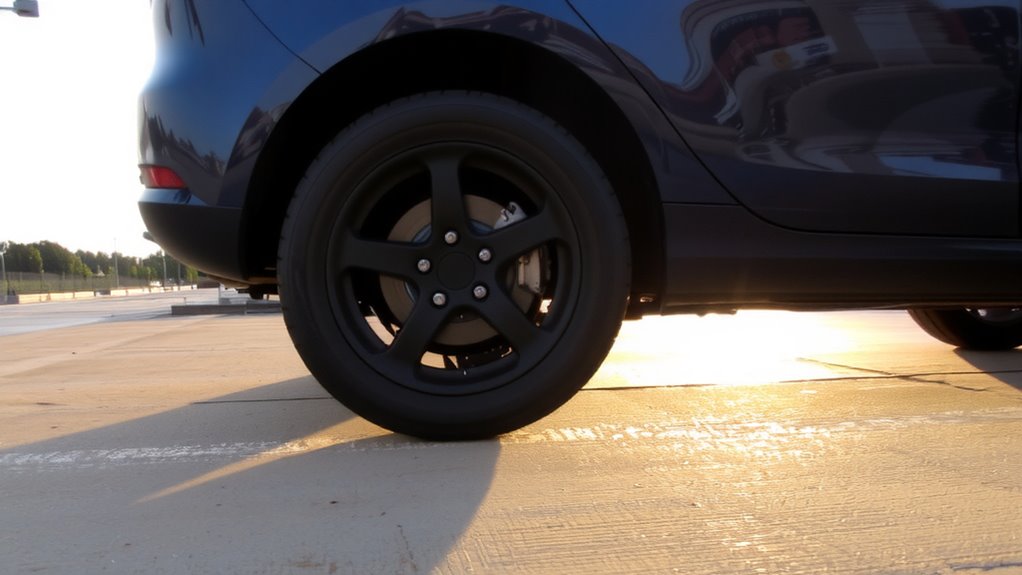
Though lighter wheels improve efficiency, they aren’t always the best choice for every EV setup. You might sacrifice structural durability when reducing weight too aggressively. Lightweight alloys often use thinner spokes and reduced rim thickness-typically under 6mm-which can limit impact resistance on rough roads. Heavier wheels, by comparison, commonly use reinforced casting or forged construction, increasing longevity under stress. Yet, they add unsprung mass, worsening energy consumption-usually by 1–3% per additional 10 lbs (4.5 kg) per wheel. Still, you may prefer them for their aesthetic appeal; larger diameters and bold finishes enhance visual presence, even if they cut range. A 20-inch forged wheel might weigh 22 lbs (10 kg), while a comparably styled cast wheel exceeds 28 lbs (12.7 kg). The choice hinges on balancing efficiency gains against appearance and long-term resilience.
When Heavier Wheels Might Be Worth It
What if durability matters more than saving a few miles of range? Heavier steel or reinforced alloy wheels often withstand impacts from potholes and curbs better than lightweight alternatives. If you drive in rugged conditions or prioritize long-term reliability, this added resilience can justify the weight penalty. You also gain performance benefits in high-torque EVs, where stiffer wheels reduce flex during rapid acceleration. Though rotational mass increases-typically adding 5–15 lbs per wheel-the effect on regen efficiency is often negligible in real-world driving. Some heavier wheels offer superior braking integration, especially with larger calipers. Plus, let’s not ignore aesthetic appeal; larger, bolder designs improve stance and visual presence without compromising structural integrity. For drivers who value a balance of toughness, confident handling, and style, heavier wheels aren’t a drawback-they’re a deliberate upgrade with measurable advantages in specific use cases.
How to Choose Wheels That Maximize EV Range
Lightweight alloy wheels made from forged aluminum or advanced composites are your best choice when maximizing EV range. They reduce unsprung mass, lowering energy demand during acceleration. Every 10 pounds shaved from total wheel weight can boost efficiency by up to 1%. Look for an aerodynamic design-smooth surfaces and enclosed spoke patterns reduce drag and improve airflow. A wheel with a 0.28 coefficient of drag (Cd) can cut wind resistance by 15% compared to open-spoke alternatives. Pair wheels with low rolling resistance tires to enhance tire efficiency. Tires rated at 8–10% below standard rolling resistance can add 3–5 miles of range per full charge. Opt for widths between 7–8 inches-wider than necessary increases drag, narrower reduces grip. Stick to 18–20 inch diameters for ideal balance of performance, efficiency, and ride quality.
On a final note
You choose wheels that directly impact your EV’s efficiency and braking performance. Heavy wheels increase unsprung mass, typically adding 2–5 lbs per wheel, reducing range by up to 5%. They resist acceleration and regen, lowering energy recovery by 10–15%. Lightweight alloy wheels, often under 20 lbs, improve responsiveness and extend range. Prioritize low rotational mass and aerodynamic design. Every pound saved enhances efficiency, like shedding cargo from a backpack on a long hike.