Swapping Lead-Acid Batteries to Climate-Stable Charging Stations Periodically
You extend lead-acid battery life by swapping them to climate-stable stations every 6 to 8 cycles or when voltage drops below 12.2V. High heat accelerates corrosion and doubles degradation every 15°F above 80°F. Cold increases resistance and sulfation. Rotate batteries to environments at 20–25°C to maintain charge efficiency and reduce stress. Use pre-charged replacements and complete swaps in under 15 minutes. There’s more to optimize in your setup.
Notable Insights
- Rotate lead-acid batteries to climate-stable stations every 6–8 cycles or when capacity drops below 80%.
- Maintain charging stations at 20–25°C to minimize corrosion, sulfation, and thermal degradation.
- Use pre-charged, temperature-stabilized batteries for swaps to ensure consistent performance.
- Store rotated batteries at 50–70% charge in stable environments to preserve electrolyte health.
- Complete swaps within 15 minutes, ensuring correct polarity and system shutdown to prevent damage.
Why Heat and Cold Damage Lead-Acid Batteries
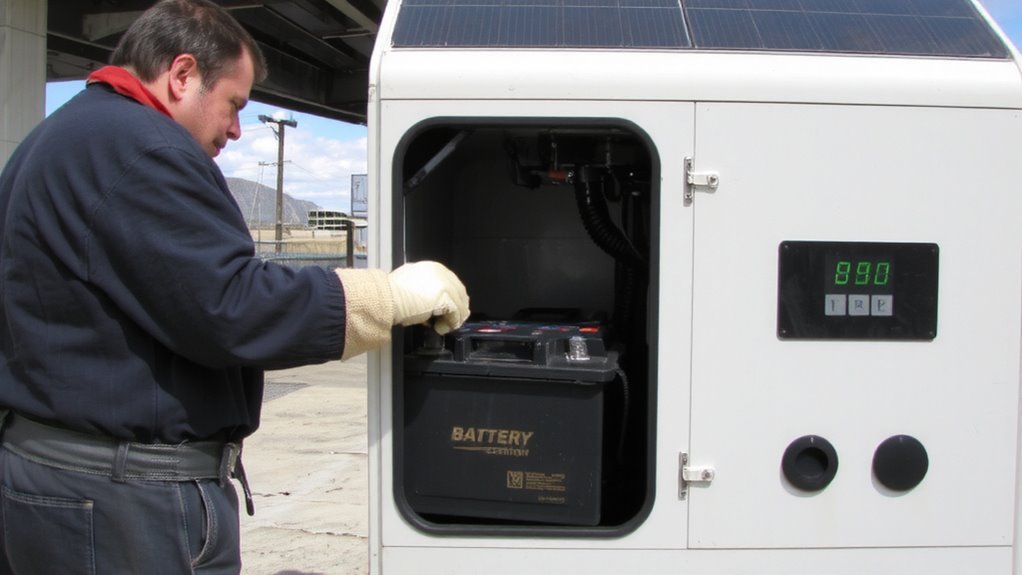
While temperature extremes may seem like inevitable challenges, they considerably shorten the life of lead-acid batteries by accelerating internal degradation. Thermal stress from high heat increases corrosion on the positive plates, reducing structural integrity and cycle life. At temperatures above 80°F (27°C), every 15°F (8°C) rise doubles the rate of degradation. Cold doesn’t slow damage-it increases internal resistance, lowering cranking power and recharge efficiency. Below freezing, electrolyte stratification worsens, with acid concentration pooling at the bottom. This uneven distribution accelerates grid corrosion and sulfation. Thermal stress also promotes water loss in flooded designs, requiring frequent maintenance. In VRLA batteries, pressure buildup risks valve release and electrolyte dry-out. You’ll see up to 50% capacity loss in three years under constant thermal stress. Electrolyte stratification further reduces available amp-hours and charging acceptance. These combined effects cripple performance and longevity, especially in daily-cycling applications. Upgrading to best cold-weather batteries can significantly mitigate these issues in freezing environments.
How Swapping Batteries Extends Lifespan
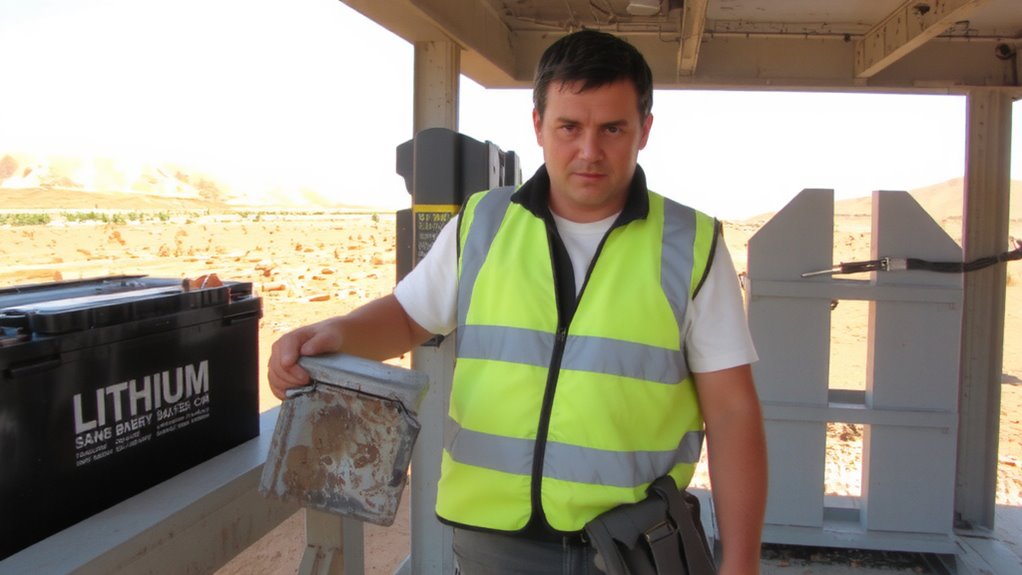
Heat and cold don’t play fair with lead-acid batteries - but you don’t have to let them win. Swapping batteries to climate-stable charging stations preserves battery chemistry and maximizes charge cycles. Extreme temperatures accelerate sulfation and grid corrosion, degrading performance. By rotating units to stable environments, you maintain ideal internal reactions and extend service life. Best cold weather batteries are specifically engineered to resist capacity loss in low temperatures, making them ideal for use in rotating systems that encounter variable climates.
| Factor | In Harsh Climate | In Stable Climate |
|---|---|---|
| Temp Effect | Accelerates degradation | Minimizes stress |
| Charge Cycles | Reduced by up to 50% | Preserved near rated capacity |
| Chemistry Health | Sulfation & water loss common | Stable electrolyte balance |
You protect both capacity and efficiency. Each battery sustains more charge cycles when kept within ideal thermal ranges. Stable charging prevents overheat damage and undercharge risks. Consistent conditions support uniform charge acceptance. You’re not just storing batteries - you’re preserving their core chemistry.
When to Rotate Batteries for Best Results?
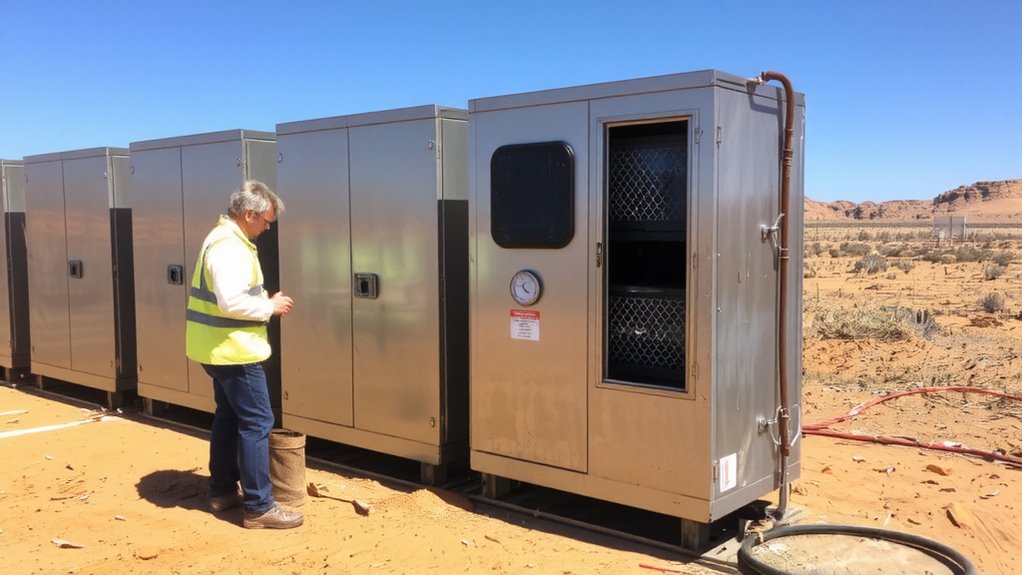
You already know that moving batteries to climate-stable charging stations slows degradation and preserves charge cycles. For lead-acid batteries, ideal rotation occurs every 6 to 8 discharge cycles, or when capacity drops below 80%. This timing aligns with typical battery chemistry limits, preventing deep sulfation. Most flooded lead-acid units deliver 300–500 discharge cycles under ideal conditions, but extreme temperatures shorten this drastically. Rotating before cycle seven maintains voltage stability and reduces internal resistance buildup. You’ll see better results if ambient temperature stays between 20°C and 25°C at the charging station. At 30°C, degradation accelerates by nearly 50% compared to 20°C. Monitor specific gravity and open-circuit voltage weekly to confirm electrolyte health. Avoid letting batteries sit below 12.2 volts-this signals 50% state of charge, the recommended rotation threshold. Proper timing protects battery chemistry and maximizes usable life.
Step-by-Step: Swap Batteries at Climate-Safe Stations
When transferring lead-acid batteries to climate-stable charging stations, timing and procedure directly impact system longevity and performance. Follow this sequence to guarantee efficient battery logistics and peak station design.
| Step | Action | Purpose |
|---|---|---|
| 1 | Power down connected systems | Prevents electrical surges during disconnection |
| 2 | Remove old battery using lift assist (max 60 lbs) | Reduces strain; maintains safe workflow |
| 3 | Install pre-charged replacement at 25°C | Guarantees stable voltage output and charge retention |
You must align terminal polarity precisely-reverse connections risk permanent damage. Climate-safe stations maintain internal temps between 20–25°C, minimizing thermal degradation. Proper airflow in station design prevents acid vapor buildup. Efficient battery logistics rely on labeled, rack-mounted slots for quick identification. Use gloves and insulated tools. Each swap should take under 15 minutes to limit system downtime.
Save Money and Power With Smarter Swapping
Since lead-acid batteries degrade faster at extreme temperatures, moving swaps to climate-stable stations cuts replacement costs and energy waste over time. You preserve battery efficiency by maintaining operating temps between 20°C and 25°C-ideal for maximizing cycle life. At these temps, batteries achieve up to 800 cycles, versus 400 in unregulated environments. Smarter swapping reduces parasitic discharge, improving energy savings. Stations with thermal buffering and passive cooling use 30% less power than standard enclosures. You also minimize sulfation, a common failure mode in cold climates, which robs 15–20% of capacity annually. By centralizing swaps in stable microclimates, your system maintains consistent voltage regulation and charge acceptance. Each optimized swap extends battery lifespan by 40%, reducing unit replacements and lowering total cost of ownership. You gain predictable performance without overbuilding backup capacity.
Which Solar and Off-Grid Systems Benefit Most?
Where should your off-grid investment deliver the highest return? Systems with high solar efficiency and consistent daily cycling benefit most. You’ll maximize gains in setups using 20%+ efficient monocrystalline panels coupled with lead-acid batteries cycled daily in stable climates. These conditions reduce degradation, extending battery life by up to 50%. Off-grid cabins, telecom stations, and rural microgrids gain the most because they rely on dependable power without grid backup. Where energy density is low-like in flooded lead-acid arrays-you trade space and weight for cost-effective storage. Rotating these batteries to climate-stable chargers preserves capacity and charge acceptance. Think of it like rotating tires: even wear improves overall system lifespan. Your array’s voltage output must match charger input specs-typically 12V, 24V, or 48V DC-to maintain efficiency. Prioritize systems where solar efficiency exceeds 19% and daily depth of discharge exceeds 50%. That’s where savings compound.
Avoid These Common Battery Rotation Mistakes
How often are your lead-acid batteries failing prematurely despite regular rotation? You’re likely overlooking key mistakes in your routine. Battery corrosion buildup on terminals increases resistance, reducing efficiency and lifespan. Always inspect and clean connections with a baking soda solution every 30 days. You should also torque connections to 75 inch-pounds to guarantee secure contact. Charging frequency is critical-undercharging below 80% state of charge causes sulfation. Overcharging generates excessive heat, accelerating grid degradation. Maintain a charging frequency of 2–3 times per week using a temperature-compensated charger. Avoid mixing old and new batteries; differences in internal resistance imbalance load sharing. Ideal rotation intervals are every 60–90 days. Store rotated units at 50–70% charge in climate-stable stations between 20–25°C. These steps guarantee maximum cycle life-typically 450–600 cycles at 50% depth of discharge.
On a final note
You extend battery life by rotating lead-acid units every 3–6 months. Swapping prevents sustained exposure to temperatures below 32°F or above 95°F, which degrade electrolyte and warp plates. Climate-stable stations maintain 60–80°F, optimizing performance. Proper rotation improves cycle life by up to 50%. Use sealed, AGM-type batteries with 500–700 CCA ratings. Guarantee charge voltage stays between 14.4V and 14.8V during swaps. Track performance with a battery monitor to maximize off-grid system efficiency.