Scheduling Seasonal Brake Inspections Following Winter Snow Belt Exposure
After winter in the snow belt, your brake system faces moisture, salt corrosion, and thermal stress. Road salts accelerate rust on calipers and hoses, while water contaminates brake fluid, reducing its boiling point below DOT 3’s 401°F standard. Pads can wear below 3 mm, and rotors may warp beyond 0.005 inches of runout. Inspect early-ideally within two weeks post-winter-for maximum safety. You’ll soon see why timing and professional assessment matter.
Notable Insights
- Schedule brake inspections within 0–2 weeks after winter to catch early signs of moisture corrosion and pad wear.
- Check brake fluid moisture content post-winter, as contamination above 2% reduces boiling point and braking efficiency.
- Inspect rotors for warping and runout, especially after freeze-thaw cycles that cause thermal stress and distortion.
- Replace brake pads if thickness falls below 3 mm due to accelerated wear from salt and abrasive winter conditions.
- Have professionals assess hidden components like calipers and hoses, which are vulnerable to salt-induced deterioration and seal damage.
How Winter Weather Wears Down Your Brakes
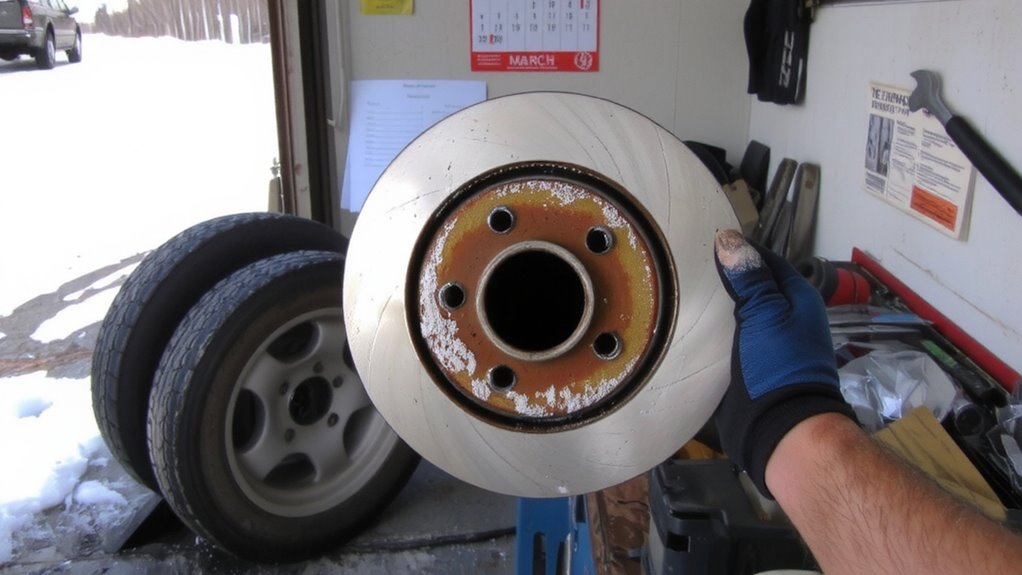
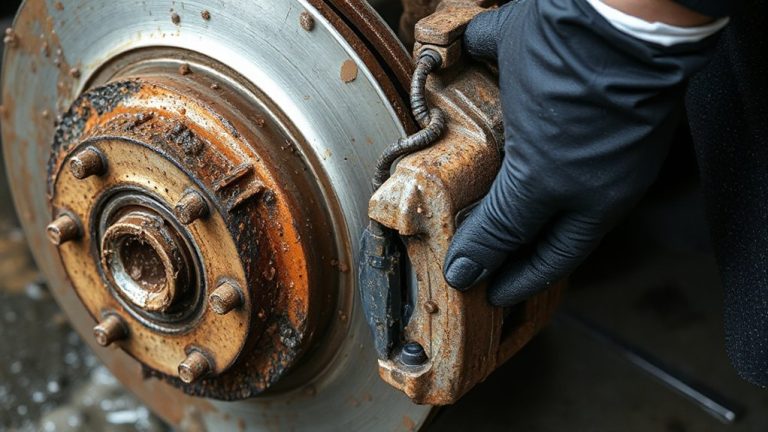
Your car’s brake system takes a beating during winter, and salt-laden roads make it worse. Moisture and road salt accelerate corrosion on brake components, increasing the risk of brake fluid contamination. Contaminated fluid degrades performance by lowering its boiling point, which can lead to spongy pedal feel and reduced stopping power. Most manufacturers specify a brake fluid dry boiling point of at least 401°F (DOT 3) to maintain effectiveness. Subzero temperatures followed by heat from friction create thermal stress, promoting rotor warping. Warped rotors cause noticeable pulsation under braking and can exceed allowable runout specs-typically 0.001 inches. Thinner rotors heat unevenly, worsening distortion. Consistent exposure to freeze-thaw cycles and abrasive salts deteriorates hoses, calipers, and seals. These effects compromise system integrity over time. Routine evaluation of fluid quality and rotor thickness helps maintain peak performance. Early detection prevents accelerated wear and guarantees safety.
Common Brake Problems After Snowy Driving
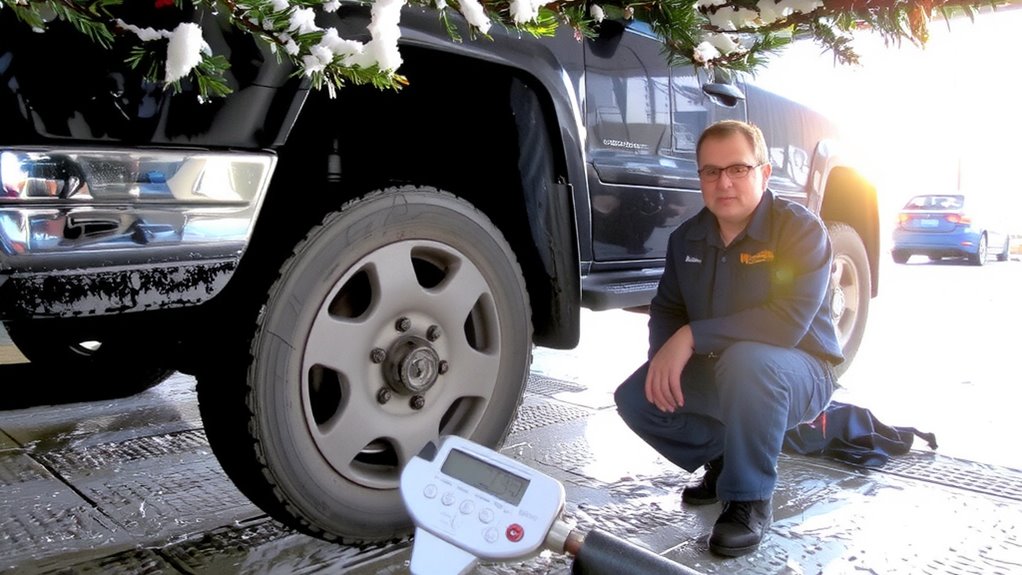
A significant number of vehicles develop brake issues following prolonged exposure to snow and ice. Salt and slush increase corrosion, leading to brake fluid contamination and reduced stopping performance. Moisture enters the brake lines, lowering the fluid’s boiling point and risking pedal sponginess. You may also experience rotor warping due to repeated freezing, heating, and cooling cycles. Warped rotors cause steering wheel vibration during braking, especially at highway speeds.
| Problem | Cause | Symptom |
|---|---|---|
| Brake fluid contamination | Moisture ingress | Spongy pedal, reduced response |
| Rotor warping | Thermal stress | Pulsating brake pedal |
| Corroded components | Road salt exposure | Uneven braking, noise |
Regular checks help catch these early. Rotor surfaces should stay within 0.001-inch tolerance for runout. Left untreated, these issues compromise safety and increase repair costs.
What Happens During a Post-Winter Brake Inspection
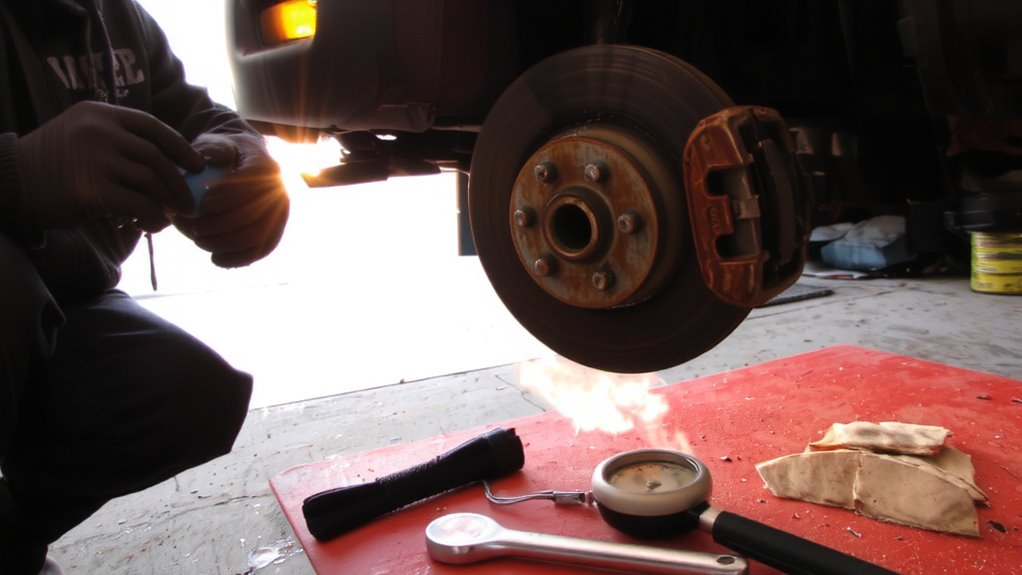
Brake inspections after winter start with a thorough visual assessment of all braking components. You’ll see technicians check brake pad thickness first-many pads begin at 10–12 mm, and anything below 3 mm requires immediate replacement. They measure remaining material precisely using calipers for accuracy. Next, they evaluate rotor surface condition, looking for scoring, cracking, or warping from heat and corrosion. Rotors thinner than the manufacturer’s minimum discard thickness-often stamped on the hub-are unsafe and must be replaced. Surface runout is measured with a dial indicator; excessive deviation beyond 0.005 inches causes pedal pulsation. Fluid contamination and line integrity are also verified. Calipers, hoses, and hardware are inspected for seized points or rust. The entire process guarantees braking effectiveness, safety, and compliance with OEM standards. Each finding is documented for your records. A professional-grade brake bleeding kit can aid in fully restoring system performance during post-winter service.
When to Get Your Brakes Checked After Winter
Timing matters just as much as the inspection itself when maintaining braking performance after winter’s toll. Cold, salt, and moisture expose your brakes to damage like brake fluid contamination and rotor warping. Check your brakes promptly to avoid safety risks.
| Time Since Winter Ended | Risk Level | Key Concerns |
|---|---|---|
| 0–2 weeks | Low | Minimal wear, early detection |
| 3–4 weeks | Moderate | Moisture buildup, slight warping |
| 5–6 weeks | High | Brake fluid contamination, uneven pads |
| 7–8 weeks | Severe | Rotor warping, reduced stopping power |
| 8+ weeks | Critical | System failure likely |
Waiting too long increases the chance of internal corrosion from absorbed moisture, degrading brake fluid performance. Rotor warping from thermal stress may cause vibration during braking. Schedule your inspection within four weeks post-winter to catch issues like fluid saturation above 3% moisture-beyond that, boiling point drops below safe thresholds. Early action guarantees peak function. Including a comprehensive car maintenance kit can help identify brake issues early while supporting overall vehicle readiness.
Why a Pro Inspection Beats a DIY Look
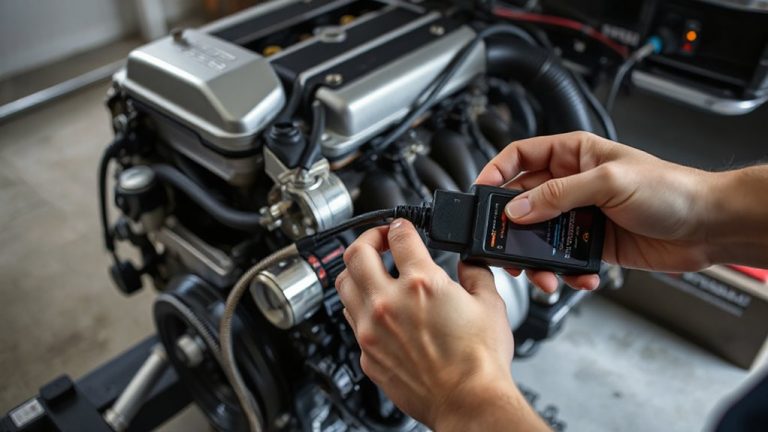
While you might feel confident checking brake pads through the wheel spokes, a visual scan won’t reveal what’s happening inside the system. You can’t see rotor thickness, caliper function, or hydraulic pressure without proper tools. A pro inspection provides professional expertise that detects issues like warped rotors-often caused by winter heat cycles and salt exposure. Technicians measure pad thickness to within 0.1 mm and check rotor runout with dial indicators. They test brake fluid moisture content, which should stay below 2%. Excess moisture lowers boiling points, risking fade. Only trained eyes deliver accurate diagnostics using OBD2 scanners and pressure gauges. These tools identify problems like valve leaks or master cylinder wear before failure. Winter grime masks corrosion on lines and joints. A pro removes wheels, cleans components, and inspects seals. Skip guesswork. Trust verified data over guesswork. Safety hinges on precision. Comprehensive evaluations often include a full brake maintenance kit assessment to ensure all service components are functioning optimally.
On a final note
You need post-winter brake inspections to maintain safety and performance. Corrosion from road salts accelerates wear on rotors and calipers, reducing braking efficiency by up to 25%. A professional inspection checks pad thickness-minimum legal is 3mm-and measures rotor runout, which should not exceed 0.003 inches. Brake fluid moisture content must stay below 2%. Only certified technicians can properly assess these critical parameters.