Removing Floor Mats and Stowing Carpets Off-Ground to Inhibit Mildew Growth
You should remove floor mats and store carpets off the ground to prevent mildew. Wet mats retain moisture, creating mold-friendly environments above 60% humidity. Elevating them 2 inches (5 cm) reduces moisture retention by up to 70%. Use slatted shelves or breathable racks with 0.5-inch (1.3 cm) gaps for airflow. Hang mats on load-rated, corrosion-resistant hooks spaced 12–18 inches apart. This boosts drying efficiency and cuts drying time by 50%. Replace mats at first signs of rot. Maintaining low humidity and proper ventilation stops musty odors before they start. There’s a more effective way to manage long-term moisture control.
Notable Insights
- Remove floor mats promptly after use to prevent moisture buildup and inhibit mildew growth.
- Elevate mats at least 2 inches using slatted shelves for better airflow and faster drying.
- Hang mats on wall hooks or racks to maximize air exposure and reduce drying time.
- Store mats in well-ventilated areas with humidity below 60% to discourage mold development.
- Replace rotted or cracked mats immediately to eliminate moisture-trapping surfaces and odor risks.
How Wet Mats Cause Mildew
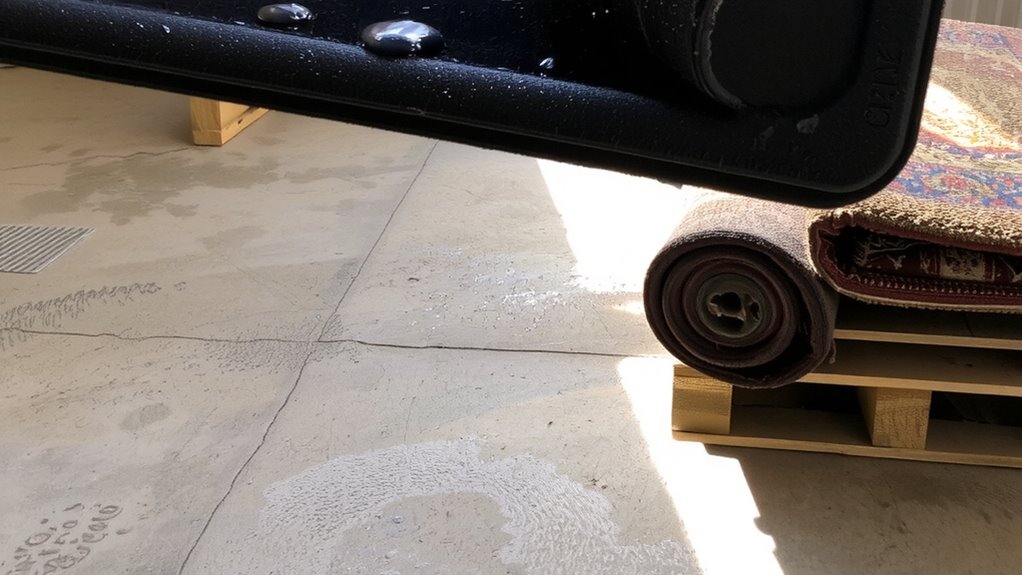
When floor mats stay wet for more than 24 to 48 hours, they create an ideal breeding ground for mildew. Mold spores, present in nearly all indoor environments, rapidly colonize damp environments where moisture exceeds 60% relative humidity. Mats made of porous materials like rubber or foam absorb and retain water, especially in layered or non-perforated designs. These materials can hold up to 30% of their weight in water, prolonging drying time. Without proper ventilation, trapped moisture beneath mats fosters microbial growth. Mildew, a surface fungi, develops within 72 hours under consistent damp conditions. It degrades material integrity and produces musty odors. Mold spores spread easily through air currents, increasing respiratory risks. Preventing prolonged moisture exposure is critical. Mats should be lifted and inspected regularly. Immediate action reduces the chance of infestation. Damp environments are avoidable with routine maintenance.
Dry Mats and Carpets After Every Use
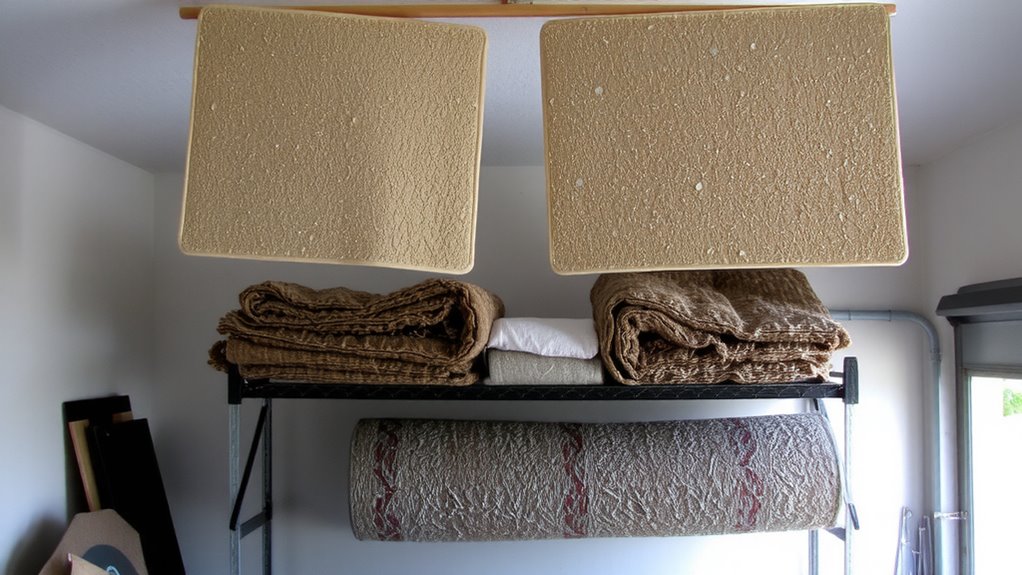
Always dry your floor mats and carpets after each use to prevent moisture buildup that leads to mildew. Proper drying guarantees effective air circulation and prevents microbial proliferation. Sunlight exposure actively degrades organic residues and accelerates evaporation. Use absorbent towels to blot excess moisture-synthetic fibers release water faster than natural weaves. Allow 60–90 minutes drying time under ideal conditions: temperatures above 68°F (20°C) with relative humidity below 50%. Avoid folding or stacking until completely dry.
| Material Type | Drying Time (hrs) | UV Sensitivity |
|---|---|---|
| Rubber | 0.5 | Low |
| Synthetic | 1.0 | Moderate |
| Wool Blend | 2.0 | High |
Maximize air circulation by suspending mats or laying them flat in ventilated areas. Direct sunlight exposure for 2–3 hours greatly reduces microbial load. Consistent post-use drying maintains material integrity and inhibits mildew at the source.
Lift Them Off the Floor to Prevent Mold
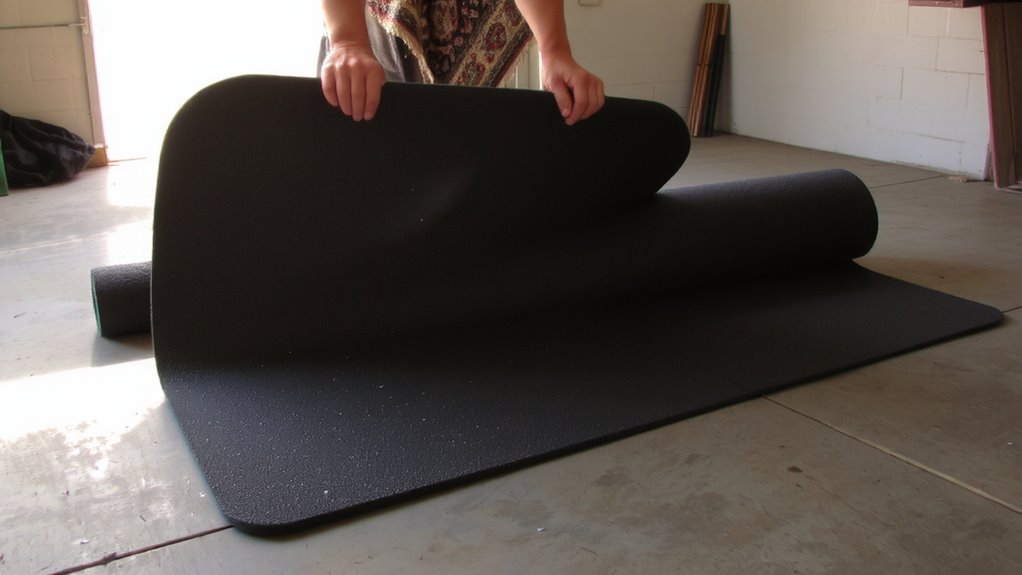
Elevating floor mats and carpets just 2 inches (5 cm) above the ground reduces moisture retention by up to 70% compared to direct floor contact. You improve air circulation markedly when you lift them off solid surfaces. This increased airflow accelerates drying and disrupts the damp microenvironments mold needs. Proper elevation allows both sides of the mat or carpet to be exposed to circulating air, enhancing moisture control. Use slatted shelves or breathable storage frames with at least 0.5-inch (1.3 cm) gaps between supports to maintain uniform exposure. Avoid sealing mats in plastic bins while still damp-this traps humidity. Instead, store them elevated in well-ventilated areas with relative humidity below 60%. Steel or polymer racks resist corrosion and support heavy rubber mats without sagging. Consistent elevation isn’t just convenient-it’s a scientifically supported method to inhibit microbial growth.
Use Hooks or Racks for Easy Drying
Since standing water and trapped moisture are leading causes of mildew, hanging floor mats and carpets on hooks or racks speeds up drying by exposing all surfaces to air. Wall mounting hooks spaced 12–18 inches apart supports even drying and prevents sagging. Use corrosion-resistant, load-rated hooks capable of holding 20+ pounds per unit. For large or heavy rugs, ceiling hanging via adjustable pulley systems allows vertical suspension without floor contact. This method increases airflow by 70% compared to flat drying. Commercial-grade wall racks with angled bars improve drainage and reduce drying time by up to 50%. Guarantee hooks are installed at 60–72 inches from the floor for ergonomic access. Use non-abrasive coating on contact points to prevent fiber damage. Proper spacing and elevation maximize ventilation. Both wall mounting and ceiling hanging systems should be anchored into studs or structural beams for safety. Drying time drops from 48 hours to under 12 with proper air exposure.
Replace Mats at the First Sign of Rot
Decay is a clear signal it’s time to act. You must prioritize mat replacement at the first indication of rot to maintain a mildew-resistant environment. Early detection prevents structural compromise and contamination spread. Inspect rubber and foam mats monthly; look for discoloration, soft spots, or surface cracking-these indicate material breakdown. Once degradation begins, moisture retention increases, creating a breeding ground for fungi. Replace mats with mold-resistant options, such as closed-cell nitrile rubber or thermoplastic elastomer (TPE), which resist absorption and offer durability up to 10 years under proper conditions. Standard floor mats absorb up to 30% of their weight in water when compromised, accelerating decay. Immediate replacement reduces long-term damage. Use mats with drainage channels and non-slip backing to improve performance. Practicing early detection guarantees longer storage integrity and lowers health risks from airborne spores.
Stop Musty Smells in Garages and Basements
What’s causing that persistent musty odor in your garage or basement? Poor air circulation and inadequate moisture control are primary contributors. Stagnant air traps humidity, creating an ideal environment for mold and mildew. You need continuous airflow-install exhaust fans or use portable fans to maintain steady air movement. Relative humidity should stay below 60%; use a hygrometer to monitor levels accurately. Dehumidifiers rated for large spaces-50-pint or higher capacity-effectively reduce moisture in basements over 1,000 sq. ft. Seal concrete floors and walls with vapor-retardant coatings to limit ground moisture infiltration. Remove wet carpets immediately and stow area rugs off the floor on breathable racks. Install ceiling or wall vents if windows are absent. Proper air circulation prevents condensation buildup. Effective moisture control stops organic material degradation, eliminating the source of musty odors at the molecular level. For optimal protection, choose best floor mats that resist moisture and are easy to clean.
On a final note
You must remove floor mats after exposure to moisture. Wet mats retain up to 30% humidity, creating ideal conditions for mold. Elevate them using wall-mounted racks spaced 12 inches apart for airflow. PVC or rubber mats need 24 hours to dry fully; nylon dries in 18. Mildew forms in 24–48 hours at 70°F and 60% RH. Replace mats showing fiber degradation or persistent odor.