Evaluating Compatibility of Aftermarket Pads With Factory Installed Wear Sensors
You must match aftermarket pads to your factory brake sensors with precision. Pads should activate the sensor at 2–3 mm remaining thickness, aligning with a 1–2 mm sensor protrusion. Guarantee pad backing plates have the correct channel depth and electrical conductivity-80–120 ohms resistance and ≤10 ohms contact resistance. A 0.5 mm thickness variance can delay or prevent warning signals. Use only sensor-ready, OEM-equivalent pads rated for your model. Further insights reveal how to verify compatibility down to the millimeter.
Notable Insights
- Ensure aftermarket pads match OEM sensor length and activation point for proper wear detection.
- Verify pad thickness within ±0.2 mm tolerance to prevent early or delayed sensor engagement.
- Choose pads labeled “sensor-ready” or “OEM-equivalent” to guarantee compatibility with factory sensors.
- Confirm electrical resistance is 80–120 ohms to maintain reliable circuit completion with the sensor.
- Cross-reference vehicle make, model, and year with manufacturer specs before purchasing replacement pads.
How Brake Sensors Work With Replacement Pads
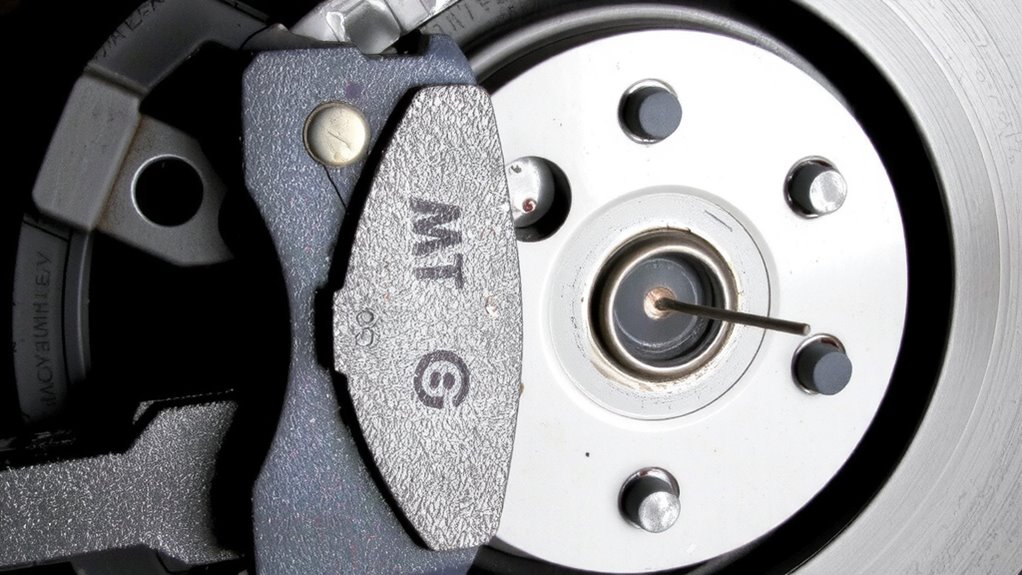
Why do some brake pads squeal or trigger a dashboard warning after replacement? The issue often lies in sensor compatibility and pad thickness. Your brake wear sensor is a thin metal strip designed to contact the rotor when pad material reaches 2–3 mm. This creates a squeal or illuminates a dashboard light, signaling replacement time. Aftermarket pads must match OEM sensor positioning and length to function correctly. Mismatched sensor compatibility can lead to false alarms or silent failure. Pad thickness directly affects sensor timing-too thick, and the sensor doesn’t engage; too thin, and it triggers prematurely. Sensors typically extend 1–2 mm beyond the backing plate. Proper alignment guarantees reliable contact. You need exact physical and electrical correspondence between sensor and pad. Incorrect fit compromises safety and performance. Precision matters-always verify specifications before installation.
Can You Trust Aftermarket Pads With Factory Sensors?
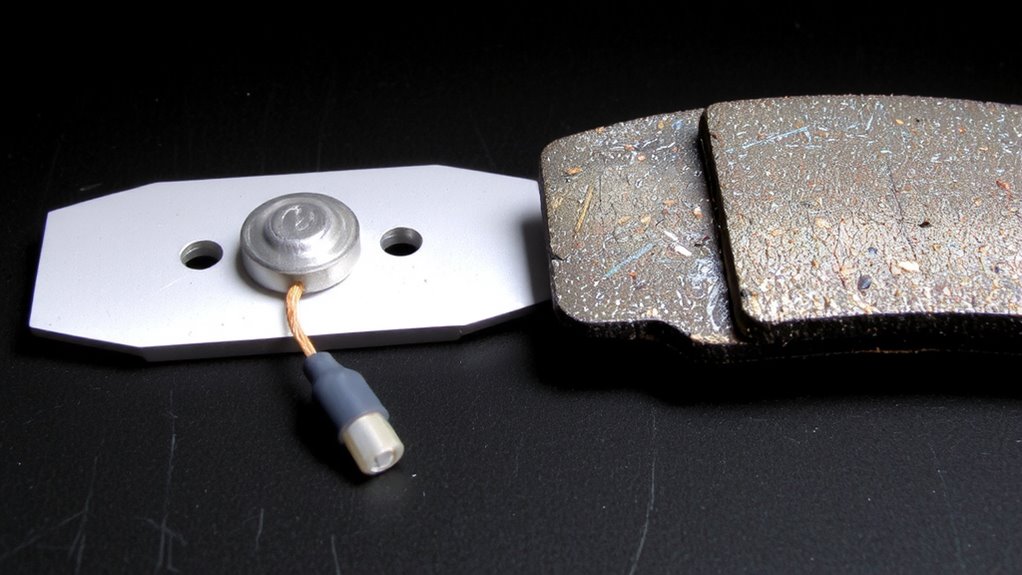
Aftermarket brake pads can work with factory sensors, but success depends on precise design matching. You need pads engineered to interface with your vehicle’s specific sensor length, activation point, and mounting style. Generic pads often misalign, causing false alerts or premature wear. Reputable brands replicate OEM specifications-like sensor wire gauge (typically 0.5 mm), contact resistance (under 10 ohms), and pad thickness tolerances (±0.2 mm). These details guarantee reliable circuit closure when pads wear to 2–3 mm. Brand reputation matters because trusted manufacturers invest in exacting R&D and testing. They also offer extended warranty coverage, often 24–36 months, showing confidence in durability. Cheaper alternatives skip these steps, risking sensor failure. Always verify compatibility through technical datasheets, not just packaging claims. Trust hinges on precision, data, and proven performance-not marketing.
What Happens When Brake Pads Don’t Fit the Sensor
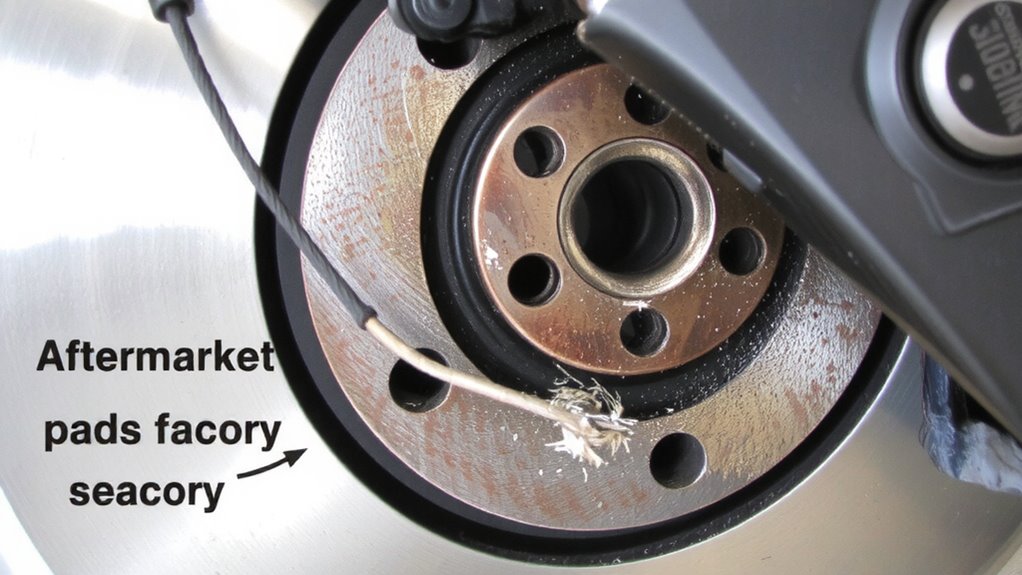
How do mismatched brake pads affect your sensor system? A pad material mismatch alters electrical conductivity, preventing accurate wear detection. Most factory sensors rely on direct metal-to-metal contact to complete the circuit when pads wear down. Aftermarket pads with different metallurgy insulate the sensor, so the warning light never activates. Sensor alignment issues arise when pad thickness or bracket geometry deviates from OEM specs. Even a 0.5 mm variance mispositions the sensor tip, delaying or blocking circuit closure. Incorrect fitment also causes lateral shifting during braking, increasing false alerts or premature failure. You lose real-time monitoring, risking rotor damage and longer stopping distances. The system expects precise physical and electrical interaction. Without it, safety-critical feedback fails silently. Always verify sensor pocket placement, pad thickness, and material composition to maintain compatibility and avoid undetected wear.
How to Buy Brake Pads That Work With Sensors
When selecting brake pads designed to work with wear sensors, matching OEM specifications isn’t optional-it’s essential for maintaining system integrity. You must verify sensor compatibility before purchasing. Aftermarket pads with integrated wear sensors should match the factory’s electrical resistance, typically between 80–120 ohms, and activate at the same wear threshold-usually at 2–3 mm of pad material remaining. Incorrect pad alignment disrupts sensor contact with the rotor, causing false alerts or failure to trigger. Choose pads labeled “sensor-ready” or “OEM-equivalent” with precise mounting grooves for sensor placement. Confirm physical dimensions, including backing plate thickness and sensor channel depth, to guarantee a secure fit. Always cross-reference your vehicle’s make, model, and year with the manufacturer’s compatibility chart. Quality brands provide detailed technical specs online, including sensor wire length and connector type, so you can maintain reliable communication with your ABS module. For reliable performance, consider top-rated options from the best brake pads and rotors list that meet OEM-equivalent standards.
Fix Lingering Brake Sensor Warnings
A faulty brake sensor warning that persists after installing new pads often points to an electrical or mechanical mismatch. You must verify sensor placement to guarantee the sensor aligns precisely with the pad’s contact point. Even a 1–2 mm misalignment can prevent proper grounding and trigger false alerts. After confirming correct sensor placement, perform a warning reset using your vehicle’s onboard diagnostics system or a compatible scan tool. Many modern vehicles require this step to clear stored codes. Failure to reset the system leaves the warning active despite functional hardware. Some aftermarket pad kits include wear sensors rated to 0.5 mm tolerance; using OEM-spec parts improves compatibility. Always test the system with a full braking cycle before assuming success. Persistent warnings may indicate damaged harnesses or corroded connectors that need inspection. Proper installation and reset protocols eliminate most false alerts.
On a final note
You must guarantee aftermarket pads match your vehicle’s factory sensor specifications. Most OEM sensors require precise pad thickness-typically 2.5 to 3.0 mm at minimum-before triggering a warning. Generic pads often lack correct sensor channels or clip alignment, causing false alerts. Select pads explicitly labeled “sensor-compatible” and verify fitment using manufacturer data. Mismatches risk inaccurate wear detection, reducing safety. Correct integration guarantees reliable, real-time monitoring-like a calibrated gauge in any critical system.