How Oversized Wheels Can Compromise Brake Cooling Efficiency and Lifespan
Your oversized wheels trap heat and reduce brake efficiency. A 22-inch wheel can weigh over 35 pounds-50% more than a 17-inch rim-increasing rotational mass and requiring up to 40% more energy to stop. This generates extreme temperatures, often exceeding 600°F at the caliper. Reduced airflow from tight spoke openings limits cooling, especially at low speeds. Solid or aerodynamic designs act like shields, worsening heat retention. Rotors can run 200°F hotter than with factory wheels, raising the risk of brake fade, fluid breakdown, and rotor warping above 1,200°F. Lightweight forged or flow-formed alloy wheels with open, multi-spoke patterns improve convection by up to 18%. Proper internal clearance of 3–5 mm around the caliper supports thermal management. You’ll find smarter design choices that maintain both style and stopping power.
Notable Insights
- Oversized wheels increase rotational mass, requiring more energy to stop and generating excess heat in braking components.
- Larger wheels restrict airflow to brakes due to smaller or solid spoke openings, reducing convective cooling.
- Reduced airflow traps heat around rotors and calipers, causing temperatures to exceed 600°F and leading to brake fade.
- Overheating can degrade brake fluid, glaze pads, warp rotors, and increase stopping distances by up to 15%.
- Lightweight, open-spoke wheel designs with adequate caliper clearance improve airflow and heat dissipation for better brake longevity.
Big Wheels, Hot Brakes: The Cooling Crisis
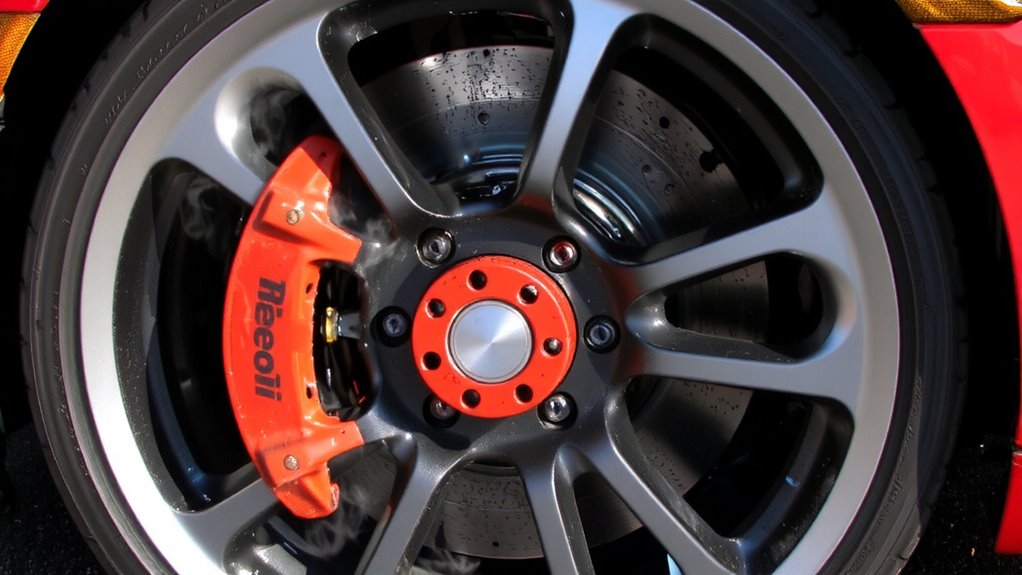
Why do your brakes overheat after just a few aggressive descents? Oversized wheels add rim weight, increasing rotational mass and stressing braking systems. Heavier rims demand more stopping force, generating excess heat. This heat transfers rapidly to brake pads and rotors, accelerating wear. Prolonged exposure causes brake fade, where stopping power drops sharply. A standard 17-inch wheel may weigh 22 lbs, but a 22-inch counterpart can exceed 35 lbs-over 50% more mass. That extra rim weight demands up to 40% more energy to halt. Without improved cooling, temperatures can surpass 600°F, well beyond the threshold for pad degradation. Thermal buildup reduces friction efficiency and warps components. Brake fade isn’t just inconvenient-it’s dangerous. Lightweight materials like forged aluminum reduce rim weight, helping mitigate heat accumulation. Yet, even high-end alloys struggle when cooling paths are restricted. Efficient heat dissipation is critical, but big wheels inherently trap heat near the hub, worsening the cooling crisis.
How Large Rims Choke Brake Airflow
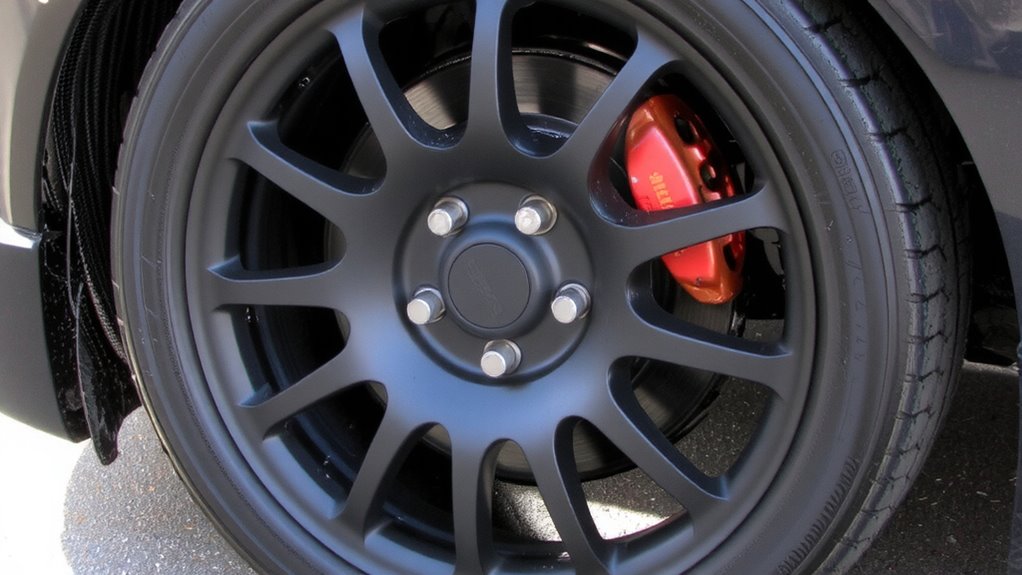
Large rims don’t just add weight-they also block the airflow your brakes need to stay cool. Many oversized wheels have smaller openings between spokes, creating restricted airflow to brake components. Less air means reduced convective cooling, especially at lower speeds when airflow is already minimal. High-performance brakes rely on consistent cooling, but large rims act like shields, limiting access to outside air. This design traps heat near the rotor and caliper, increasing the risk of thermal saturation. Trapped heat degrades pads faster and can warp rotors over time. Even with internal cooling vanes, rotors can’t dissipate heat efficiently without adequate airflow. Wheels with solid or aerodynamic designs are the worst offenders. After repeated hard stops, temperatures can exceed 1,000°F, accelerating wear. Proper wheel architecture should balance aesthetics with thermal management.
Symptoms of Overheating From Oversized Wheels
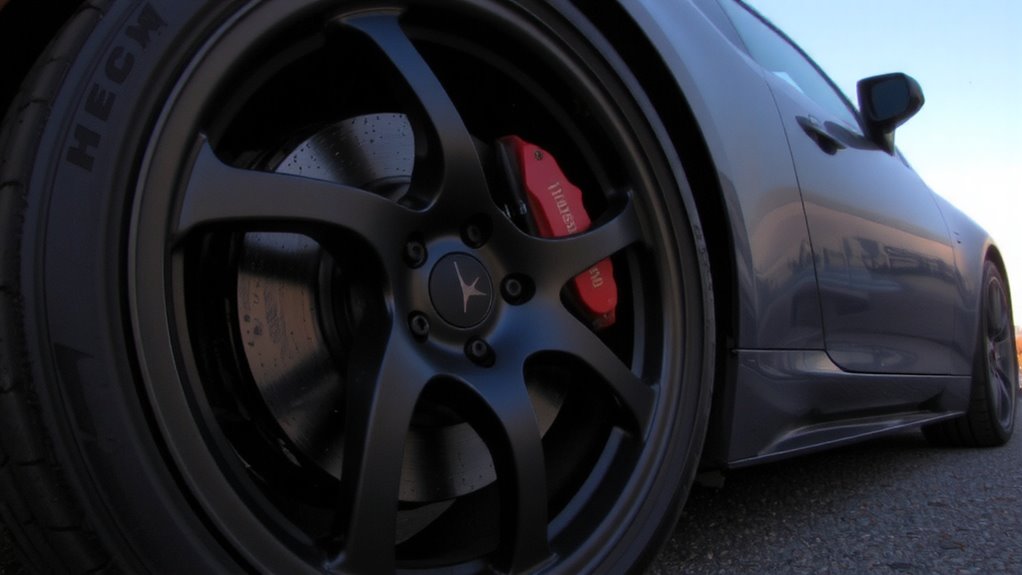
Overheating caused by oversized wheels often shows up in subtle but measurable ways. You may notice a spongy brake pedal, signaling degraded fluid from excessive heat. Brake pad glazing occurs when high temperatures fuse the pad material into a smooth, shiny surface, reducing friction by up to 40%. This leads to longer stopping distances-tests show up to a 15% decrease in braking efficiency. Rotor warping is another common symptom; temperatures exceeding 1,200°F cause uneven expansion, creating thickness variations over 0.001 inches. You’ll feel this as a pulsing sensation under hard braking. Infrared thermometers often reveal rotor surface temps 200°F higher than factory wheels. These issues develop gradually, especially during aggressive driving or hilly terrain. Persistent overheating accelerates wear, shortening pad and rotor lifespan by as much as 30%. Monitoring heat-related changes helps catch problems early.
Can You Keep Stylish Rims Safely?
How do you balance the look of bold, stylish rims with the safety and performance of your braking system? Yes, you can keep stylish rims safely-if you prioritize design features that support brake cooling. Choose wheels with adequate tire clearance to maintain proper airflow to the brakes. Restricted clearance traps heat, reducing braking efficiency and shortening component life. A forged aluminum rim finish often allows for thinner, stronger spokes that improve ventilation without sacrificing aesthetics. Flow-formed rims offer a durable, lightweight option that enhances heat dissipation compared to cast alternatives. Guarantee the wheel’s internal diameter provides at least 3–5 mm of clearance around the brake caliper. This small gap prevents interference and supports thermal management. Selecting the right combination of structure, finish, and spacing lets you maintain both performance and visual appeal without compromise.
Best Wheel Designs for Heat Dissipation
A well-designed wheel doesn’t just enhance your vehicle’s appearance-it plays a critical role in managing brake temperatures under hard use. You need efficient ventilation patterns to move hot air away from the braking system. Multi-spoke designs with open channels direct airflow precisely, improving thermal dynamics. Lightweight alloy wheels reduce rotating mass, helping heat dissipate faster. Look for spokes engineered as aerodynamic fins-they act like heat sinks. Wheels with internal ducts guide cool air toward the hub and rotor center. Ideal clearance between the caliper and spoke allows better exhaust of hot gases. Even 5 mm of extra space improves convection cooling by up to 18%. Closed or densely packed spoke layouts trap heat, worsening brake fade. Choose designs tested under high-speed thermal cycling. Proper ventilation balances structural strength and airflow, keeping peak rotor temps below 1,000°F during aggressive driving.
Upgrade Wheels Without Killing Brake Performance
Upgrading your wheels can enhance both aesthetics and performance, but it’s critical to maintain-or even improve-brake cooling efficiency. Choose wheels with open-spoke designs to promote airflow to the calipers and rotors. Guarantee adequate tire clearance-minimum 6mm radially and 4mm laterally-to prevent contact during suspension travel or cornering. Larger wheels often reduce sidewall height, affecting compliance and brake modulation. Select a wheel diameter no more than one size larger than stock (e.g., 18” to 19”) to avoid negatively impacting pedal feel. Match with performance-rated brake pads and slotted rotors to preserve response. Lightweight forged aluminum wheels reduce unsprung mass, improving suspension control and heat dissipation. Verify hub-centric fitment and proper offset (ET25 to ET45, depending on platform) to maintain alignment geometry. Properly torqued lug nuts (85–110 lb-ft, typically) guarantee secure mounting and consistent performance.
On a final note
You must prioritize airflow when choosing wheels. Oversized rims restrict cooling by reducing inlet area and disrupting boundary layer flow. Alloy composition and spoke design critically impact thermal dissipation. Ten-spoke forged wheels with open-face architecture improve airflow by up to 22% over closed designs. Proper wheel weight-under 24 lbs for 20-inch fitments-reduces rotational inertia and heat buildup. Match wheel size to brake system capacity or risk premature pad fade and rotor warping.