Inspecting Ball Joints During Front Suspension Service on a GMC Sierra
You must inspect your GMC Sierra’s ball joints during front suspension service to guarantee safe steering and suspension function. Excessive play-over 0.050 inches-compromises control and alignment. Check for torn boots, clunking noises, or uneven tire wear. Use a pry bar or perform a tire rock test at the 12 and 6 o’clock positions. Confirm movement stays under factory limits. Always support the vehicle safely on jack stands. Next steps reveal precise tools and replacement thresholds.
Notable Insights
- Lift the front end using factory lift points and secure with jack stands rated for 3+ tons each.
- Inspect ball joint boots for tears, cracks, or grease leaks indicating contamination and potential failure.
- Check vertical play by rocking tire top-to-bottom at 12 and 6 o’clock with less than 0.050 inches acceptable.
- Use a pry bar under the control arm to detect looseness exceeding GM’s 0.25-inch service limit.
- Replace ball joints showing clunking, excessive play, or wear beyond factory specifications during suspension service.
Why Bad Ball Joints Are Dangerous on a GMC Sierra
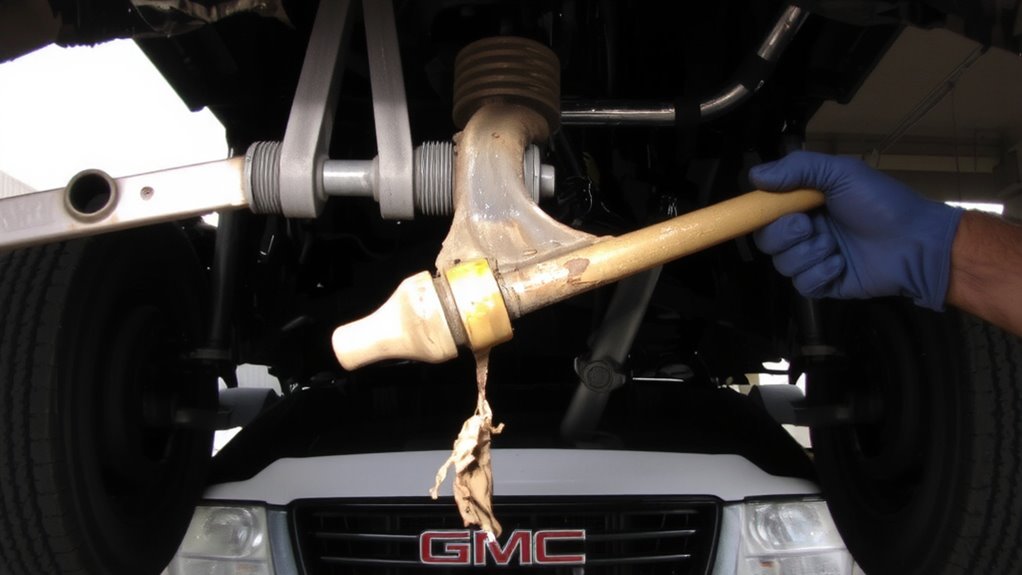
While it may seem like a small part, a failing ball joint on your GMC Sierra can lead to serious safety issues. These components connect the steering knuckles to the control arms, allowing smooth suspension movement and wheel articulation. When worn, you’ll notice loose steering because excessive play develops in the joint-up to 0.25 inches of vertical movement exceeds GM’s service limit. This slack compromises control, especially during sudden maneuvers. A bad ball joint also causes uneven alignment, altering camber and toe angles beyond factory specs, which means tires wear prematurely on one edge. Without intervention, the joint may seize or separate, risking complete wheel collapse. Unlike gradual brake wear, ball joint failure can be sudden. The load-bearing design supports over 1,500 pounds per corner under normal operation. Ignoring symptoms jeopardizes vehicle stability, making inspection critical even if no visible damage appears.
Essential Tools to Inspect GMC Sierra Ball Joints
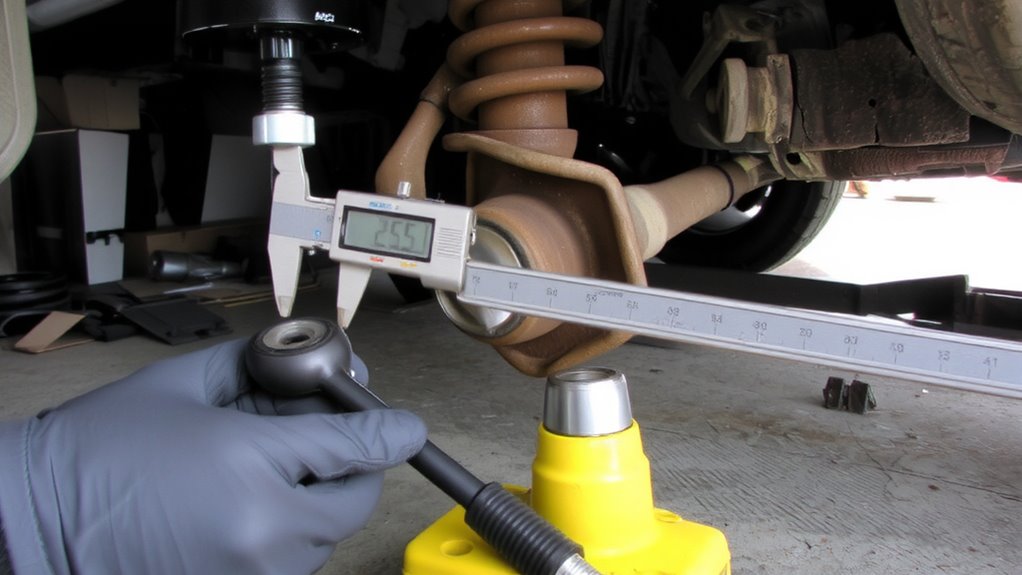
You’ll need the right tools to inspect your GMC Sierra’s ball joints accurately and safely. A ball joint wear gauge measures vertical and horizontal play, typically detecting movement beyond 0.050 inches-exceeding OEM specs. Use a pry bar (at least 36 inches) to check for looseness; excessive movement indicates failure. A torque wrench guarantees proper fastener tightness during inspection, maintaining steering geometry. Include a digital caliper to measure stud and socket dimensions, comparing them to factory specs. A flashlight and inspection mirror help spot cracks or boot damage. These tools preserve suspension alignment by identifying wear before it alters critical angles. Improper alignment affects tire wear and handling. Always reference service manual tolerances. Accurate tools prevent misdiagnosis and guarantee the front end operates within design limits, supporting vehicle stability and safety.
Lift and Support Your Sierra Safely
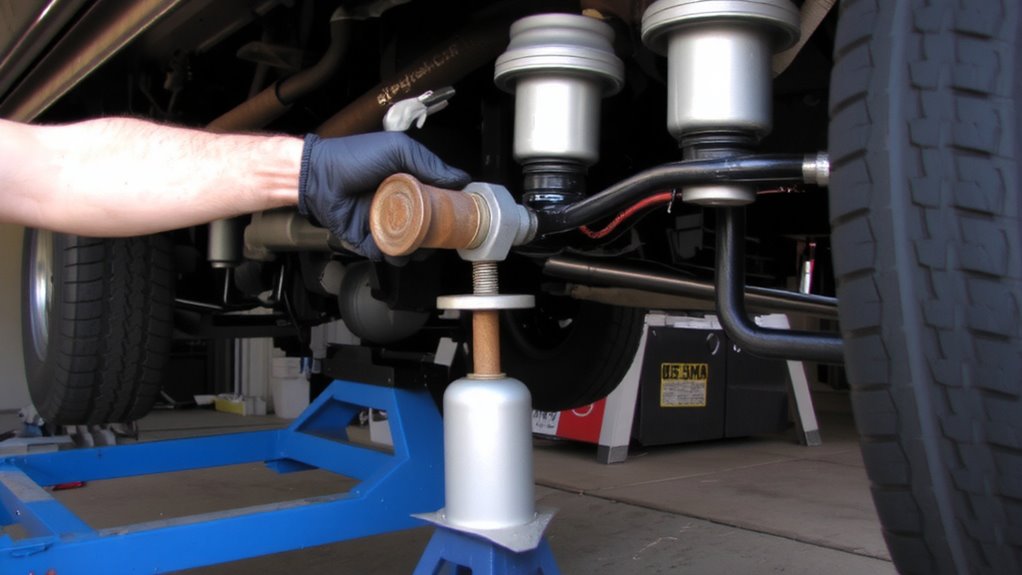
Always prioritize safety when moving from inspection prep to lifting your GMC Sierra. Use proper lift techniques and reliable support methods to prevent accidents. Position a hydraulic floor jack under the factory-recommended lift points-typically the lower control arms or frame rails-avoiding soft suspension components. Lift slowly and evenly, raising one end at a time. Once the tires clear the ground by at least 6 inches, secure the Sierra with jack stands rated for at least 3 tons each. Place stands under reinforced frame sections, never on control arms or subframes. Wheel chocks on the rear tires add stability. Never rely solely on a jack-the jack stands are your primary support methods. Confirm the truck is stable before sliding underneath. Proper setup guarantees safe, effective ball joint inspection. For lightweight yet durable lifting solutions, consider an aluminum floor jack that offers high strength without added weight.
How to Test Ball Joints for Play – No Special Tools Needed
How can you tell if your GMC Sierra’s ball joints are worn without specialized tools? Use visual inspection and manual rocking to check for excess movement. First, inspect the boot for tears or grease leaks-damaged boots let contaminants in and cause premature wear. Then, grip the tire at 12 and 6 o’clock and rock it vertically. Excessive up-and-down movement indicates play in the ball joint.
| Action | Purpose | Expected Result |
|---|---|---|
| Visual inspection | Check boot condition | No cracks, tears, or grease leaks |
| Manual rocking | Detect vertical play | Less than 0.050 inches (1.27 mm) movement |
| Observe pivot point | Monitor joint motion | Smooth, controlled movement |
| Compare sides | Identify asymmetry | Both sides feel consistent |
| Repeat per wheel | Guarantee full check | Complete for all front ball joints |
Common Signs of Worn or Failing Ball Joints on a GMC Sierra
What if the steering on your GMC Sierra starts to feel loose or unpredictable? That’s often your first clue the ball joints are wearing out. Steering wander, where the truck drifts or pulls without input, indicates excessive play in the joint. You’ll notice vague steering response, especially on uneven roads. A common symptom tied to failing ball joints is uneven wear on your front tires. Look for cupping or feathering on the tread edges-this pattern points to alignment instability caused by weakened suspension joints. Most OEM ball joints allow no more than 0.050 inches of vertical movement before needing replacement. Any more than that, and control diminishes. Listen for clunking noises when hitting bumps; that’s metal-on-metal impact from internal joint damage. These signs mean the load-bearing stud and socket can’t maintain proper geometry. Ignoring them risks premature tire damage and reduced steering control. Using the right best grease for ball joints ensures smoother operation and extends the life of the joint.
Replace or Keep an Eye? Know When to Act on GMC Sierra Ball Joints
When should you pull the trigger on new ball joints instead of just monitoring them? Replace them if you measure more than 0.050 inches of vertical play at the joint. Excessive movement compromises steering alignment and accelerates tire wear. If your Sierra’s ball joints have serviceable zerk fittings, perform regular ball joint lubrication every 6,000 miles to extend service life. Sealed joints don’t allow lubrication, so monitor them more closely. Persistent clunking or uneven front tire wear often confirms failure. Also, if play is detected during a digital tire alignment setup, replacement is non-negotiable. Never wait for complete joint failure-it risks loss of vehicle control. Replace both lower and upper joints in pairs to maintain balanced suspension geometry. Use OEM-specified torque when installing. Proper ball joint function guarantees precise steering alignment and overall front-end safety.
On a final note
You now know how to inspect ball joints safely and effectively. Always begin with a secure lift using jack stands rated for your Sierra’s weight. Check for play exceeding 0.05 inches vertically or laterally-this indicates wear. Use a pry bar under the control arm to test movement. GM OEM ball joints have a specified service limit of 1/16 inch play. Exceeding this requires replacement. Safety depends on precision.