Replacing Dried-Out Dust Boots on Caliper Guide Rods Every Six Years Proactively
You should replace dried-out dust boots on caliper guide rods every six years to prevent brake failure. These boots, made of nitrile rubber, degrade from ozone, UV exposure, and temperatures from -40°F to 250°F. Cracked boots let in dirt and moisture, causing corrosion in the guide pin bores. Even slight corrosion beyond 0.005 inch tolerance creates binding, leading to uneven pad wear and seized calipers. Replacing them every 30,000 to 50,000 miles-or during pad changes-keeps your caliper moving freely. Proactive swaps take 30 minutes with basic tools and avoid $600 per axle repairs. The right boot guarantees a 0.5 mm interference fit on 7–8 mm pins and withstands brake fluids and thermal cycling. Knowing the exact part number for your model guarantees proper sealing and long-term reliability. There’s more to getting this job right than just swapping rubber.
Notable Insights
- Replace caliper guide pin dust boots every six years to prevent drying, cracking, and contamination ingress.
- Proactive replacement maintains seal integrity and protects against corrosion of guide pins and bores.
- Aged boots lose elasticity due to temperature swings, UV exposure, and ozone, leading to failure.
- Inspect boots during brake pad changes and replace if hardened, cracked, or missing to avoid costly caliper damage.
- Use OEM-spec nitrile rubber boots for optimal resistance to brake fluid, ozone, and operating temperatures.
Why Brake Caliper Dust Boots Fail
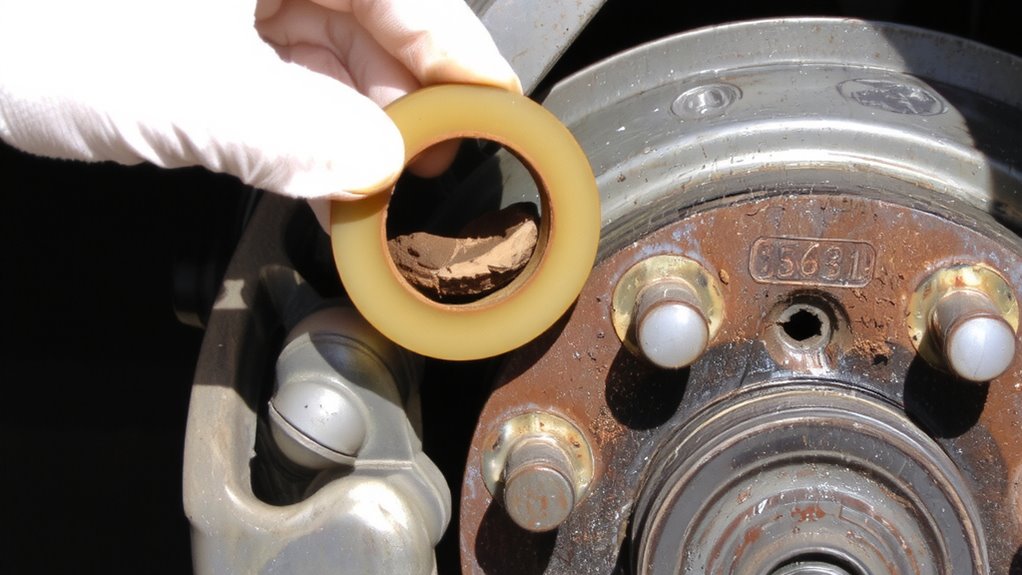
While they’re small and often overlooked, brake caliper dust boots play a critical role in protecting the guide pins from dirt, moisture, and road debris. You’ll find they’re typically made from synthetic rubber or thermoplastic elastomers, materials chosen for flexibility and sealing performance. Over time, material degradation occurs due to continuous environmental exposure. UV radiation, ozone, road salts, and temperature swings from -40°F to 250°F accelerate this breakdown. The boots harden, crack, and lose elasticity, compromising their seal. Microfractures form at stress points, especially where the boot flexes around the guide pin. Even high-quality boots last only 6 to 8 years under normal conditions. You can’t reverse this aging process-once degradation begins, the protective function declines steadily. Prevention, not repair, is key. Regular inspection reveals early signs like discoloration, brittleness, or surface crazing.
How Failed Boots Cause Expensive Brake Damage
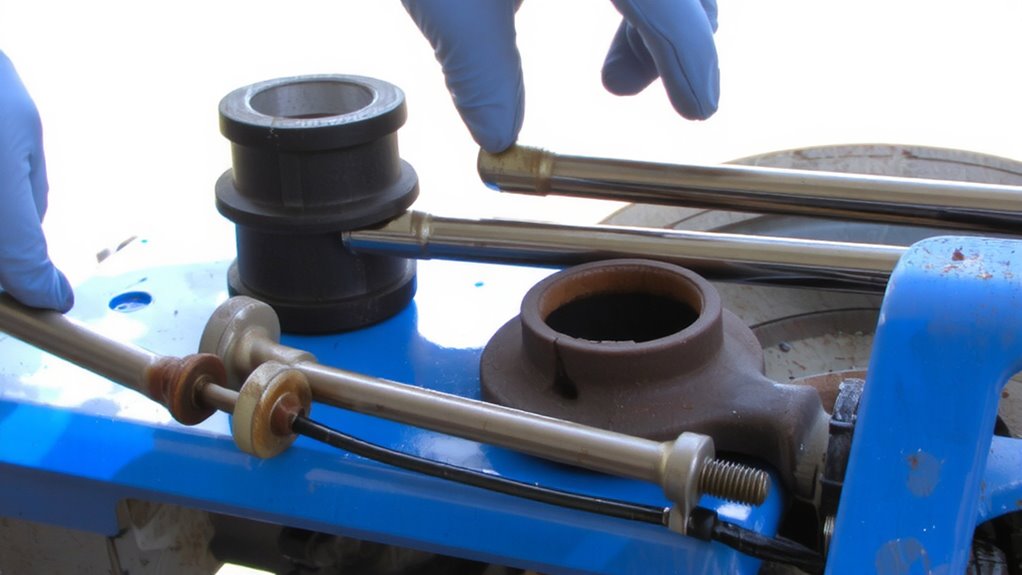
When dust boots fail, contaminants gain direct access to the caliper guide pins, setting off a chain reaction of brake system damage. Dirt, moisture, and road salts infiltrate the pin bores, accelerating corrosion buildup. This rust restricts pin movement, increasing friction beyond the designed 0.002–0.005 inch clearance tolerance. As corrosion worsens, guide pins lose lateral float, leading to uneven pad wear and reduced braking efficiency. You’ll notice longer stopping distances and uneven pad taper-symptoms of inadequate caliper float. Without full range of motion, the caliper housing can’t slide properly, causing premature rotor grooving. Over time, this degradation results in seized pins, where the pin is completely immobilized. Seized pins prevent brake release, causing constant pad drag, excessive heat, and potential brake fade. Left unchecked, this leads to warped rotors, melted caliper boots, and complete caliper replacement-costing up to $600 per axle.
When To Replace Guide Pin Dust Boots
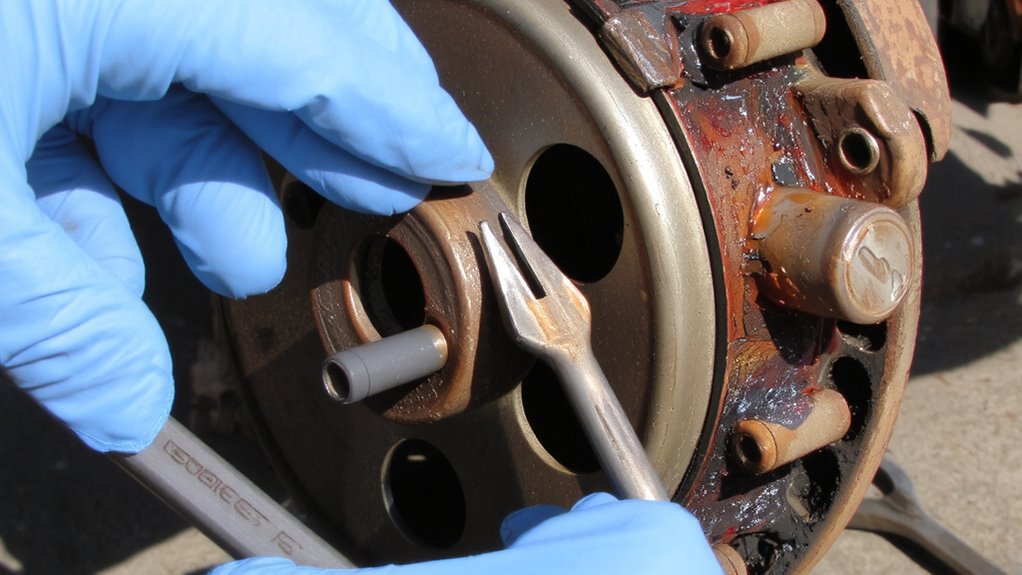
A good rule of thumb is to replace guide pin dust boots during every brake pad service-typically every 30,000 to 50,000 miles. This timing aligns with normal brake pad wear cycles and helps maintain proper caliper alignment. Ignoring boot condition can let dirt and moisture into the guide pin bore, increasing friction and risking uneven pad wear. You’re better off replacing them proactively than risking a stuck caliper.
| Condition | Action Needed |
|---|---|
| Cracked or swollen boot | Replace immediately |
| Boot dislodged or missing | Replace during pad service |
You can’t guarantee correct caliper alignment if the guide pins are corroded or binding. Fresh dust boots seal out contaminants, allowing smooth movement. Replace them with every brake job-it’s a low-cost part that protects expensive components. Caliper function depends on clean, free-floating pins, and you’ll extend brake life by maintaining this simple part.
Replace Dust Boots In 30 Minutes
Replacing guide pin dust boots takes about 30 minutes and requires only basic hand tools. This DIY maintenance job prevents moisture and debris from contaminating the slide pins, avoiding brake sticking and uneven pad wear. You’ll need a 12mm socket, C-clamp, and rubber mallet-common tools in most home garages. Remove the caliper mounting bolts, then gently pivot the caliper upward without disconnecting the brake line. Slide out the guide pins, peel off the cracked original boots, and press new ones firmly into place until they click. Time efficiency is key: most professionals complete the task in under half an hour. The boots are made of nitrile rubber, designed to resist ozone and temperature swings from -40°C to 125°C. Proper reassembly guarantees smooth caliper movement and consistent braking performance.
Pick The Right Dust Boot For Your Car
You’ve just finished replacing worn dust boots and seen how quickly the job goes with the right tools. Now, picking the correct dust boot for your car matters just as much as the replacement process. Material compatibility guarantees long-term performance-most OEM boots use nitrile rubber for its resistance to brake fluid and temperature extremes between -40°C and 120°C. Aftermarket silicone options offer wider temperature tolerance but may lack rigidity. Always verify inner diameter; standard guide pins measure 7–8 mm, requiring a snug 0.5 mm interference fit. Use installation tools like plastic pry bars or dedicated boot expanders to avoid tearing. These tools provide even pressure, reducing misalignment. A poorly chosen boot leads to grit ingress, accelerated caliper wear, and brake drag. Match part numbers to your vehicle’s service manual. Precision matters-your brake system relies on it.
On a final note
You should replace caliper guide pin dust boots every six years. This prevents moisture and debris from contaminating the sliding mechanism. Most boots are made from nitrile rubber or EPDM, rated for -40°C to 120°C operating temps. A compromised seal leads to corroded pins, uneven brake pad wear, and seized calipers. Quality boots have 20–30 Shore A durometer hardness. Installing them takes 30 minutes with basic tools. Match inner diameter to pin size-typically 6–8mm.