How to Inspect Control Arm Bushings for Wear on a Ford Escape
Lift your Ford Escape using a floor jack at the manufacturer’s designated points and secure it with jack stands rated for at least 3,500 lbs. With the suspension unloaded, use an 18-inch pry bar to check for movement at the control arm bushings. More than 1/8 inch of play indicates wear. Look for cracks, splits, or separation between the rubber and metal sleeves. These signs compromise alignment and ride quality. Further details reveal how bushing type and material affect long-term performance.
Notable Insights
- Lift the Ford Escape using a floor jack at manufacturer-specified points and secure it with 3,500+ lb-rated jack stands.
- Visually inspect control arm bushings for cracks, splits, or separation between rubber and metal sleeves.
- Use an 18-inch pry bar to check for excessive play; movement over 1/8 inch indicates worn bushings.
- Look for uneven tire wear or steering wander, which may signal bushing-related alignment issues.
- Confirm bushing integrity by checking for clunking noises and ensuring no metal-to-metal contact during suspension movement.
Signs Your Ford Escape’s Control Arm Bushings Are Worn
What does it mean when your Ford Escape starts clunking over bumps? You’re likely dealing with worn control arm bushings. These rubber or polyurethane components dampen suspension movement and maintain alignment. When they degrade, you’ll notice steering wander-where the vehicle drifts or pulls without input. This happens because the control arm shifts unpredictably, compromising directional stability. Uneven tire wear often follows, especially on the inner or outer edges, due to misaligned camber angles. Typical bushings last 80,000–100,000 miles, but harsh driving or poor road conditions accelerate wear. Inspect for visible cracks, splits, or fluid leakage from the rubber. Excessive play-more than 1/8 inch-confirms failure. A failing bushing won’t hold proper suspension geometry, reducing handling precision and increasing road noise. Ignore it, and you risk damage to tie rods and ball joints. Early detection saves tires and guarantees safer, smoother rides.
What Control Arm Bushings Do (And Why They Matter)
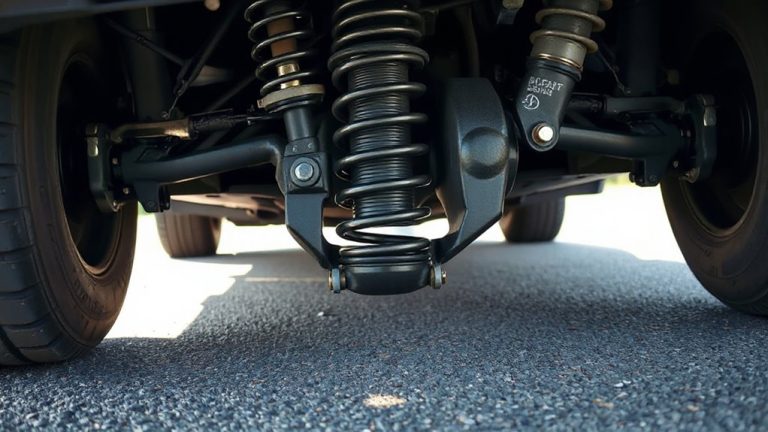
Suspension compliance starts with the control arm bushings-your Ford Escape’s silent partners in ride quality and control. These rubber or polyurethane components connect the control arms to the vehicle’s frame, allowing slight movement while maintaining alignment. They absorb road impacts, directly affecting ride comfort. Without them, metal-to-metal contact would occur, increasing vibration and noise. The bushings provide critical noise isolation by damping high-frequency vibrations from bumps and rough surfaces. Factory bushings typically use soft rubber for ideal ride comfort, while aftermarket polyurethane versions offer increased durability and responsiveness at the cost of some noise isolation. Each bushing is engineered to deform under load, returning to shape-typically rated for 70–90 Shore A hardness. They’re designed to last 80,000 to 100,000 miles under normal driving conditions.
Tools You’ll Need to Inspect Control Arm Bushings
You’ll need the right tools to inspect control arm bushings properly, and starting with the correct equipment guarantees accuracy and safety. Use jack stands and a floor jack rated for your Ford Escape’s weight-typically 3,500 to 4,000 lbs-to access the vehicle safely. Always lift at the manufacturer-designated lift points to prevent frame damage. Wear safety gear, including impact-resistant gloves and ANSI-rated safety glasses, to protect against debris and sharp edges. A pry bar (at least 18 inches long) helps detect bushing play by applying controlled pressure to the control arm. Use a torque wrench to recheck bolt tightness if you loosen them during inspection. A flashlight or LED work light guarantees clear visibility in tight spaces. Digital calipers can measure bushing sleeve displacement if wear is suspected. These tools, combined with factory service manual specifications, guarantee a precise, reliable inspection without guesswork.
How to Safely Inspect Control Arm Bushings
Start by lifting the Ford Escape securely using a floor jack at the manufacturer-specified lift points, then support it with jack stands rated for at least 3,500 lbs to prevent accidental collapse. Lift safety is critical-never rely solely on a jack. Guarantee the vehicle is on level ground and the parking brake is disengaged to avoid uneven stress. Once stable, begin visual checks on the control arm bushings. Use a flashlight to examine each bushing closely. Focus on the front and rear lower control arms, where bushings commonly wear. Avoid prying or forcing components during inspection. Maintain stability-do not crawl under the vehicle without proper support. These steps guarantee accurate, safe evaluation. Always double-check jack stand placement and vehicle stability before performing undercarriage work. Your safety depends on careful procedure and attention to lift safety throughout.
What to Look for: Cracks, Splits, and Excess Movement
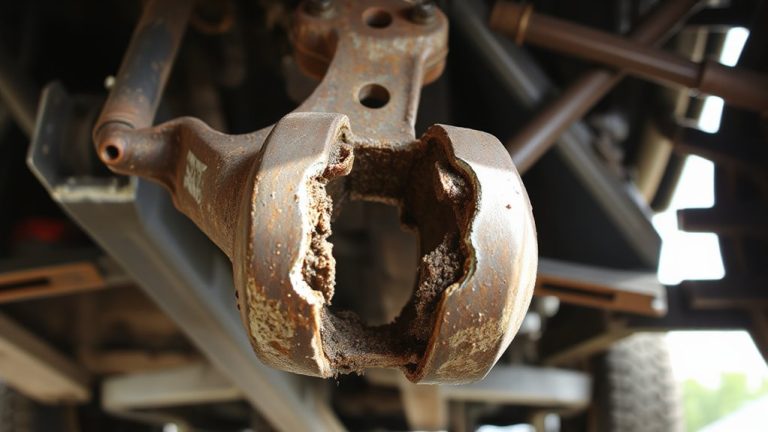
With the Ford Escape securely lifted and supported, you can now examine the control arm bushings for signs of physical damage and wear. Look closely at the rubber portions for cracks, splits, or tears-these are clear indicators of rubber degradation. The bushings should have smooth, intact rubber bonded firmly to the inner and outer metal sleeves. Any visible separation suggests internal failure. Check for metal deformation, such as bent or cracked control arm mounts, which can misalign suspension geometry. Excess movement is another red flag. With the suspension unloaded, grip the control arm and try to move it. More than 1/8 inch of play means the bushings are worn. This looseness creates steering wander and uneven tire wear. Rubber degradation and metal deformation both compromise ride stability and control. Use a pry bar gently to test for hidden internal cracks. Note any visible gaps or bulging in the rubber under pressure.
Should You Replace Worn Bushings or Keep Monitoring?
While minor wear may not demand immediate replacement, any bushing showing cracks extending beyond 1/4 inch in length or exhibiting more than 1/8 inch of radial play should be replaced without delay. You risk compounding damage to suspension components if you keep monitoring severe wear. Safety concerns increase as degraded bushings reduce steering precision and alignment stability, especially under hard braking or evasive maneuvers. Worn bushings allow excessive control arm movement, accelerating tire wear and compromising handling. Ignoring these signs can lead to unsafe driving conditions. The cost implications of waiting often outweigh initial repair expenses, since prolonged neglect may damage ball joints, struts, or chassis mounts. Factory OEM replacements typically cost $40–$75 per bushing, with labor adding $150–$300. Replacing them early guarantees predictable vehicle dynamics and avoids more expensive repairs down the road.
On a final note
You now know how to inspect your Ford Escape’s control arm bushings effectively. Worn bushings compromise alignment and handling. Check for cracks, tears, or separation in the rubber-common signs of deterioration. Excessive suspension play, measured beyond 3mm of movement, indicates failure. Always use proper jack stands and inspect with the suspension unloaded. Replace bushings in pairs if wear exceeds OEM tolerances. Ignoring wear accelerates tire and component damage.