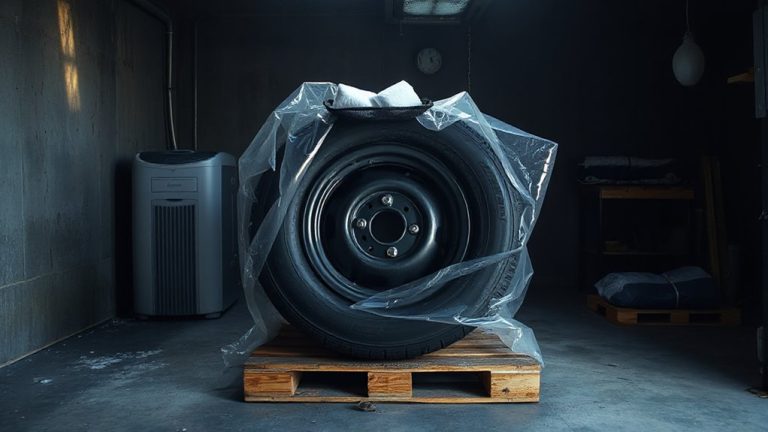
Why Commercial Vehicles Require Reinforced Steel Wheel Options
You need reinforced steel wheels because standard SAE 1020 steel wheels fatigue under heavy loads, developing cracks after 100,000+ cycles. Reinforced versions use high-tensile steel rated at 120,000 psi yield strength, handling 8,000–12,000 pounds per wheel-end safely. They resist warping, maintain alignment, and last 40% longer due to thicker flanges and precision heat treatment. Built to meet SAE J267 standards, they reduce downtime and repair costs. Their durability under thermal and mechanical stress reveals even greater advantages under sustained fleet operation.
Notable Insights
- Standard steel wheels fail under heavy loads due to fatigue from repeated stress cycles.
- Reinforced wheels support over 10,000 pounds per axle with thicker steel and better design.
- High-tensile steel and heat treatment resist cracking and warping in severe conditions.
- Reinforced wheels last up to 40% longer, reducing downtime and lifecycle costs.
- They meet strict durability standards, enhancing safety and tire life in fleet operations.
Why Standard Wheels Fail Under Heavy Loads
Even when built tough, standard steel wheels often can’t handle the relentless stress of heavy commercial loads. You subject them to constant strain, and over time, material fatigue sets in. This occurs when microscopic cracks form due to repeated loading and unloading, typically after 100,000+ road cycles. These cracks grow silently, compromising integrity. Structural fatigue follows, weakening load-bearing zones like the rim flange and hub interface. Standard wheels, often made from SAE 1020 steel with a yield strength of 350 MPa, lack the reinforcement needed for sustained high-torque or overweight conditions. Without upgraded metallurgy or design, they risk sudden failure. You’ll notice spalling or warping only after critical damage occurs. Unlike reinforced options, they don’t redistribute stress efficiently. The result? Premature wear, increased downtime, and safety risks. Material and structural fatigue aren’t just theoretical-they’re measurable failures waiting to happen under excessive load.
How Reinforced Steel Handles Extreme Weight
When you demand more from your commercial vehicle, reinforced steel wheels respond with engineered strength designed to manage extreme weight. These wheels support higher load capacity by using thicker gauge steel and optimized spoke geometry. The increased material density allows them to safely carry payloads exceeding 10,000 pounds per axle. Their design maintains structural integrity under constant stress, distributing forces evenly across the entire wheel. Unlike standard alloys, reinforced steel resists deformation even when fully loaded. The rim and flange are cold-rolled for added hardness, reducing wear during heavy-duty cycles. You’ll find these wheels on Class 6–8 trucks because they meet rigorous industry standards. Their yield strength exceeds 50,000 psi, enabling consistent performance. Reinforced steel doesn’t just tolerate heavy loads-it’s built to master them. You rely on this toughness daily, and the wheel delivers through strength you can count on.
Why Reinforced Wheels Resist Cracking and Warping
Because they’re built with high-tensile steel and precision-engineered heat treatment, reinforced wheels resist cracking and warping under harsh operating conditions. You face constant stress from heavy loads and rough roads, but these wheels fight material fatigue with superior grain structure and uniform thickness. Thermal expansion won’t distort them easily-their design allows even heat distribution during braking and long hauls. Unlike standard wheels, reinforced versions maintain shape and integrity, even under repeated temperature swings and mechanical strain.
| Feature | Standard Wheel | Reinforced Wheel |
|---|---|---|
| Steel Tensile Strength | 500 MPa | 750 MPa |
| Heat Treatment | Basic annealing | Dual-phase quenching |
| Resistance to Warping | Moderate | High |
You reduce downtime and safety risks by choosing reinforcement that stands up to real-world demands.
Built to Last: Reinforced Wheels in Daily Fleet Use
Reinforced wheels don’t just perform under stress-they deliver lasting value in daily fleet operations. You rely on them to maintain high load capacity, routinely supporting 8,000 to 12,000 pounds per wheel-end depending on specifications. Their thicker rim flanges and reinforced bead seats resist deformation under heavy payloads. These wheels meet strict durability standards, including SAE J267 and ISO 9001 certifications, ensuring performance consistency across thousands of miles. You’ll see fewer replacements and less downtime. The high-tensile steel construction, often rated at 120,000 psi yield strength, withstands constant loading and thermal cycling. Unlike standard wheels, reinforced models resist fatigue cracks even after 500,000 miles of stop-and-go urban routes. They’re designed for real-world conditions, matching your fleet’s operational tempo. When you factor in longer service life and lower life-cycle costs, the choice is clear. You’re not just buying wheels-you’re investing in reliability built to last.
Staying Safe on Rough Roads and in Bad Weather
Even on the most unforgiving terrain, your safety depends on wheels that won’t fail when conditions shift. Reinforced steel wheels maintain integrity under stress, supporting superior tread grip during sudden stops or slippery conditions. Their rigid construction enhances suspension stability, minimizing flex when traversing potholes or uneven surfaces. You’ll experience more predictable handling, especially in rain or snow, because these wheels resist deformation under load. Unlike alloy alternatives, steel wheels tolerate impacts without cracking, preserving alignment and tire contact. Tread grip improves because tires stay firmly seated on the rim, even under extreme pressure changes. Suspension stability is preserved through consistent wheel geometry, ensuring shocks and struts operate within design parameters. These wheels typically use high-tensile steel, around 550 MPa yield strength, to endure constant stress. You’re not just buying durability-you’re investing in control. Every mile on rough roads demands reliability, and reinforced steel delivers.
Reduce Downtime and Save on Repairs
A single wheel failure can sideline your vehicle for days, but reinforced steel wheels help you stay on the road by minimizing breakdowns. These wheels are built with thicker, high-tensile steel-typically SAE 1045 or higher-resisting cracks and deformation under heavy loads. Their durability reduces unscheduled repairs, letting you stick to maintenance scheduling with precision. Fewer breakdowns mean less time in the shop and more consistent fuel efficiency, as damaged wheels create drag and uneven tire wear. Reinforced wheels maintain alignment and balance, supporting ideal aerodynamics and rolling resistance. They’re engineered to endure over 500,000 miles under normal conditions, outlasting standard models by up to 40%. With less fatigue and warping, they preserve tire integrity, cutting replacement costs. You’ll see savings not just in parts, but in labor and downtime. This reliability translates to smoother operations and stronger fleet performance overall.
Choosing the Right Reinforced Steel Wheels for Your Fleet
How do you know which reinforced steel wheels are truly built for your fleet’s demands? You start with a cost analysis that weighs durability against operating expenses. Reinforced steel wheels boost fuel efficiency by maintaining structural integrity under heavy loads, reducing rolling resistance. Choose wheels with a minimum load rating of 6,000 lbs and a tensile strength of 1,200 MPa for peak performance.
| Feature | Specification |
|---|---|
| Rim Diameter | 22.5 inches |
| Load Capacity | 6,000–7,500 lbs per wheel |
| Material | High-tensile carbon steel |
| Finish | Powder-coated for corrosion resistance |
These specs guarantee long service life and reduced maintenance. You’ll cut downtime and lower lifecycle costs. A proper cost analysis includes initial price, expected mileage, and fuel efficiency gains. Don’t overlook fitment-verify bolt pattern and hub pilot diameter. You’re not just buying wheels; you’re investing in fleet reliability.
On a final note
You need reinforced steel wheels because standard rims crack under heavy loads. Reinforced steel, typically 12-gauge or thicker, resists deformation at 15,000+ lbs. GVWR. These wheels maintain structural integrity, reduce warping by 40% vs. alloy, and endure daily fleet abuse. They’re ISO 9001-certified, tested to 1.5x load limits, and cut downtime with 30% longer service life. Choose correct bolt pattern and load rating. It’s not overkill-it’s engineering for real demands.