How to Lubricate Steering Pitman Arm Shaft on a 2012 Ram 2500
You need to grease the pitman arm shaft to maintain steering precision and prevent wear. Locate the 1/8-inch NPT zerk fitting on the ball stud beneath the steering gearbox. Use a high-pressure grease gun with a 90-degree hose and NLGI #2 lithium grease with molybdenum disulfide. Pump until fresh grease emerges, then stop to avoid seal damage. Overgreasing risks boot failure. Lubricate every 5,000 miles, or every 3,000 under severe conditions. There’s more to get right for long-term performance.
Notable Insights
- Locate the zerk fitting on the pitman arm’s ball stud beneath the steering gearbox near the center link.
- Use a high-pressure grease gun with a 90-degree flexible hose to access the 1/8-inch NPT zerk fitting.
- Apply NLGI #2 lithium-based grease with molybdenum disulfide until fresh lubricant emerges from the joint.
- Avoid overgreasing by stopping when grease seeps out to prevent boot seal damage and contamination.
- Lubricate every 5,000 to 7,500 miles, or every 3,000 miles under heavy towing or off-road conditions.
Why Your 2012 Ram 2500 Needs Greased Pitman Arm Shaft
While many components in your 2012 Ram 2500’s steering system operate under heavy load, the pitman arm shaft is especially vulnerable to wear without proper lubrication. This shaft connects the steering box to the steering linkage, converting rotational movement into lateral motion. Without grease, friction increases, accelerating wear. Worn bushings develop, allowing misalignment and excess movement. You’ll notice steering play, which compromises control and safety. The pitman arm endures high torque-up to 1,000 lb-ft during aggressive turns-making lubrication critical. Factory-sealed joints can dry out over time, especially under heavy towing or off-road use. Grease reduces metal-to-metal contact, preventing premature failure. Even slight steering play-just ½ inch of free movement at the wheel-can indicate internal damage. Regular lubrication minimizes heat and stress, extending component life. Preventive maintenance guarantees precise steering response and prevents dangerous wear.
Find the Zerk Fitting on Your Pitman Arm
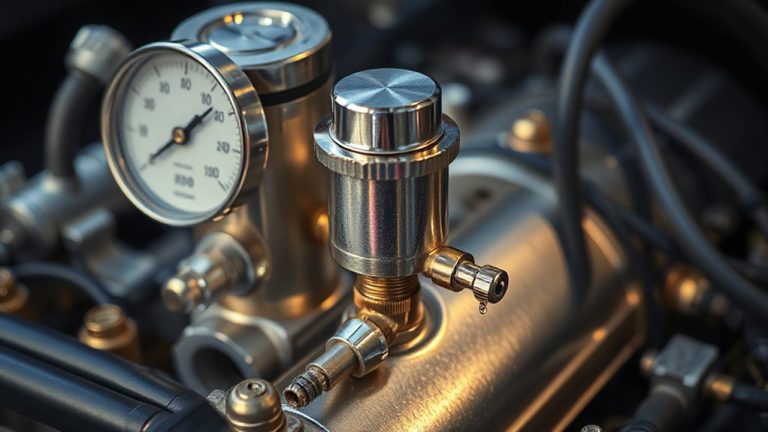
You need to locate the zerk fitting to properly lubricate your pitman arm shaft. This small grease fitting is typically positioned on the ball stud of the pitman arm, where movement occurs within the steering linkage. On your 2012 Ram 2500, the pitman arm design integrates a forged steel construction with a threaded stud and attached sector shaft connection. Depending on your model’s steering linkage types-whether recirculating-ball or rack-and-pinion-the zerk will be accessible from beneath the vehicle near the center link. The fitting usually has a 1/8-inch NPT thread, standard for most Dodge trucks of this era. Use a flashlight to spot the zerk’s hex base or dust cap, often hidden in grease buildup. Correct identification guarantees you’re greasing the pitman arm joint and not an adjacent tie rod fitting.
Tools and Supplies to Grease the Pitman Arm Shaft
A quality grease gun is your most important tool for lubricating the pitman arm shaft. Use a high-pressure, lever-action grease gun capable of delivering at least 10,000 psi to guarantee proper lubrication. You’ll need a 90-degree flexible hose attachment to access the grease zerk at awkward angles. Choose lithium-based, NLGI #2 grease-it’s ideal for heavy-duty applications and performs well in temperatures from -20°F to 250°F. A clean rag and safety gloves are essential to maintain hygiene and prevent contamination. The grease zerk fitting on your 2012 Ram 2500 is typically 1/4-inch male NPT. Proper tool alignment prevents damage during pitman maintenance. Always inspect the grease zerk for clogs or damage before connecting. Using the right tools guarantees efficient lubrication and extends the life of the steering system.
How to Lubricate the Pitman Arm Shaft
Greasing the pitman arm shaft starts only after confirming your tools are ready and in good working order. Position your 2012 Ram 2500 on a level surface and engage the parking brake for safety. Lift the front end using a floor jack rated for at least 3 tons, then secure it with jack stands. Locate the pitman arm beneath the steering gearbox. Use a high-quality lithium-based grease compatible with OEM specifications. Attach the grease gun to the zerk fitting on the pitman arm shaft. Pump grease steadily until fresh lubricant emerges from the joint, indicating complete saturation. Over-greasing can damage seals, so stop promptly. Proper lubrication preserves steering alignment and guarantees consistent vehicle stability. A well-greased shaft reduces friction and wear, extending component life. Recheck the fitting for leaks after operation. This maintenance step enhances steering responsiveness and supports safe, reliable performance under heavy loads and rough terrain conditions.
Mistakes to Avoid When Greasing the Pitman Arm Shaft
Several common errors can compromise the effectiveness of pitman arm shaft lubrication and lead to premature wear or steering instability. Overgreasing components is a frequent mistake-you’re not improving performance by forcing in excess. The 2012 Ram 2500’s pitman arm zerk fitting accepts only high-pressure molybdenum-disulfide grease, typically NLGI #2. Using an incorrect grease type, such as a low-tack or non-automotive formula, can result in rapid grease expulsion under load. Apply grease slowly until slight seepage appears at the boot edge-this indicates proper fill. Excess pressure from overgreasing can rupture the boot seal, introducing contaminants. Always use a hand-operated grease gun for better control; electric guns increase the risk of overgreasing components. Stick to OEM-recommended lubricants like Mobilgrease XHP 220 or equivalent for ideal seal integrity and wear protection.
How Often to Grease the Pitman Arm
You can avoid future steering issues by sticking to a consistent lubrication schedule, just as much as by avoiding overgreasing or using the wrong grease type. Most manufacturers recommend greasing the Pitman arm every 5,000 to 7,500 miles. Severe driving conditions-such as frequent off-road use or towing-require lubrication every 3,000 miles. Neglecting this interval increases Pitman arm corrosion risk, especially where moisture and road salts accelerate wear. Always perform a grease quality comparison before servicing; NLGI #2 lithium-based grease with a high dropping point (at least 265°F) offers ideal protection. Use grease with anti-wear additives like molybdenum disulfide to reduce friction. A single shot (0.5 to 1 ounce) via the zerk fitting is typically sufficient. Proper lubrication preserves steering response and extends component life.
On a final note
You must lubricate your 2012 Ram 2500’s pitman arm shaft regularly to prevent premature wear. The zerk fitting accepts NLGI #2 lithium-based grease. Use a high-pressure grease gun delivering 2,500–3,000 psi. Apply grease until fresh lubricant emerges from the seal. Over-greasing can rupture the seal, causing contamination. Under-greasing accelerates ball joint and sector shaft wear. Follow the 10,000-mile service interval in severe conditions.