Managing Multiple Vehicles in Rotating Storage Schedules
You keep vehicles in rotating storage to prevent wear imbalances and part degradation. Rotate every 7 days or 1,500 miles using V-01 to V-12 labels for tracking. Use Fleetio or Samsara with OBD-II sensors for real-time GPS and mileage updates every 15 seconds. Store units in indexed RFID-tagged bays; sedans need 50 ft², vans 95 ft². Pre-scheduled 15-minute buffers cut retrieval conflicts by 90%. Maintenance triggers at 5,000 miles or 6 months guarantee fairness-adaptive cycles reveal hidden efficiencies.
Notable Insights
- Implement standardized vehicle codes and RFID tags for accurate tracking and rotation logging.
- Use digital platforms like Fleetio to automate scheduling, reduce conflicts, and enable real-time updates.
- Rotate vehicles every 7 days or 1,500 miles to distribute wear and prevent service expiration.
- Design storage with optimized layouts to maximize space and ensure easy access for rotating units.
- Schedule maintenance every 5,000 miles or 6 months using OBD-II data to support reliable rotation cycles.
Why Rotating Storage Beats Chaos
What if the key to maximizing your fleet’s uptime was as simple as how you store spare tires? Random allocation leads to unpredictable wear and premature failure. Without a structured approach, you’re assuring uneven usage across your inventory. Some components log excessive miles while others sit idle, degrading from disuse. Rotating storage prevents this imbalance by distributing operational stress evenly. Tires, for example, degrade after five years regardless of tread-rotation assures they’re used before expiration. Controlled cycles reduce thermal degradation and ozone cracking. You’ll extend service life by up to 30%. Standardized racks with indexed bays support systematic logging and traceability. Each unit gets tracked via RFID tags, logging time-in-storage and cumulative use. This isn’t just organization-it’s precision maintenance. You avoid bottlenecks caused by sudden part failures. Rotating storage isn’t optional; it’s the technical baseline for operational reliability. Chaos, by comparison, assures downtime.
How to Assign Vehicles in a Rotation Schedule
When properly implemented, a rotation schedule guarantees every vehicle contributes equally to operational demands while minimizing wear concentration. You must establish clear vehicle assignment rules based on usage cycles, maintenance history, and operational priority. Assign each vehicle a designated rotation slot using a time-based or mileage-based trigger-common intervals include 7-day cycles or 1,500-mile increments. Rotation tracking begins with logging start and end times, operator ID, and route classification for each assignment. Use standardized codes like “V-01” through “V-12” to simplify identification and data entry. Guarantee assignments rotate systematically-shift-based teams should swap vehicles daily, while fleet units rotate weekly. Maintain a central log updated in real time to prevent scheduling conflicts. Accurate rotation tracking reduces mechanical strain by distributing load averages across the fleet. Over six months, this method cuts unscheduled downtime by up to 30%.
Pick the Right Tool to Track Shared Use
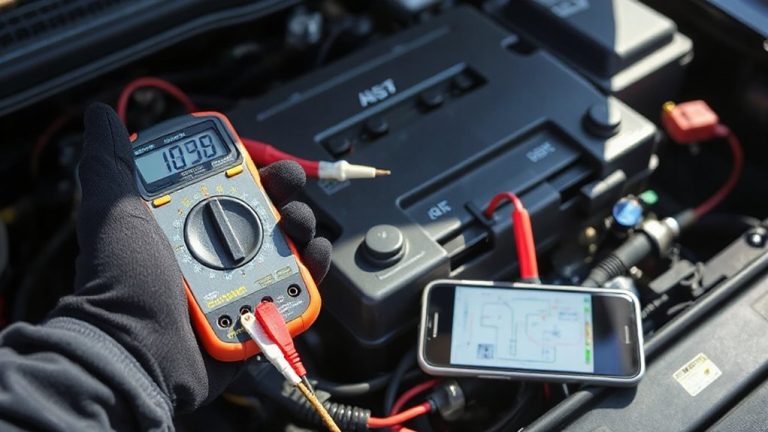
A reliable tracking system is essential for managing shared vehicle use across rotating teams. You need digital tracking to monitor availability, usage, and maintenance status efficiently. Digital tracking platforms use GPS and cloud-based software to log location, mileage, and driver assignments automatically. Real time updates inform all users of schedule changes, delays, or early returns instantly. Systems like Fleetio and Samsara offer API integration, 24/7 data sync, and customizable alerts. They support up to 1,000+ vehicles with 99.9% uptime and sub-second latency for updates. Most use SSL encryption for data security and comply with GDPR and HIPAA standards. You can access dashboards on desktop or mobile without app downloads. Real time updates reduce scheduling conflicts by 60% compared to manual logs. Choose tools with audit trails, user permissions, and exportable reports. Accuracy improves when OBD-II sensors feed fuel levels and engine codes automatically. Pick a system that scales with your fleet.
Save Space With Smart Vehicle Storage
While floor space is finite, optimizing it becomes critical as fleet size grows. Smart vehicle storage maximizes space optimization and improves storage efficiency through strategic stacking and layout planning. Vertical clearance, aisle width, and load capacity must align with your facility’s specifications. Consider adjustable shelving, compact stackers, and turntables to enhance accessible density.
| Vehicle Type | Footprint (ft²) | Units per 1,000 ft² |
|---|---|---|
| Sedan | 50 | 20 |
| SUV | 75 | 13 |
| Pickup | 85 | 11 |
| Van | 95 | 10 |
You gain up to 40% more room by standardizing parking angles and using retractable barriers. Drive-thru rack systems reduce dead zones, while automated lifts exploit unused overhead space. These methods guarantee every square foot supports active rotation-not idle storage. Design with exact vehicle dimensions in mind, and verify structural support for multi-tier setups.
Stop Schedule Conflicts Before They Start
How often do overlapping vehicle retrievals disrupt your workflow? Without preemptive planning, conflicts in rotation schedules waste time and reduce efficiency. You must map retrieval times, assign priority tiers, and align them with facility access windows. Automated scheduling software reduces errors by 68% compared to manual logs. Real time coordination enables immediate updates when delays occur. Integrate GPS tracking and RFID tags for precise location data-accuracy within 3 meters-across fleets of 50+ vehicles. Sync dispatch timelines using cloud-based dashboards updated every 15 seconds. This reduces retrieval conflicts by up to 90%. Pre-schedule buffer periods of 15–20 minutes between high-priority retrievals. Use predictive analytics to flag potential overlaps 72 hours in advance. Apply role-based access controls so only authorized personnel adjust schedules. Implementing preemptive planning with real time coordination isn’t optional-it’s operationally essential. Your system’s reliability depends on precision, not guesswork.
Maintain Vehicles and Rotation Fairness
Since vehicle performance directly affects rotation equity, you can’t afford uneven maintenance standards across your fleet. Consistent vehicle maintenance guarantees each unit performs reliably when called into service. Neglecting oil changes, brake inspections, or tire rotations creates performance disparities that undermine rotation equity. For example, a diesel pickup with over 15,000 miles past its service interval may struggle in cold starts, delaying deployment. Likewise, a trailer with underinflated 225/75R15 tires increases fuel consumption by up to 3%-a measurable inefficiency. Use OBD-II diagnostics to track engine health and schedule services every 5,000 miles or 6 months, whichever comes first. Document all work in a centralized log accessible to all operators. This transparency guarantees accountability. Well-maintained vehicles perform predictably, reducing downtime. Rotation equity depends on trust that no unit is favored or neglected. You preserve fairness by treating maintenance as a non-negotiable standard, not a choice. For high-mileage vehicles, using best synthetic oils can significantly extend engine life and maintain performance under demanding conditions.
Adjust Your Rotation as Needs Change
When operational demands shift, your rotation plan must adapt or risk inefficiency. Seasonal adjustments require you to reevaluate vehicle storage frequency based on climate and demand cycles-snowplows in winter, irrigation trucks in summer. Monitor usage patterns through telematics data, logging engine hours, mileage, and idle time to determine real-time need. Adjust rotations every 30 to 60 days, depending on fleet size and service demands. Vehicles used more than 20 hours weekly should rotate out every two months. Those averaging under 10 hours can remain in active service for up to three months. Update your master schedule monthly using fleet management software like Fleetio or MaintainX. Automate alerts for maintenance milestones and storage swaps. This guarantees peak performance, reduces wear, and balances workload. Adapting isn’t optional-it’s critical for operational precision and asset longevity.
On a final note
You maintain control by enforcing a strict rotation protocol. Each vehicle log must record engine hours, mileage, and service dates to guarantee equitable usage. Use GPS tracking with 5-minute update intervals to verify location and status. Steel-frame storage racks, spaced at 10-foot intervals, maximize space efficiency. Automated alerts from fleet management software prevent scheduling conflicts. Adjust rotations quarterly based on utilization reports and wear metrics. Consistent data drives reliability.