15,000-Mile Service Checklist: Oil, Brakes, Filters & More
You should change your oil and filter every 15,000 miles using factory-recommended viscosity, especially with full synthetic. Inspect the cabin air filter-replace it if clogged to maintain airflow and HVAC efficiency. Rotate tires to prevent uneven wear and check tread depth; align if needed. Inspect brake pads for thickness above 3mm, check rotors and fluid condition. A professional fuel system cleaning removes carbon deposits, restoring combustion efficiency. More operational insights follow.
Notable Insights
- Inspect the cabin air filter and replace it if clogged to maintain proper airflow and improve cabin air quality.
- Perform a professional fuel system cleaning to remove carbon deposits and restore optimal combustion efficiency.
- Change engine oil and replace the oil filter using factory-recommended viscosity, especially when using full synthetic.
- Inspect brake pads, rotors, and fluid condition; replace components if wear or contamination exceeds safety thresholds.
- Rotate tires every 15,000 miles and check alignment to ensure even wear and extend tire lifespan.
What Your Car Needs at 15,000 Miles
While every car is different, most manufacturers recommend key maintenance tasks around the 15,000-mile mark to keep your vehicle running efficiently and prevent premature wear. You should inspect and likely replace the cabin air filter, which traps dust, pollen, and pollutants. A clogged filter reduces airflow and HVAC efficiency, potentially lowering air quality inside the cabin. Most filters measure 8 x 10 to 12 x 14 inches, depending on the make and model. Replacing it every 15,000 to 30,000 miles guarantees peak performance. You should also consider a fuel system clean to remove carbon deposits from injectors, intake valves, and combustion chambers. Deposits disrupt fuel atomization and reduce combustion efficiency, leading to rough idling or decreased fuel economy. Professional cleaning uses solvent-based agents injected through the fuel rail, restoring spray patterns and volumetric efficiency. This service improves throttle response and can recover up to 5% in fuel mileage under real-world conditions. Using a high-quality fuel injector cleaning kit can deliver results similar to professional services when performed regularly.
Change Oil and Filter on Schedule
Most vehicles need fresh oil and a new filter every 15,000 miles to keep the engine running cleanly and efficiently. Skipping this service hurts engine performance and shortens engine life. Oil viscosity breaks down over time, reducing its ability to lubricate moving parts under high heat and pressure. Using the factory-recommended viscosity guarantees proper oil flow and protection.
| Oil Type | Viscosity Grade | Change Interval (miles) |
|---|---|---|
| Conventional | 10W-30 | 3,000–5,000 |
| Synthetic Blend | 5W-20 | 7,500 |
| Full Synthetic | 0W-20 | 10,000–15,000 |
| High Mileage | 10W-30 | 7,500–10,000 |
| Diesel-Specific | 15W-40 | 15,000 |
Always pair oil changes with a new filter to maintain flow and prevent sludge buildup. This simple step supports long-term engine performance. For 5th gen 4Runner owners, selecting the right best oil filters can enhance engine protection and filtration efficiency.
Inspect Brakes: Pads, Rotors, and Fluid
Since brake performance is critical to safety and vehicle control, a thorough inspection at 15,000 miles helps catch issues before they become dangerous. You should check brake pad thickness; most manufacturers specify a minimum of 3mm. If pads are near or below this, schedule brake pad replacement immediately. Thin pads reduce stopping power and increase wear on rotors. Inspect rotors for scoring, warping, or thickness variation. If surface defects exist but rotor thickness is above the minimum spec (typically marked on the rotor), rotor resurfacing restores smooth contact. Otherwise, replacement is required. Check brake fluid level and condition-it should be clear to amber and free of moisture. Spongy pedal feel often indicates air or contaminated fluid. Replace fluid if it’s dark or exceeds two years of service. This inspection guarantees consistent braking and prevents costly repairs. Upgrading to high-performance best brake rotors can improve heat dissipation and braking efficiency.
Rotate Tires and Check for Wear
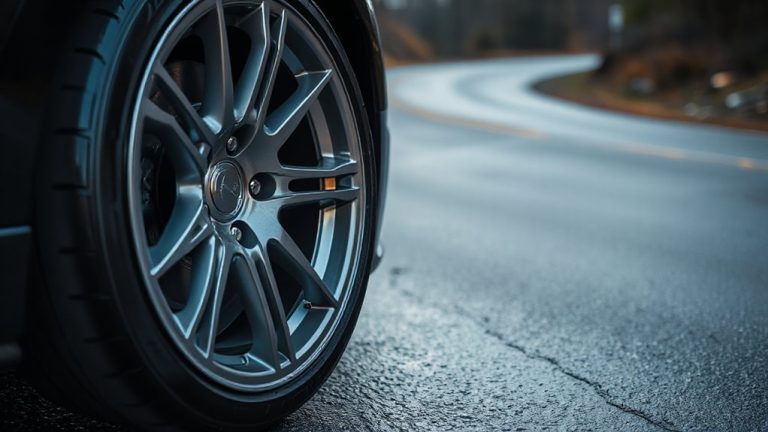
Regular tire rotation every 15,000 miles guarantees even tread wear and extends tire life, especially on drive wheels that bear more stress. You should rotate tires in a front-to-rear pattern, or cross-rotate if your vehicle allows it. Uneven wear reduces grip and increases stopping distances. Check tread depth at multiple points using a gauge; minimum legal depth is 2/32 of an inch, but 4/32 indicates reduced wet traction. Shallow tread depth compromises handling in rain or snow. Misalignment accelerates wear on inner or outer edges. If you notice uneven wear patterns, get a tire alignment. Proper alignment secures straight tracking and maximizes tread life. It also improves fuel economy by reducing rolling resistance. Tires last longer when rotated and aligned. Neglecting this maintenance risks blowouts and lowers performance. Stay safe-monitor wear and stick to the schedule.
Top Off or Flush Critical Fluids
While your engine runs smoothly, hidden wear begins without proper fluid maintenance. At 15,000 miles, you should inspect and top off or flush critical fluids to prevent long-term damage. Coolant degrades over time; check the coolant color-bright green, orange, or pink indicates freshness, while brown suggests contamination. Low or dirty transmission fluid can lead to shifting issues or transmission leaks, so flush it per manufacturer specs. Oil, brake fluid, and power steering fluid also require level and condition checks.
| Fluid Type | Service Needed | Interval (Miles) |
|---|---|---|
| Engine Oil | Top off or change | 5,000–7,500 |
| Coolant | Flush | 30,000 |
| Transmission | Flush or top off | 15,000–30,000 |
Use only manufacturer-recommended fluid types and specifications.
Check Belts, Hoses, and Battery
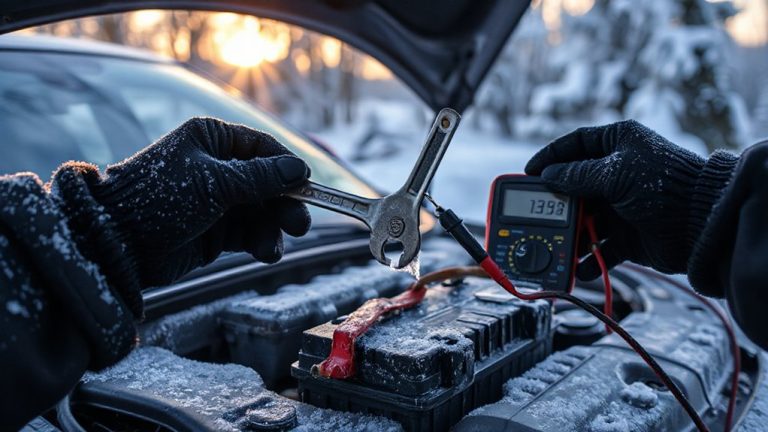
One-third of all roadside breakdowns at this mileage result from preventable electrical or cooling system failures-most tied to worn belts, cracked hoses, or a failing battery. You should inspect belt tension regularly; loose or glazed serpentine belts reduce alternator and compressor efficiency, risking electrical and AC failure. A properly tensioned belt typically allows only 1/2 inch of deflection under 10 pounds of finger pressure. Check for fraying, cracking, or glazing-signs of wear beyond acceptable limits. Hose integrity is equally critical. Squeeze upper and lower radiator hoses; they should feel firm, not soft or mushy. Look for bulges, cracks, or coolant leaks, which signal imminent failure. Test your battery’s voltage: it should read 12.6 volts when idle. Weak batteries fail under cold starts. Replace units below 12.4 volts or with slow engine crank. Preventative checks now save costly towing later.
On a final note
You’ve just hit 15,000 miles-time for critical maintenance. Change your oil and filter every 5,000 to 7,500 miles using 5W-20 or manufacturer-specified grade. Inspect brake pads: replace if under 3mm. Rotate tires now to extend life. Check transmission, coolant, and brake fluid levels. Flush if discolored. Examine serpentine belt for cracks; replace at 60,000 miles. Test battery voltage-should read 12.6V when idle.