How Clear Coat Properties Enhance Vehicle Appearance Longevity Through Proper Care and Maintenance Techniques
Your clear coat is a 35–65 micron urethane layer that chemically bonds to the basecoat, shielding it from UV, chemicals, and abrasion. UV exposure degrades 1–3 microns annually, reducing gloss and hardness. Use pH-neutral soap (6.5–7.5) and microfiber towels (300–400 g/m²) to prevent marring. Wax every three to four months with synthetic polymers for lasting protection. Proper care maintains cross-linked polymer integrity, preserving gloss and preventing hazing, blistering, or chalkiness-key signs of failure. Long-term results depend on consistent, correct maintenance practices.
Notable Insights
- Clear coat’s UV-resistant polymer structure shields paint from solar degradation, preserving gloss and color integrity over time.
- Proper washing with pH-neutral soap prevents chemical damage, maintaining the clear coat’s protective and aesthetic qualities.
- Regular waxing every 3–4 months adds a sacrificial layer, enhancing UV protection and extending clear coat longevity.
- Microfiber cleaning tools minimize swirl marks, preserving the smooth, reflective surface of the clear coat finish.
- Distilled water rinsing prevents mineral deposits, avoiding etching and maintaining the clarity and shine of the clear coat.
What Is Clear Coat and Why It Protects Your Car
A paint system isn’t complete without clear coat-the transparent layer that serves as your car’s first line of defense. It contains a urethane-based clear coat composition designed for hardness and optical clarity. This layer shields the colored basecoat from contaminants, abrasion, and minor impacts. Its primary function is structural protection, not just gloss enhancement. Clear coat bonds chemically to the base layer, ensuring strong paint layer adhesion. Typical clear coat thickness ranges from 35 to 65 microns, applied in two coats for ideal coverage. The cross-linking polymer structure increases durability and resistance to chemical etching. Without proper adhesion, delamination or peeling may occur, compromising both protection and appearance. You rely on this layer daily, even if you don’t see it. It’s engineered to last 5–10 years under normal conditions. Regular washing preserves its integrity without degrading the film.
How UV Rays and Weather Damage Clear Coat
While your car’s clear coat is built to withstand harsh conditions, prolonged exposure to UV radiation gradually breaks down its polymer structure. This process, known as UV degradation, weakens the resin matrix, reducing gloss and surface hardness. Most OEM clear coats are 30–60 microns thick, but UV exposure can erode 1–3 microns annually under intense sunlight. UV degradation accelerates oxidation effects, where oxygen reacts with surface polymers, causing micro-cracking and embrittlement. Unlike paint layers, the clear coat lacks pigments to block UV, making it more vulnerable. Temperature fluctuations worsen this damage-thermal cycling induces expansion and contraction, promoting stress fractures. In humid climates, moisture penetrates micro-fissures, increasing oxidation effects. Salt and acid rain compounds further degrade polymer integrity. Over time, the surface becomes porous and less resistant to contaminants. Consistent exposure without protection leads to irreversible surface deterioration, compromising both appearance and substrate safety.
Signs Your Clear Coat Is Failing or Worn
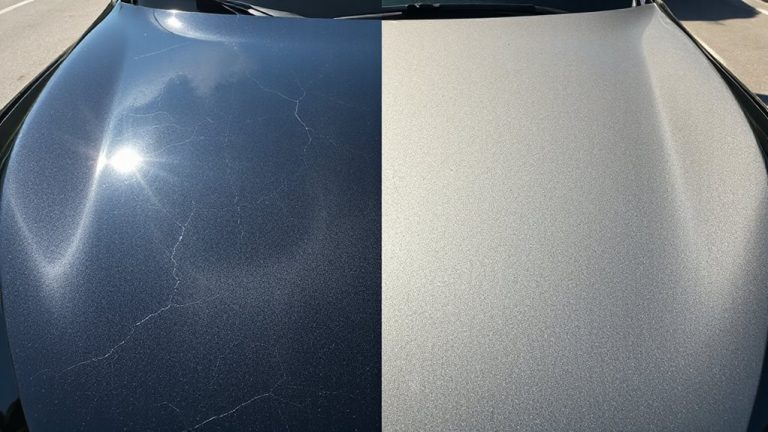
What if your car’s glossy finish isn’t just dirty-but actually breaking down? Dullness or a hazing finish indicates the clear coat is degrading. Microscopic cracks and oxidation form when UV exposure and contaminants compromise the polymer structure. Without intervention, blistering paint can develop, where layers separate due to moisture intrusion beneath weakened clear coat.
| Sign | What It Means |
|---|---|
| Hazing finish | Oxidation layer over clear coat, reducing light reflection |
| Blistering paint | Moisture trapped under clear coat, causing delamination |
| Chalky surface | UV damage degrading resin, leading to micro-erosion |
A hazing finish typically measures 20–30 gloss units (GU) lower than healthy clear coat. Blistering paint often appears after years of neglect, especially on vertical panels exposed to sun. Immediate assessment is critical-once the clear coat fails, the base color is at risk. Applying a high-quality clear coat spray paint can restore protection and enhance gloss retention.
How to Wash Your Car Without Harming Clear Coat
You can protect your car’s clear coat by washing it the right way-starting with the right tools and technique. Use only microfiber towels with a plush pile depth of 300–400 g/m² to reduce friction and prevent marring. These towels trap dirt without scratching, unlike coarse cotton or polyester fabrics. Always pair them with a pH neutral soap, ideally between 6.5 and 7.5 on the pH scale, to maintain the clear coat’s chemical stability. Harsh detergents strip protective oils and degrade urethane-based clear layers over time. Wash in straight-line motions, not circles, to avoid creating fine swirl patterns. Use two buckets: one for soapy water, another for rinsing the mitt, minimizing grit transfer. Rinse the vehicle thoroughly with distilled water to prevent mineral deposits. Wash every 10–14 days to remove contaminants before they bond to the surface. Enthusiasts who prioritize driving dynamics often choose Best Driver’s Cars for their well-balanced performance and build quality.
When and How to Wax for Lasting Clear Coat Protection
Regular washing keeps your clear coat clean, but waxing adds a protective barrier that washing alone can’t provide. Apply wax every three to four months to maintain peak protection-this wax frequency balances durability with environmental exposure. Use a foam applicator pad or microfiber cloth as your primary application tools to guarantee even, lint-free distribution. These tools hold wax efficiently and reduce swirl marks. Opt for synthetic polymer-based waxes; they last up to six months and resist UV degradation better than carnauba. Spread a thin layer in straight-line motions, allowing 5–10 minutes of dwell time before removal. Buff off residue with a clean, 100% microfiber towel-typically 16” x 16” with a 300–400 GSM weight-for maximum clarity. Proper waxing enhances gloss retention and shields against acid rain, brake dust, and road grime. Consistent use of the right application tools and wax frequency guarantees long-term clear coat integrity.
On a final note
You maintain your clear coat by applying proper washing and waxing techniques every 3–6 months. This protective layer, typically 15–25 microns thick, shields the base paint from UV degradation, chemical etching, and minor abrasions. Without maintenance, clear coat oxidizes, leading to hazing and micro-cracking. Regular use of pH-balanced car shampoos prevents surfactant damage. Quality synthetic waxes or ceramic coatings enhance reflectivity and extend protection, preserving gloss and structural integrity for up to five years with consistent care.