Why Worn Shocks Lead to Poor Braking Performance and Increased Stopping Distance
Your worn shocks increase stopping distance by up to 20% because they can’t control spring motion, causing tires to bounce. This reduces the contact patch by as much as 30% on rough roads, cutting traction. Modern shocks dampen 10–15 oscillations per second; worn ones drop below 5, weakening wheel control. Poor tire-to-road contact during braking leads to brake fade and unstable force transfer. ABS can’t fix mechanical instability. You’re putting more stress on your brakes than you think. There’s more to how this affects safety and performance over time.
Notable Insights
- Worn shocks reduce tire-to-road contact, decreasing traction needed for effective braking.
- Excessive tire bounce from bad shocks can cut contact patch by up to 30% on rough roads.
- Poor shock damping increases stopping distance by up to 20% from 60 mph.
- Worn shocks cause sharp front-end dive, reducing rear tire grip and stability during braking.
- Reduced suspension control leads to uneven brake pad contact and accelerated brake fade.
Worn Shocks and Tire Grip Loss
While your vehicle’s shocks may seem like simple components, they play a critical role in maintaining tire contact with the road. Worn shocks fail to control spring motion, allowing excessive tire bounce. This leads to inconsistent tire deformation, reducing the tire’s ability to conform to road surfaces. As a result, you experience contact patch reduction-sometimes by up to 30% on uneven pavement. The contact patch is where grip happens; shrinking it degrades traction. Modern tires rely on full tread-to-road contact for peak performance. When shocks wear, the tire spends more time airborne, not gripping. Even minor undulations can induce micro-hopping, worsening contact patch instability. Independent testing shows vehicles with worn shocks exhibit measurable decreases in lateral and longitudinal grip during dynamic maneuvers. Maintaining proper shock absorber function guarantees consistent tire contact, preserving the engineered contact patch and minimizing dangerous grip loss due to uncontrolled tire deformation. Choosing from top-tier best shock brands ensures optimal performance and safety over time.
Braking Distance Increases With Bad Shocks
Every time you hit the brakes, your vehicle’s shocks help keep the tires planted firmly on the road. When shock degradation occurs, the suspension can’t control wheel movement effectively, increasing stopping distance. Worn shocks reduce tire-to-road contact, especially during hard braking, which diminishes friction and traction. Tests show vehicles with degraded shocks can take up to 20% longer to stop from 60 mph. This added distance could mean the difference between a near-miss and a collision. As the shocks weaken, brake fade becomes more likely because unstable wheel motion causes uneven brake pad contact. That leads to inconsistent braking performance. Even high-performance brake systems can’t compensate for poor shock function. Your vehicle’s stopping power depends not just on brakes but on how well the tires stay grounded. Replacing worn shocks restores stability and helps maintain maximum braking efficiency. Upgrading to the best shocks for every ride can significantly improve both handling and braking performance.
Why Bumpy Roads Worsen Braking?
When the road gets rough, your vehicle’s ability to stop efficiently takes a hit-especially if the shocks are worn. Road vibrations increase dramatically on uneven surfaces, reducing tire-to-pavement contact. Worn shocks fail to dampen these vibrations, causing tires to lose grip during braking. Each bump delivers uneven impacts that force suspension components upward, momentarily lifting tires off the ground. This reduces effective braking time and distance control. Modern shock absorbers typically manage 10 to 15 cycles per second of oscillation damping; worn units perform below 5 cycles, severely limiting response. As a result, brake force isn’t transferred efficiently. On bumpy roads, even hard braking can’t compensate for lost traction from poor suspension control. Your stopping distance grows because the system can’t maintain consistent wheel contact. Effective braking relies on stability-without it, performance drops fast. Upgrading to high-performance best shocks for Jeep Wrangler can restore damping efficiency and improve braking stability on rough terrain.
Loss of Stability When Braking Hard
If your shocks are worn, slamming on the brakes can make your vehicle feel unsteady and unpredictable. The front end dives sharply, transferring excessive weight forward. This reduces rear tire traction, increasing the risk of skidding. Worn shocks fail to control suspension motion, causing the tires to lose consistent contact with the road. Without proper tire adhesion, braking effectiveness drops considerably. You may also notice brake fade, especially during repeated hard stops, as heat builds up in the braking system without efficient energy dissipation. Uneven wear on brake pads and rotors often follows, due to inconsistent pressure distribution. This imbalance further degrades stopping power. The vehicle’s nose may oscillate after initial dive, delaying recovery and steering response. Stable braking requires controlled weight transfer-something compromised shocks can’t deliver. Safety systems like ABS can’t compensate for mechanical instability.
5 Signs Your Shocks Hurt Braking
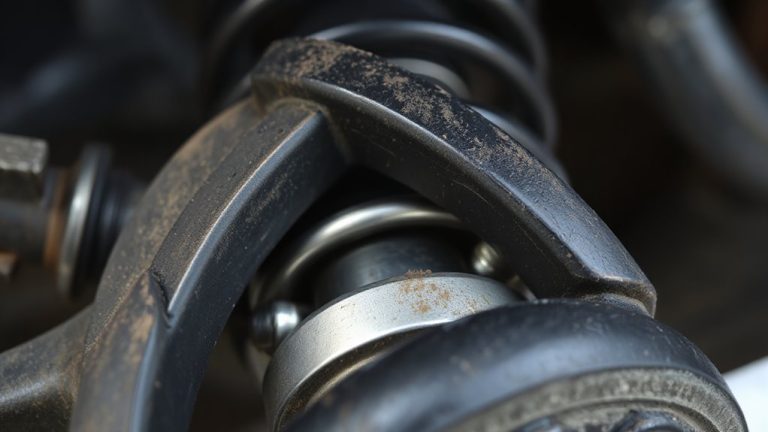
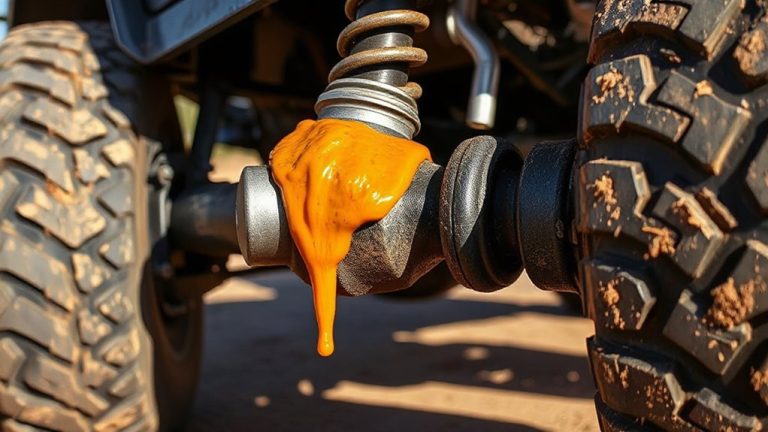
A bouncing car after hitting bumps or braking hard is a telltale sign your shocks aren’t doing their job. Each bounce reduces tire contact with the road, extending stopping distances by up to 20% on uneven surfaces. You may notice your vehicle nosediving sharply-the front end dips excessively when braking-indicating weakened damping. Inspect for shock fluid leakage; oily residue on the exterior means internal seals have failed, reducing hydraulic resistance needed for control. Mounting hardware wear also contributes; loose or cracked bushings allow misalignment, worsening wheel instability. These components should be secure, with rubber mounts free of cracking or separation. Worn shocks can’t stabilize the chassis, so tires lose grip during deceleration. Even moderate wear decreases braking efficiency. Check shocks every 50,000 miles or if handling feels loose. Early detection prevents further degradation of braking performance.
Replace Shocks Before Braking Suffers
Ignoring shock wear lets braking performance slide long before you hit panic-stop situations. You need to address shock replacement timing proactively, not reactively. Worn shocks reduce tire-to-road contact, increasing stopping distance by up to 20% on rough surfaces. This loss of control accelerates brake pad wear because inconsistent tire grip forces the braking system to work harder. Original equipment shocks typically last 50,000 to 100,000 miles, but factors like road conditions and driving habits affect longevity. Delaying replacement degrades handling and braking efficiency. Modern vehicles rely on stable suspension for ideal brake bias and ABS performance. Worn shocks disrupt this balance, increasing the risk of wheel lockup or longer deceleration times. Replace shocks at the first signs of fade or every 60,000 miles-whichever comes first-to maintain braking integrity and extend brake pad life.
On a final note
You need functional shocks for safe braking. Worn shocks reduce tire contact by allowing excess wheel bounce, especially on uneven surfaces. This decreases grip, increasing stopping distance by up to 20% in tests at 60 mph. Damaged shocks compromise stability during hard stops, raising the risk of skidding. Replace shocks every 50,000 miles or when showing signs of wear to maintain peak brake performance and vehicle control.