The Science Behind Wax Bonding Mechanisms for Maximum Long-Term Surface Protection of Automotive Paint Layers
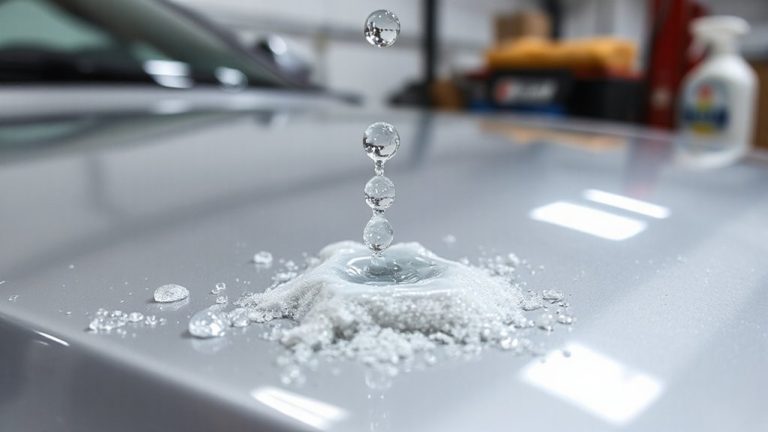
You rely on wax to shield your car’s paint, but long-term protection comes from how it bonds at the molecular level. Wax adheres through van der Waals forces, not chemical bonds, forming a 0.5–2 micron sacrificial layer. Non-polar molecules match your clear coat’s low surface energy for uniform coverage. Polymers improve adhesion, with covalent-bonded versions lasting up to 12 months. Ceramic-infused waxes add SiO₂ hardness, achieving water contact angles over 110°. Environmental breakdown occurs at 0.2–0.5 microns monthly in cities. Ideal performance demands contamination-free prep and narrow molecular distribution. The strongest protection starts with controlled crystallization-what happens next changes everything.
Notable Insights
- Wax bonds to paint via van der Waals forces and surface tension, not chemical bonding, relying on physical adhesion to form a protective layer.
- Optimal wax adhesion requires contamination-free surfaces and matching low surface polarity of clear coats for uniform coverage and durability.
- Polymer-enhanced waxes extend longevity through mechanical interlocking and partial chemical bonding, lasting 6–12 weeks versus 4–8 for standard waxes.
- Covalent-bonded ceramic waxes with SiO₂ form cross-linked networks, achieving 6–12 month durability and superior resistance to environmental degradation.
- Narrow molecular weight distribution and controlled crystallization ensure uniform, high-integrity films that minimize microfractures and maximize long-term protection.
What Is Wax Bonding and Why Does It Protect Paint?
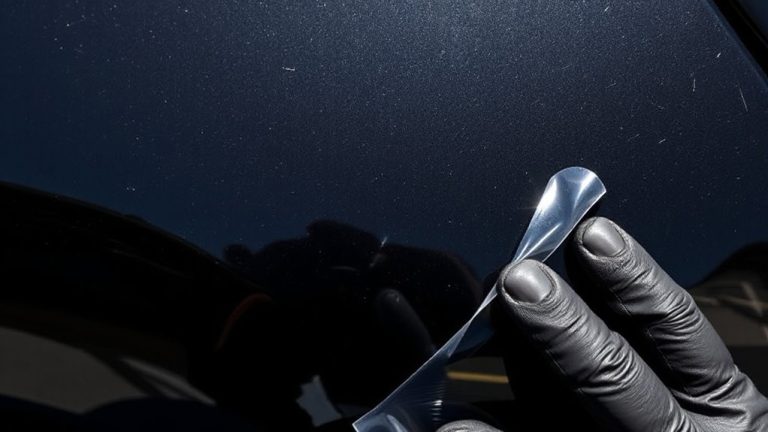
How does wax actually stay on your car’s paint? Wax bonding relies on physical adhesion, not chemical attachment. It forms a sacrificial layer that shields the clear coat. This layer resists UV rays, acid rain, and minor abrasions. Wax porosity is low, meaning it limits moisture and contaminant penetration. Think of it like a raincoat for your car’s surface. Over time, surface aging from sun exposure and oxidation degrades paint integrity. The wax layer slows this deterioration by blocking harmful environmental factors. Most waxes last 3–8 weeks, depending on formulation and conditions. Carnauba-based products offer higher durability, with melting points near 180°F. Synthetic polymers extend protection up to 6 months. Wax thickness typically ranges from 0.5 to 2 microns. Consistent reapplication combats wear from washing and weather. Proper application guarantees uniform coverage, maximizing defense against elemental damage and maintaining finish clarity.
How Do Waxes Chemically Bond to Car Paint?
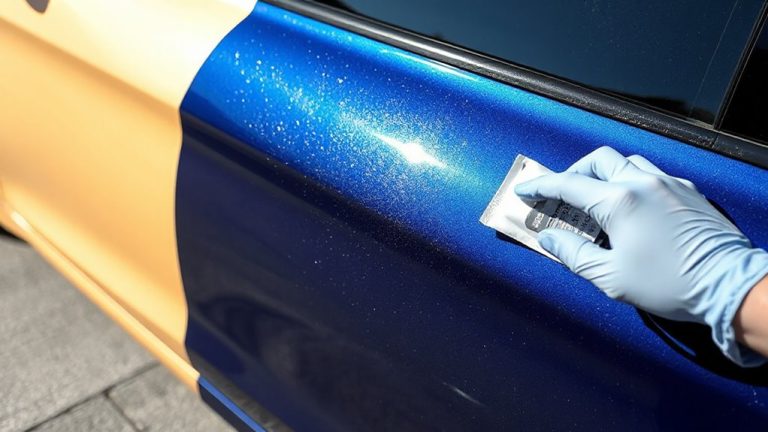
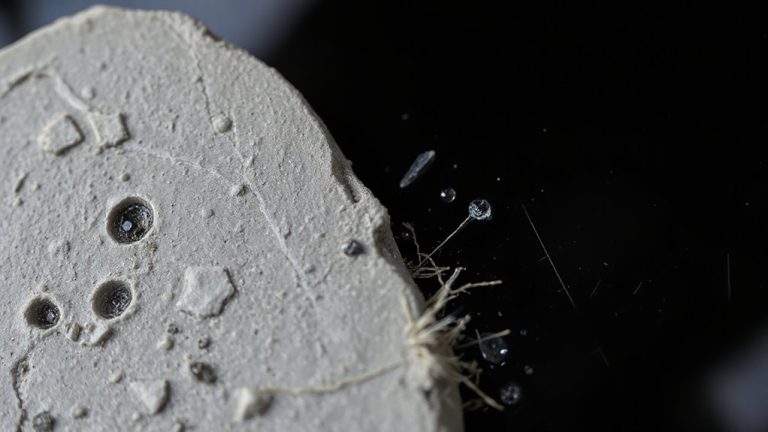
While wax doesn’t chemically bond to car paint in the way that sealants or ceramic coatings do, it adheres through physical attraction and surface tension. You rely on molecular adhesion, where van der Waals forces create weak intermolecular bonds between the wax and the paint surface. These forces work best when surface polarity is low-most car waxes are non-polar, matching the hydrophobic nature of clear coat finishes. This compatibility maximizes contact and improves film formation. Surface polarity affects how uniformly the wax spreads; too much polarity causes beading and poor coverage. The wax molecules settle into micro-imperfections, anchoring via physical interlocking and cohesion. Though not permanent, this bond resists rain, UV, and light abrasion for 4–8 weeks. You get protection proportional to application thickness-typically 1–2 microns. Proper surface prep removes contaminants that disrupt adhesion, ensuring ideal performance. For best results, choose a waxing kit that includes applicators and buffing cloths designed for optimal wax application efficiency.
Why Polymers Make Wax Stick and Last Longer
Adding polymers to wax transforms its performance by enhancing adhesion and extending durability. Polymers bond mechanically and sometimes chemically to paint, forming a resilient protective layer. The polymer structure-typically long-chain molecules with repeating units-interlocks with microscopic surface imperfections. This increases surface contact and improves film cohesion. Higher molecular weight polymers tend to form thicker, more robust films that resist wash-off and environmental degradation. These long chains entangle, creating a barrier that slows oxidation and water penetration. You benefit from extended protection, often doubling or tripling wax life compared to traditional formulations. Molecular weight directly influences flexibility and hardness; ideal ranges balance both. Too low, and the film wears quickly. Too high, and it may crack under stress. Polymer-enhanced waxes typically last 6–12 weeks under regular washing. They outperform standard carnauba blends, especially in humid or UV-intensive environments.
Which Wax Bond Lasts Longer: Hydrophobic or Covalent?
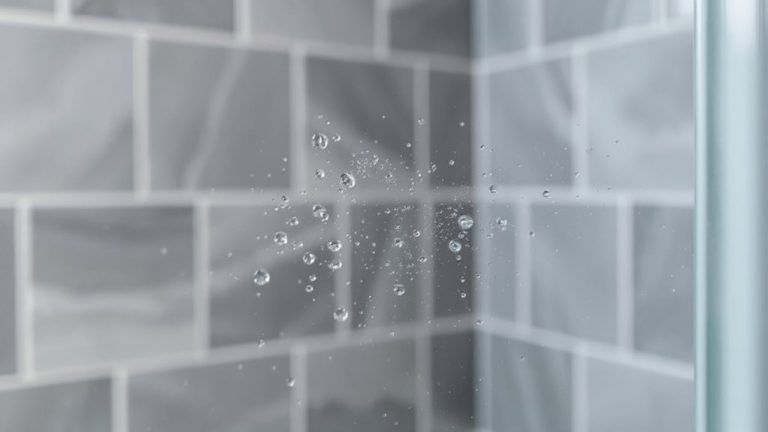
When comparing wax bond longevity, covalent bonds outperform hydrophobic interactions by forming direct chemical links between the wax and the vehicle’s surface. These bonds create a durable, cross-linked network that resists washing, UV exposure, and thermal degradation. Hydrophobic bonds, while effective at repelling water, rely on weaker physical adhesion and wear off faster-typically lasting 4–8 weeks. Covalent-bonded waxes often last 6–12 months under normal conditions. You benefit from advanced formulations like ceramic infusion, where SiO₂ integrates into the paint matrix, enhancing hardness and chemical resistance. Silicone fusion further improves flexibility and adhesion, reducing cracking and delamination. Together, these technologies yield a protective layer measuring 1 to 3 microns thick, with water contact angles exceeding 110°. This guarantees sustained beading and dirt shedding. For maximum durability, covalent bonding is the superior choice. Many top-tier protection solutions now come in the form of complete ceramic coating kits, offering professional-grade results with DIY application ease.
How to Prep Your Car for Maximum Wax Adhesion
You’ve chosen a covalent-bonded wax for long-term protection-now the surface must be ready to accept that bond. Proper surface cleaning removes loose contaminants like dust and grime that block adhesion. Use a pH-neutral car wash soap at 10–15 ml per liter of water to avoid residue. After rinsing, perform paint decontamination with a clay bar or iron fallout remover to eliminate embedded pollutants. Iron particles oxidize and compromise wax bonding if left untreated. A lubricated clay bar glides at 1.5 m/s, lifting bonded contaminants without marring the paint. Test decontamination success by wiping a panel with isopropyl alcohol-any streaking indicates leftover residue. Once clean, the surface should feel glass-smooth. This prep guarantees maximum wax adhesion, allowing silane or siloxane molecules to form covalent bonds with hydroxyl groups on the paint. Skipping these steps reduces bond density by up to 70%. For optimal results, use a high-quality car clay bar that effectively removes stubborn contaminants without introducing fine scratches.
How Weather and Pollution Break Down Wax Bonds
Even with perfect application, environmental exposure inevitably degrades covalent wax bonds over time. UV degradation is a primary factor, breaking down hydrocarbon chains in the wax matrix at the molecular level. Prolonged sunlight exposure generates free radicals that weaken bond stability, reducing protective effectiveness by up to 40% within three months in high-sunlight regions. Chemical erosion occurs when airborne pollutants-like ozone, acid rain, and sulfur dioxide-react with wax surfaces. These compounds initiate oxidation and hydrolysis, dissolving the outer wax layer at a rate of 0.2–0.5 microns per month in urban environments. Temperature fluctuations accelerate microcracking, increasing surface vulnerability. Moisture infiltration widens these cracks, promoting faster breakdown. Together, UV degradation and chemical erosion compromise the wax’s structural integrity, reducing its ability to shield paint. Regular maintenance is essential to counteract these unavoidable environmental effects.
Which Waxes Form the Strongest, Longest-Lasting Bonds?
You get the strongest, longest-lasting bonds by choosing waxes with high cross-link density and thermally stable formulations. These waxes resist degradation from UV exposure and thermal cycling, maintaining integrity above 180°F. Waxes with higher molecular weight form denser, more durable films due to reduced chain mobility and slower oxidation rates. Synthetic hydrocarbon waxes, like polyethylene and PTFE-modified formulations, offer superior performance over natural carnauba. Their engineered structures promote uniform wax crystallization, enhancing surface adhesion and water beading. Crystalline domains act as physical cross-links, improving abrasion resistance. High molecular weight also reduces volatility, extending service life beyond 6 months. You’ll see contact angles exceed 110°, indicating excellent hydrophobicity. For maximum protection, select waxes with narrow molecular weight distribution and controlled crystallization kinetics. These guarantee consistent film formation and fewer weak points. Performance hinges on chemistry, not branding-verify specifications before application.
On a final note
You achieve maximum paint protection when wax forms stable, long-lasting bonds. Hydrophobic interactions repel water but last weeks. Covalent bonds, especially with SiO₂-based polymers, create silica networks that resist UV and chemicals. These bonds withstand 90+ days under normal conditions. Proper surface prep-claying, decontamination-ensures adhesion. Waxes with 5–7% polymer content outperform traditional carnauba. For durability, covalent-bonding synthetic sealants are scientifically superior.