How Anti-Sway Bars Work: End Links, Bushings & Body Roll
When you corner hard, lateral forces shift your vehicle’s weight, compressing the outside suspension and causing body roll. Your anti-sway bar, a torsion spring connecting left and right wheels, resists this tilt by transferring force across the axle. It’s mounted to the frame with bushings and linked to control arms via end links torqued to 15–25 ft-lbs. A stiffer bar can increase roll resistance by over 30%. Upgraded components improve response, revealing how tuning enhances balance.
Notable Insights
- Anti-sway bars link left and right wheels to resist uneven suspension movement during cornering.
- They act as torsion springs, reducing body roll by transferring load across the axle.
- End links connect the bar to control arms, transmitting forces to limit chassis lean.
- Bushings mount the bar to the frame, allowing controlled twist while maintaining stability.
- A stiffer bar increases roll resistance but requires balanced suspension components for optimal performance.
What Causes Body Roll in Cars
Body roll.
It happens when you take a turn too fast, and your car leans outward-noticeable, uncomfortable, and expected. Cornering forces push your vehicle sideways during a turn. These forces overcome the tires’ grip and shift the car’s center of gravity laterally. That shift triggers weight transfer: the suspension compresses on the outside wheels while the inside suspension extends. Up to 70% of the vehicle’s weight can shift across the chassis in aggressive turns. The stiffer the springs, the less roll occurs, but even stiff suspensions can’t eliminate it entirely. Body roll reduces tire contact with the road, degrading grip and steering response. It’s physics-mass in motion resists changing direction. The suspension geometry, center of gravity height, and track width all influence how dramatically your car leans. You feel it, your passengers feel it, and your control diminishes.
How Anti-Sway Bars Reduce Body Roll
Your car’s anti-sway bar fights body roll by linking the left and right wheels together with a torsion spring. When you corner, the outside suspension compresses while the inside extends. The bar resists this motion, transferring force across the axle to reduce lean. This increases lateral stability and improves cornering stiffness. A stiffer bar reduces roll more but can affect ride comfort.
| Vehicle Type | Bar Diameter (in) | Roll Reduction (%) |
|---|---|---|
| Compact Sedan | 0.8 | 35 |
| SUV | 1.2 | 50 |
| Sports Coupe | 1.4 | 60 |
| Luxury Sedan | 1.0 | 45 |
| Truck | 1.1 | 40 |
You’ll notice sharper handling and more balanced weight distribution. The anti-sway bar doesn’t carry the vehicle’s weight-springs do-but it fine-tunes dynamic response. Proper tuning matches bar stiffness to suspension rates for ideal lateral stability.
How Anti-Sway Bars Connect to Suspension
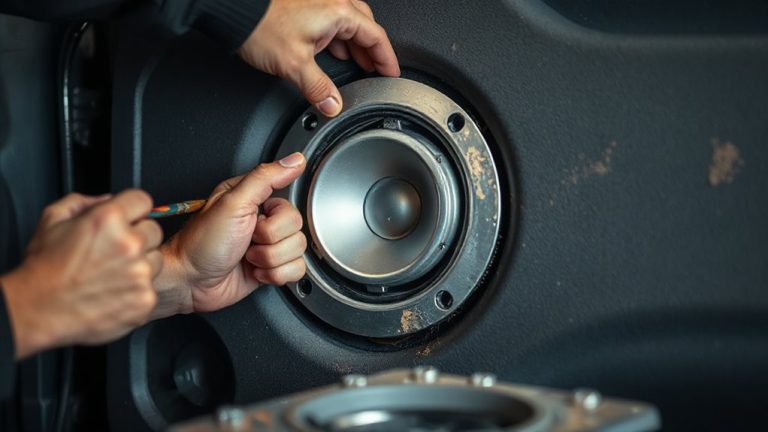
The anti-sway bar’s ability to reduce body roll depends on how it connects to the suspension system. You’ll find the bar mounted to the vehicle’s frame using flexible rubber or polyurethane bushings, known as sway bar mounting. These mounts secure the bar in place while allowing slight twist under load. At each end, the bar connects to the suspension control arms via an end link connection. These links are typically adjustable, ranging from 4 to 8 inches in length, and use ball sockets to maintain alignment under motion. A solid end link connection guarantees force is transferred instantly from the control arm to the bar. The bar then twists, resisting lateral movement and stabilizing the chassis. Proper installation torque-usually 15–25 ft-lbs for mounting bolts and end links-guarantees durability and peak performance. Misalignment or worn components degrade response and reduce effectiveness.
How Suspension Supports Anti-Sway Bar Performance
A well-tuned suspension system plays a critical role in maximizing anti-sway bar effectiveness. Your suspension guarantees consistent contact between tires and the road during cornering, which allows the anti-sway bar to transfer load efficiently. Frame rigidity is essential-without a stiff chassis, the bar’s inputs get lost in flex, reducing response. Modern unibody designs typically offer sufficient rigidity, but older body-on-frame vehicles may need reinforcement. Proper load distribution across axles helps the anti-sway bar work within its tuned range. If your springs are too soft or worn, they can’t support the bar’s force, leading to delayed reaction and uneven roll control. Shock absorbers and control arms must maintain geometry under stress to preserve alignment. When all components are in harmony, the anti-sway bar reduces body roll by up to 30%, depending on setup.
Upgrade Your Anti-Sway Bar for Better Handling
Though stock anti-sway bars meet basic handling needs, upgrading one delivers measurable improvements in cornering stiffness and balance. You’ll notice sharper turn-in response and reduced body roll when pushing through curves. Aftermarket anti-sway bars are typically thicker, increasing torsional rigidity-some by 30% or more-especially in performance tuning applications. A stiffer front bar reduces understeer; a stiffer rear enhances rotation, fine-tuning handling balance. Adjustable end links and polyurethane bushings improve responsiveness and reduce deflection. Upgraded sway bars integrate seamlessly with your existing suspension, requiring no major modifications. Bar diameter increases-say, from 24mm to 28mm-directly correlate to resistance against body roll. Proper selection depends on your vehicle’s weight distribution and driving style. Performance tuning isn’t just about power; it’s about control. Upgrading your anti-sway bar is one of the most effective, cost-efficient ways to improve handling balance and dynamic stability on any street or track-prepped vehicle.
Signs of Worn Anti-Sway Bar Links and Bushings
Why does your car feel loose in corners or clunk over bumps? Worn anti-sway bar links and bushings are often the culprit. These components maintain stability by reducing body roll, but over time, they degrade. Loose connections compromise handling and increase suspension play. You might notice reduced steering response or a shaky front end. Uneven wear on tires can also signal failing bushings, as alignment shifts occur.
| Symptom | Cause | Effect |
|---|---|---|
| Clunking noise | Worn bushings | Metal-to-metal contact during movement |
| Loose steering | Bad links | Delayed response in turns |
| Excessive roll | Weak connection | Poor cornering stability |
| Uneven tire wear | Misalignment from loose connections | Reduced tire lifespan |
Inspect every 30,000 miles. Replace rubber bushings every 50,000 miles or when cracked. Polyurethane lasts longer but transmits more vibration.
On a final note
You reduce body roll effectively with a properly tuned anti-sway bar. It connects to the chassis and control arms via rigid links and bushings, transferring roll force across the suspension. A larger diameter bar, such as a 32mm solid steel unit, increases torsional rigidity by up to 40%, limiting lean. This improves tire contact and steering response. Worn components weaken performance, so inspect regularly.