Testing Fuel Pump Efficiency After Extended High-RPM Operation
You need to test fuel pressure at idle and under load after extended high-RPM use. A healthy pump holds 45–60 psi at idle and drops no more than 5–10% at 3,000 rpm. Check voltage and current-below 11.5V or over 9.5A signals electrical stress. Flow should stay above 250 L/h at 60 psi; drops over 10% suggest wear. Thermal and electrical strain degrade performance faster than time alone. There’s a deeper level of system insight available if you’re seeing repeat issues.
Notable Insights
- Test fuel flow rate at 60 psi after high-RPM operation; a drop over 10% indicates internal wear.
- Measure fuel pressure at idle and under load; sustained levels below 58 psi suggest pump degradation.
- Check voltage at the pump during high-RPM operation; readings below 10.5V point to electrical supply issues.
- Listen for abnormal whining or buzzing noises from the tank, which may signal pump cavitation or armature damage.
- Use a calibrated pressure gauge and scan tool to verify consistency between reference and actual fuel pressure values.
Why High RPMs Hurt Fuel Pump Efficiency
When your engine revs beyond 6,000 RPM, the fuel pump has to work considerably harder to keep up with the increased fuel demand. It must deliver fuel at flow rates exceeding 300 liters per hour in high-performance applications. Sustained high output generates excess heat within the pump. This heat leads to thermal degradation of internal components, especially the armature and commutator. Efficiency drops as insulation breaks down and electrical resistance increases. Simultaneously, fuel velocity rises, lowering pressure at the pump inlet. This pressure drop can trigger cavitation damage-tiny vapor bubbles form and implode, eroding impeller surfaces. Metal fragments contaminate the fuel system. Over time, reduced volumetric efficiency and inconsistent delivery degrade engine performance. Unlike brief overloads, extended high-RPM operation accelerates wear. The pump may still operate, but flow variance exceeds 10% of rated output. These physical and thermal stresses compromise reliability long before complete failure.
Test Fuel Pressure at Idle and Load
While your engine sits at idle, fuel pressure should remain stable and within the manufacturer’s specified range-typically between 45 and 60 psi for most port-injected gasoline systems. A fluctuating or low reading may point to poor fuel filter condition or weak pump output. Now rev the engine to 2,500–3,000 rpm and hold steady. Proper pressure should drop no more than 5–10% from idle levels. A significant drop suggests the pump struggles under demand. Check the pressure regulator function: it must maintain consistent pressure across throttle changes. A leaking regulator causes high pressure at idle; a failed diaphragm leads to low pressure under load. Clogs from debris restrict flow and mimic pump failure, so inspect the fuel filter condition early. Use a scan tool to verify reference pressure matches actual gauge readings. Any inconsistency undermines fuel delivery accuracy and engine performance. Always test with a calibrated mechanical gauge for precision.
Check Voltage and Current Under Load
Though fuel pressure reveals much about system performance, voltage and current under load tell you whether the pump’s electrical supply is up to the task. You need stable power delivery to maintain efficiency after high-RPM operation. A significant voltage drop across the fuel pump circuit impairs performance. Monitor for a current surge during acceleration-it indicates added electrical demand. Use a digital multimeter and inductive current clamp for precise readings. Below are typical values under load:
| Condition | Voltage (V) | Current (A) |
|---|---|---|
| Ignition On | 12.6 | 2.0 |
| Idle | 12.2 | 3.5 |
| 3,000 RPM | 11.8 | 5.0 |
| 6,000 RPM | 11.2 | 7.8 |
| Wide-Open Throttle | 10.9 | 9.5 |
Sustained voltage drop below 10.5V or erratic current suggests wiring or relay issues-not pump failure.
Spot Symptoms of a Failing Fuel Pump
A steady electrical supply keeps your fuel pump running efficiently, but when symptoms start showing up in performance, it’s time to pay closer attention. You might notice hard starts, especially when the engine’s cold, or experience intermittent stalling under load. These issues often trace back to mechanical wear inside the pump’s rotor or commutator, reducing its ability to maintain 58–62 psi at idle. A sputtering engine near top speed usually indicates fuel starvation caused by worn brushes or clogged inlet screens. Fuel contamination-like water or debris in the tank-accelerates wear and can jam the armature. Listen for a whining or buzzing noise from the tank; a healthy pump hums steadily at 70–80 dB. Voltage drops below 11.5 volts during operation also hint at failing performance. These signs signal the pump can’t meet OEM flow demands, risking engine damage if ignored.
Track Efficiency Loss With Flow Rate Testing
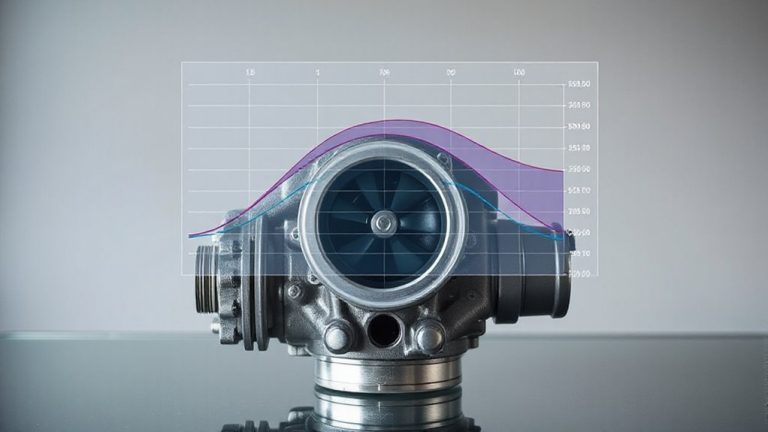
How can you tell when your fuel pump is losing its edge? Test flow rate consistency under load. A healthy pump delivers stable fuel volume, typically 250–300 liters per hour at 60 psi for modern high-performance systems. After prolonged high-RPM operation, retest the flow. Inconsistent output-drops exceeding 10%-signals trouble. This decline often stems from thermal degradation impact, where excessive heat warps internal components or degrades insulation on motor windings. Over time, that heat reduces pump efficiency, even if the unit still runs. Use a calibrated flow meter and pressure gauge to record real-time data. Compare cold-start flow rates to post-run measurements. If flow rate consistency falters, the pump can’t sustain demand. That’s a clear sign of internal wear or thermal stress. Track these changes early. Catching degradation this way gives you objective data before performance issues arise on track.
Maintain Peak Fuel Pump Efficiency Proactively
You already know flow rate consistency reveals a fuel pump’s health, but maintaining peak efficiency means acting before performance drops appear. Install high-quality fuel pump insulation to reduce heat transfer from the tank and surrounding components. Thermal shielding, especially in high-RPM applications, prevents vapor lock and maintains consistent fuel pressure. Most modern in-tank pumps operate at maximum efficiency below 60°C; beyond that, efficiency drops 3–5% per additional 10°C. Use aluminized thermal wrap or molded composite shields rated for continuous 200°C exposure. Guarantee shields don’t restrict fuel flow or trap moisture. Pair insulation with proper electrical supply-clean, stable voltage at 13.5–14.4V keeps the pump motor running efficiently. Upgrade wiring if needed. Regular inspection of insulation and shielding every 15,000 miles prevents degradation. Proactive care extends pump life by up to 40%.
On a final note
You must verify fuel pump efficiency after high-rpm stress. Inspect pressure: a healthy pump sustains 58–62 psi at idle and under load. Measure voltage drop across the circuit; exceed 0.5V, and resistance is too high. Check amperage-draw over 8.5A suggests internal wear. Flow tests should deliver ≥750 ml/min. Efficiency loss means replace. Prevent failure with regular voltage and flow checks every 15,000 miles.