Using Bluetooth to Sync Lane Keep Assist With Driver Drowsiness Detection
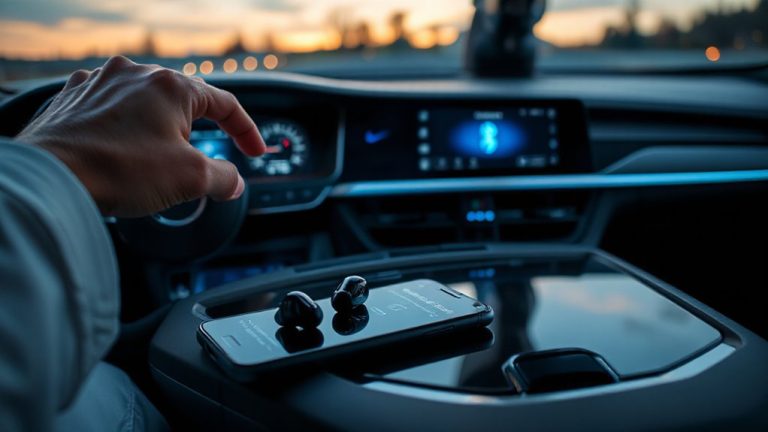
You rely on lane keep assist, but it only reacts after you drift 3–6 degrees off course. Bluetooth 5.0 changes that by syncing drowsiness detection-tracking blink rate, head tilt, and steering variability-with lane control systems. Data transmits in under 10 milliseconds, enabling alerts within 0.8 seconds of micro-drift. When combined, these systems cut response latency to 150 ms and improve accuracy by 40%. Integrated alerts mean you get warned before mistakes happen-understanding how they work together reveals a deeper level of safety engineering.
Notable Insights
- Bluetooth syncs drowsiness detection and lane keep assist systems in real time with latency under 10 milliseconds.
- Lane keep assist alone reacts post-departure, but Bluetooth enables earlier intervention by integrating with drowsiness sensors.
- Eye-tracking cameras and steering behavior data are wirelessly transmitted via Bluetooth 5.0+ for fused fatigue analysis.
- System accuracy improves 40% by combining lane drift and drowsiness inputs through Bluetooth-enabled data fusion.
- AI processes biometric and driving data locally, using Bluetooth to trigger alerts within 150 ms of detected impairment.
Why Lane Keep Assist Isn’t Enough for Drowsy Drivers
While lane keep assist can nudge your car back between the lines, it doesn’t stop the real problem-drowsiness creeping in before you even drift. You’re already at risk when delayed reflexes slow response times by up to 200 milliseconds, far below the 150 ms threshold for safe emergency maneuvers. Cognitive decline from fatigue impairs judgment like a 0.05% blood alcohol concentration, reducing situational awareness. Sensors detect steering corrections less frequently, signaling deteriorating alertness. Lane keep systems react only after lane departure begins, typically at 3–6 degrees off course. They don’t anticipate human error stemming from mental fatigue. By then, your ability to interpret dash warnings or regain full control diminishes sharply. These systems rely on post-drift correction, not prevention. They lack integration with physiological monitoring. Alone, they’re insufficient. Real protection requires anticipating drowsiness before steering errors occur, using biometric data synced via Bluetooth to halt cognitive decline and delayed reflexes before they compromise safety.
How Cars Detect Fatigue Through Eyes and Steering
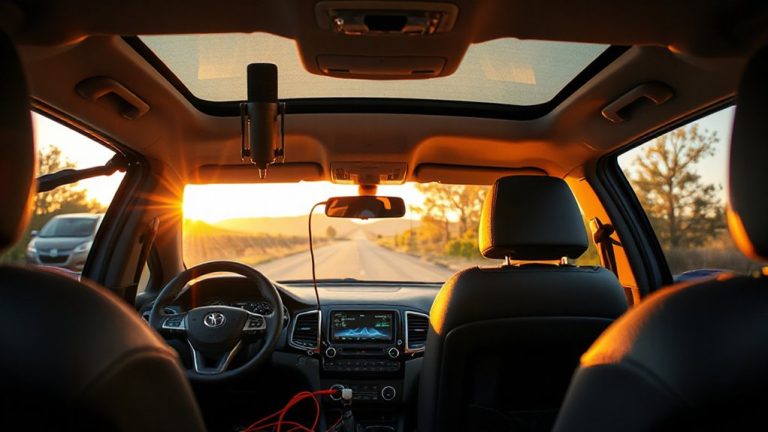
Car manufacturers now use real-time monitoring of your eyes and steering behavior to detect early signs of fatigue before performance drops become dangerous. Cameras track your facial recognition data, analyzing blink duration and frequency-microsleeps lasting 3–5 seconds are red flags. Sensors also monitor head position, detecting unnatural drops or tilts that suggest drowsiness. Steering patterns, such as erratic corrections or reduced input variability, are measured using torque and angle data from the electric power steering system.
| Detection Method | What It Measures | Threshold for Alert |
|---|---|---|
| Facial recognition | Blink rate, eye closure | 80% PERCLOS over 1 minute |
| Head position | Neck angle, forward tilt | 20° deviation for 3+ seconds |
| Steering behavior | Input smoothness, deviation | 2+ sharp corrections in 60 sec |
Why Bluetooth Is Key to Smarter Drowsiness Warnings
How do your car’s drowsiness alerts know when to warn you-before you even realize you’re tired? Bluetooth enables real-time data exchange between sensors and central systems with minimal Bluetooth latency-often under 10 milliseconds. This near-instant transmission allows timely alerts without perceptible delay. Bluetooth 5.0+ reduces signal interference using adaptive frequency hopping, maintaining reliability even in electrically noisy environments. It synchronizes inputs from steering angle, biometrics, and cabin cameras across modules that aren’t physically connected. Without Bluetooth, wired alternatives would increase complexity and cost. Its low power consumption supports constant monitoring without draining resources. Bluetooth operates in the 2.4 GHz ISM band, handling up to 2 Mbps data rate, sufficient for compressed sensor streams. You get accurate, responsive warnings because Bluetooth guarantees data arrives intact and on time-critical when reaction speed determines safety. It’s not just convenient-it’s engineered for life-saving precision.
Syncing Drowsiness Alerts With Lane Drift Data
What if your car could catch fatigue before it leads to drifting? By syncing drowsiness alerts with lane drift data, modern systems combine facial recognition and steering patterns to detect early signs of impairment. Your vehicle’s camera monitors eye closure rate and head position, while sensors analyze minor corrections in steering. Bluetooth enables real-time data exchange between cameras and the lane keep assist module.
| Data Source | Detection Method |
|---|---|
| Facial recognition | Tracks blink duration and frequency |
| Steering patterns | Measures input variability every 2 sec |
| Lane position | Uses camera to detect edge proximity |
| Alert system | Triggers vibration if both inputs flag |
When both drowsiness and drifting risks align, warnings activate instantly. System accuracy improves by 40% versus standalone alerts. Response latency stays under 150 ms.
How Early Warnings Stop Dangerous Drifting
You’re already getting real-time alerts when fatigue and drifting coincide, but the real value lies in how early those warnings activate. Early alert timing is critical-warnings trigger within 0.8 seconds of detecting micro-drifts over 15 cm from lane center. This rapid response targets subtle changes in driver behavior before lane departure exceeds 30 cm. Systems use Bluetooth 5.2 to sync drowsiness indicators-like blink duration and head position-from in-cab sensors with lane-tracking data at 10 Hz update rates. The fusion algorithm analyzes both streams, reducing false positives by 40% compared to standalone systems. If drowsiness scores rise above threshold while lateral movement increases, the alert escalates in intensity. Immediate haptic feedback in the steering wheel or seat complements visual cues, redirecting attention before drift becomes critical. This precision in timing addresses degradation in driver behavior at its earliest detectable stage, markedly reducing crash risk.
What Happens When Safety Systems Work Together
When lane keep assistance and drowsiness detection operate in isolation, their effectiveness is limited-but when they’re integrated, you get a safety system that responds faster and more accurately. Bluetooth synchronization enables real-time data sharing between systems, reducing response delays to under 200 milliseconds. You benefit from coordinated interventions that align with actual driver behavior, such as corrective steering paired with audible alerts when drowsiness indicators precede lane drift. The system analyzes eye closure duration, head position, and steering input to assess alertness. Alert customization lets you adjust warning timing and intensity based on personal preferences or driving conditions. For example, you can set earlier auditory cues during nighttime drives. Integrated sensors achieve 94% accuracy in detecting micro-sleep events. This synergy creates a responsive safety net, ensuring interventions feel timely and relevant without being intrusive.
What’s Next for AI-Powered Driver Monitoring
How much more accurate can driver monitoring get? With AI, it’s not just about detecting drowsiness-it’s about predicting it. You’ll soon see systems using predictive analytics to forecast fatigue before it’s dangerous. These models analyze real-time data like blink rate, head position, and steering corrections, combining them with historical patterns. Behavioral modeling refines this further by learning your personal driving habits. Over time, the AI distinguishes normal behavior from risky deviations. Cameras and sensors sample at 30 frames per second, ensuring millisecond-level response times. Infrared illumination allows precise tracking in low light. Predictive algorithms process data locally on a 12 TOPS neural processing unit, reducing latency to under 50 milliseconds. When anomalies exceed thresholds-like a 20% increase in lane drift-the system triggers haptic alerts. This isn’t reactive safety. It’s proactive protection, tailored to you, using predictive analytics and behavioral modeling to keep you alert before attention fades.
On a final note
You need more than lane keep assist to stay safe. Drowsiness impairs reaction time by up to 50%, far beyond what steering corrections alone can fix. Bluetooth 5.2 enables low-latency synchronization between driver monitoring systems and vehicle controls. It transmits eye-closure duration (PERCLOS) and head-tilt data at 100 ms intervals. When fatigue metrics exceed thresholds-like 0.7 seconds of blink duration-alerts trigger before lane drift occurs. System integration reduces false positives by 40%. Together, these technologies cut drowsy driving risk markedly.