Ensuring Proper Operation of Adaptive Headlights During Night Drives Pre-30K
You need your adaptive headlights performing at their best for night drives. Check beam output-each bulb should deliver 1,200 to 2,000 lumens with no flickering or uneven brightness. Aim the hot spot 2 inches below headlight height on a wall 25 feet away. Delayed swiveling past 0.5 seconds or lumen drops over 15% signal trouble. Corrosion, voltage below 12.0V, or actuator wear may already be affecting performance by 30K miles-knowing what comes next helps you stay ahead.
Notable Insights
- Check beam alignment every 6 months or after rough drives to maintain proper aim and visibility.
- Inspect connectors and wiring for corrosion or damage to prevent electrical failures before 30K miles.
- Ensure voltage remains above 12.0 V to support stable adaptive headlight system operation.
- Clean sensor lenses monthly to maintain accurate detection of steering, speed, and ambient light.
- Perform professional calibration after windshield replacement or sensor disturbance to restore system accuracy.
Spot These 5 Signs of Adaptive Headlight Failure
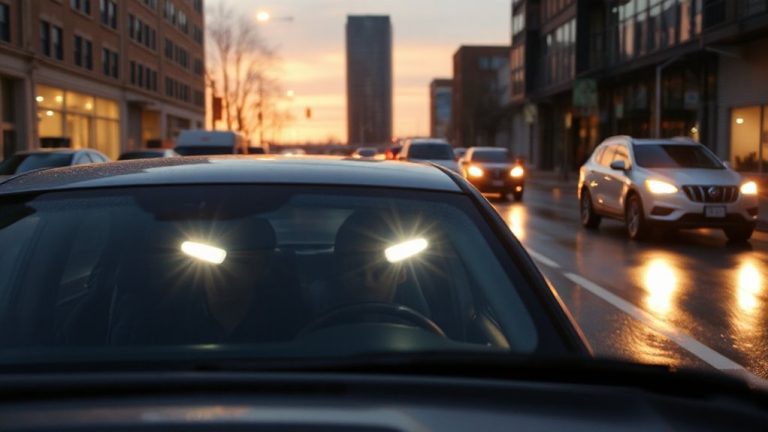
While driving at night, you might not immediately notice when your adaptive headlights begin to degrade, but subtle changes can signal serious issues. Flickering beams often indicate electrical faults or failing ballasts, especially in HID or LED systems. These interruptions reduce visibility and can compromise safety. Uneven brightness between left and right headlights suggests misaligned actuators or worn motor assemblies. Adaptive systems rely on precise lumen output-typically 1,200 to 2,000 lumens per bulb-so deviations over 15% impair performance. You may also notice delayed swiveling, where the headlight response lags more than 0.5 seconds behind steering input. That lag exceeds OEM tolerance. Sensor obstruction or software glitches may cause this. Corroded connectors or voltage drops below 12.0 V can further disrupt operation. Monitor these signs early. Early detection prevents failure during high-speed or adverse-condition driving.
Check Your Adaptive Headlight Alignment at Home
How accurately are your adaptive headlights aimed? Misaligned beams can reduce nighttime visibility and create glare for oncoming drivers. You can perform DIY alignment at home with basic tools and a flat wall. Park your vehicle 25 feet from the wall, perpendicular to the surface. Measure the center of each headhashed from the ground, then mark that height on the wall. Turn on the lights and observe the beam’s hot spot-the brightest area should fall 2 inches below the mark for low beams. Use the headlight’s adjustment screws-typically labeled vertical and horizontal-to fine-tune aim. Home testing guarantees proper spread and focus, preserving safety and compliance. Check alignment every 6 months or after front-end impacts. This DIY alignment process maintains maximum light projection without needing special equipment.
When to Get Professional Adaptive Headlight Calibration
You can handle basic headlight alignment at home, but not every issue lends itself to a DIY fix. If your adaptive headlights aren’t tracking curves or adjusting to elevation changes correctly, you might be dealing with Headlight Sensor Misalignment. These sensors, often located in the front grille or bumper, rely on precise calibration-sometimes within 0.2 degrees-to function. Even minor impacts or improper realignment after windshield replacement can throw them off. You’ll need professional equipment to reset the reference point. Similarly, if the system intermittently fails or the dashboard displays a warning, it could indicate a Software Glitch Detection issue. Modern adaptive systems use embedded control modules that monitor performance in real time. Technicians use OEM-level diagnostic tools to identify firmware errors or corrupted data. Only certified service centers can perform the full recalibration and software reset required. Don’t risk reduced visibility or failed inspections-seek expert help when symptoms persist.
5 Common Causes of Adaptive Headlight Failure by 30K Miles
Though adaptive headlights are built to last, many drivers start seeing issues by 30,000 miles due to wear and environmental stress. Moisture intrusion degrades electrical wiring, leading to intermittent signals or complete failure. Corroded connectors and worn insulation disrupt power delivery, especially in high-vibration areas. Adaptive systems rely on precise voltage regulation-any fluctuation impacts performance. Modern LED bulbs typically have a 15,000- to 20,000-hour lifespan, but real-world conditions often shorten bulb lifespan. Dust, heat cycles, and voltage spikes accelerate lumen depreciation. Mechanical actuators controlling beam direction wear out, reducing responsiveness. Seals degrade over time, allowing contaminants to enter. Faults in the control module or sensor misalignment also contribute. These components work together-failure in one affects the whole system. Regular inspection of electrical wiring integrity and monitoring output brightness help identify early signs of failure before complete breakdown occurs. Upgrading to high-quality plug-and-play LED headlights can improve reliability and reduce the risk of premature failure.
Maintain Adaptive Headlight Performance in All Conditions
When driving through rain, fog, or uneven terrain, your adaptive headlights must respond accurately to maintain visibility and safety. Sensor accuracy is critical-these systems rely on front-facing cameras and radar to detect steering angle, vehicle speed, and ambient light. If sensors are dirty or misaligned, the system can’t adjust properly. You should clean the sensor lens monthly and inspect for obstructions. Beam consistency guarantees stable illumination; halogen bulbs degrade faster than LEDs, which typically last 5,000 to 15,000 hours. Uneven terrain can jar mounts, leading to misalignment-check beam aim every 6,000 miles or after rough drives. Proper alignment means the beam cutoff is 1% downward per 10 meters of distance. Regular calibration preserves performance. Use OEM-spec replacement parts to maintain factory settings and avoid compatibility issues.
On a final note
You must inspect adaptive headlights regularly to guarantee safety and performance. These systems rely on precise motor alignment, typically within ±0.2 degrees of factory specifications. Sensors, including yaw and steering angle units, require calibration every 12 months or after front-end work. Failure to maintain them risks reduced visibility and compliance. Dirt, voltage spikes, or impact can disrupt actuator function. Proper voltage (12.6–14.4V) prevents LED degradation.