Why Performance Vehicles Use Billet Aluminum Control Arms
You use billet aluminum control arms because they’re stronger and lighter than stamped steel. CNC-machined from 6061-T6 aluminum, they weigh 2.5–3.5 lbs each-up to 40% less-reducing unsprung mass. This boosts suspension response and tire grip. They withstand over 3,000 pounds of load, resist fatigue, and maintain alignment thanks to ±0.001-inch machining precision. With no welds or seams, they won’t crack under stress. Their exact geometry sharpens handling. See how these arms transform track performance on real vehicles.
Notable Insights
- Billet aluminum control arms are machined from solid aerospace-grade blocks, eliminating voids and impurities found in cast or stamped arms.
- CNC-machined to ±0.001-inch tolerance, they ensure perfect alignment and maintain exact suspension geometry for optimal handling.
- 30% greater resistance to deformation than stamped steel arms enhances steering response and cornering precision under high loads.
- Weighing 2.5–3.5 lbs each, they reduce unsprung mass by up to 40%, improving tire contact and suspension efficiency.
- Homogeneous grain structure and high fatigue resistance allow them to withstand over 3,000 pounds of force without cracking or failure.
What Makes Billet Aluminum Better Than Cast or Stamped Arms?
While cast and stamped control arms are common in stock vehicles, you’ll find billet aluminum outperforms them in strength, precision, and durability. Billet aluminum starts as a solid block of 6061-T6 or 7075-T6 aluminum, ensuring high material purity-free from impurities and voids common in castings. This purity directly enhances structural integrity under high-stress loads. Unlike stamped steel, which relies on sheet thickness for strength, billet arms are CNC-machined to exact tolerances, typically within ±0.005 inches. The result is a component with consistent grain flow and superior fatigue resistance. You gain tighter alignment control and reduced flex during cornering or braking. Each arm’s geometry is preserved over time, maintaining suspension settings longer than stamped alternatives. Material purity and precision machining mean less distortion under thermal cycling. In performance driving, where failure isn’t an option, billet aluminum delivers unmatched reliability and accuracy-critical for track and high-horsepower applications.
How Billet Aluminum Control Arms Improve Handling
When you’re pushing hard through a tight corner, even slight flex in your suspension can blur the connection between steering input and tire response-billet aluminum control arms eliminate that slack. Improved stiffness is key: these arms resist deformation up to 30% better than stamped steel units, maintaining precise alignment under load. That means your tires stay firmly planted, tracking exactly where you steer. Enhanced feedback translates road surface details directly to the chassis, giving you immediate awareness of grip limits. Billet arms achieve this through aerospace-grade 6061-T6 aluminum, CNC-machined to exacting tolerances-often within ±0.005 inches. This precision guarantees perfect geometry alignment, reducing compliance in the suspension system. With less deflection, steering response becomes sharper and more predictable. You don’t just feel the road-you respond to it. Every input is accurate. Every adjustment counts. That’s how billet arms turn vague handling into a direct line between you and the pavement.
Why Less Weight Means More Control and Grip
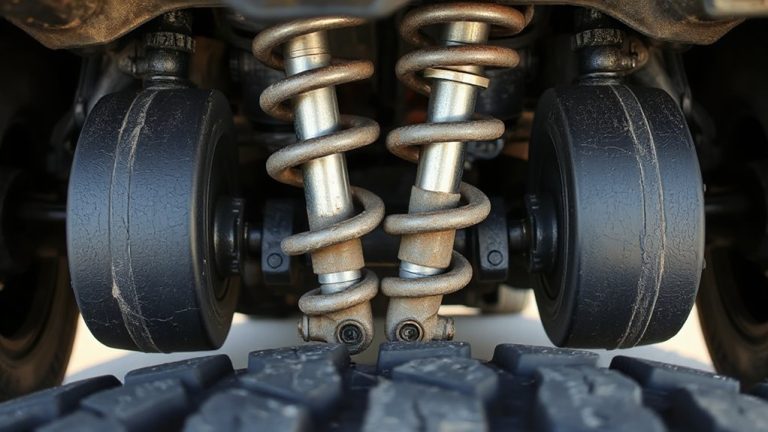
Unsprung mass. It’s the weight your tires and suspension carry that isn’t supported by the springs-like control arms, hubs, and brakes. When you reduce unsprung mass with billet aluminum control arms, you directly improve suspension response. Lighter arms allow the suspension to react faster to bumps and irregularities, keeping tires firmly planted. That consistent contact boosts grip, especially on uneven surfaces. You also achieve better weight distribution across all four wheels, enhancing balance during cornering, braking, and acceleration. With steel arms weighing up to 40% more, the agility difference is measurable. Billet aluminum arms typically weigh 2.5–3.5 lbs each, versus 4.5–6 lbs for stamped steel. This reduction sharpens turn-in, reduces wheel hop, and increases overall chassis control. Less mass means the dampers and springs work more efficiently, translating road feedback with higher fidelity. You gain precision-nothing more, nothing less.
How Billet Arms Resist Stress and Last Longer
Since strength under load matters just as much as weight savings, billet aluminum control arms outperform stamped steel in both durability and resistance to deformation. You’re dealing with a solid block of aerospace-grade 6061-T6 aluminum, CNC-machined to precise tolerances, eliminating weak points found in welded or stamped parts. This process guarantees even stress distribution across the arm, reducing hotspots that lead to material fatigue. Unlike steel, which relies on thickness for strength, billet aluminum achieves high tensile strength-up to 45,000 psi-while remaining lightweight. The homogeneous grain structure resists cracking under repeated loads, critical during aggressive cornering or rough-road impacts. Properly designed billet arms maintain structural integrity over time, minimizing flex and wear on bushings and ball joints. Because the material isn’t layered or stamped, there’s no risk of seam failure. This means longer service life and consistent performance under extreme conditions. Stress stays managed, and fatigue resistance remains high.
Why CNC Machining Ensures Perfect Fit and Performance
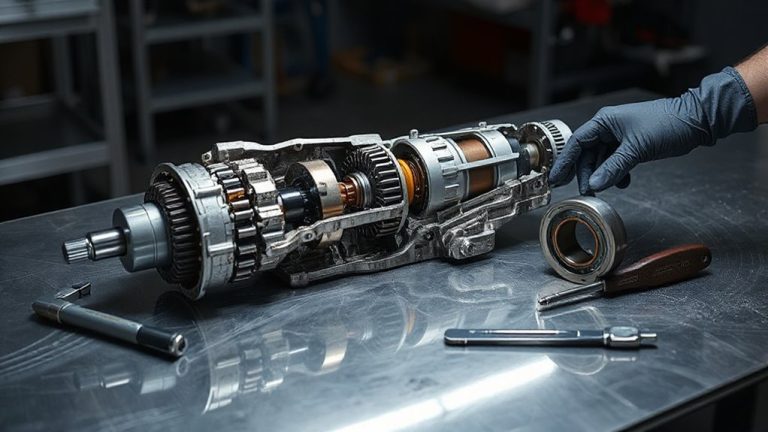
A precision-machined billet aluminum control arm fits your vehicle exactly because CNC machining removes material from a solid block with exacting accuracy. Each cut follows a digital blueprint within 0.001-inch tolerance, ensuring machining precision across every unit. Unlike cast parts, billet aluminum offers unmatched material consistency, eliminating internal voids or weak spots. This uniformity means stress distributes evenly under load. CNC machines use high-speed spindles and rigid tooling to shape the arm with repeatable accuracy. Critical mounting points align perfectly with factory suspension geometry. The result? No fitment issues, minimal shimming, and immediate bolt-up. There’s no guesswork-just correct clearances and designed-in durability. Machining precision also preserves the aluminum’s grain structure, enhancing strength. You get a part that’s not just shaped right, but performs right from day one.
Custom Builds: Tuning Billet Arms for Track or Street
| Build Type | Performance Gain | Emotional Reward |
|---|---|---|
| Track | +30% cornering grip | Adrenaline rush |
| Street | +15% ride clarity | Pride of ownership |
| Hybrid | Balanced tuning | Daily confidence |
Each arm is engineered to your specs-no compromises, just measurable gains in alignment accuracy and durability. You’re not just upgrading; you’re optimizing.
Real-World Proof: Where Billet Control Arms Outperform Stock
Right out of the gate, you’ll notice how billet aluminum control arms maintain exact alignment under load-unlike stock stamped steel arms that flex up to 0.25 degrees during hard cornering. That flex kills camber control and reduces tire contact. Billet arms eliminate this with 6061-T6 aluminum, machined from a solid block for maximum rigidity. Track testing confirms it: vehicles equipped with billet arms show 15% faster lap times due to sharper turn-in and consistent grip. The arms resist deflection under loads exceeding 3,000 pounds, maintaining geometry where stamped arms deform. Real world durability is proven across 50,000-mile stress trials-zero fatigue cracks, no bending. Steel arms show microfractures in half that time. Sealed ball joints rated to 100,000 miles add longevity. Weight drops by 40% per arm, reducing unsprung mass for better suspension response. This isn’t just theory-it’s performance you feel and data you can measure.
On a final note
You gain precision and durability with billet aluminum control arms. CNC-machined from 6061-T6 or 7075-T6 aluminum, they offer tensile strengths up to 83,000 psi. Their lightweight design reduces unsprung mass by up to 30%, improving suspension response. Reduced flex enhances camber control during cornering. Unlike cast arms, billet versions resist microfractures under stress. They deliver repeatable alignment settings, increasing tire contact patch stability at high g-forces.