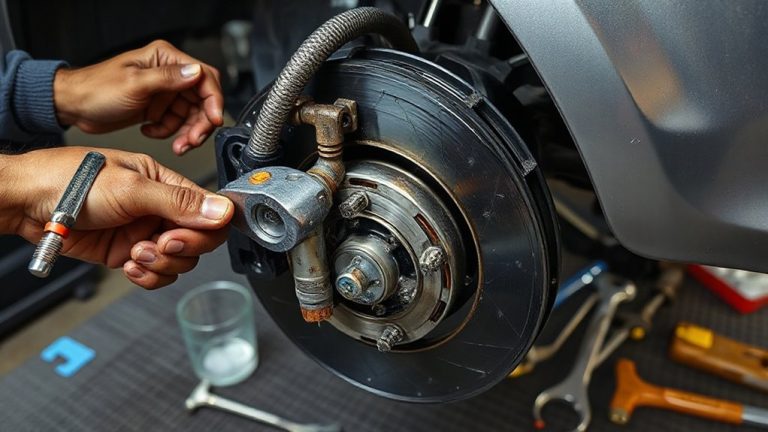
How to Lubricate Steering Gear Sector Shaft Bearings on a 2013 GMC Sierra
You can’t lube the sector shaft bearings without disassembling the steering gear-these are sealed components on your 2013 GMC Sierra. Start by checking steering fluid; use Dexron VI ATF meeting GM 88861572 specs. Lift the truck safely with jack stands rated for 3,000 lbs per corner. Remove the pitman arm with a puller after marking alignment. Inspect the shaft for pitting or play over 0.005 inches. Replace worn parts. Apply NLGI #2 synthetic EP grease to bearings during reassembly. Torque housing bolts to 28 ft-lbs in a crisscross pattern. Reattach the pitman arm with a new castle nut, tightened to 160 ft-lbs and secured with a cotter pin. A proper grease fill prevents premature wear and guarantees smooth operation under load-knowing the right techniques makes all the difference.
Notable Insights
- Inspect the sector shaft for wear, pitting, or excessive play exceeding 0.005 inches before lubrication.
- Use NLGI #2 marine-grade or synthetic EP grease compatible with O-rings and exceeding 500°F drip point.
- Apply grease evenly to bearing surfaces using a grease gun with a needle tip and flexible hose.
- Avoid over-greasing to prevent seal damage and internal binding in the steering gear housing.
- Reassemble with proper torque: housing bolts at 28 ft-lbs in a crisscross pattern and pitman arm at 160 ft-lbs with cotter pin.
Diagnose Stiff Steering in Your 2013 GMC Sierra
If you notice increased resistance when turning the steering wheel of your 2013 GMC Sierra, it may indicate worn or dry sector shaft bearings in the steering gear. This stiffness often develops gradually, making early detection critical. Perform a steering fluid check first-low or degraded fluid reduces hydraulic assistance and accelerates wear. Inspect the reservoir for proper levels and signs of contamination like foaming or dark residue. The vehicle uses Dexron VI automatic transmission fluid, which must meet GM 88861572 specifications. Next, schedule a professional alignment inspection; misaligned wheels can mimic stiff steering symptoms. An alignment check measures toe, camber, and caster to guarantee they’re within factory tolerances-typically ±0.17° for toe. These steps isolate mechanical causes before servicing internal components.
Gather Tools for Sector Shaft Lubrication
You’ve confirmed the steering stiffness isn’t due to fluid issues or alignment, so it’s time to prepare for servicing the sector shaft bearings. Start by gathering a high-quality marine-grade grease or synthetic EP (extreme pressure) grease, guaranteeing lubricant compatibility with the OEM-spec bronze bushings used in your 2013 GMC Sierra’s steering gear. The bearing type is a sleeve-style bushing, resistant to radial loads but sensitive to improper lubrication. Use a grease gun with a flexible hose and needle tip for precise application. Include O-ring-compatible degreaser, shop towels, and nitrile gloves. Verify the grease NLGI consistency rating is #2-too thick, and it won’t flow; too thin, and it won’t protect. Check the drip point-ideally above 500°F-to guarantee thermal stability under heavy steering loads.
Safely Access the Steering Gear Sector Shaft
Before reaching the sector shaft, you’ll need to properly expose the steering gear housing without damaging surrounding components. Raise and securely support the vehicle using jack stands rated for at least 3,000 lbs per corner. Disconnect the battery ground to prevent electrical hazards. Perform pitman arm removal using a puller tool designed for splined shafts to avoid damaging the sector shaft. Mark the steering column alignment before disconnecting any linkage to guarantee proper reassembly. Use a torque wrench to loosen the pitman arm nut-typically 160 ft-lbs-then remove it completely. Carefully separate the arm from the sector shaft with minimal side loading. Once the pitman arm is off, detach mounting bolts securing the steering gear. Now you’ve safely accessed the sector shaft for service.
Inspect Sector Shaft Bearings for Wear
Wear patterns tell the story of a bearing’s life. You can spot bearing wear by checking for grooves, pitting, or discoloration on the sector shaft surface. Smooth metal means healthy operation; roughness indicates failure is near. Rotate the sector shaft and watch for uneven movement-this often points to internal damage. Look for shaft play by grasping the shaft and moving it up and down. Any detectable movement-more than 0.005 inches-is unacceptable. Excessive shaft play degrades steering response and accelerates gear wear. Inspect the bearing bore, too; it should have no scoring or corrosion. Use a dial indicator to measure radial play if possible. Persistent binding or grittiness during rotation confirms advanced bearing wear. Replace the sector shaft assembly if wear is visible or play exceeds spec. Don’t overlook small anomalies-they compound fast under load.
Lubricate the Sector Shaft Bearings
Now that you’ve confirmed the sector shaft bearings are in good condition with no excessive play or surface damage, it’s time to apply the proper lubrication. Proper bearing lubrication prevents premature wear and guarantees smooth steering response. Use a high-quality lithium-based grease with a NLGI #2 rating-this consistency offers ideal viscosity for automotive steering applications. Apply grease evenly using a grease gun with a flexible extension for hard-to-reach areas. Focus on the bearing’s contact surfaces where the sector shaft interfaces with the housing. A uniform grease application minimizes friction and protects against moisture and contaminants. Avoid over-greasing, which can damage seals or cause binding. A pea-sized amount per bearing point is usually sufficient. This lubricant performs well between -20°F and 250°F, making it ideal for the Sierra’s operating range. Proper lubrication extends component life and maintains steering precision.
Reassemble and Test Your Steering
Once the sector shaft bearings are properly lubricated, begin reassembling the steering gear housing with care to guarantee precise alignment. Align the housing halves exactly as marked during disassembly-any misalignment of more than 0.002 inches disrupts steering alignment. Torque the housing bolts to 28 ft-lbs in a crisscross pattern to maintain even clamping force. Reconnect the pitman arm and secure it with a new castle nut, tightened to 160 ft-lbs and cotter-pinned. After reassembly, check for binding or resistance during manual rotation of the sector shaft. Verify steering center position matches factory specifications before reconnecting the steering column. Road-test at low speed to monitor steering responsiveness and stability. Confirm wheel balance is within 0.5 ounce-inch tolerance to avoid vibrations that mimic poor steering alignment. Properly executed reassembly assures accurate steering return and preserves OEM performance metrics.
Extend Steering Life: Simple Maintenance Tips
A well-maintained steering system can easily last over 100,000 miles with minimal issues. Check fluid levels every 5,000 miles to prevent premature wear. Low power steering fluid causes increased friction and air ingestion, reducing hydraulic efficiency. Use Dexron VI automatic transmission fluid unless specified otherwise by GM. Inspect hoses and seals during each oil change for leaks or deterioration. Steering alignment directly affects tire wear and system longevity. Misaligned wheels create uneven pressure on steering components, accelerating wear on the sector shaft bearings. Have alignment checked annually or after hitting a curb or pothole. Maintain proper toe, camber, and caster within GM factory specs-typically ±0.1 degrees for toe on a 2013 Sierra. Rotate tires every 7,500 miles to promote even wear. Clean steering components regularly to remove road grime and salt buildup.
On a final note
You’ve completed the sector shaft lubrication properly. Use only high-pressure molybdenum disulfide grease (NLGI #2) to guarantee peak bearing performance. Reassembly requires precise torque specs: tighten the sector shaft adjustment screw to 18 ft-lbs, then back off 90 degrees. Test steering for smooth operation without binding. Regular maintenance every 30,000 miles prevents wear. Correct lubrication extends gear life by reducing metal-to-metal contact in the recirculating ball mechanism.