The Role of Run-Flat Tires in Maintaining Mobility After Punctures
Run-flat tires keep you moving after a puncture by supporting your vehicle’s weight even with zero air pressure. Their reinforced sidewalls, made of stiff rubber compounds and twin steel belts, resist deformation and sustain loads up to 50 miles at 50 mph. This structural support maintains steering control and reduces the risk of rim damage. A TPMS alerts you instantly to pressure loss, ensuring you don’t overlook a failure. Most punctures, especially in the sidewall, mean the tire must be replaced-repairs compromise safety. You’ll discover key differences between run-flat and spare tire systems that could shape your next vehicle choice.
Notable Insights
- Reinforced sidewalls support the vehicle’s weight even after complete air loss, preventing collapse.
- Run-flat tires allow continued driving up to 50 miles at speeds no higher than 50 mph post-puncture.
- Specialized rubber and layered steel reinforcements maintain stability, steering, and control during air pressure loss.
- Integration with TPMS ensures immediate driver alerts for pressure drops, enhancing safety and response.
- Eliminates need for roadside tire changes, enabling safe travel to a service location after a puncture.
How Run-Flat Tires Work After a Puncture
Even if you get a sudden puncture, run-flat tires are designed to keep you moving. Their reinforced sidewalls provide structural support design that sustains the vehicle’s weight even at zero pressure. You can typically drive up to 50 miles at speeds up to 50 mph, depending on load and road conditions. The robust sidewall construction uses heat-resistant rubber and twin steel belts to maintain stability. Tire pressure monitoring systems alert you immediately when pressure drops, ensuring you don’t overlook a puncture. These sensors are critical-without them, you might not notice a loss of inflation. The system triggers a dashboard warning, usually within seconds of detecting a 25% pressure drop. Unlike standard tires, run-flats resist deformation when deflated, preventing rim damage. This engineering allows continued mobility while preserving safety margins. BMW recommends specific run-flat tire models for optimal performance and compatibility with their vehicles’ safety systems.
When Run-Flat Tires Make the Difference
You’re driving on the highway, miles from the nearest service center, when you hear that telltale thump. Run-flat tires keep you moving, supporting your vehicle’s weight even with zero air pressure. They’re designed with reinforced sidewalls that can travel up to 50 miles at speeds up to 50 mph after a puncture. In emergency situations-like sudden blowouts or hazardous weather-this capability reduces the need to stop in unsafe locations. The built-in structural support mimics a partially inflated tire, maintaining stability and steering response. For urban commutes, where traffic congestion and limited parking complicate roadside changes, run-flats offer a practical advantage. You can continue to your destination or a service center without immediate tire replacement. Integration with tire pressure monitoring systems (TPMS) guarantees you’re alerted instantly. This seamless functionality enhances safety and convenience without requiring driver intervention.
Driving Limits After a Run-Flat Puncture
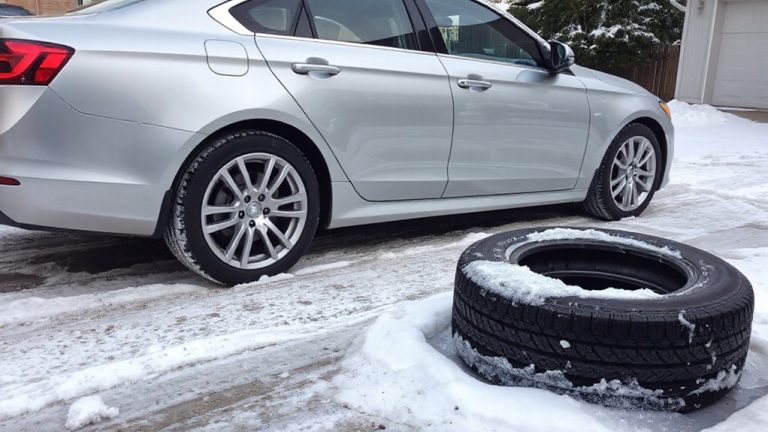
A run-flat tire’s ability to operate after a puncture is limited by specific parameters. You can typically drive up to 50 miles at a maximum speed of 50 mph. Exceeding these limits risks structural damage and reduces tire longevity. Maintaining driving safety means staying within manufacturer guidelines-most systems monitor pressure and alert you when thresholds are breached. The reinforced sidewalls support your vehicle’s weight temporarily, but continued stress generates heat and wear. This compromises integrity, especially over rough terrain or at high speeds. Even if the tire seems intact, its performance degrades after a puncture. You should inspect it promptly and replace or repair as recommended. Pushing beyond the rated distance or speed increases blowout risks and endangers control. Think of it like running on a sprained ankle-possible for a short time, but harmful long-term. Adhering to limits preserves both driving safety and tire longevity. For winter driving conditions, consider pairing your run-flat capability with run-flat snow tires to maintain mobility and traction in snowy environments.
Run-Flat Tires vs. Traditional Spares: Pros and Cons
Run-flat tires and traditional spare tires each offer distinct approaches to handling roadside punctures, and your choice impacts both vehicle design and emergency preparedness. Run-flats let you drive up to 50 miles at 50 mph on a flat, eliminating immediate roadside changes. They improve space efficiency by removing the need for a spare, jack, or tools-freeing trunk space and reducing vehicle weight. However, they’re heavier, deliver a stiffer ride, and often cost 30–40% more than standard tires. The cost comparison includes added tire pressure monitoring systems (TPMS), required for detecting gradual leaks. Traditional spares are cheaper to replace and easier to install but take up space and add weight. Full-size spares match performance, while compact “donuts” limit speed to 50 mph and distance to 70 miles. Your decision balances convenience, cost, and design efficiency.
Can You Repair a Run-Flat Tire After a Puncture?
How safe is it to repair a run-flat tire after a puncture? Most manufacturers advise against it. Once punctured, a run-flat’s internal structure may be compromised, affecting tire longevity and performance. Even small punctures can cause micro-damage to the reinforced sidewalls, which are critical for load support when deflated. Repair eligibility depends on the extent and location of the damage. Punctures in the tread area under 6mm *might* be repairable, but sidewall or shoulder damage disqualifies the tire. Repairs can also void warranties and fail under stress, risking sudden air loss. Unlike standard tires, run-flats aren’t designed for multiple repairs. Heat buildup during continued use worsens internal degradation. For safety and reliability, replacement is typically recommended. Always follow the automaker’s and tire manufacturer’s guidelines to guarantee continued mobility and structural integrity.
How Run-Flat Tires Are Built to Handle Air Loss
Reinforced sidewalls make all the difference. These thick, rigid sidewalls support your vehicle’s weight even after complete air loss. Unlike standard tires, run-flats use reinforced sidewalls made from specialized rubber compounds and layered reinforcements that resist deformation. They let you keep driving safely for up to 50 miles at speeds up to 50 mph. The reinforced sidewalls flex under load without collapsing, maintaining stability and control. Heat resistant materials are critical-they dissipate heat build-up caused by sidewall flexing. Without them, overheating would quickly degrade the tire. These materials include heat resistant materials like high-strength polymers and heat-dissipating fillers in the rubber compound. Combined, they guarantee structural integrity during continued use. Run-flat tires also feature strengthened bead areas to stay seated on the rim under low pressure. This design keeps the tire securely in place, minimizing damage and supporting mobility after punctures.
On a final note
You maintain mobility after a puncture because run-flat tires support the vehicle’s weight even with zero air pressure. Their reinforced sidewalls, made of heat-resistant rubber compounds, can carry a load up to 50 miles at speeds of 50 mph. This allows safe travel to a repair facility. Unlike traditional spares, run-flats save space and weight-typically reducing vehicle mass by 25–35 pounds. You gain convenience but lose repair options; most manufacturers advise against repairing them after inflation loss.