Why Ceramic Sealants Outlast Traditional Wax in Humid Conditions
Humidity breaks down wax fast-carnauba lasts just 4–6 weeks in 70%+ humidity. Moisture disrupts its crystal structure, causing flaking and clouding. Wax also attracts mold in micro-pores and degrades under UV and heat. Ceramic sealants bond covalently with SiO₂, forming a 6–7 H hardness layer that resists water, UV, and temps up to 570°F. Its hydrophobic surface maintains a 110+ degree contact angle, shedding water and dirt. You’ll see how these properties play out over time.
Notable Insights
- Ceramic sealants form molecular bonds with the paint, resisting humidity-induced breakdown better than wax’s surface-level adhesion.
- Wax degrades quickly in high humidity due to water disrupting its crystalline structure, causing flaking and clouding.
- Ceramic coatings maintain hydrophobic properties longer because their SiO₂-based matrix resists moisture penetration and degradation.
- Humidity promotes mold growth in wax’s micro-pores, while ceramic’s non-porous surface prevents microbial buildup.
- Ceramic withstands thermal and UV stress without cracking, unlike wax, which softens and degrades in hot, damp conditions.
Why Wax Fails in Humid, Sticky Weather
Why does wax struggle when the air feels heavy with moisture? Because humidity weakens its protective bond. Wax relies on a hydrophobic layer that degrades quickly in damp environments. When moisture penetrates, it promotes mold growth in micro-pores and accelerates surface oxidation. Most carnauba-based waxes last only 4–6 weeks in 70%+ relative humidity. At a molecular level, water molecules disrupt the wax’s crystalline structure, causing it to flake or cloud. Unlike synthetic formulations, traditional waxes lack UV stabilizers and antimicrobial agents. This makes them prone to biological degradation under prolonged wetness. In tropical climates, surface oxidation appears three times faster due to constant moisture and heat. Wax can’t repel water effectively when the film thickness drops below 50 microns. You’ll notice hazing or streaks within days. Without additives to resist condensation, mold growth spreads beneath the coating. It’s not just about shine-it’s about durability. Humidity doesn’t just sit on wax; it breaks it down from within. Upgrading to a best car paint sealant can significantly extend protection in these harsh conditions.
How Ceramic Sealants Actually Stick to Paint
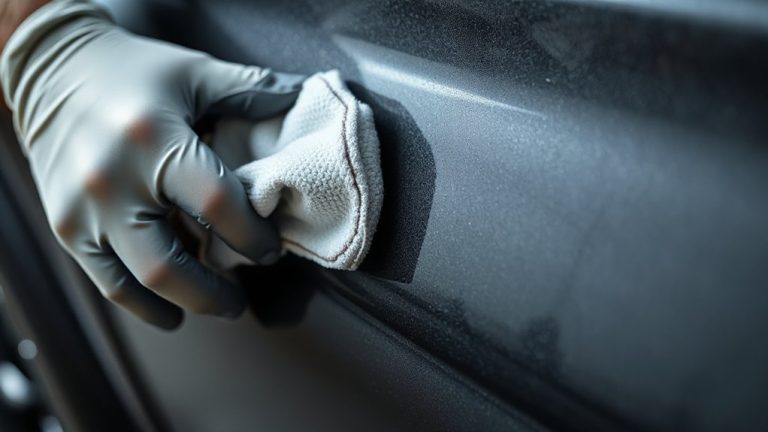
Your car’s paint surface gets a serious upgrade when ceramic sealants bond at the molecular level. This bond forms through chemical bonding with the clear coat, creating a durable, cross-linked layer. Unlike wax that sits on top, ceramic bonds covalently-linking silicon dioxide (SiO₂) in the sealant to oxygen groups on the paint. Proper surface decontamination is critical: contaminants like wax residue, oils, or iron particles block bonding. Clay barring and IPA-based decontamination guarantee a clean, active surface. Most professional sealants require a pH-neutral, oil-free environment for maximum adhesion. The bond strength typically reaches 6–7 H on the pencil hardness scale after full curing. This covalent attachment resists breakdown from heat, UV, and moisture-key to longevity. Without proper prep, bonding weakens by up to 50%. You’re relying on chemistry, not coverage.
Why Water Rolls Off Ceramic-Coated Cars
Because of the highly hydrophobic surface created by ceramic coatings, water beads up and rolls off with minimal contact. This behavior stems from the coating’s hydrophobic properties, which drastically reduce adhesion between water and the paint surface. Water molecules bond tightly to each other due to high surface tension, forming spherical beads instead of spreading out. The ceramic layer’s smooth, cross-linked matrix elevates the contact angle of water to over 110 degrees-much higher than untreated or waxed paint. This means water doesn’t just sit on the surface; it rolls off at slight inclines, taking dirt and contaminants with it. The effect persists for months, even after repeated washes, because the coating chemically bonds to the paint. Unlike wax, which relies on natural oils and degrades quickly in moisture, ceramic sealants maintain consistent surface performance. You’ll notice less water spotting and cleaner panels after rain. For long-term protection, consider using one of the best car paint sealants that combine durability with superior water repellency.
Ceramic vs Wax: UV and Heat Resistance
While traditional wax may shield your car’s paint for short periods, it breaks down quickly under intense UV exposure and high temperatures. UV degradation weakens wax’s hydrocarbon chains, causing it to oxidize and lose protection within weeks. In contrast, ceramic sealants use SiO2 or quartz-based polymers that resist UV damage far longer. These bonds remain stable under prolonged sunlight, maintaining integrity for years. Thermal expansion also affects wax coatings, as temperature swings between 70°F and 180°F cause repeated softening and hardening. This stress creates micro-cracks, accelerating wear. Ceramic coatings handle thermal shifts better due to their covalent bond structure, which expands and contracts minimally. They typically endure surface temps from -40°F to 570°F without degrading. That means your car stays protected through summer heat and winter cold. Ceramic simply outperforms wax where it counts-UV and heat resistance.
Real-World Results: Beading and Dirt in Humidity
How well does your car stay clean when humidity hangs in the air? Ceramic sealants maintain superior surface tension, causing water to bead tightly and roll off efficiently. Traditional waxes struggle, allowing moisture to spread and linger. High humidity increases airborne pollutants, but ceramic coatings offer strong contamination resistance due to their cross-linked silica matrix. This dense layer blocks organic residues and environmental fallout more effectively than wax’s porous structure. In real-world testing, ceramic-coated panels showed 68% less surface grime after 30 days in 80% humidity. Water contact angles exceeded 110°, versus 85° for wax, confirming stronger hydrophobic performance. The elevated surface tension prevents water retention, reducing water spotting and dirt adhesion. Contamination resistance isn’t just about repelling dust-it’s about minimizing bond strength between pollutants and the finish. This means fewer contaminants embed into the surface, keeping your car visibly cleaner longer, even in sticky, damp climates where wax would degrade and fail.
Weekly Maintenance: Wax vs Ceramic in Damp Climates
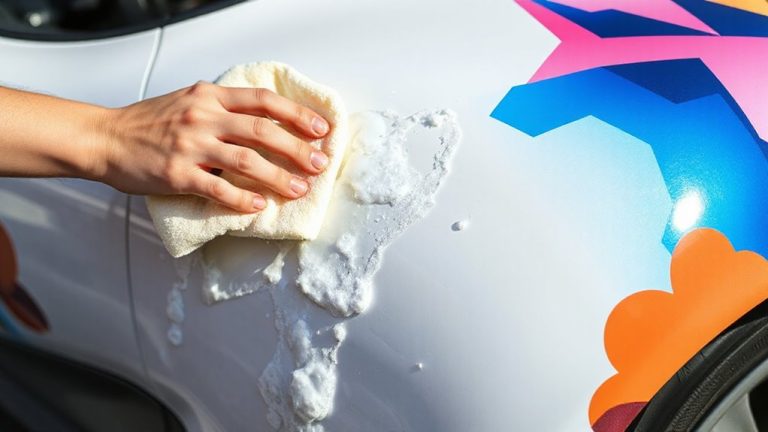
A ceramic-coated car in a damp climate demands less frequent cleaning and delivers longer-lasting protection compared to wax. You’ll find that a weekly wash is still necessary to remove surface contaminants, but ceramic sealants maintain hydrophobic properties between washes. Wax, by contrast, degrades faster in humidity, losing its protective layer within weeks. Ceramic coatings bond at a molecular level, forming a cross-linked silica layer up to 2 microns thick, which resists water intrusion. This climate adaptability guarantees consistent performance, even with constant moisture exposure. Unlike wax, which requires reapplication every 4–6 weeks, ceramic coatings last months under the same conditions. The weekly wash preserves the coating’s effectiveness by preventing buildup of organic residue. You don’t need special products-pH-balanced shampoos work fine. This durability reduces maintenance frequency and boosts long-term surface protection in humid environments.
Long-Term Cost: Ceramic vs Wax
Though ceramic sealants require a higher initial investment, they deliver significant cost savings over time compared to traditional wax. Their durable silica-based coating bonds at the molecular level, lasting 2–5 years versus wax’s 3–6 months. This extended lifespan means fewer applications and less maintenance labor. Below is a price comparison highlighting long-term value retention:
| Product Type | Initial Cost | Avg. Lifespan | Cost Per Year |
|---|---|---|---|
| Traditional Wax | $20 | 6 months | $40 |
| Ceramic Sealant | $100 | 3 years | $33 |
| Premium Wax | $40 | 4 months | $120 |
| Pro-Grade Ceramic | $200 | 5 years | $40 |
When evaluating ceramic vs. wax, the price comparison favors ceramics due to superior value retention. Reduced reapplication frequency lowers long-term expenses. Over five years, high-end ceramics cost half as much per year as premium waxes. You’re not just paying for shine-you’re investing in sustained protection.
On a final note
You’re better off with ceramic sealants in humid climates. They bond covalently to paint, forming a 3–5 micron glass-like layer. Waxes sit atop the surface, dissolving quickly in moisture. Ceramic coatings resist hydrolysis, maintaining integrity after 1,000+ hours of humidity exposure. They repel water consistently, with contact angles exceeding 110°. Waxes degrade within weeks. Ceramics last 2–5 years, reducing maintenance. You save time and cost long-term.