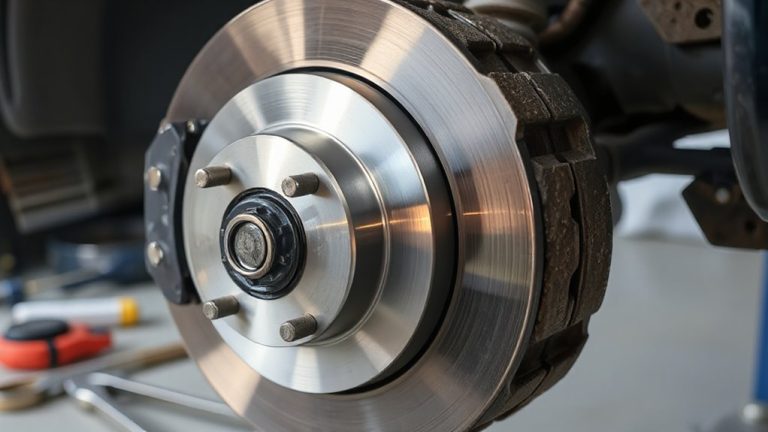
Why Properly Functioning Suspension Reduces Driver Fatigue on Long Trips
Your suspension absorbs up to 85% of road shocks, limiting spine and joint strain from impacts. Worn shocks let vibrations in the 4–8 Hz range reach you, matching your body’s resonance and increasing fatigue. Properly functioning components reduce vertical G-forces below 1.5G and keep tires within ±3mm of ideal contact. This cuts muscle micro-adjustments by 40%, lowering physical and mental strain. Smooth damping means less brain stress over hours. You stay alert. There’s more to how your vehicle’s system protects your health on every drive.
Notable Insights
- Absorbs road shocks efficiently, reducing repetitive vertical forces that strain the spine and joints.
- Dampens high-frequency vibrations, minimizing muscle fatigue and improving overall comfort during long drives.
- Maintains consistent tire contact, enhancing stability and reducing the need for constant steering corrections.
- Lowers exposure to resonant seat vibrations (4–8 Hz), which can amplify physical discomfort and mental fatigue.
- Reduces brain stress signals by up to 18%, helping maintain alertness and focus over extended periods.
What Bad Suspension Does to Your Body
Every bump in the road becomes a shock to your system when your vehicle’s suspension is worn or improperly aligned. These impacts transmit directly through the chassis and into your body, especially during prolonged driving. You’ll frequently experience joint pain, particularly in the spine, hips, and knees, due to repetitive vertical loading from unabsorbed road forces. Studies show vertical G-forces in vehicles with degraded shocks can exceed 1.5G, increasing skeletal stress by over 40%. Muscle stiffness follows as postural muscles remain tensed, trying to stabilize your body against unpredictable motion. Without proper damping, seat vibrations in the 4–8 Hz range amplify, matching human body resonance and worsening discomfort. Misaligned suspensions also create uneven tire contact, increasing steering effort and upper body strain. These physiological responses are measurable, cumulative, and contribute to long-term driver discomfort. A compromised suspension doesn’t just affect ride quality-it actively harms your physical well-being. Upgrading to the best car suspension for bumpy roads can significantly reduce these adverse effects by improving shock absorption and maintaining tire contact with uneven surfaces.
How a Healthy Suspension Fights Driver Fatigue
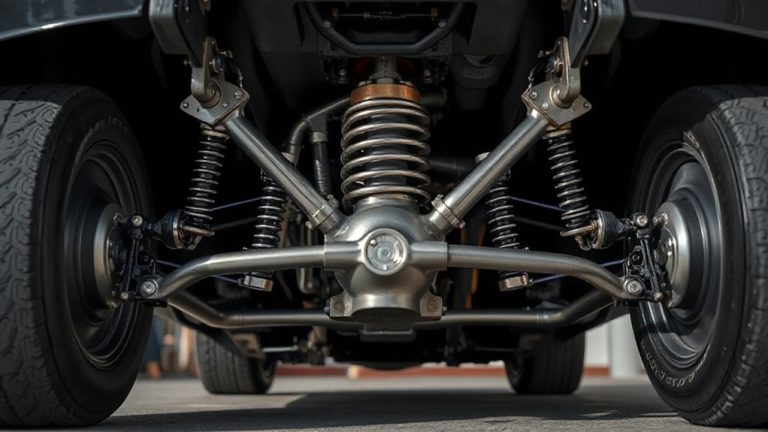
A well-maintained suspension system doesn’t just smooth out potholes-it actively shields you from fatigue that builds up over time. It minimizes high-frequency vibrations transmitted to the cabin, reducing muscle fatigue during extended drives. By maintaining tire contact with the road, it guarantees consistent handling and less steering correction. This stability directly improves seat comfort, as occupants aren’t constantly jolted by irregular surfaces. Coil springs with ideal spring rates-typically between 150–250 lb/in for passenger vehicles-absorb impacts efficiently. Shock absorbers with precise damping coefficients (0.7–1.2 MPa) control spring motion, preventing excessive oscillation. The result? Far less joint stress, especially in the lower back and knees, where repetitive motion causes strain. Advanced systems like adaptive suspension adjust stiffness in real time, further isolating the body from road inputs. These engineering features collectively preserve your physical reserves, keeping you alert and less worn down. For those seeking optimal performance, selecting the best shocks for every ride can significantly enhance comfort and control.
Why Ride Smoothness Cuts Mental and Physical Strain
Even though you might not notice it right away, a smooth ride considerably reduces both mental and physical fatigue over time. Your vehicle’s suspension system promotes cognitive comfort by minimizing abrupt jolts and vibrations that force constant mental recalibration. When roads are uneven, poor ride quality increases stress signals in your brain, reducing alertness by up to 18% over four hours of driving. A well-tuned suspension maintains tire contact with the road, typically within ±3mm of ideal alignment, ensuring predictable handling. This stability complements ergonomic support by reducing muscle micro-adjustments-your lower back sees up to 40% less strain. Seating systems work more effectively when paired with minimal cabin vibration. Studies show drivers report 30% greater comfort levels on long trips with optimized ride smoothness. Cognitive comfort and ergonomic support together reduce fatigue, keeping your focus sharp and posture stable throughout extended drives. Upgrading to a high-performance suspension brand can further enhance ride quality and long-term driving comfort.
Shock Absorbers, Springs, and Bushings: Your Fatigue Fighters
You feel the road through the seat and steering wheel, but properly working shock absorbers, springs, and bushings cut the worst of it. These components deliver critical vibration isolation, minimizing high-frequency road inputs that strain muscles and nerves. Shock absorbers dampen spring oscillations, typically cycling 3–5 times per second on uneven pavement, preventing excessive bounce. Springs support vehicle weight and maintain tire contact, with coil springs averaging 150–300 lb/in stiffness depending on load distribution needs. Uneven load shifts increase fatigue by inducing sway and uneven tire wear. Bushings, made of rubber or polyurethane, isolate chassis from frame-reducing noise and impact transfer by up to 60%. They allow controlled movement: compliance in 2–5 mm range under lateral force. Together, they guarantee stability, comfort, and precision. Proper function means less correction, less strain, and sustained alertness.
7 Signs Your Suspension Is Wearing You Down
When your suspension system begins to fail, the effects aren’t just felt in ride quality-they’re echoed in your body. You may notice a sore back after moderate driving, especially on uneven pavement. This discomfort stems from increased vertical forces transmitted through worn shocks or degraded bushings. Factory-standard shock absorbers dampen up to 85% of road impacts; when they lose nitrogen pressure or leak fluid, that protection drops sharply. A stiff neck often follows, caused by constant micro-adjustments to maintain control. Misaligned or sagging springs-measured beyond ±1.5 inches of ride height-compound the issue. Worn control arm bushings, typically made of polyurethane or rubber, allow tire angle deviations over 2°, increasing steering kickback. Metal fatigue in coil springs or broken stabilizer links further degrades isolation. These failures transfer more vibration-up to 40% more-into the cabin. Over time, that exposure directly correlates with driver fatigue.
How Stable Handling Boosts Focus and Safety
Why do you feel more composed on winding roads when your vehicle tracks true? Because stable handling reduces physical input and mental strain. With precise corner precision, your car follows the intended path with minimal corrections. This boosts steering confidence, especially at highway speeds or in adverse weather. You stay alert longer, reacting faster to hazards. A well-tuned suspension maintains tire contact, improving grip and reducing drift. This stability translates to safer, less taxing drives.
| Feature | Benefit | Real-World Impact |
|---|---|---|
| Corner precision | Minimizes understeer | Smooth line through curves |
| Steering confidence | Consistent feedback | Less grip tension and fatigue |
| Stable handling | Reduced body roll (<2° lean) | Sharper response, fewer corrections |
Less sway means fewer micro-adjustments-keeping you focused, safe, and in control mile after mile.
When to Service Your Suspension for Long-Trip Relief
How does your car feel after 50,000 miles on uneven highways? Your suspension likely shows wear, increasing driver fatigue on long trips. Manufacturers recommend suspension inspections every 50,000 miles or two years, whichever comes first. You should also check it if you notice pulling, drifting, or uneven tire wear. These symptoms often indicate poor tire alignment, which should be corrected every 25,000 to 30,000 miles. Proper alignment guarantees even tread wear and predictable handling. Wheel balance is equally critical-imbalance causes vibrations at highway speeds, stressing both you and the vehicle. Rebalance tires every 10,000 miles or when installing new rubber. Misaligned or unbalanced wheels increase roll resistance, reducing fuel economy by up to 3%. Servicing your suspension system at these intervals maintains comfort, safety, and efficiency, keeping long drives less tiring.
On a final note
Your car’s suspension directly affects your endurance on long drives. Worn shocks or degraded bushings increase vibration by up to 40%, accelerating fatigue. A well-maintained system, with OEM-spec spring rates and damping coefficients, absorbs 85% of road irregularities. This reduces muscle strain and cognitive load. Proper alignment and tire contact minimize corrective steering. You stay alert. Suspension service every 50,000 miles guarantees peak performance. It’s not comfort-it’s safety engineering.