When to Replace Both Brake Pads and Rotors Together for Balanced Performance
Replace both brake pads and rotors together when wear indicators squeal or pad thickness drops below 3mm. You need matched components if rotors show grooves, scoring, or runout over 0.005 inches. Uneven friction surfaces reduce stopping power and cause vibration. Replacing in pairs guarantees balanced coefficient of friction-ideally 0.35 to 0.45-and maintains alignment. This pairing maximizes heat dissipation, extends service life, and meets factory specifications for safety and performance. Best results depend on correct torque and concentric mounting-details you’ll want to get right.
Notable Insights
- Replace both brake pads and rotors together to maintain balanced friction and optimal braking performance.
- Pair new pads and rotors when existing components show uneven wear or thickness variation beyond 0.001 inches.
- Install matched sets if pads are below 3mm or rotors are near minimum thickness or show scoring.
- Ensure concentric mounting with rotor runout under 0.003 inches for consistent contact and reduced vibration.
- Replace in pairs to prevent mismatched friction coefficients, which compromise stopping power and safety.
Why Brakes Wear Out in Pairs
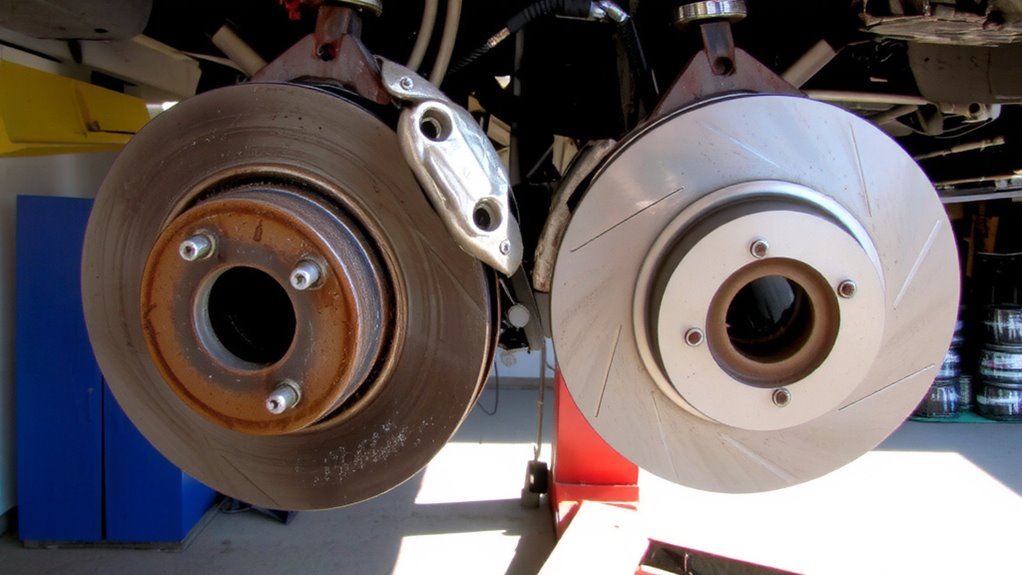
While braking force is distributed evenly across both wheels on an axle, wear naturally occurs in pairs due to shared load and synchronized operation. You’ll notice both front or both rear brake pads degrade at similar rates. This paired wear guarantees consistent brake alignment and maintains friction balance across the axle. Uneven wear disrupts this balance, reducing stopping power. Rotors spin in tandem with wheels, so heat and pressure affect them equally. When one pad wears faster, it upsets the system, leading to vibration or pulling. Factory specs require matched friction surfaces. Replacing only one pad or rotor creates imbalance. For best performance, service both sides together. This preserves alignment geometry and guarantees even contact. Think of it like tire rotation-maintenance keeps systems synchronized. Balanced components extend system life and improve safety. Your brakes depend on uniform wear. Maintain friction balance to avoid premature failure. Upgrading to high-quality top brake rotors can further enhance braking efficiency and durability.
Common Signs You Need New Pads and Rotors
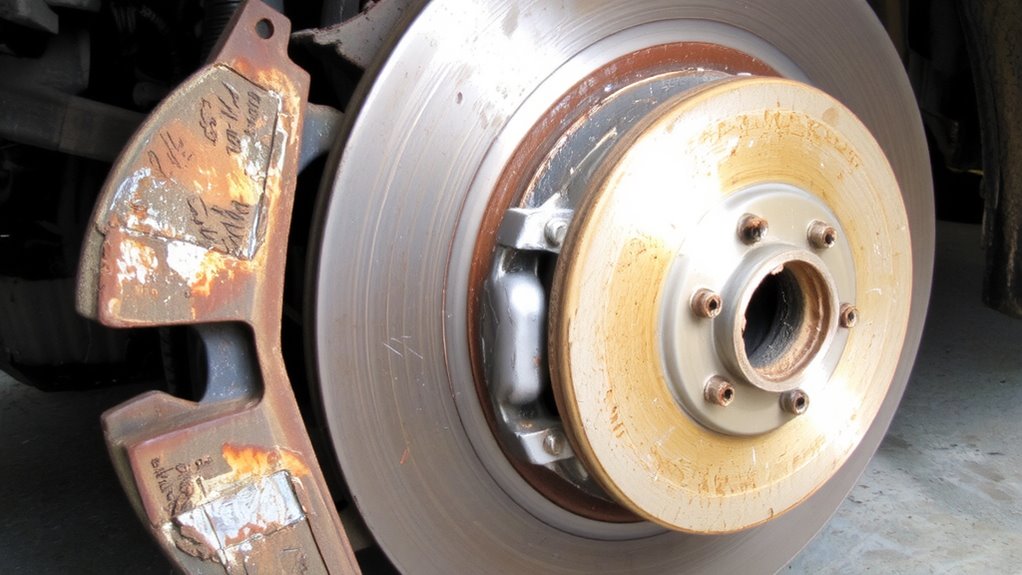
What if the way your car stops suddenly feels off? That’s your first clue something’s wrong with your brakes. Squealing noises are a clear warning-most brake pads have wear indicators that scrape the rotor when pads are down to 3mm or less. Ignoring this sound risks damaging the rotors. You might also feel pulsation in the brake pedal, often caused by uneven wear or rotor thickness variation exceeding 0.001 inches. This leads to inconsistent contact and reduced stopping power. Visible grooves or scoring on the rotor surface confirm advanced deterioration. If braking performance feels soft or longer than usual, pad material may be depleted below safe levels. Uneven wear can result from seized calipers or improper installation. At this stage, both pads and rotors should be replaced together to guarantee balanced braking, proper contact, and maximum safety. Choosing the right components matters-consider a top-rated brake kit for optimal performance and durability.
What Happens When Pads and Rotors Don’t Match
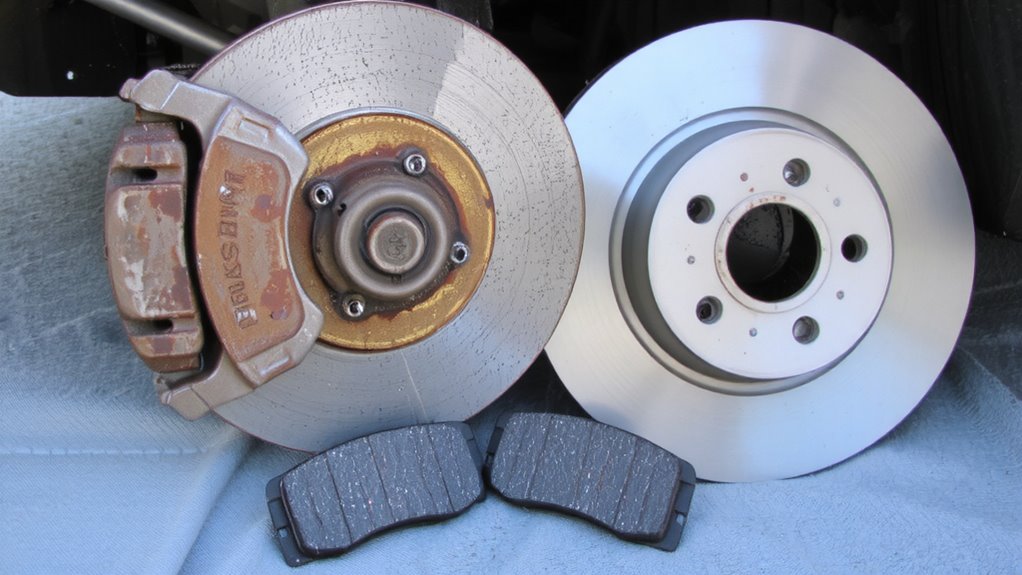
A mismatch between brake pads and rotors can compromise your entire braking system, even if both components appear to be in good condition. This pad rotor mismatch leads to uneven friction, reducing stopping power and increasing wear. You’ll notice longer braking distances, vibration under pressure, and premature component failure.
| Factor | Matched Components | Mismatched Components |
|---|---|---|
| Friction Coefficient | Balanced (0.35–0.45) | Inconsistent (<0.30 or >0.50) |
| Heat Dissipation | Even, controlled | Hot spots form rapidly |
| Wear Pattern | Uniform across surfaces | Accelerated, uneven friction |
Mismatched setups disrupt thermal management and material compatibility. For example, ceramic pads on performance rotors create inadequate bite, while metallic pads on standard rotors generate excessive noise and glazing. Always pair components to manufacturer specs-differences as small as 0.05 friction coefficient units affect safety. Consistent friction guarantees reliable, predictable stops.
How to Inspect Brake Pads and Rotors Yourself
Safety starts with what you can see. Begin with a visual inspection of your brake pads and rotors. Remove the wheel to expose the brake assembly. Check pad thickness through the caliper-if it’s less than 3mm, it’s nearing replacement. Use a ruler or caliper for precise thickness measurement. Pads below 2mm require immediate service. Inspect the rotor surface for grooves, scoring, or bluing, which indicates overheating. Measure rotor thickness near the edge using a micrometer; compare to the minimum thickness stamped on the rotor. If it’s within 0.5mm of that value, replacement is necessary. Uneven wear or runout over 0.005 inches suggests warping. Conduct this check every 10,000 miles. Early detection prevents damage and maintains braking efficiency.
When to Replace Both for Maximum Value
While you might be tempted to replace only the component that’s worn, pairing new brake pads with old, worn rotors-or vice versa-can compromise performance and shorten the lifespan of your investment. Replacing both guarantees brake material compatibility, allowing the pad compound to properly season and transfer evenly onto the rotor surface. Mismatched components often lead to uneven wear, increased noise, and reduced stopping power. Proper installation alignment is critical-rotors must be mounted concentrically, with runout under 0.003 inches, to prevent pulsation and premature pad wear. New rotors should be torqued to manufacturer specs, typically 70–100 ft-lbs in a star pattern, guaranteeing stability. Together, fresh pads and rotors deliver maximum friction, heat dissipation, and consistent response. This pairing maximizes return per dollar spent, extends service life, and maintains factory-level safety margins under repeated stress.
Pro Tips for Smoother, Safer Braking
You just upgraded both pads and rotors for peak performance-now make sure your driving and maintenance habits don’t undo that investment. Perform a brake fluid flush every 24 months or 30,000 miles to maintain maximum hydraulic efficiency. Moisture contamination lowers boiling point, risking fluid fade under hard braking. Use only DOT-compliant fluid matching your manufacturer’s specification. Conduct a brake line inspection annually. Look for cracks, bulges, or corrosion, especially at fittings and near suspension components. Steel-braided lines resist expansion, improving pedal feel. Avoid aggressive driving that causes excessive heat buildup. Allow brakes to cool gradually after highway use. Bed new pads and rotors properly: 6–10 moderate stops from 50 mph, avoiding hard lockups. This guarantees even transfer layer formation. Clean caliper slides every 15,000 miles with high-temp grease. These steps extend component life and deliver consistent, reliable stopping power. For optimal exterior care after maintenance, use a best car chamois to prevent water spots and preserve your finish.
On a final note
Replace both brake pads and rotors together for best performance. Uneven wear reduces stopping power and increases heat. New pads on grooved rotors wear unevenly, shortening lifespan. Fresh rotors provide a flat, smooth surface for consistent contact. This guarantees even pressure distribution across the braking system. Manufacturers recommend replacing rotors when thickness drops below 0.4 inches. Match pad material-ceramic, semi-metallic, or organic-to driving needs. Doing the job right once saves cost and improves safety long-term.