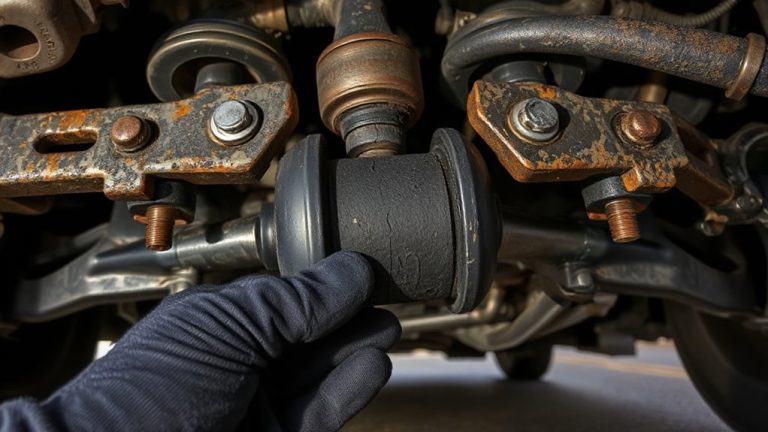
Sealing Dust Boots on Spherical Bearings to Extend Lifespan in Gravel Environments
You need to seal dust boots properly to protect spherical bearings from gravel damage. Sharp aggregate causes microcracks in rubber boots, especially at flex points, while vibration loosens clamps-maintain 1.5 N·m torque with thread locker. Use abrasion-resistant NBR or UV-stable EPDM boots matched to bearing OD. Install with 8–12 in-lbs seal tension, ensuring no pinching. A compromised seal lets grit in, accelerating wear. Further validation of material and torque specs reveals even greater durability gains.
Notable Insights
- Use abrasion-resistant materials like polyurethane or NBR for dust boots in gravel environments to withstand sharp aggregate impacts.
- Align dust boots concentrically with the bearing housing and ensure full seating to prevent debris and moisture ingress.
- Secure boots with clamps torqued to 1.5 N·m using thread locker to maintain clamp integrity over rough terrain.
- Inspect seal tension under rotation, ensuring no gaps, wrinkles, or pinching that compromise protective performance.
- Choose boots with proper environmental resistance, avoiding NBR in high UV/ozone conditions where FKM or EPDM excel.
Why Dust Boots Fail in Gravel
While gravel might seem harmless, it’s one of the most destructive environments for dust boots on spherical bearings. Constant impacts from sharp aggregate cause material fatigue, degrading elastomeric compounds over time. Most standard boots use NBR or HNBR rubber, rated for -40°C to 120°C, but repeated flexing from uneven terrain exceeds their fatigue resistance. Microcracks form at stress points, especially near the boot’s pleats, creating entry paths for debris. Simultaneously, vibration loosening compromises the boot’s retention clamp, which typically requires 1.2–1.5 N·m torque for secure fitment. In high-vibration gravel applications, clamps can loosen by 0.3 N·m per 100 km of operation without thread-locking agents. This gap allows abrasive particles to infiltrate the bearing interface. UV exposure and ozone levels in outdoor settings accelerate rubber aging, reducing boot lifespan by up to 40%.
How Gravel Destroys Spherical Bearings
Gravel doesn’t just damage dust boots-it sets off a chain reaction that leads straight to bearing failure. Tiny rock particles slip past compromised seals, entering the bearing’s internal clearance. Once inside, they act like abrasive grit, accelerating wear during rotation. You’ll see increased friction and rough movement-early signs of internal damage. Gravel also causes impact damage, especially in off-road suspensions where loads exceed 5,000 N. Repeated shocks deform raceways and brinelling on the ball surfaces reduce effective load capacity by up to 30%. Water follows the same entry path, promoting bearing corrosion. Moisture reacts with steel components, forming iron oxide that pits surfaces and weakens structural integrity. Corrosion increases surface roughness, accelerating fatigue. Even brief exposure in wet gravel conditions can initiate rust within 48 hours. These combined effects shorten bearing life by as much as 70% compared to clean environments. Preventing contamination isn’t optional-it’s essential for durability.
Choose the Best Dust Boot for Off-Road Use
A durable dust boot is your first defense against off-road contamination. Material selection directly impacts performance in abrasive gravel environments. Silicone and nitrile rubber offer superior environmental resistance, maintaining flexibility across extreme temperatures (-40°C to 125°C). Reinforced cuffs prevent tearing during vibration-heavy operations. Below is a comparison of top-performing materials:
| Material | Temperature Range | Abrasion Resistance |
|---|---|---|
| Nitrile Rubber | -40°C to 125°C | High |
| Silicone | -55°C to 200°C | Moderate |
| Polyurethane | -30°C to 90°C | Very High |
| EPDM | -50°C to 150°C | Good |
Choose based on operating conditions. Nitrile suits most gravel applications with its balanced durability and cost. Polyurethane excels where mechanical wear dominates, though it stiffens in cold. Silicone provides unmatched thermal stability but less tear strength. Your boot must seal tightly without restricting bearing movement-ensure proper fitment to spherical bearing OD dimensions.
How to Seal Dust Boots in 5 Steps
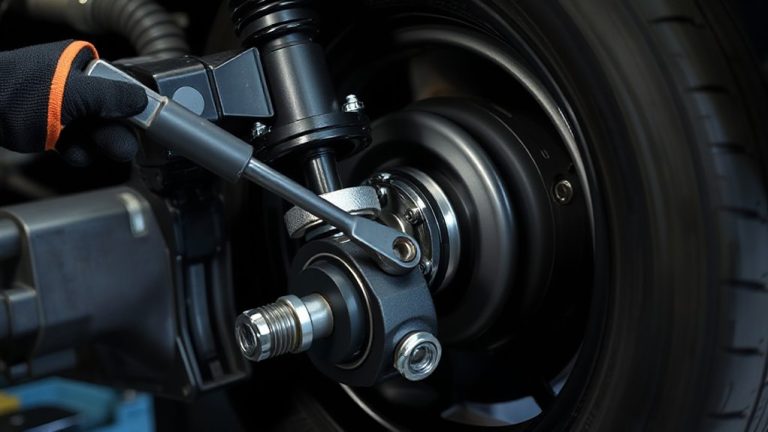
You’ve selected the right dust boot for your off-road conditions-now it’s time to seal it properly to protect your spherical bearing from grit, moisture, and impact damage. Start by making certain of precise boot alignment; the boot must sit concentrically around the bearing housing without pinching. Misalignment causes premature wear and reduces protection. Next, slide the retaining clamp over the boot’s open end before attaching it to the shaft. Use a tension gauge to set seal tension between 8–12 in-lbs; too loose invites contamination, too tight deforms the boot. Secure the clamp with a torque-controlled screwdriver at 1.5 Nm. Finally, inspect the seal under rotational load-no gaps or wrinkles should appear. Proper boot alignment and consistent seal tension guarantee maximum defense against abrasive debris in harsh gravel environments.
Avoid These Common Sealing Mistakes
While getting the seal right matters, skipping small details can still leave your spherical bearing exposed to failure. Improper installation is one of the most frequent errors-failing to seat the dust boot fully allows fine gravel and moisture to enter, accelerating internal wear. Even slight misalignment during mounting compromises the seal’s effectiveness. You must guarantee the clamp band is torqued to 3.5–4.0 Nm, as under-tightening causes slippage and over-tightening damages the boot. Material degradation occurs when seals made of standard NBR rubber are used above 100°C or in UV-heavy environments. Opt for FKM boots instead, which resist heat and ozone up to 200°C. Avoid using solvents during cleaning-they swell rubber and weaken bonds. A failed seal doesn’t just leak lubricant; it invites abrasives that reduce bearing life by as much as 70%.
Inspect and Maintain Dust Boots Regularly
Regularly inspecting dust boots on spherical bearings isn’t optional-it’s essential for longevity. You should check boots at least every 200 operating hours in gravel environments. Look for cracks, tears, or swelling-early signs of material fatigue from constant flexing and abrasive exposure. A compromised boot allows grit to infiltrate, accelerating bearing wear. Make certain the boot fits snugly over the bearing housing; gaps suggest improper installation, which can cause premature failure. Most boots are made from NBR or polyurethane, rated for -40°C to 120°C, with Shore A hardness between 60–80 for ideal flexibility and durability. Confirm clamps are tight and corrosion-free. Replace boots showing >1 mm crack depth or 10% deformation. Routine maintenance prevents unplanned downtime and protects your equipment investment.
On a final note
You must seal dust boots properly to protect spherical bearings in gravel. A compromised seal lets abrasive particles enter, accelerating wear. Use a high-quality neoprene or silicone boot with a 60 Shore A durometer rating. Guarantee the boot fits snugly over the bearing’s outer diameter-typically 25–40 mm. Secure it with a 3.2 mm thick stainless steel clamp. Check the seal every 50 operating hours.