Exhaust Gas Temperature Monitoring Strategy for Preventing Meltdown
You prevent engine meltdown by tracking exhaust gas temperature in real time. Sustained EGT above 1,650°F (900°C) causes thermal stress that cracks manifolds and destroys pistons. Install a chromel-alumel thermocouple in the exhaust manifold at 45–90 degrees, inserting it 75% into the flow. Watch for spikes over 1,600°F or fluctuations exceeding 100°F-they signal fuel, airflow, or sensor issues. Set alarms at 1,250°F with a 100°F safety buffer below peak limits. Smart systems use dynamic thresholds based on load and fuel type. Address root causes like clogged filters, poor fuel quality, or blocked DPFs. Real-time EGT data protects turbine blades and extends engine life. Further refinements turn monitoring into proactive protection.
Notable Insights
- Monitor EGT in real time to detect dangerous temperature spikes before critical engine damage occurs.
- Install EGT sensors at a 45–90 degree angle in the exhaust manifold for accurate, representative readings.
- Set alarm thresholds 100°F below maximum EGT limits to allow a safety buffer for diesel engines.
- Investigate sudden EGT spikes above 1,600°F as they indicate fuel, turbo, or airflow issues.
- Maintain proper maintenance of air filters, fuel quality, and exhaust components to prevent EGT buildup.
Why EGT Monitoring Prevents Engine Meltdowns
Although you might not hear it often, keeping an eye on your exhaust gas temperature (EGT) is one of the most effective ways to avoid engine damage. High EGT levels directly increase thermal stress on critical components like turbine blades and exhaust manifolds. Prolonged exposure above 1,650°F (900°C) accelerates material degradation, weakening metals through oxidation and creep. You’ll risk warped valves, cracked manifolds, or even catastrophic piston failure. Monitoring EGT helps maintain operating ranges below manufacturer limits-typically 1,560°F (850°C) for diesel engines. Real-time awareness lets you adjust fueling or load before damage occurs. Thermal stress isn’t immediate, but cumulative, making consistent monitoring essential. Material degradation accelerates exponentially past safe thresholds. Think of EGT as a warning system: it doesn’t prevent overheating alone, but gives you time to act-protecting longevity and performance with precision.
How EGT Sensors Work and Where to Install Them
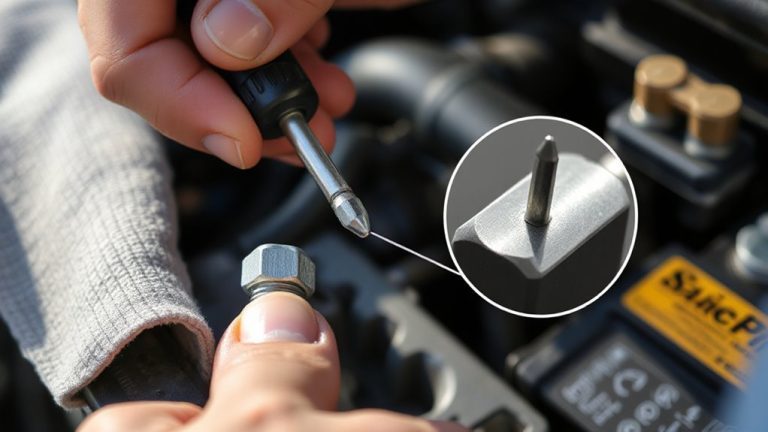
An EGT sensor is your first line of defense against unseen thermal damage. It measures exhaust gas temperature in real time, typically using a thermocouple made of chromel-alumel wire. You install it in the exhaust manifold or downpipe, where gases are most representative. Proper installation angles-ideally 45 to 90 degrees relative to horizontal-guarantee heat doesn’t pool around the tip and distort readings. Insert the probe at least 75% into the exhaust stream for accurate exposure. Sensor calibration is critical; factory-calibrated units reduce error to ±2°C, while field calibration compensates for signal drift over time. Most sensors operate between -40°C and 1000°C, with response times under 100 milliseconds. Use a welded bung for secure mounting and minimal exhaust leakage. Position upstream of the turbo, unless monitoring turbine health. Correct placement and calibration guarantee reliable data, letting you act before metal limits are exceeded.
Spot Dangerous EGT Patterns Before Damage Occurs
You now have your EGT sensor correctly installed and calibrated, feeding real-time data from the exhaust stream. Monitoring this data reveals dangerous patterns before catastrophic damage occurs. A sudden spike above 1,600°F indicates fuel mixture issues or turbo overboost. Prolonged operation above 1,500°F accelerates component wear. Watch for uneven readings between cylinders-this cylinder imbalance suggests incomplete combustion or injector failure. Left unchecked, it leads to exhaust discoloration, such as blue or black staining near manifold ports, signaling overheating or rich fuel conditions. Consistent fluctuations over 100°F between cycles also warn of sensor degradation or airflow disruption. Use a digital display with data logging to track trends over time. Detecting these anomalies early allows intervention before warping, cracking, or meltdown occurs. Regularly correlate EGT data with visual inspections for exhaust discoloration to confirm combustion health and maintain engine longevity.
Set Smart EGT Alarm Limits for Early Warnings
How alert are you to the risks of undetected exhaust heat buildup? You need smart EGT alarm limits to catch rising temperatures before they cause damage. Proper threshold setting guarantees alarms activate at safe yet effective points. Set limits based on your engine’s max EGT tolerance-typically 1,350°F for diesel engines. Exceeding this risks component failure. Alarm calibration fine-tunes sensor response to match system specifications. Use a calibrated thermocouple with ±2°F accuracy. Program alarms to trigger at 1,250°F-providing early warnings before reaching danger zones. This 100°F buffer allows time for intervention. Fixed thresholds fail under variable loads. Instead, apply dynamic threshold setting that adjusts to operating conditions. Smart monitoring systems use real-time data to modify limits. This prevents false alarms while maintaining safety. Proper alarm calibration and intelligent threshold setting are essential. They turn passive sensors into proactive safeguards.
Fix These 5 Common Causes of High EGT
What’s pushing your engine’s exhaust gas temperature beyond safe limits? Poor fuel quality is a leading culprit. Low-grade diesel or contaminated fuel burns inefficiently, increasing soot and heat. Always use fuel with proper cetane ratings and low sulfur content to maintain combustion efficiency. Faulty ignition timing throws off combustion phasing. Advanced timing causes early peak pressure, raising EGT by up to 100°F. Retarded timing leaves unburned fuel in the cylinder, igniting in the exhaust manifold. Both scenarios endanger components. Clogged air filters restrict airflow, creating a rich mixture that elevates temperatures. Turbocharger issues, like wastegate failure, reduce cooling efficiency. Exhaust restrictions, such as blocked DPFs, trap hot gases. Each factor directly impacts EGT. Address these five causes systematically. Monitor fuel quality. Verify ignition timing aligns with manufacturer specs, typically within ±2 degrees crankshaft rotation.
Use EGT Data to Optimize Engine Performance
While EGT readings are often viewed as warning signals, they’re equally valuable for fine-tuning engine performance when interpreted correctly. You can use real-time EGT data to adjust combustion timing, ensuring peak pressure occurs at the most favorable crankshaft angle. Properly timed combustion reduces thermal stress and improves fuel efficiency by up to 8%. If EGTs are lower than ideal-typically below 1,100°F under load-your air-fuel ratio may be too rich, wasting fuel. Conversely, readings consistently above 1,350°F suggest lean conditions or advanced timing, risking component damage. Target an EGT range of 1,200°F to 1,300°F during sustained loads for balanced performance. Monitoring this data lets you calibrate injection duration and boost pressure accurately. Think of EGT as a window into your engine’s thermal efficiency-small adjustments guided by these readings enhance power output, prolong engine life, and maximize fuel efficiency without sacrificing reliability.
On a final note
You now control the key to engine survival-exhaust gas temperature (EGT) monitoring. EGT readings above 1,600°F indicate imminent risk. Sensors, typically Type K thermocouples, mount near the exhaust manifold. Real-time data reveals spikes before damage occurs. Set alarms at 1,500°F for early warnings. Correct issues like lean fuel mixtures or clogged filters promptly. Sustained EGTs under 1,450°F maximize engine life. Monitor, respond, and maintain within safe thermal limits.