Active Exhaust Systems: Solenoid Operation and ECU Integration for Sound Control
You control exhaust sound and performance in real time using solenoids that actuate valves based on ECU signals. The ECU monitors RPM, throttle position, and load, then commands 12V solenoids to open or close valves in under 50ms. Valves, made of stainless steel or Inconel, adjust from 0° to 90° to manage backpressure and resonance. At high RPM, they open to boost flow and power by 5–10 hp. Closed valves at idle refine sound and improve low-end torque. System response is under 300ms, ensuring immediate adaptation-explore further to uncover how driving modes shape this dynamic control.
Notable Insights
- Solenoids control exhaust valve actuation using 12V electrical signals and pressure differentials for precise flow management.
- The ECU commands solenoids based on RPM, load, and throttle position to optimize backpressure and engine performance.
- Solenoid response times under 50ms enable immediate valve adjustments for real-time sound tuning.
- ECU integrates sensor data to modulate valves, balancing sound, efficiency, and power across driving conditions.
- Solenoids support harmonic tuning by adjusting exhaust flow to shape sound frequencies and enhance acoustic quality.
What Is an Active Exhaust System and How Does It Work?
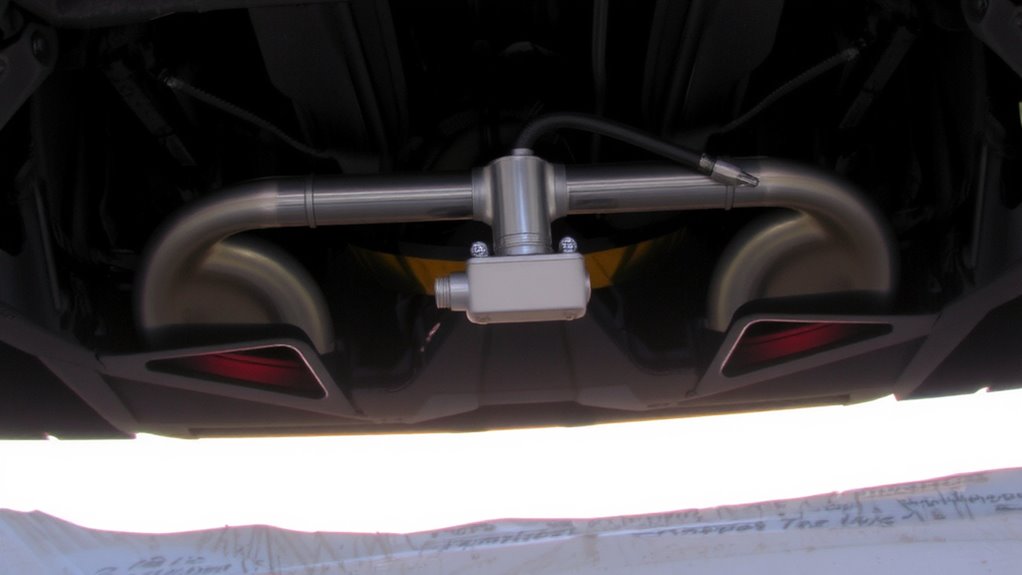
Although most exhaust systems are passive, an active exhaust system gives you control over how your vehicle sounds and performs by adjusting airflow through the exhaust. You achieve precise sound modulation using valves that open or close based on driving conditions. These valves alter exhaust resonance, letting you switch between a quiet, refined tone and an aggressive growl. The system relies on input from the ECU, which monitors engine load, RPM, and throttle position. Valves typically open above 3,000 RPM or under heavy load, reducing backpressure and enhancing flow. Constructed from stainless steel, they withstand temperatures up to 1,600°F. Response time is under 100 milliseconds. You benefit from improved performance and customizable acoustics without sacrificing daily drivability. Sound changes are immediate, seamless, and engineered for consistency across all driving modes.
How Exhaust Valves Function in Active Exhaust Systems
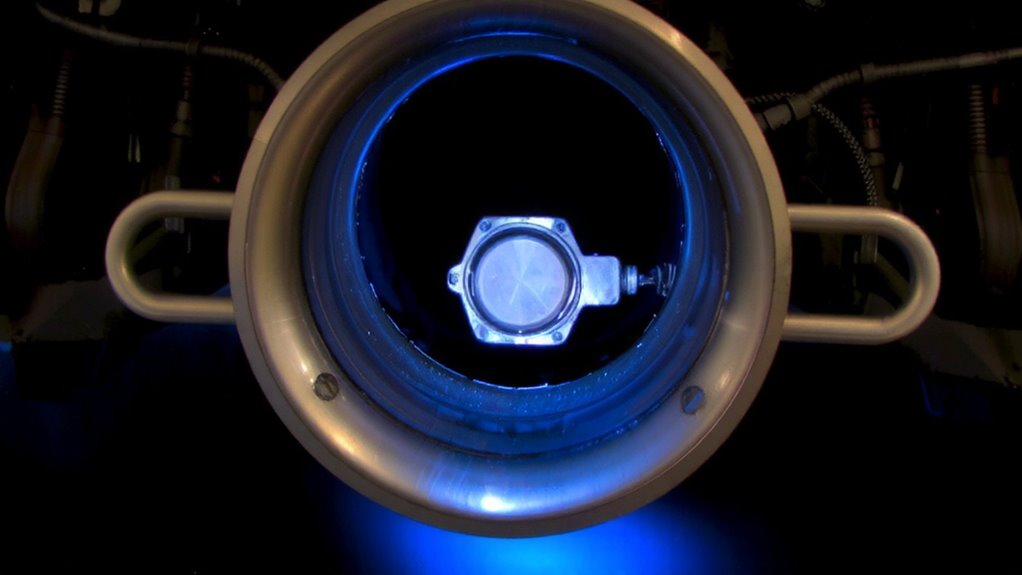
When you hit harder on the throttle, exhaust valves respond by opening to relieve pressure and sharpen exhaust tone. These valves, typically made of stainless steel or Inconel, rotate or slide to redirect exhaust flow. At idle or low load, they remain closed, increasing backpressure slightly to enhance low-end torque and refine exhaust harmonics. Under high RPM, they open fully, improving flow dynamics and reducing restriction. This shift allows exhaust gases to exit faster, boosting horsepower-typically by 5 to 10 hp in performance applications. Valve position directly affects sound frequency and volume, tuning exhaust harmonics for desired acoustic output. Flow dynamics are optimized through precise valve angles-often between 0° (closed) and 90° (fully open). The result is balanced performance, reduced turbulence, and minimized power loss. You get better throttle response and a more aggressive note without sacrificing efficiency or longevity.
The Role of Solenoids in Exhaust Sound Control
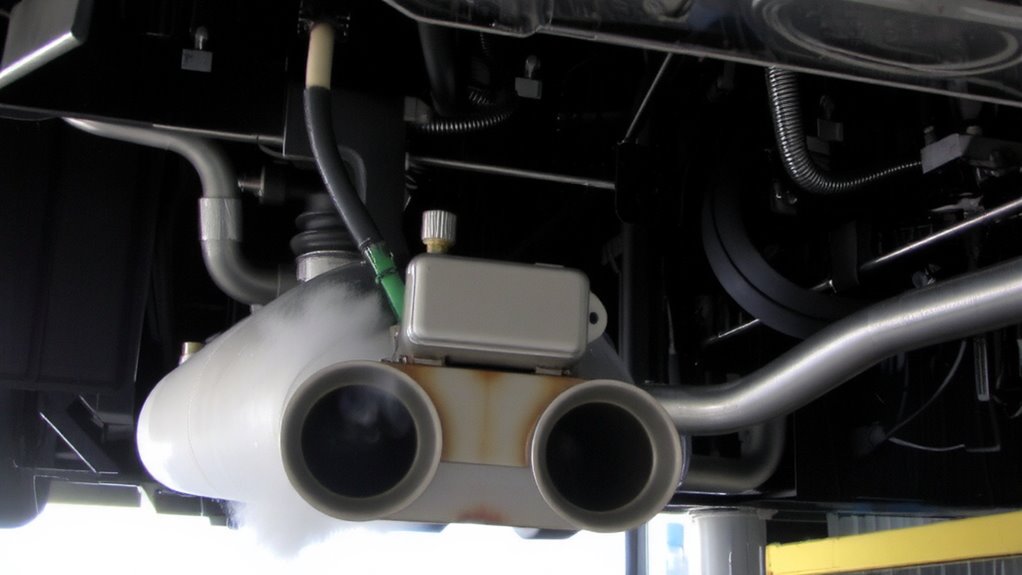
As you accelerate, the solenoid acts as the gatekeeper of exhaust sound by controlling valve actuation with precision. It responds to pressure differentials and electrical signals, opening or closing valves in milliseconds. This direct control enables effective backpressure management, maintaining engine efficiency and performance. Without proper backpressure regulation, you’d see power loss and inefficient exhaust scavenging. The solenoid also supports harmonic tuning by adjusting exhaust flow to enhance specific sound frequencies. By altering valve position, it shapes resonance in the exhaust tract, emphasizing desirable tones while suppressing droning. These adjustments occur in real time, based on RPM and load. Solenoids typically operate at 12V with a response time under 50ms, ensuring immediate feedback. They’re built for durability, rated for over 100,000 cycles. Precision-engineered drop designs minimize leakage, ensuring consistent valve positioning vital for both performance and sound quality.
How ECU Integration Shapes Exhaust Valve Behavior
The solenoid doesn’t act on its own-it follows commands from the engine control unit, which orchestrates exhaust valve behavior based on real-time operating conditions. You rely on precise valve sequencing to balance performance and sound. The ECU analyzes RPM, load, throttle position, and exhaust pressure to adjust valve position. This control fine-tunes exhaust harmonics, enhancing engine tone without sacrificing efficiency.
| Parameter | ECU Action |
|---|---|
| Low RPM | Closes valves to increase backpressure |
| High Load | Opens valves to reduce restriction |
| Cruise | Modulates for maximum fuel economy |
| Throttle Tip-in | Anticipates opening for response |
| RPM Threshold | Triggers staged valve sequencing |
Valve movement happens in milliseconds, synchronized to engine cycles. Exhaust harmonics are managed to cancel resonance or amplify desirable tones. You get engineered sound-never accidental. The ECU guarantees every adjustment serves performance, emissions, or acoustic goals with surgical precision.
Driving Modes and Real-Time Exhaust Response
Ever wondered how your exhaust sound shifts from quiet hum to aggressive roar at the push of a button? Your car’s driving modes trigger real time tuning of active exhaust valves, altering exhaust resonance instantly. In comfort mode, the ECU keeps solenoids closed, restricting flow and damping sound. Switch to sport or track, and the ECU opens valves based on RPM, load, and throttle position. This allows higher exhaust gas velocity and tuned backpressure, amplifying low-end torque and sharpening response. Valves react in under 300 milliseconds, ensuring precise exhaust resonance control. Real time tuning uses data from engine sensors to balance sound and performance. You hear more mid-range growl at 3,500 RPM, then a sharp crack on upshifts. The system isn’t just for noise-it optimizes flow for each mode, maintaining drivability and emissions compliance without sacrifice.
Benefits of Smart Exhaust Tun在玩家中 for Performance and Style
When you demand more than just a loud exhaust note, smart exhaust tuning delivers measurable gains in both performance and personalization. You gain precise control over backpressure, improving airflow and increasing horsepower by up to 8% in some turbocharged engines. Variable valve timing syncs with ECU signals, optimizing exhaust scavenging during high-RPM operation. Sound customization lets you switch between aggressive growls and stealthy tones via a mobile app or dashboard control. Valves open fully under load, reducing restriction, while closing during idle for refined cabin comfort. Exhaust aesthetics enhance curb appeal with polished tips and aggressive diffusers, blending function and visual impact. System materials-typically 304 stainless steel-resist corrosion and support long-term durability. You retain OEM reliability while gaining aftermarket performance. Integration with drive modes guarantees seamless response, making smart tuning a technical upgrade that balances power, efficiency, and style without compromise.
Common Active Exhaust Issues and How to Diagnose Them
Why does your active exhaust system suddenly lack its usual responsiveness or produce unexpected noises? Exhaust leaks are a common culprit. They disrupt backpressure, causing performance drops and popping sounds. Check joints and welds, especially near valved sections-any gap over 1.5mm can trigger issues. Sensor malfunctions also affect operation. O2 or pressure sensors reading incorrectly send faulty data to the ECU, leading to improper valve actuation. Use an OBD2 scanner to check for error codes like P0470 (exhaust pressure sensor). Solenoids typically operate at 12V; test resistance-most should read 8–12 ohms. A reading outside this range means replacement. Inspect wiring harnesses for fraying. Vacuum lines should hold 20 inHg; leaks cause valve lag. Address exhaust leaks and sensor malfunctions early. They compromise emissions, fuel efficiency, and long-term component health.
On a final note
You control exhaust tone and backpressure through precision-engineered solenoids linked to the ECU. These 12-volt PWM-controlled actuators open valves in milliseconds, adjusting flow based on RPM, throttle position, and driving mode. Valve timing aligns with cam profiles and boost curves, optimizing power-up to 15 hp in some turbo applications-while meeting noise regulations. System diagnostics via OBD-II flag vacuum leaks or solenoid resistance faults. Properly calibrated, active exhausts balance performance, compliance, and sound.