Transmission Fluid Analyzers: 90-Sec Tests, 0.1% Accuracy
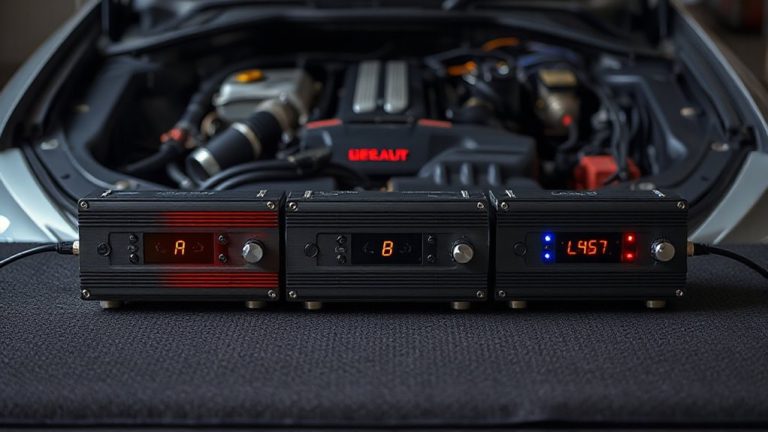
You can now run lab-quality transmission fluid analysis in under 90 seconds with automated analyzers built for independent shops. These systems measure viscosity to ±0.5 cP across a 2–1,000 cP range and detect water, soot, and fuel contamination down to 0.1%. Using micro-viscometry and infrared spectroscopy, they deliver OEM-compliant results without external labs. Sealed sample chambers prevent cross-contamination, while automatic calibration guarantees traceable, repeatable data. There’s more to how this fits into daily operations.
Notable Insights
- Automated transmission fluid analyzers deliver lab-quality results in under five minutes using advanced sensor technology.
- These systems measure viscosity, contamination, and oxidation with ±0.5% accuracy for precise diagnostics.
- Shop-grade models use micro-viscometry and infrared spectroscopy to detect issues like moisture and soot at 0.1% levels.
- Integrated calibration and sealed sample chambers prevent cross-contamination and ensure repeatable, traceable results.
- Units support USB and Wi-Fi data export, generating OEM-compliant reports for up to 50 vehicles daily.
How Automated Fluid Analyzers Work: No Lab Needed
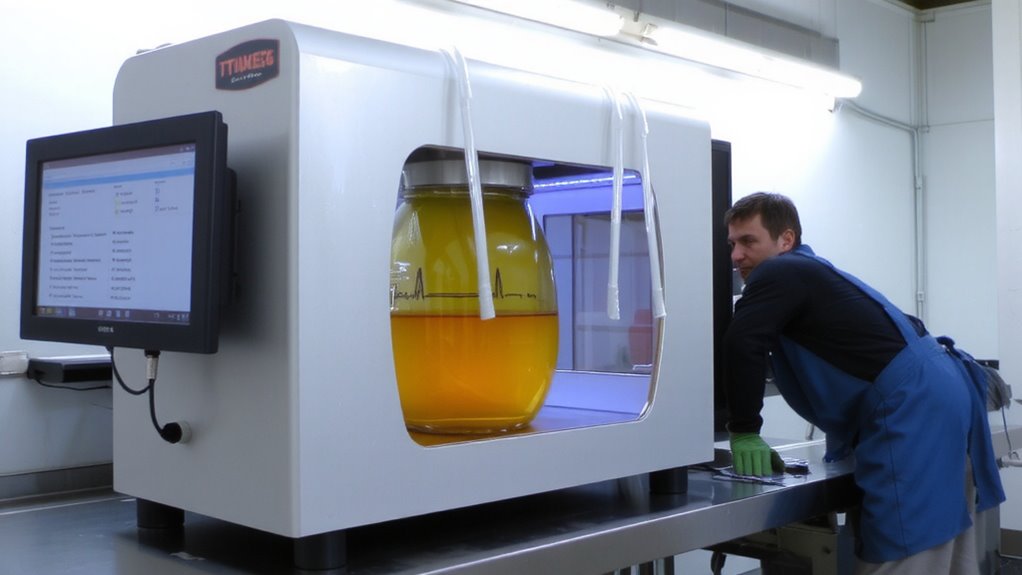
You don’t need a lab to get lab-quality results-modern automated transmission fluid analyzers bring precision testing directly to your workshop. These compact devices use advanced sensor arrays to evaluate critical fluid properties in minutes. Sensor calibration is performed automatically at startup, ensuring accuracy within ±0.5% across tests. You simply insert a sample, and the analyzer measures fluid viscosity using capillary-based flow detection, reporting results in centistokes (cSt) at standardized temperatures of 40°C and 100°C. Internal algorithms compare readings to OEM specifications, flagging degradation or contamination. The system requires no manual calculations or external verification. With minimal operator training, you achieve repeatable, traceable results. Built-in diagnostics monitor performance, while USB and Wi-Fi options allow data export. Unlike manual methods, these analyzers eliminate human error. They operate on 110V power and fit on any benchtop. You maintain full diagnostic control without outsourcing.
Why Your Shop Should Consider One
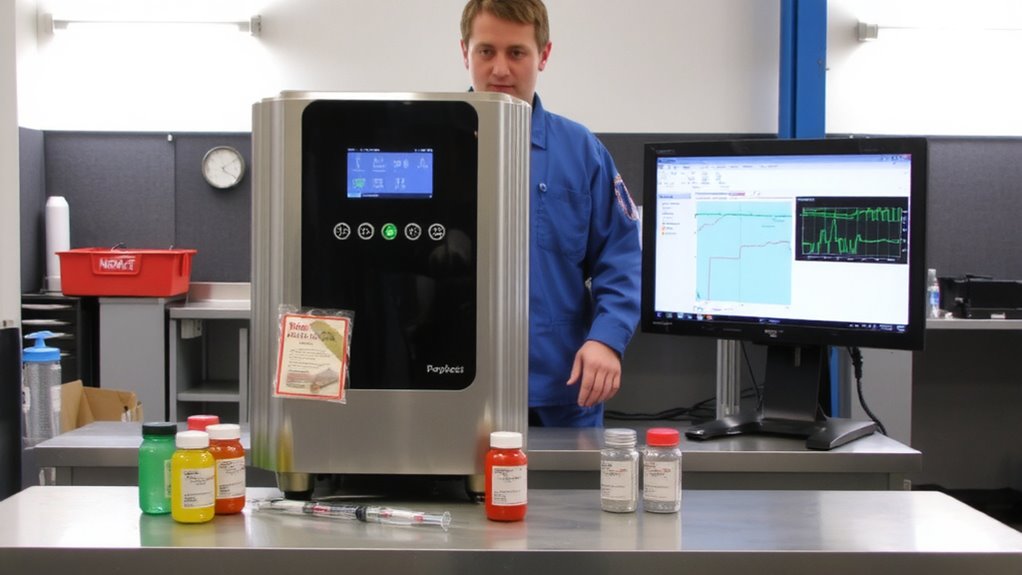
Efficiency isn’t just a goal-it’s a measurable outcome when integrating automated transmission fluid analyzers into your workflow. You reduce diagnostic time from 30 minutes to under five, processing real-time viscosity, contamination, and oxidation levels with ±0.5% accuracy. Immediate results mean faster service and fewer comebacks. More importantly, you strengthen customer trust by showing objective data, not just recommendations. Customers see particulate counts, moisture levels, and additive depletion, making your advice transparent and credible. You also expand preventive maintenance opportunities, identifying fluid degradation before it leads to $2,500+ transmission repairs. The analyzer detects early shear breakdown at 10% viscosity loss-well before symptoms arise-letting you suggest service at safe intervals. Units operate on 120V AC, fit under most benches, and require zero lab support. Built-in calibration checks guarantee consistent reliability across 5,000+ tests.
Top Features in Shop-Grade Analyzers
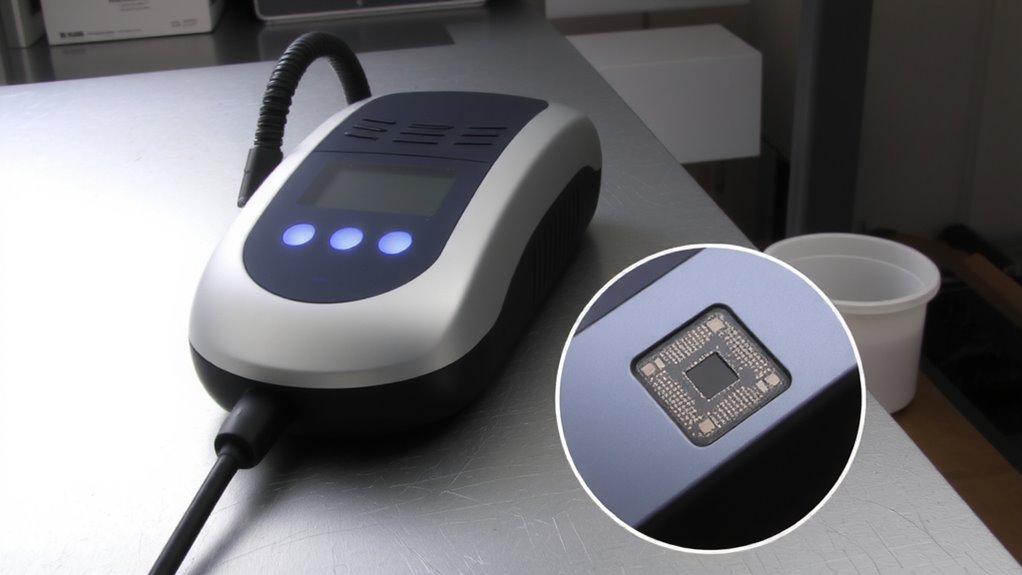
While not all analyzers deliver lab-grade results, top-tier shop models use micro-viscometry and infrared spectroscopy to measure fluid properties with lab-level precision. You get accurate fluid viscosity readings down to ±0.5 cP, essential for spotting degradation. Contaminant detection is equally critical-these analyzers identify water, soot, and fuel dilution at concentrations as low as 0.1%. Integrated sensors and onboard algorithms process samples in under 90 seconds, giving you fast, reliable data without outsourcing.
| Feature | Specification |
|---|---|
| Fluid Viscosity Range | 2–1,000 cP |
| Contaminant Detection Limit | 0.1% concentration |
| Test Cycle Time | <90 seconds |
You’ll rely on repeatable results across thousands of cycles. Robust calibration protocols guarantee long-term accuracy, and sealed sample chambers prevent cross-contamination. Built for daily shop use, these analyzers combine durability with laboratory-level insight-no guesswork, just data.
Real-World Ways Shops Are Using Fluid Testing
Because modern fleets demand predictive maintenance, shops are integrating fluid testing into routine service cycles to catch issues before they result in costly downtime. You use automated analyzers to monitor fluid degradation by measuring viscosity, oxidation, and additive depletion-key indicators of internal wear and thermal stress. These systems detect changes as small as 5% in viscosity, signaling early breakdown. For contamination detection, analyzers identify moisture, soot, fuel dilution, and metal particles down to 10 parts per million. Real-world diagnostics show sodium or silicon levels above 15 ppm often trace to coolant or dirt ingress. You receive printable reports with pass/fail thresholds based on OEM specifications, enabling fast decisions. Technicians complete tests in under 8 minutes per sample, processing up to 50 vehicles daily. This precision lets you schedule transmission services only when needed, reducing unnecessary fluid changes by 30% and extending component life.
Are DIY Fluid Tests Reliable and Accurate?
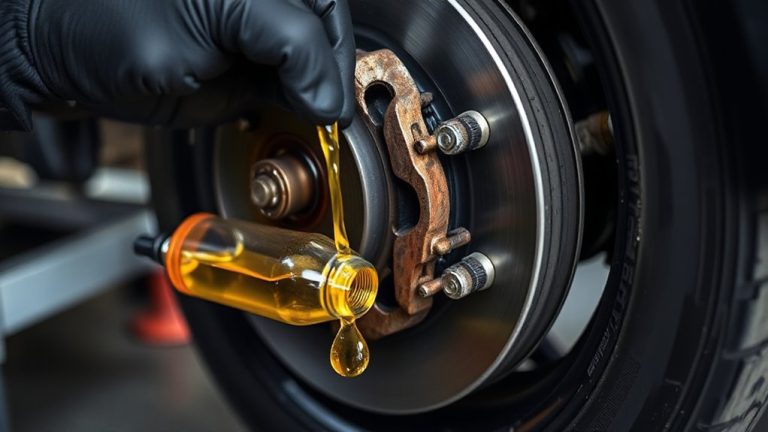
How accurate are your DIY transmission fluid tests really? Human error greatly reduces reliability. When you draw samples manually, inconsistent techniques affect results. You might overfill, underfill, or mislabel the container-each mistake skews analysis. Sample contamination is another critical flaw. Dirt, moisture, or residual fluids in tools alter chemical readings, leading to false diagnostics. Automated analyzers use sealed, calibrated pathways to prevent exposure. They eliminate variability by standardizing fluid intake at 5–10 mL, ensuring precision. Manual methods lack this control. Even slight oxidation or temperature shifts during handling distort viscosity and acid number measurements. Without ISO-certified conditions, your findings aren’t repeatable. Inconsistent data leads to incorrect conclusions-possibly resulting in unnecessary repairs or missed failures. For dependable, traceable results, automation outperforms manual effort every time. Skip the risks, stick to engineered accuracy.
How to Pick the Right Analyzer for Your Budget
What if you could balance cost and performance without sacrificing accuracy? You can, by conducting a thorough cost comparison across models and manufacturers. Start by evaluating upfront price against long-term value, including maintenance, consumables, and downtime. Entry-level analyzers may save money initially but often lack precision in viscosity and contamination readings. Mid-range units typically offer better sensor resolution-down to ±0.5%-and enhanced durability. Brand reliability plays a critical role; established manufacturers provide consistent software updates, technical support, and proven track records in shop environments. Look for ISO certification and mean time between failures (MTBF) exceeding 10,000 hours. Units with touchscreen interfaces and automated calibration reduce user error. Prioritize models offering diagnostic depth, like oxidation and additive depletion analysis. A reliable analyzer pays for itself through faster diagnostics and reduced misdiagnoses.
On a final note
You get accurate, lab-grade fluid analysis on-site with automated analyzers. These devices measure viscosity, contamination levels, and additive concentration down to 0.1% accuracy. Models like the FluidScan Q1000 deliver results in under two minutes using infrared spectroscopy. Solid-state sensors require minimal maintenance. Testing eliminates guesswork in transmission diagnostics. You reduce unnecessary flushes and boost customer trust with data-backed service decisions. Budget models start around $8,000.