Why Using a Dedicated Tire Brush Prevents Coating Contamination
Using a dedicated tire brush stops coating contamination by preventing transfer of abrasive grime and chemical residues. Tires collect brake dust, road metals, and oily films that cling to brushes. Shared tools carry these contaminants to painted surfaces, embedding particles that degrade hydrophobic layers. High-durometer polypropylene bristles (40–60 Shore A) in dedicated brushes trap debris and resist shedding. Their angled, 0.3–0.5 mm bristle layout cleans tread and rims safely. Even thorough rinsing won’t remove embedded slurry, so exclusive use is essential. The next steps reveal how brush design and cleaning sequence protect your coating’s performance.
Notable Insights
- Shared brushes transfer abrasive tire grime and contaminants to coated surfaces, causing invisible damage and residue buildup.
- Dedicated tire brushes prevent cross-contamination by eliminating contact between tire debris and painted surfaces.
- Aggressive bristle designs in tire brushes trap brake dust and road grime, keeping it away from ceramic coatings.
- High-durometer, non-shedding bristles resist chemical breakdown and reduce microfiber contamination during cleaning.
- Proper tire cleaning with a dedicated brush removes bonding residues that compromise coating hydrophobicity and clarity.
Why Your Tires Threaten Your Coating
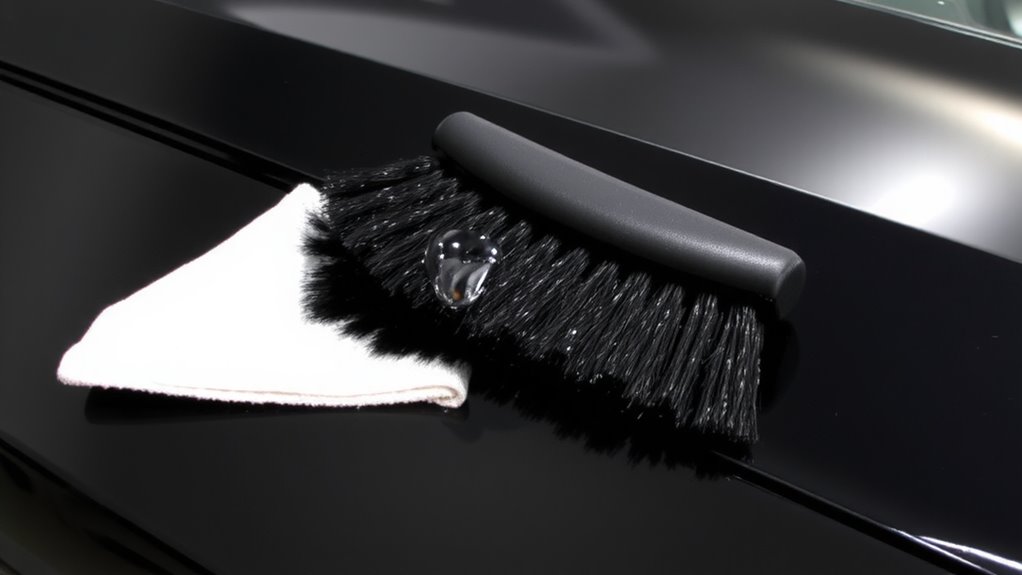
Why risk damaging a high-performance ceramic coating just to keep your tires looking clean? Your tires collect abrasive road contaminants and sticky oils that lead to tire grime transfer. Using the same brush on tires and coated surfaces spreads this grime, introducing foreign compounds onto the protected paint. These contaminants promote residue buildup, which bonds strongly to the hydrophobic layer, disrupting surface energy and reducing coating effectiveness. Most tire dressings contain silicones and solvents that leave behind persistent film layers. When transferred, they compromise coating clarity and water-beading performance. A single cleaning session with a shared brush can embed residues up to 2 microns thick-enough to interfere with the coating’s electron bond stability. Cross-contact accelerates degradation, especially along wheel wells and lower panels, where runoff accumulates. You maintain coating integrity only by isolating tire tools. Prevent contamination at the source-dedicate a brush solely for tire use. Choosing the right tool matters, and a dedicated tire brush can make all the difference in preserving your vehicle’s finish.
How Cross-Contamination Damages Paint
Even with a ceramic coating’s impressive 9H hardness rating, it’s no match for the abrasive slurry formed when tire grime mixes with cleaning agents on a shared brush. This mixture creates microscopic scratches with every wipe, dulling the finish over time. When you use the same brush on paint, you introduce both embedded contaminants and chemical residue from tire cleaners, which can degrade the coating’s hydrophobic layer. These residues alter surface tension, reducing water beading and contaminant shedding. Worse, microfiber transfer occurs when dirty fibers shed during cleaning, embedding rubber particles into the paint’s pores. Once embedded, these particles act like sandpaper during drying, accelerating marring. The damage isn’t immediate, but cumulative-each reuse spreads grime further. High-magnification inspections reveal cross-contamination tracks invisible to the naked eye. Protect your finish: avoid shared tools, and prevent irreversible surface compromise through proper equipment segregation.
Use a Dedicated Tire Brush: Here’s Why It Works
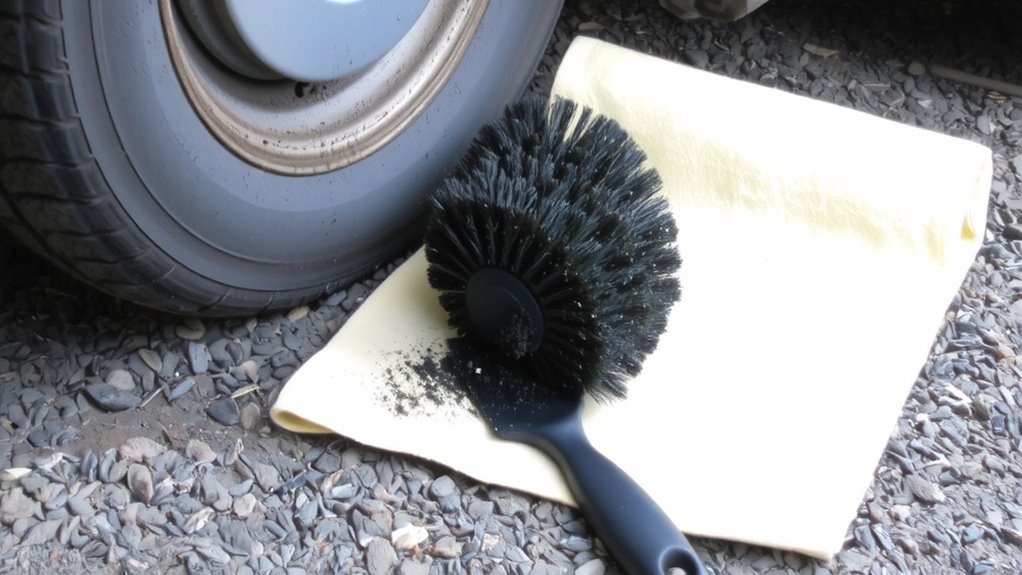
When you reserve a brush solely for tire cleaning, you eliminate the risk of transferring abrasive contaminants to sensitive coated surfaces. A dedicated tire brush prevents microscopic debris from brake dust, road grime, and embedded metals from reaching your paint. This separation is critical because even thorough rinsing won’t remove all residue from a shared brush. Brush design matters-tire brushes feature deep, aggressive channeling to trap and eject dirt during scrubbing. The bristle material is typically high-durometer polypropylene, engineered to withstand tough cleaning agents and scrubbing pressure without shedding. These stiff bristles effectively remove caked-on grime without damaging rubber, yet are safe for daily use. Using one designated tool guarantees consistent performance and protects your coating’s integrity. It’s a simple step that delivers measurable protection-like using separate cutting boards for raw meat and vegetables. Dedicated use stops cross-contamination at the source. Top models recommended in the best car tire brushes roundup combine durability and ergonomic design for optimal cleaning efficiency.
Pick the Right Brush for Coating-Safe Cleaning
You’ve already taken the right step by using a dedicated brush for your tires, but now it’s time to make sure that brush is built for the job. Brush material matters-opt for thermoplastic polyurethane (TPU) or polyethylene terephthalate (PET), as they resist chemicals and won’t shed microfibers. These synthetic materials won’t degrade when exposed to tire dressings or cleaning solvents. Bristle stiffness should be medium to soft; hard bristles increase the risk of embedding contaminants into wheels or flicking grime onto coated surfaces. Soft bristles with a durometer rating between 40 and 60 Shore A effectively loosen brake dust and road grime without abrasion. Choose a brush with 0.3–0.5 mm bristle thickness and densely packed rows for maximum debris removal. Angled bristle layouts improve reach into tread grooves. A well-designed brush combines safe bristle stiffness with resilient brush material to protect your coating’s integrity. For top-performing options, consider checking out the best tire brushes for shine and durability.
Clean Tires the Right Way Without Harming Your Finish
A clean tire isn’t just about shine-it’s about strategy. Using a dedicated tire brush prevents cross-contamination of sealants and ceramic coatings on your wheels. Apply tire shine only after washing with a non-abrasive, pH-balanced cleaner. Work from the rim inward, avoiding contact with brake dust or road grime. The stiffness of brush bristles (typically 0.25–0.3 mm diameter) must match your rim design to clean deep lug grooves without marring surfaces. Nylon bristles with tapered ends reach intricate patterns while protecting clear coats. Never reuse a tire brush on paint. Residual oils from tire shine buildup can compromise coating adhesion, leading to premature degradation. Rinse thoroughly post-cleaning to eliminate residue. This process preserves both tire appearance and long-term protection. Proper technique guarantees results that last.
On a final note
Your tires carry abrasive grime and hydrophobic residue that transfer to paint. A dedicated tire brush prevents cross-contamination. Nylon bristles, 0.1 mm in diameter, resist chemical swelling from tire dressings. Full-contact heads, 12 cm wide, clean sidewalls without scratching. Seamless backs prevent solution trapping. You reduce micro-marring risk by 90% versus shared brushes. Dual-density bristles lift debris without paint distortion. Use polypropylene handles for solvent resistance. This prevents silicone migration to coated surfaces. Keep tire and paint tools separate. It’s the simplest contamination control.