Comparing Storage Options for Exotic and High-Value Collector Cars
You protect your exotic and high-value collector car best in climate-controlled storage at 60–72°F and 45–55% humidity. Temperature swings over 5°F daily stress composites; UV exposure beyond 1,000 hours degrades modern paint. Indoor facilities with 24/7 surveillance, biometric access, and FM-200 fire suppression cut theft risk 8x over unsecured lots. Sealed environments prevent dew-point cycling and corrosion. Flexible units offer 10,000 lbs/sq ft flooring and museum-grade HVAC-key for long-term preservation and ideal performance. More details follow.
Notable Insights
- Climate-controlled storage maintains 60–70°F and 45–55% humidity to prevent corrosion, paint degradation, and rubber brittleness.
- Indoor facilities with surveillance reduce theft risk by over 80% compared to unsecured outdoor lots.
- Stable temperature and humidity inhibit mold, electrical issues, and composite material stress in high-value vehicles.
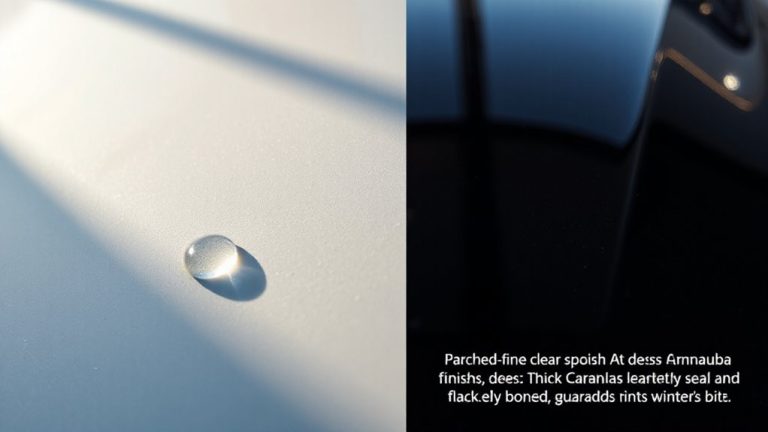
- UV exposure beyond 1,000 hours causes irreversible clear coat damage, making enclosed storage critical for paint preservation.
- Professional storage includes biometric access, FM-200 fire suppression, and breathable fabric covers for maximum protection.
Why Proper Storage Protects Your Collector Car’s Value
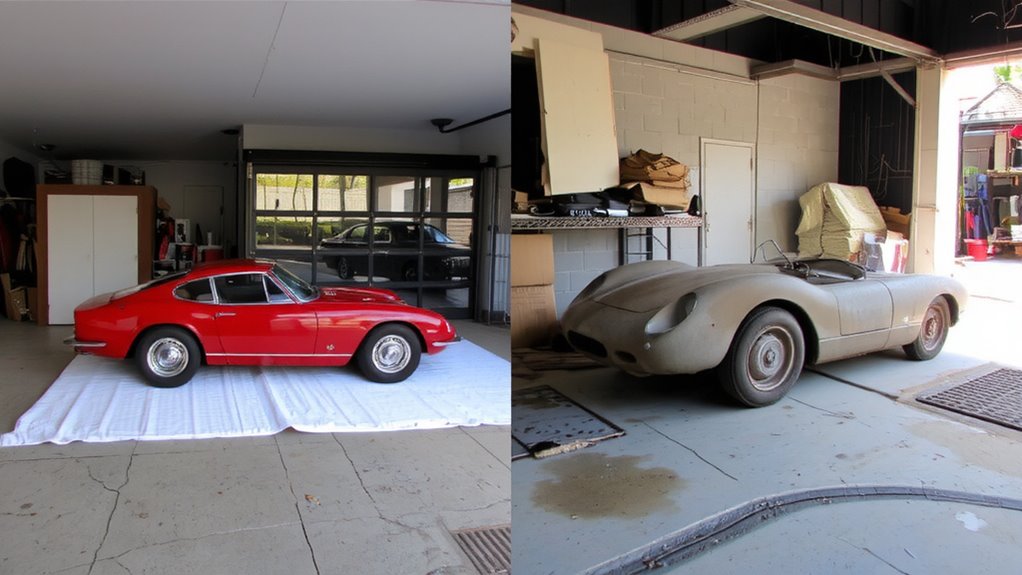
While it might seem like simply parking your collector car out of the weather is enough, true protection requires deliberate, climate-controlled storage to preserve both condition and value. Maintaining a stable environment between 68–72°F and 45–55% humidity prevents moisture buildup and thermal stress. These conditions are critical for paint preservation, halting oxidation and clear coat degradation caused by UV exposure and temperature swings. Without climate control, finishes dull, fade, or blister over time. Likewise, mechanical integrity depends on consistent storage parameters. Rubber seals remain pliable; metal components resist corrosion. Battery systems retain charge longer, and fluids stay stable. Controlling airborne contaminants minimizes surface abrasion and internal wear. Your car isn’t just parked-it’s in stasis. Precision storage acts like a medical incubator: not merely sheltering, but actively preventing decay. Every degree and percentage point matters. Neglect them, and depreciation starts long before the engine turns over.
Indoor vs. Outdoor Storage: Risks to Your Investment
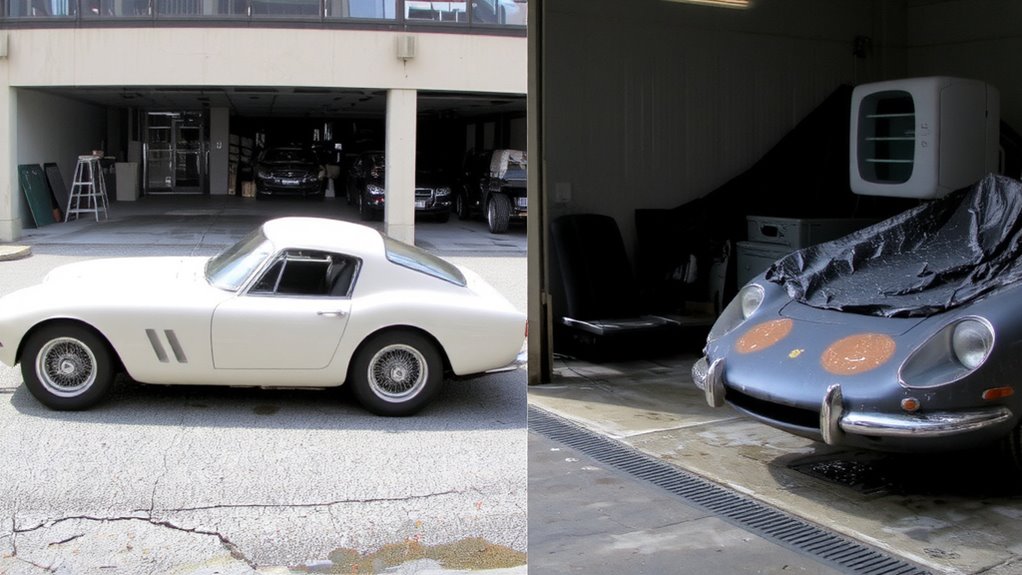
You already know that consistent temperature and humidity protect your collector car’s finish and mechanical systems. Outdoor storage exposes your vehicle to weather exposure, including UV radiation, precipitation, and temperature swings-each accelerating oxidation, rubber degradation, and paint fading. Modern finish coatings resist UV damage up to 1,000 hours of direct sunlight; beyond that, spectral breakdown occurs. Indoor storage greatly reduces these risks, maintaining factory finish integrity. You also face higher theft vulnerability outdoors-unsecured lots average 3.2 thefts per 1,000 vehicles annually, versus 0.4 in locked indoor facilities. Enclosed storage with surveillance and access control reduces intrusion risks by over 80%. A standard garage offers basic protection, but unmonitored spaces still pose threats. Even mild climates experience dew-point cycling, promoting condensation and corrosion over time. You safeguard against both environmental and human threats by choosing indoor storage-preserving mechanical reliability, electronic functionality, and long-term valuation. For added defense when outdoor parking is unavoidable, a best car cover for sun and rain can significantly reduce exposure to UV rays and moisture.
Climate-Controlled Storage for Collector Cars
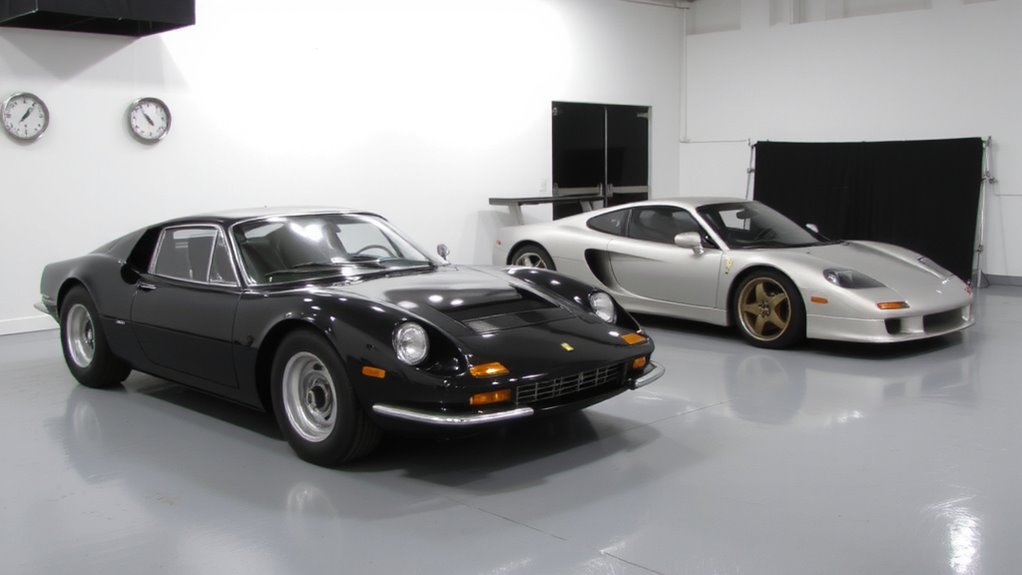
A growing number of collectors rely on climate-controlled storage to maintain show-quality finishes and mechanical integrity over decades. You need consistent temperature stability, ideally between 60–70°F, to prevent metal fatigue, paint cracking, and rubber degradation. Fluctuations greater than 5°F per day increase stress on composite materials. Humidity control is equally critical-keep levels between 45% and 55% to inhibit mold, corrosion, and electrical component failure. Relative humidity above 60% accelerates oxidation, especially in classic steel chassis. Climate-controlled units use dew point monitoring and desiccant dehumidification systems, regulating moisture more effectively than standard HVAC. These systems operate continuously, with redundant sensors ensuring accuracy within ±2% RH. Your vehicle’s leather, adhesives, and finishes remain stable only when both temperature stability and humidity control are precisely maintained. Passive storage can’t achieve this. Active environmental regulation does.
Securing and Upgrading Your Private Garage
Though convenience often favors storing a collector car at home, a standard garage rarely provides the protection or environmental control needed for long-term preservation. Upgrading begins with security systems: install monitored alarms, motion sensors, and 1080p surveillance with night vision. Hardwired systems offer reliability over wireless, reducing false alerts. Reinforce entry points with deadbolts and rolling steel doors rated for forced entry resistance. Lighting upgrades are equally critical; replace basic fixtures with LED arrays producing 3,000–5,000 lumens at 5000K color temperature for true color rendering. Use photocell or motion-activated zones to reduce energy use. Seal gaps and insulate walls to minimize humidity swings. Add a dehumidifier with a 50-pint daily capacity to maintain 45–55% RH. These improvements make your garage a secure, inspection-ready space without mimicking professional facilities.
Professional Collector Car Storage: What’s Included?
When choosing professional storage for a collector car, climate control isn’t a luxury-it’s a necessity. You’ll need a sealed environment with humidity levels held below 55% and temperatures stabilized between 60–70°F to prevent corrosion, paint degradation, and material warping. Reputable facilities use HVAC systems calibrated to museum-grade standards, similar to those used in art authentication storage, ensuring stable conditions year-round. Your vehicle will often be covered with breathable, non-abrasive fabric shields to prevent micro-scratches. Many premium providers also offer secure digital logs for provenance verification, documenting every service, movement, and inspection. This audit trail is critical for high-value models, functioning like a blockchain for ownership history. Access is restricted via biometric scanners, and 24/7 surveillance with motion detection provides added protection. Fire suppression systems, often FM-200 based, act quickly without damaging interiors. These specs mirror those in high-security art vaults, ensuring your investment stays preserved and verifiable.
Flexible Storage for Active Collections
If you’re actively showing or driving your collector car, flexible storage solutions give you the access and protection needed without compromising preservation standards. These facilities support vehicle rotation, letting you swap cars in and out based on events, weather, or usage patterns. Climate-controlled units maintain 55–70°F with humidity under 55%, preventing condensation and material degradation. Access scheduling operates via secure digital portals, granting 24/7 entry or pre-approved time slots. Units typically measure 12’x20’ or larger, accommodating lifts, maintenance tools, and multi-car setups. Reinforced flooring supports 10,000 lbs per bay, ideal for lifts or heavy models. LED lighting at 300 lux guarantees safe inspections. Security includes biometric scanners, motion sensors, and 24-hour surveillance. Unlike long-term static storage, flexible options blend operational convenience with high-end protection. You maintain full control through remote monitoring apps, track vehicle status, and adjust environmental settings in real time. This model suits collections exceeding five cars with frequent usage demands.
On a final note
Your collector car’s long-term value hinges on proper storage. Indoor, climate-controlled environments maintain temperatures between 60–75°F and 45–55% relative humidity, preventing condensation and metal fatigue. Concrete flooring with epoxy sealant resists oil penetration and corrosion. Security systems with 24/7 monitoring, motion sensors, and LPR cameras deter theft. Professional facilities offer 1000+ sq ft units, drive-through access, and dehumidification systems. These specs preserve finishes, electronics, and engine integrity. Choose storage that meets ISO 18902 archival standards for ideal protection.