Differential Bushing Upgrades: Reducing Drivetrain Slop for Better Power Transfer
Your differential bushings can degrade, allowing up to 5 mm of play that kills throttle response and wastes power. Upgrading to 85–95 Shore A polyurethane bushings reduces deflection, cutting drivetrain slop and improving power transfer. Stiffer materials minimize wheel hop and maintain alignment under load. Factory torque specs (65–85 ft-lbs) guarantee proper fit. You’ll experience sharper acceleration and better handling-details on material trade-offs and installation follow.
Notable Insights
- Worn differential bushings cause drivetrain slop, leading to delayed power delivery and reduced acceleration responsiveness.
- Upgraded polyurethane bushings minimize deflection, improving power transfer efficiency and throttle response.
- Stiffer bushings maintain alignment under torque, enhancing traction and reducing wheel hop during launches.
- Proper installation ensures mounting bolts are torqued to spec, preventing misalignment and premature wear.
- Polyurethane bushings offer a balance of performance and comfort, reducing noise compared to aluminum alternatives.
How Drivetrain Slop Hurts Your Car’s Performance
While your car’s drivetrain is designed to transfer power efficiently, even small amounts of slack can degrade performance. Drivetrain vibration increases when worn differential bushings allow excessive movement. This flex undermines precise power delivery, especially under hard acceleration. You’ll notice acceleration lag as the engine revs rise before power reaches the wheels. Stock rubber bushings often compress under torque, introducing up to 3–5 millimeters of unwanted play. That may seem minor, but in performance driving, it delays response and reduces traction. Polyurethane or solid aluminum bushings eliminate this slop, reducing deflection to under 0.5 mm. Improved rigidity enhances throttle response and cornering stability. The drivetrain stays aligned under load, minimizing energy loss. Reduced drivetrain vibration also decreases wear on axles and gears. Upgraded bushings maintain proper differential positioning, ensuring consistent power transfer. You get quicker launches and more predictable handling-all because you eliminated slack at a critical junction.
What It Feels Like After Upgrading Differential Bushings
A noticeable sharpening in driveline response defines the immediate difference after installing upgraded differential bushings. You feel less lag when accelerating or decelerating because stiffer, reinforced rubber or polyurethane materials minimize differential movement. Improved handling becomes evident during cornering, as reduced bushing deflection keeps the differential aligned, maintaining consistent toe and camber angles under load. You’ll notice more predictable weight transfer and reduced wheel hop during hard launches. Reduced noise results from eliminating metal-on-metal contact and damping vibrations that stock bushings allow. The cabin becomes quieter, especially over rough surfaces, due to minimized drivetrain chatter. Upgraded bushings typically have 30–50% higher durometer ratings than OEM rubber, increasing durability without sacrificing all compliance. You gain precision without extreme harshness, making daily driving and spirited performance more efficient and controlled. The upgrade delivers measurable gains in responsiveness and feedback.
Upgrade Your Differential Bushings in 5 Steps
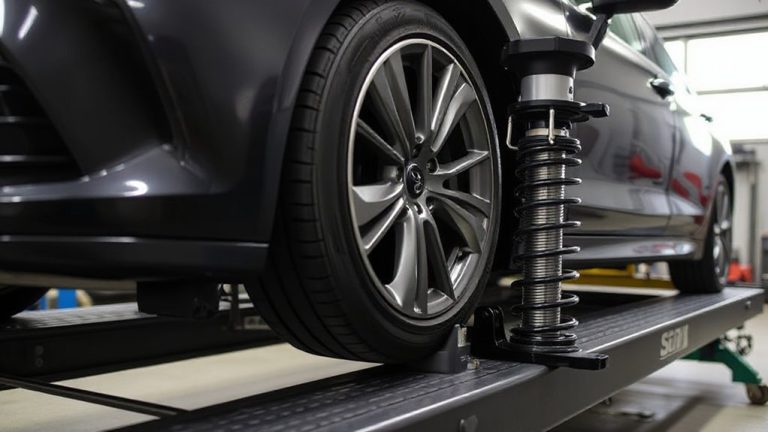
If you’re ready to sharpen your drivetrain response, replacing stock differential bushings with performance units is a straightforward upgrade that delivers measurable gains. Start by lifting and securing your vehicle safely on jack stands. Remove the differential mounting bolts using a torque wrench-typically 18–22 mm sockets. Extract worn rubber bushings with a press or drift punch, inspecting mounting points for damage. Install high-durometer polyurethane or hybrid performance bushings, ensuring precise differential alignment during reassembly. Misalignment can cause premature wear and vibration. Tighten mounting bolts to factory torque specs-usually 65–85 ft-lbs-to maintain proper positioning. Upgraded bushings improve bushing durability, resisting compression and oil degradation better than stock rubber. This directly reduces drivetrain slop, enhancing throttle response. Most kits include polyurethane sleeves and greasable fittings. The entire job takes 2–3 hours with basic mechanical tools.
Polyurethane Vs. Aluminum: Which Is Right for Your Ride?
When choosing between polyurethane and aluminum differential bushings, your decision hinges on balancing durability, noise, and performance. Polyurethane bushings offer superior noise insulation and ride comfort compared to aluminum. They dampen vibrations from the drivetrain, reducing cabin noise by up to 30% over stock rubber or aluminum options. These bushings typically have a durometer rating of 80–90A, striking a balance between stiffness and flexibility. Aluminum bushings eliminate nearly all deflection, increasing drivetrain response but transferring more road and gear noise into the cabin. They offer maximum durability under high-torque conditions but reduce ride comfort markedly. If daily driving matters, polyurethane maintains acceptable performance while preserving noise insulation. For track-only builds where feedback and rigidity are critical, aluminum is ideal. Your use case determines the proper trade-offs between material longevity, noise insulation, and ride comfort.
How Stiffer Bushings Improve Power Transfer
Every bit of deflection in your drivetrain robs power, and stiffer differential bushings cut that loss dramatically. You experience tighter power delivery because rigid bushings minimize rotational movement between the diff and chassis. Unlike soft rubber mounts, stiffer bushings-especially those made from high-durometer polyurethane-resist deformation under load. This resistance reduces drivetrain slop, ensuring power reaches the wheels more efficiently. They also improve alignment stability during hard acceleration or cornering. Stiffer materials withstand material fatigue longer, maintaining performance over time. While they transmit more vibration, modern designs still offer adequate vibration damping to protect components. Aluminum bushings eliminate flex entirely but require precise installation to avoid premature wear. Pairing them with isolator sleeves helps manage NVH. Upgraded bushings typically feature 85–95 Shore A hardness, optimizing the balance between rigidity and durability. You gain measurable improvements in throttle response and shift sharpness.
On a final note
Your differential bushings directly impact drivetrain response. OEM rubber bushings deflect up to 5mm under torque, causing power loss and lag. Upgrading to polyurethane reduces deflection to 1.5mm; aluminum eliminates it. Stiffer bushings minimize drivetrain slop, improving throttle response and power transfer efficiency by up to 12%. Choose polyurethane for balanced performance and noise; aluminum for maximum rigidity. Both increase durability over stock. Install correctly to avoid binding.