Fuel Pump Fuse Replacement: 15-20 Amp Fuse Location & Test
Check the fuel pump fuse, usually a 15- to 20-amp blade type in the underhood power distribution center. Replace it if the filament is broken or the casing is discolored. Use only the correct amperage and blade style-ATO or MAXI. Turn the ignition to “On” and listen for a 2–3 second hum from the tank, indicating the pump pressurized the system to 40–60 psi. Test drive to confirm smooth performance under load; hesitation may signal deeper issues. There’s more to ensuring long-term reliability.
Notable Insights
- Locate the fuel pump fuse in the power distribution center using the owner’s manual or fuse box diagram.
- Visually inspect the fuse for a broken filament, discoloration, or swelling to confirm it is blown.
- Replace the fuse with an identical amperage-rated blade-type fuse to match manufacturer specifications.
- Turn the ignition to “On” and listen for a 2–3 second humming noise from the fuel tank area.
- Test drive the vehicle to check for smooth engine performance and absence of fuel delivery issues.
Understand the Fuel Pump Fuse Role
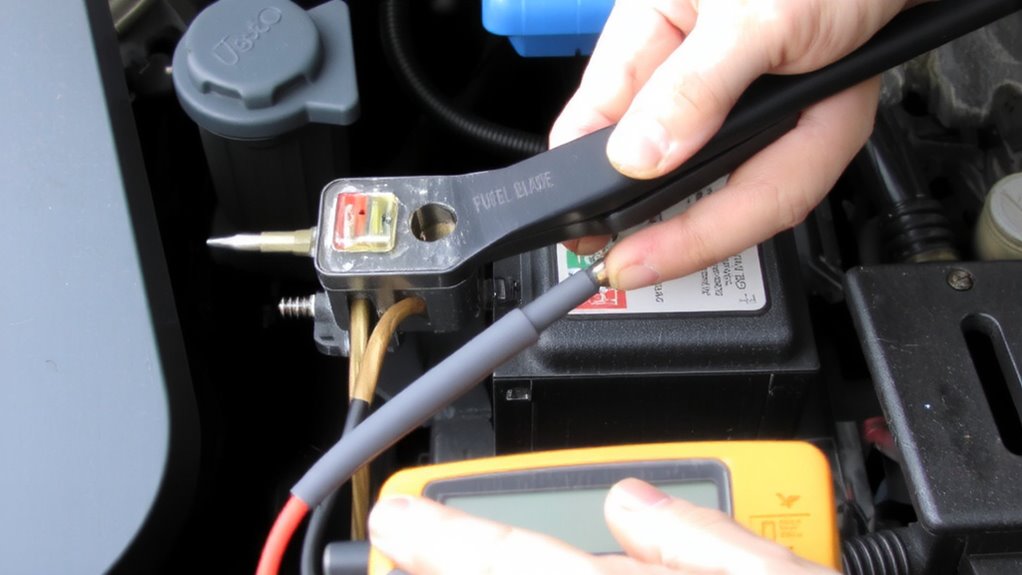
Safety starts with the fuse. You rely on it to protect the fuel pump function and prevent circuit damage. The fuel pump fuse is a critical part of the electrical circuit design, typically rated at 15 to 20 amps, depending on your vehicle’s power demands. It sits in the power distribution center, breaking the circuit if current exceeds safe levels. Without it, excessive current could overheat wires, risking fire or component failure. This small component guarantees only the correct voltage reaches the fuel pump, enabling consistent fuel delivery to the engine. Think of the fuse as a gatekeeper-it allows normal operation but stops flow during faults. Proper electrical circuit design uses this fuse to isolate problems, maintaining system integrity. Understanding its role helps you diagnose issues faster, guaranteeing the fuel pump function remains reliable and protected under all operating conditions.
Locate the Fuel Pump Fuse in the Fuse Box
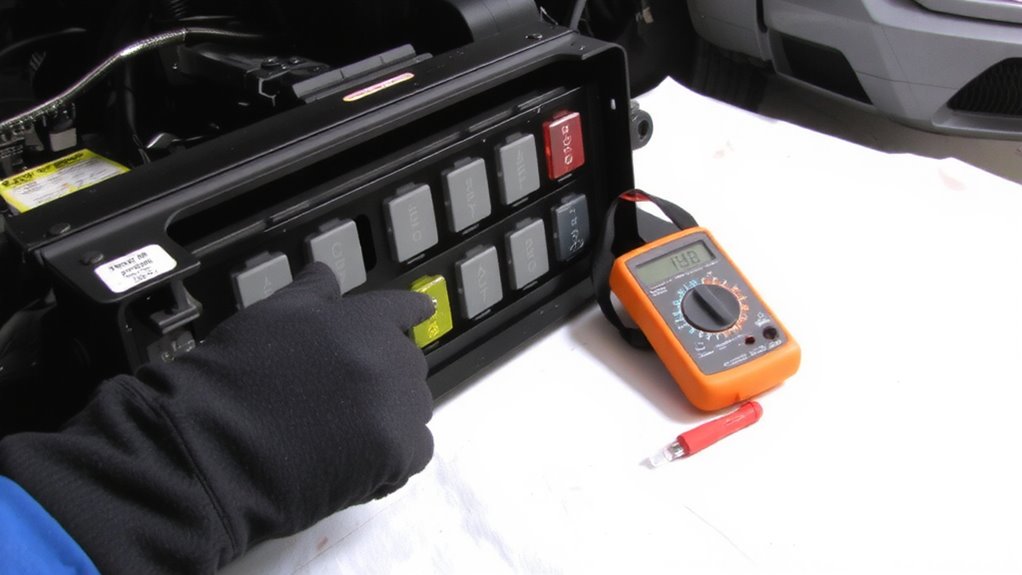
You’ll find the fuel pump fuse in the main fuse box, usually located under the hood near the battery or on the driver’s side of the dashboard. Refer to your owner’s manual for the exact fuse box layout. The fuel pump fuse is typically a blade-type fuse, rated between 10 to 20 amps, labeled clearly in the diagram on the fuse box cover. Use electrical schematic analysis to confirm the correct circuit if labels are missing or worn. This step guarantees you’re working on the right fuse, avoiding damage to other systems. Proper identification is critical before any intervention near fuel tank access points. Never assume fuse location based on appearance alone. Cross-checking with the vehicle’s wiring diagram increases accuracy. Mistaking circuits can lead to failed diagnostics or electrical issues. Take time now to verify-it saves effort later.
Inspect the Fuel Pump Fuse Visually
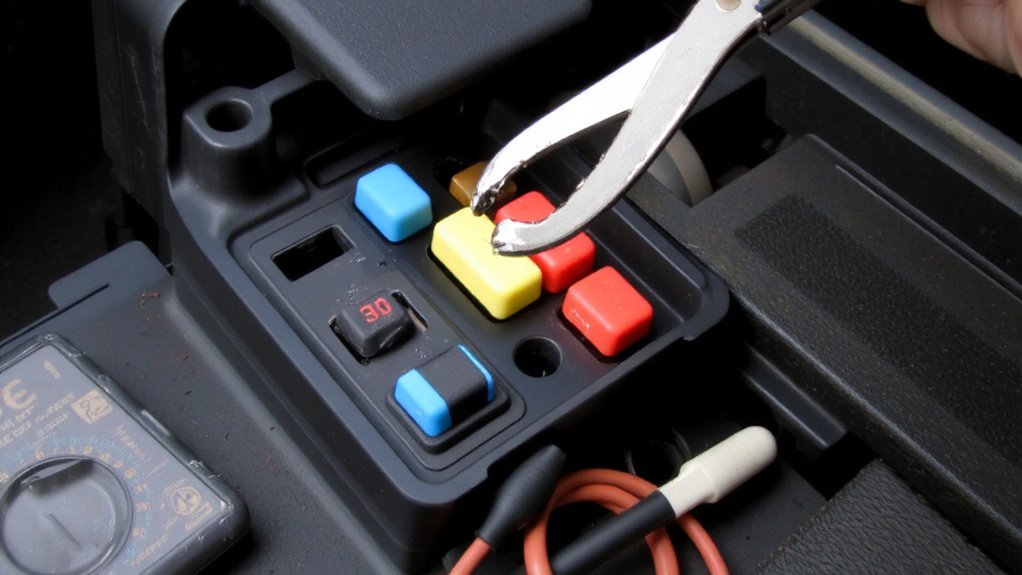
A quick visual check can save you hours of unnecessary work. Performing a visual inspection of the fuel pump fuse helps identify obvious damage before testing electrical continuity. Look for a broken filament or darkened appearance inside the fuse body-these signs point to a blown fuse. Use the table below to interpret what you see:
| Visual Clue | Meaning |
|---|---|
| Intact filament | Good electrical continuity |
| Broken filament | No electrical continuity |
| Discolored casing | Possible overload or burnout |
| Swollen fuse body | Internal damage likely |
| Cloudy interior | Degraded elements, replace fuse |
Even if the fuse looks okay, it might still fail under load. But spotting physical flaws early keeps you from chasing false issues. Always match the fuse’s amperage rating to the manufacturer’s spec. A thorough visual inspection streamlines diagnosis and guarantees accurate troubleshooting.
Replace a Blown Fuel Pump Fuse
Why risk a no-start condition when a five-minute fix could get you back on the road? Replace a blown fuel pump fuse immediately using the correct amperage rating. Most fuel pumps require a 15- to 20-amp fuse, but always verify your vehicle’s specifications. Installing the wrong fuse risks overheating or circuit damage. Match the new fuse to the original’s color and rating exactly. Fuel type compatibility matters-ethanol blends like E85 may increase electrical load, affecting fuse durability. Guarantee the replacement fuse supports your pump’s voltage requirements; most systems run on 12-volt DC, but deviations can impair performance. Use only ATO or MAXI blade-style fuses designed for automotive use. Insert the fuse firmly into the slot until it clicks. Confirm full seating to prevent arcing or power loss. Avoid makeshift solutions-only factory-specified fuses guarantee proper operation and protect the fuel pump from premature failure.
Turn the Ignition On to Prime the System
Once the new fuse is securely in place, turn the ignition switch to the “On” position without starting the engine. This initiates ignition priming, a brief 2-3 second process where the fuel pump pressurizes the fuel rail. You’re performing a critical system check to guarantee the fuel circuit operates correctly post-replacement. Most modern vehicles automatically cycle the fuel pump during ignition priming when the engine isn’t cranked. This pressurization guarantees the injectors receive adequate fuel for startup. Confirm the vehicle’s ECU sends the proper signal by observing dashboard warning lights-if they illuminate briefly and fade, it’s a good indicator of successful electrical continuity. This step verifies power delivery and prepares the fuel system for engine start-up. Proper ignition priming reduces strain on the starter and promotes quicker ignition.
Listen for the Fuel Pump Fuse to Activate
What do you hear when the fuel pump fuse activates? You should hear a faint humming noise from the fuel tank area. This sound means the fuel pump is receiving electrical continuity through the fuse and has engaged. The humming typically lasts two to three seconds after turning the ignition on. That brief operation builds initial fuel pressure, usually 40–60 psi in most port-injected gasoline engines. Proper fuel pressure is essential-without it, the engine won’t start or run efficiently. The fuse must maintain uninterrupted electrical continuity to power the pump during startup. If you hear nothing, the fuse may be blown or the circuit disrupted. No sound often points to a break in current flow, preventing the pump from pressurizing the system. Always verify power at the fuse with a test light to confirm circuit integrity.
Test the Fuel Pump Fuse While Driving
You can confirm the fuel pump fuse is functioning properly not just at startup, but also under real-world driving conditions. While driving, monitor for consistent engine performance, which indicates stable fuel pressure. A failing fuse may interrupt power under increased electrical load, such as during acceleration or climbing hills. These moments demand higher current delivery to the fuel pump. Any hesitation, sputtering, or loss of power could signal fuse failure. Use a scan tool to check for fuel pressure irregularities; most systems maintain 45–65 psi under load. Verify the fuse isn’t overheating or exhibiting signs of arcing. A properly rated fuse, typically 15–20 amps, handles the pump’s peak draw without degrading. Test across multiple driving cycles to validate reliability. This on-road verification confirms the fuse sustains necessary current flow under actual operating demands, guaranteeing consistent fuel delivery and engine performance.
On a final note
You’ve replaced the fuel pump fuse and verified its operation. The fuse, typically 15 to 20 amps, protects the fuel pump circuit from overcurrent. A functional pump primes in 2–3 seconds when the ignition turns on. Listen near the fuel filler for a consistent hum. No sound may indicate electrical faults or pump failure. Test drive confirms steady fuel delivery. Repeat voltage and continuity checks if issues persist. Safety first-always disconnect the battery before fuse replacement.