How to Clean Paint Protection Film on Convertible Tops Without Water Intrusion
Use a waterless cleaner with mild surfactants and lubricants to clean your PPF without risking water intrusion. Apply it to a 300-thread-count microfiber cloth, not the film directly, and wipe in straight lines to avoid micro-tears. These high-grade films are 8–10 mils thick and self-healing, but always use silicone-free, ammonia-free solutions. Protect sensors with dielectric gel and 3M VHB tape. Dry debris removal with an air blower or soft brush comes first. You’ll discover safer techniques and approved products that enhance film longevity and top performance.
Notable Insights
- Use waterless cleaning solutions with mild surfactants applied to a microfiber towel to prevent PPF oversaturation.
- Wipe PPF in straight lines along the film’s grain to minimize micro-tears and surface damage.
- Remove loose debris with an ultra-soft brush or air blower before using a lint-free microfiber cloth.
- Avoid water exposure to convertible mechanisms by isolating sensors and sealing edges with protective tape.
- Apply PPF-safe polymer polish in small sections to correct haze without risking water intrusion.
How to Clean PPF on a Convertible Top Without Water
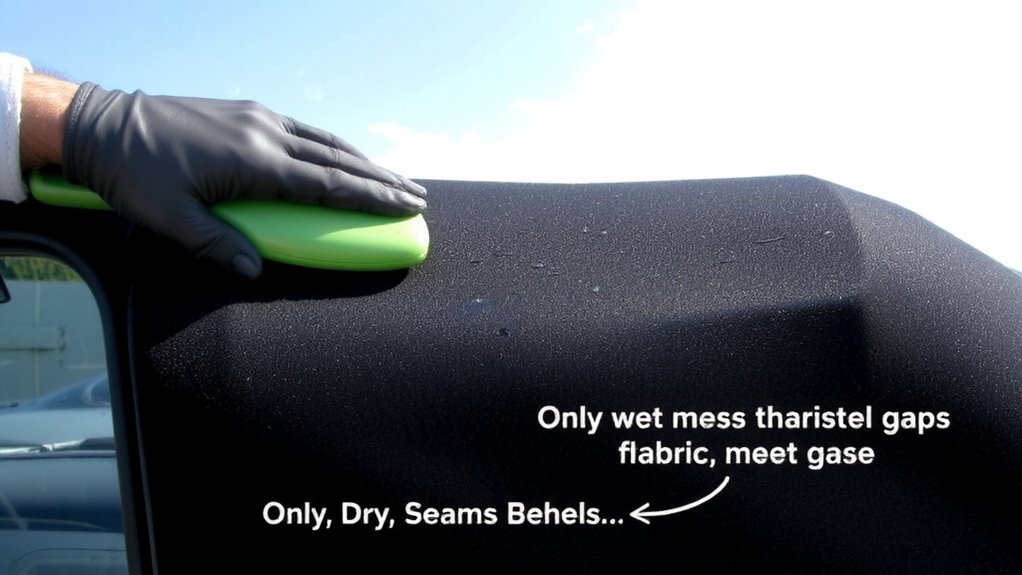
While water is often the go-to choice for cleaning, it’s not always available or practical when maintaining paint protection film (PPF) on a convertible top. You can preserve PPF longevity using a waterless cleaning solution specifically formulated for automotive films. These solutions contain mild surfactants and lubricants that lift dust and contaminants without abrasion. Spray the solution directly onto a microfiber towel-never the PPF-to prevent oversaturation. Gently wipe in straight lines following the film’s grain to avoid micro-tears. Most high-grade PPFs are 8–10 mils thick with self-healing properties, but improper wiping can compromise the surface. Avoid ammonia-based products to prevent fabric discoloration beneath the film. Use only 100% silicone-free cleaners compliant with the PPF manufacturer’s specifications. Regular maintenance with proper materials guarantees clarity, adhesion, and long-term protection under dynamic environmental stress.
Why Water Damages Convertible Top Mechanisms
Water exposure poses real risks to the mechanical components of a convertible top, even if the PPF itself handles moisture well. Moisture infiltrating the frame rails or actuator housings can lead to electrical shorts in the motor control circuits, disrupting operation. Modern convertibles use 12-volt electro-hydraulic systems with sensors rated IP67, yet prolonged water contact degrades seals over time. Once inside, water promotes corrosion on steel linkages and aluminum brackets, reducing structural integrity. It also creates ideal conditions for mold growth in fabric channels and foam gaskets-visible within 72 hours in humid environments. Mold compromises air quality and weakens stitching. Saltwater accelerates damage, with conductivity increasing short-circuit risks by up to 40%. Even small gaps-0.5mm or more-allow capillary action to wick moisture inward. Prevention is critical; once corrosion or mold sets in, repair costs exceed $800 on average.
Dry Methods to Remove Dirt and Debris From PPF
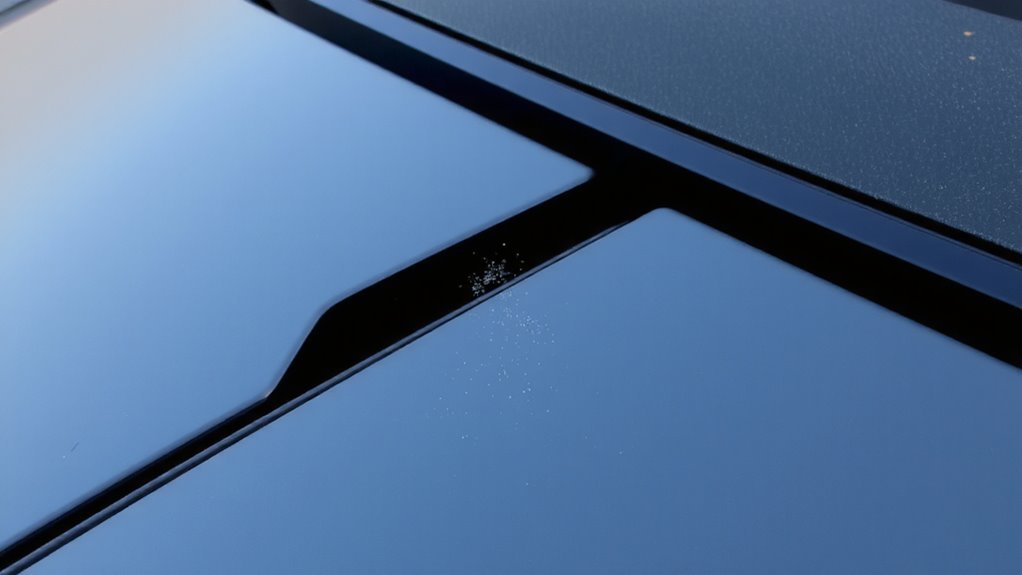
How do you safely clean your paint protection film without introducing moisture risks to the convertible’s sensitive mechanisms? Use dry dusting to remove loose particles before they scratch the PPF surface. Start with a clean, ultra-soft brush or air blower to lift away sand, pollen, and grit. Avoid abrasive materials that compromise the film’s clear coat. Follow with microfiber wiping using a lint-free, 100% polyester cloth with a minimum 300-thread count. Wipe in straight lines, not circles, to prevent micro-scratches. Microfiber wiping captures fine dust without solvents or moisture. Use moderate pressure-about 3–5 ounces per square inch-to guarantee effective debris removal while preserving self-healing properties. Clean the microfiber cloth frequently to avoid redepositing contaminants. Perform dry maintenance weekly in dusty environments. These dry methods maintain optical clarity and surface integrity. They’re essential for protecting both PPF lifespan and convertible top functionality.
Fix PPF Haze and Stains Safely on Soft Tops
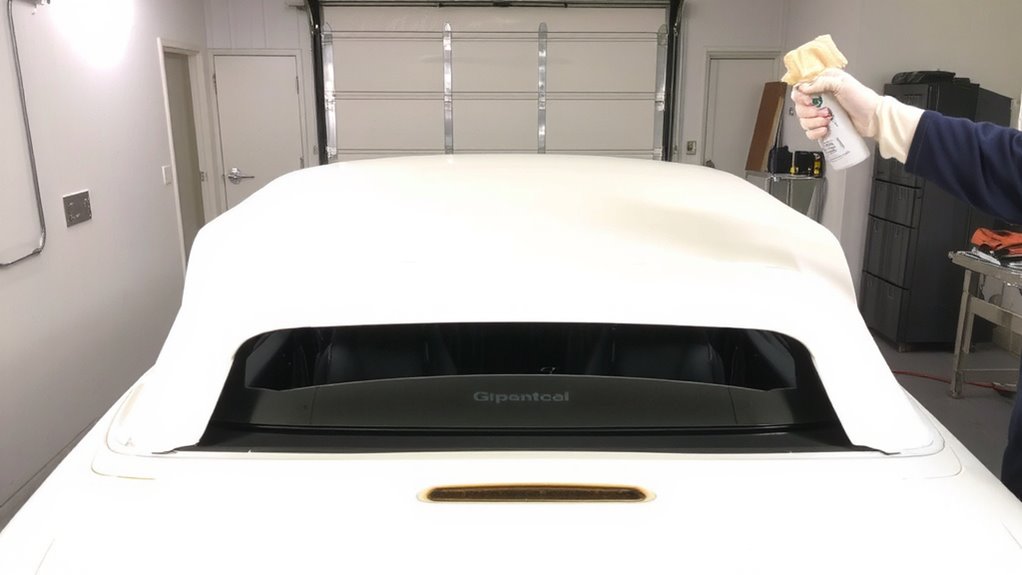
If stubborn haze or surface stains appear despite regular dry maintenance, you’ll need targeted cleaning methods that avoid damaging the paint protection film or exposing your convertible’s soft top mechanisms to excess moisture. Use a PPF-safe microfiber cloth with a non-abrasive cleaning solution designed for film restoration. Gently wipe in straight lines, not circles, to prevent heat buildup. For light haze, apply a polymer-based polish for surface polishing-avoid wax or compounds with solvents. These can degrade the film’s clear coat. Work in small 2’x2’ sections, applying light pressure (under 3 psi) to prevent film lifting. Most high-grade urethane films tolerate mild polishing, but never exceed manufacturer thickness specs, typically 8–10 mils. Over-polishing reduces lifespan. Test any product on an inconspicuous area first. Proper technique restores optical clarity without water intrusion or material compromise. For best results, choose a film tested for durability and clarity, such as one of the top PPF brands.
Protect Sensors When Cleaning Convertible Top PPF
Ever wonder why your convertible’s rain sensor triggers unexpectedly after cleaning the top? Moisture intrusion during PPF cleaning can disrupt sensor calibration and compromise electronic shielding. Water seeping into sensor housings causes false readings, erratic behavior, or permanent damage. To prevent this, isolate sensors before cleaning. Use precision-applied masking tape and non-conductive sealants around sensor zones.
| Sensor Type | Protection Method |
|---|---|
| Rain Detection | Apply dielectric shield gel |
| Sunlight Sensing | Cover with static-safe film |
| Proximity Monitoring | Seal edges with 3M VHB tape |
Ensure no fluid pools near sensor clusters. Test operation post-cleaning with a calibrated moisture meter. Proper electronic shielding maintains signal integrity. Incorrect sensor calibration leads to delayed wiper activation or HVAC errors. Always inspect seals before and after service. Protecting these components preserves system accuracy and extends sensor lifespan.
Best Waterless Cleaners and Tools for PPF Care
Maintaining the integrity of paint protection film (PPF) on convertible tops demands careful selection of cleaning agents and tools, especially in water-restricted environments. You should use pH-neutral, solvent-free waterless cleaners to preserve PPF longevity. Products like CarPro Eraser or Chemical Guys EcoSmart contain lubricants that lift contaminants without scratching. These sprays reduce surface friction, minimizing micro-marring during drying. For application, use a dual-action microfiber towel: 300–400 GSM weight with split fibers guarantees effective residue removal without abrasion. UV resistance in high-grade PPF relies on stable polymer layers; improper cleaners degrade this protection over time. Clean monthly to prevent contaminant buildup, especially in high-exposure zones. Avoid silicone-based polishes-they create false gloss but reduce long-term clarity. Instead, opt for PPF-specific sealants with SiO2 content to enhance hydrophobic properties. Proper tools and formulas maintain optical clarity and structural resilience.
On a final note
You protect your convertible’s PPF correctly by avoiding water exposure. Direct moisture risks damaging electric motors, rail mechanisms, and sensors-often leading to costly repairs. Use waterless cleaners with pH-neutral formulas (6.5–7.5) to safely dissolve contaminants. Microfiber towels with 300+ GSM and split fibers lift debris without scratching. Regular maintenance preserves hydrophobic properties. Proper technique guarantees longevity, keeps sensors dry, and maintains factory-level performance under all conditions.