How to Implement an Electrical Safety Program for Garage Workshops
You need GFCI protection in damp garage areas because it cuts power in 1/40th of a second if a 4–6 milliamp ground fault is detected. Install 20-amp, 120-volt circuits with 12-gauge wiring and use GFCI receptacles or breakers. Check cords monthly for fraying, and never run them under rugs. Label all breakers clearly and map circuits to prevent overloads. Balance loads-15-amp circuits handle 1,800 watts, 20-amp handle 2,400. Set up a red emergency shutoff near exits, wired to the main panel. Test connections for voltage drop; more than 3% signals trouble. Each outlet must be grounded with less than 25 ohms resistance. Use arc-fault breakers for added fire protection. Warm outlets or flickering lights mean immediate inspection. Unplug tools before service, and store cords loosely coiled. A full safety plan includes monthly shutdown drills. More critical steps follow.
Notable Insights
- Install GFCI outlets or breakers on all garage circuits to prevent electrocution from ground faults.
- Regularly inspect cords and tools for damage, replacing frayed or exposed wiring immediately.
- Map and label all circuits at the breaker panel to ensure clear identification and proper load management.
- Establish an emergency power-off plan with a clearly marked main disconnect and shutoff procedure.
- Avoid overloading circuits by balancing loads and using appropriately rated cords and equipment.
Install GFCI Outlets and Protect Circuits
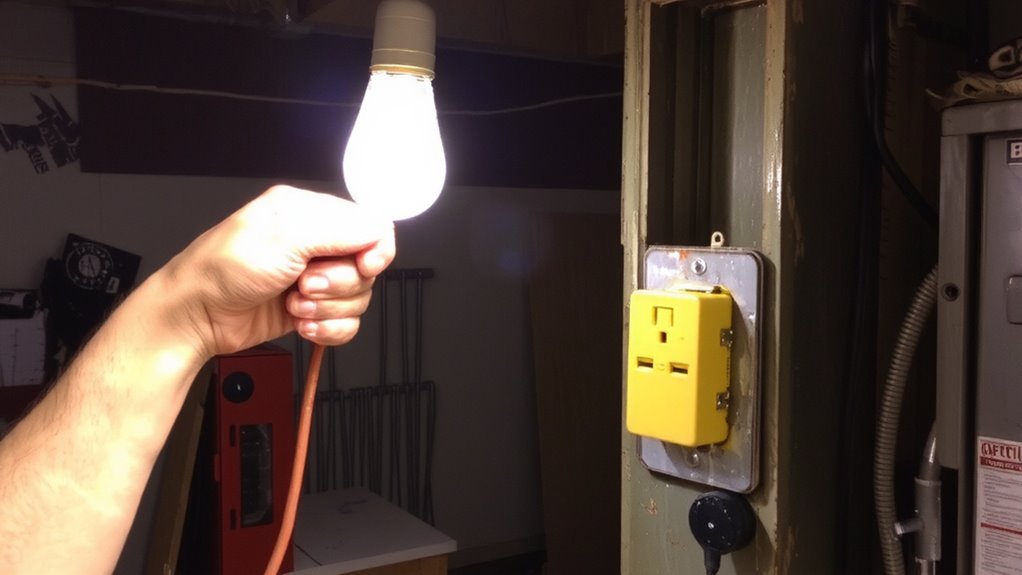
While electricity powers nearly every tool in your garage workshop, it can also pose a serious hazard if not properly managed-starting with the right outlets makes all the difference. Install GFCI (Ground Fault Circuit Interrupter) outlets to prevent electrocution from ground fault currents as low as 4–6 milliamps. Standard outlets offer no such protection. GFCIs detect imbalances between hot and neutral wires, cutting power within 1/40th of a second. They are required by the National Electrical Code (NEC) in damp or wet locations, including most garages. Use either GFCI receptacles or GFCI circuit breakers for complete circuit protection. Receptacle models allow local testing with “Test” and “Reset” buttons. For new installations, 20-amp, 120-volt circuits with 12-gauge wire are recommended. GFCI outlets maintain functionality even when wired downstream, ensuring protection across multiple outlets. This reliable, code-compliant solution drastically reduces shock risk.
Inspect and Maintain Cords and Tools
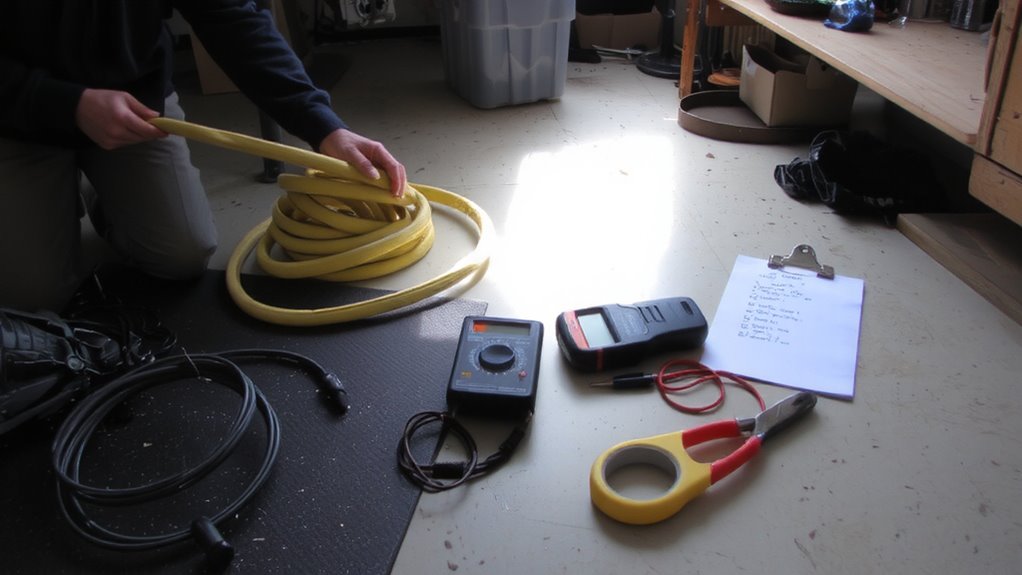
A damaged cord or malfunctioning tool can turn a routine project into a dangerous situation-regular inspection and maintenance are essential for safe operation. Check cords monthly for cuts, frays, or cracked insulation; replace any with exposed wires immediately. Use 14-gauge or thicker extension cords rated for your tool’s amperage-undersized cords overheat. Practice proper cord management: don’t run cords through doors, windows, or under rugs where they can get pinched or abraded. Always unplug tools before inspecting or servicing. Verify tool grounding by ensuring three-prong plugs are intact and outlets are properly grounded-use a receptacle tester annually. Double-insulated tools reduce reliance on grounding but still require inspection. Ground fault protection won’t compensate for faulty cords or compromised tool grounding. Store cords coiled loosely to prevent internal wire stress. Replace damaged tools or send them for professional repair-don’t bypass safety features.
Label and Organize Your Electrical System
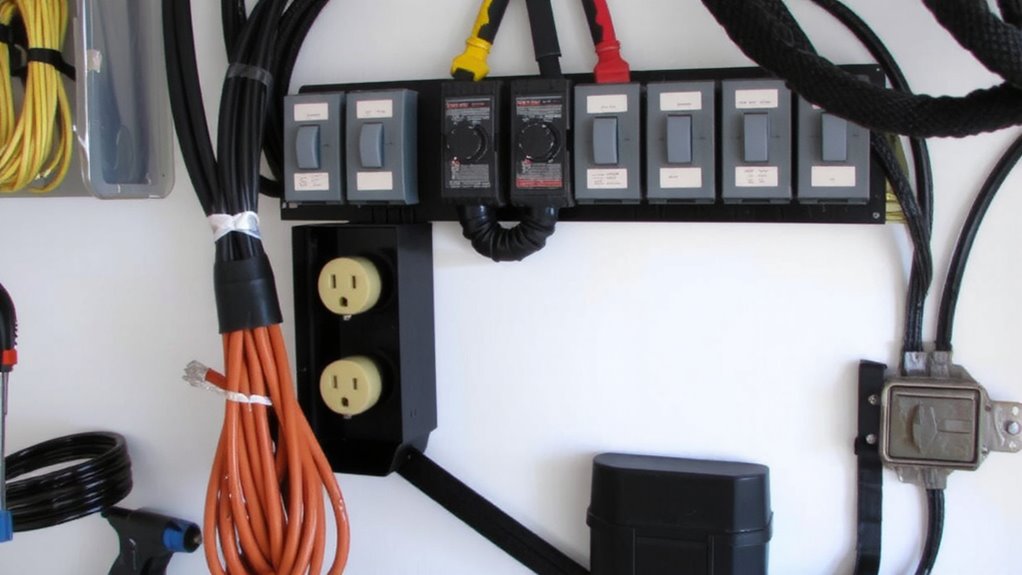
Keep your garage workshop safe by making sure you know exactly what each circuit controls-clear labeling and organization prevent mistakes that could lead to shocks or equipment damage. Start with circuit mapping: turn off each breaker one at a time and record which outlets, lights, and tools lose power. Label every breaker clearly, using a permanent marker or label maker. Use a legend near the panel for circuits powering high-draw equipment like compressors or welders. Apply load balancing by distributing high-wattage tools across separate circuits to avoid overloading. Most 15-amp circuits handle 1,800 watts; 20-amp circuits manage 2,400 watts. Avoid daisy-chaining power strips. A well-organized panel with accurate mapping reduces confusion, guarantees efficient power use, and supports long-term safety and performance.
Create an Emergency Power-Off Plan
If an electrical accident happens in your garage workshop, seconds matter-having a clear, practiced emergency power-off plan can prevent injury or fire. Perform an emergency shutdown quickly by identifying the main disconnect, typically a 100-200 amp breaker located at your electrical panel. Power isolation is achieved by flipping this main breaker, cutting supply to all circuits. Install a clearly labeled emergency shutoff button near exits, wired directly to your panel, to expedite power isolation. Use a red, mushroom-head push button rated for 600V AC, compliant with NFPA 79 standards. Practice the procedure monthly so the response becomes automatic. Guarantee everyone in your household knows the protocol. Unlike turning off individual devices, an emergency shutdown halts all current flow, eliminating arc flash and shock risks at the source. This centralized cutoff guarantees full power isolation across your workshop’s electrical system.
Assess Your Garage’s Electrical Hazards
What hidden risks lie in your garage’s wiring and equipment? You could be facing serious hazards like circuit overload and wiring degradation without realizing it. Older garages often have outdated circuits not designed for modern power tools or shop heaters. A single 15-amp circuit can handle 1,800 watts max-exceed that, and you risk overheating. Check for warm outlets or flickering lights; these are red flags. Inspect wiring for cracked insulation or brittle sheathing, especially near joints and outlets-this indicates wiring degradation. Rodents and temperature swings accelerate damage. Use a multimeter to test voltage drops; anything over 3% suggests poor connections. Install arc-fault breakers to detect dangerous arcs before they ignite fires. Each outlet should be grounded, with resistance under 25 ohms. Assess all cords, tools, and junction boxes annually to stay safe.
On a final note
You now have the foundation for a safe garage electrical system. Install GFCI outlets rated for 120V, 15A or 20A circuits to reduce shock risk by tripping at 5 milliamps of leakage. Inspect cords monthly for fraying or insulation wear matching NEC 400.4 standards. Label all breakers clearly using a standardized numbering system tied to a schematic diagram. Use red emergency shutoff switches near exits, wired to disconnect all power within 1 second per NFPA 70E.