How to Monitor Your Parked Car’s Location via Smartphone Using GPS Trackers
You can monitor your parked car’s location in real time using a GPS tracker that updates every 10 to 30 seconds with 5-meter accuracy. Devices connect via 4G LTE and send location data through cellular networks to your smartphone. Plug-in OBD-II, battery-powered, or hardwired models offer installation flexibility. Set up the tracker via Bluetooth or Wi-Fi using a dedicated app on iOS or Android. Geofencing triggers alerts within 8 seconds of a boundary breach, and motion detection responds in under 5 seconds. Cloud-stored location history keeps logs for up to 90 days, including timestamps, speed, and route patterns. Trackers work best with strong signal strength above -90 dBm, especially when mounted under the dashboard for best reception. A reliable unit gives you constant visibility of your vehicle’s status-knowing how each model balances power source, visibility, and connectivity helps you make the right choice.
Notable Insights
- Install a GPS tracker using OBD-II, hardwired, or battery-powered connection for continuous car location monitoring.
- Pair the GPS device with your smartphone via Bluetooth or Wi-Fi using a dedicated app.
- Enable real-time tracking and receive instant alerts for motion, vibration, or geofence breaches.
- View your parked car’s live location and movement history updated every 10 seconds on your smartphone.
- Ensure strong cellular signal (4G LTE) and optimal tracker placement for reliable, accurate location data.
Stop Worrying About Theft or Towing: How GPS Trackers Protect Parked Cars
While your car sits unattended, a GPS tracker actively monitors its location using real-time satellite data linked directly to your smartphone. This constant surveillance enhances vehicle security by providing accurate, second-by-second positioning. Most trackers update location every 10 to 30 seconds, with accuracy within 5 meters. GPS units use cellular networks to transmit data, ensuring you receive alerts if your car moves unexpectedly-a critical component of theft prevention. Geofencing lets you set virtual boundaries; if the vehicle crosses them, you get an instant notification. The tracker operates independently of your car’s systems, continuing to function even if the ignition is off. With low-power modes extending battery life up to 30 days, you maintain constant oversight. This reliable, precise monitoring means you’re never blind to your car’s status, offering peace of mind and immediate response capability.
Plug-In, Battery, or Hardwired: Choose the Right GPS Tracker for Your Vehicle
You’ve got three main options when choosing a GPS tracker for your parked car: plug-in, battery-powered, or hardwired. Each type varies by power source and installation method, affecting longevity and setup. Plug-in trackers draw power from your OBD-II port, offering constant operation without charging. They’re easy to install-just plug in-but remain visible and dependent on port accessibility. Battery-powered models run on internal cells, lasting months to years based on usage. Their installation method is simple: place discreetly inside the vehicle. However, they require periodic recharging or battery replacement. Hardwired trackers connect directly to your car’s electrical system, using it as their power source. This setup needs professional installation due to wiring complexity, but guarantees continuous tracking without battery decay. Choose based on your need for permanence, ease of installation method, and preferred power source reliability.
Set Up Your GPS Tracker in Minutes: Connect to Your Phone Easily
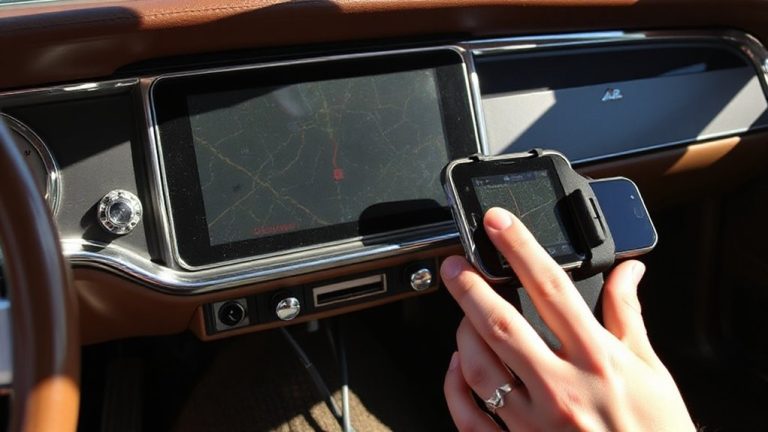
Once you’ve selected the right GPS tracker for your vehicle, getting it connected to your smartphone takes just minutes with the right app and setup steps. Most trackers use Bluetooth or Wi-Fi to pair with your phone, syncing via a dedicated app available on iOS and Android. Begin by downloading the app and creating an account. Power on the device and follow the on-screen prompts to link it. Strong signal strength guarantees reliable location updates-aim for at least -90 dBm for best performance. Proper placement, like under the dashboard or behind trim panels, improves GPS and cellular reception. Use the manufacturer’s installation tips to avoid metal obstructions and electromagnetic interference. Test the connection by checking real-time position accuracy, typically within 5 meters. A stable pairing means you’re ready to monitor your car’s status directly from your smartphone.
Get Alerts If Your Parked Car Moves: Real-Time Monitoring & Geofencing
If your parked car starts moving without you, you’ll want to know immediately-real-time alerts make that possible. GPS trackers use motion detection sensors to monitor vehicle status continuously. When movement is detected, the device triggers instant alerts sent directly to your smartphone. These notifications arrive within seconds, allowing rapid response. Geofencing enhances this feature by defining virtual boundaries around parking zones. Exceeding these limits activates additional alerts. Below is a comparison of key monitoring functions:
| Feature | Function | Response Time |
|---|---|---|
| Motion Detection | Sensors detect vibration and movement | < 5 seconds |
| Instant Alerts | Push notification to phone | < 10 seconds |
| Geofence Breach | Virtual boundary violation | < 8 seconds |
Systems operate on 4G LTE networks, ensuring reliable connectivity. Most devices draw power from the OBD-II port, maintaining constant readiness.
Track Location History and Movement Patterns Over Time
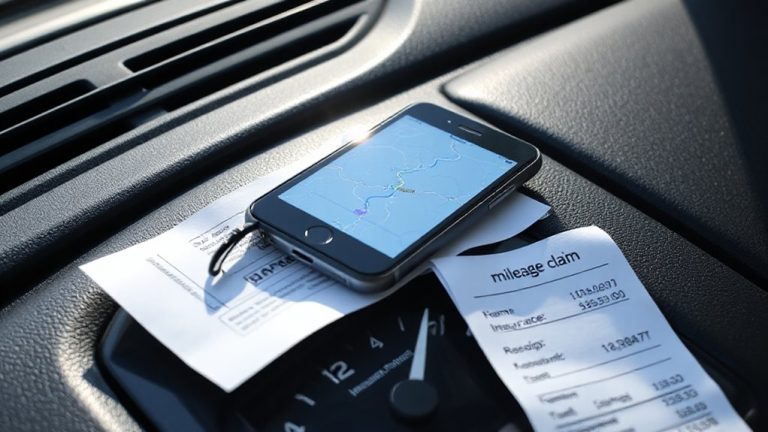
A GPS tracker doesn’t just alert you to real-time movement-it also records every mile traveled over time. You can access detailed location history logs stored securely in the cloud, typically retained for up to 90 days. These logs include timestamps, coordinates, speed, and duration of each trip. With data analysis tools in the app, you review routes and detect inconsistencies. Pattern recognition algorithms identify common destinations, like your home or workplace, and flag unusual stops. The tracker updates location every 10 seconds when in motion, ensuring high-resolution movement mapping. Stored data syncs automatically to your smartphone, allowing you to compare daily commutes or verify vehicle use. This historical insight helps confirm if your car was used without permission. It’s not just about where it’s been-it’s about understanding behavior through precise tracking and repeatable data interpretation. You gain clarity through consistent, measurable evidence.
Find the Best GPS Tracker for Your Car and Budget
You now know how tracking history reveals patterns and potential misuse, so it’s time to choose a device that delivers this data reliably. Look for a GPS tracker with strong signal accuracy, ensuring location updates within 5-meter precision using GPS, GLONASS, and cellular triangulation. Poor signal accuracy leads to false location data, reducing trust in alerts. Opt for models with at least -160 dBm receiver sensitivity for dependable performance in urban canyons or underground lots. Device longevity matters-select one with a 5-year minimum battery life or hardwired power to avoid frequent replacements. IP67-rated enclosures protect against dust and water damage. Trackers like the Tracki 2024 or LandAirSea 54 offer real-time updates every 15 seconds, 4G LTE support, and encryption for data security. Balance cost with technical reliability-premium features often justify higher upfront costs.
On a final note
You secure your parked car with a GPS tracker that updates location every 10 seconds. Real-time monitoring uses 4G LTE and GNSS for accuracy within 5 meters. Geofencing triggers instant alerts if the vehicle moves outside a defined boundary. Battery-powered models last up to 30 days; hardwired units draw from the OBD-II port, offering continuous power. Data logs 250,000+ waypoints. Choose based on update frequency, battery life, and installation type.